
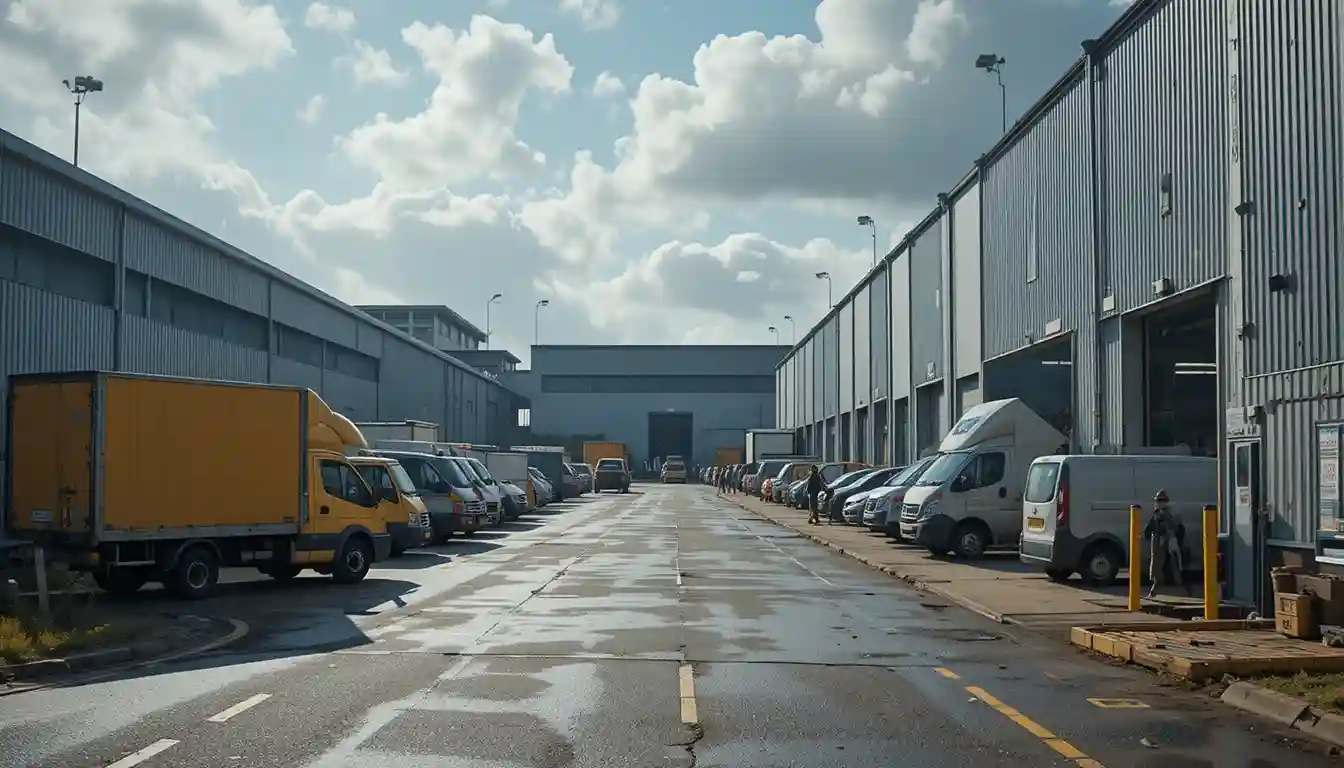
WCM Europe Ltd entered administration after severe financial pressure, including the collapse of a key customer and wider strain across the UK automotive supply chain.
Tim Bateson and Ryan Grant of Interpath Advisory were appointed as joint administrators to manage the process, review the company’s position, and explore a possible sale of the business or assets.
Key takeaways:
- WCM Europe Ltd is a Basildon-based automotive component manufacturer.
- The company entered administration around March 3 to 4, 2026.
- The administrators are Tim Bateson and Ryan Grant of Interpath Advisory.
- Financial pressure and a key customer’s collapse contributed to the administration.
- The business specialises in plastic components, high-tech engineering, and advanced automotive systems.
- Its Basildon production facility may attract distressed automotive buyers.
Why Were WCM Europe Administrators Appointed?

The appointment of WCM Europe administrators followed a period of serious financial pressure for the automotive component manufacturer.
WCM Europe Ltd, which has a long background in British engineering, entered administration after facing conditions that became difficult to manage within its existing financial structure.
The company’s situation appears to have been shaped by both direct business pressure and wider market conditions.
A key customer collapse was identified as one of the major factors.
For a specialist automotive supplier, the failure or withdrawal of a major customer can have a deep effect because production planning, stock levels, staffing, and investment decisions are often built around expected orders.
When an automotive supplier loses an important customer, the damage is rarely limited to lost revenue. The business may still have to cover fixed costs such as wages, rent, machinery finance, utilities, insurance, materials, and quality control systems.
These costs can remain high even when income falls suddenly.
Financial Pressure Behind the Administration
WCM Europe Ltd entered administration because the business could no longer continue under the same level of financial strain. Administration gives a company temporary legal protection while appointed insolvency practitioners assess the most suitable next step.
In many manufacturing insolvencies, the problem is not always the absence of useful assets or technical ability.
The difficulty often comes from the mismatch between cash coming in and cash going out. A company may have valuable machinery, skilled workers, and customer history but still face insolvency if it cannot meet its debts as they fall due.
A restructuring professional explained this type of pressure clearly:
“I often see manufacturing businesses reach a crisis point not because they lack technical skill, but because one lost customer, one delayed payment, or one sharp cost increase can remove the cash buffer they depend on.”
For WCM Europe Ltd, the appointment of administrators means that control of the company has moved away from its directors and into the hands of licensed insolvency practitioners.
Their role is to protect value, review the company’s position, and explore options that may include a sale of the business or its assets.
Collapse of a Key Customer and Supply Chain Strain
The collapse of a key customer can be particularly damaging in the automotive supply chain. Suppliers often work within complex contract arrangements where future production is planned months ahead.
If a large customer fails, cancels work, or cannot continue trading, the supplier may be left with unpaid invoices, unused stock, and production capacity that is no longer fully supported by revenue.
The UK automotive supply chain has also faced broader strain. Rising energy costs, higher employment costs, material price movements, supply uncertainty, and pressure from global competition have all added difficulty for manufacturers.
Specialist suppliers with high overheads can be especially exposed when demand shifts.
Main Pressure Area Possible Effect on WCM Europe Ltd Wider Supply Chain Impact
Key customer collapse Reduced revenue and possible unpaid invoices Disruption to planned orders and production schedules
Rising operating costs Higher pressure on margins and cash flow Increased financial risk for smaller suppliers
High fixed overheads Difficulty reducing costs quickly More vulnerable specialist manufacturers
Automotive sector uncertainty Lower confidence in future orders Delayed investment and tighter credit terms
Liquidity pressure Reduced ability to pay suppliers and staff Higher risk of insolvency across linked firms
The table shows why a company can move from stress to formal administration quickly. Once suppliers, lenders, or customers lose confidence, the pressure can intensify.
Who Are the Administrators Appointed to WCM Europe Ltd?
The joint administrators appointed to WCM Europe Ltd are Tim Bateson and Ryan Grant of Interpath Advisory.
Their appointment places the company under a formal insolvency process, with the administrators responsible for reviewing the company’s affairs and deciding how best to proceed.
Administrators are not appointed simply to close a business. In many cases, their first task is to see whether value can be preserved.
This could involve continuing to trade for a short period, seeking buyers, selling assets, or managing an orderly wind-down if rescue is not possible.
Tim Bateson and Ryan Grant of Interpath Advisory
Tim Bateson and Ryan Grant will be expected to review WCM Europe Ltd’s trading position, liabilities, asset base, and buyer interest.
Their work may involve communication with employees, suppliers, customers, landlords, lenders, and creditors.
The key responsibilities of the administrators may include:
- Taking control of company operations and records
- Reviewing cash flow and trading prospects
- Protecting valuable plant, machinery, stock, and intellectual property
- Speaking with customers about ongoing supply requirements
- Assessing whether a going concern sale is realistic
- Reporting to creditors through the formal insolvency process
The appointment of Interpath Advisory is important because automotive manufacturing administrations can be complex.
They often involve technical assets, customer quality requirements, skilled labour, and urgent continuity questions.
Role of Joint Administrators in the Insolvency Process
Joint administrators must act in the interests of creditors as a whole. They must consider whether the company can be rescued, whether a sale can produce a better result than liquidation, or whether assets should be realised in the most effective way.
In WCM Europe Ltd’s case, the administrators may examine whether the business can trade for a short period while expressions of interest are gathered.
This short-term trading period can be valuable because it gives potential buyers time to understand the opportunity.
Administrator Priority Why It Matters Likely Question Being Asked
Business rescue Preserves jobs and trading value Can WCM Europe Ltd continue in some form?
Going concern sale May deliver a stronger return than asset sales Is there a buyer for the full business?
Asset sale Allows value to be recovered from machinery and stock Which assets are most marketable?
Creditor outcome Legal duty focuses on creditors as a whole What route gives the best return?
Stakeholder communication Reduces uncertainty for employees and customers Who needs urgent updates?
The role is therefore both commercial and legal. The administrators must make decisions quickly, but those decisions must also be properly documented and justified.
What Does WCM Europe Ltd Do in the UK Automotive Supply Chain?
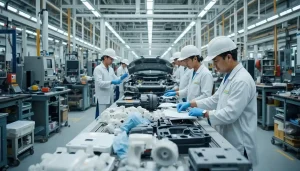
WCM Europe Ltd is described as a specialist automotive component manufacturer involved in high-tech engineering, plastic components, and advanced automotive systems.
Its operations place it within a technical part of the supply chain where reliability, consistency, and quality control are essential.
Automotive component suppliers support vehicle manufacturers by producing parts or assemblies that fit into larger production programmes.
These suppliers may be Tier 1 suppliers working directly with vehicle manufacturers, or Tier 2 suppliers providing components to other firms in the chain.
Specialist Plastic Automotive Components
Plastic components are widely used in modern vehicles. They can reduce weight, improve efficiency, support design flexibility, and contribute to safety or comfort.
Producing these parts at scale requires precision equipment, trained staff, strong quality checks, and dependable supply arrangements.
For a company like WCM Europe Ltd, technical reputation matters. Vehicle manufacturers and larger suppliers need confidence that components will be produced to specification and delivered on time.
Any failure in quality or delivery can affect wider production schedules.
Plastic automotive component manufacturing can involve several stages, including:
- Product design support
- Tooling and mould preparation
- Material selection
- Production and finishing
- Clean assembly
- Quality inspection
- Packaging and delivery
Each stage requires control. This is one reason why specialist manufacturers can be valuable even when they face financial distress.
High-Tech Engineering and Advanced Automotive Systems
WCM Europe Ltd’s work in advanced automotive systems may be of interest to buyers seeking technical capability.
High-tech engineering assets are not always easy to recreate because they depend on machinery, processes, people, certifications, and customer knowledge.
A professional buyer adviser described the appeal of such assets in first-person terms:
“When I look at an automotive supplier in administration, I do not only ask what went wrong. I ask what still works, what customers still need, and whether the technical platform can be used more effectively under new ownership.”
This type of thinking is common in distressed manufacturing acquisitions. A financially stressed company may still hold valuable production capacity that a stronger buyer can absorb.
How Did WCM Europe Ltd Build Its Manufacturing Heritage?
WCM Europe Ltd has a long manufacturing background. The business was originally established in 1948 as WCM Patterns Ltd.
Over time, it developed from an engineering business into a specialist automotive component manufacturer with experience in plastic components and advanced production processes.
A long trading history can show resilience, adaptability, and sector knowledge. Businesses that survive for decades often do so because they adapt to changing customer needs, new technologies, and new production methods.
However, heritage alone cannot protect a company from modern liquidity pressure. Manufacturing conditions in 2026 are different from those in earlier decades.
Today’s suppliers must deal with global competition, tighter margins, changing vehicle technology, cost inflation, and customer consolidation.
Period of Development Likely Business Focus Strategic Importance
1948 foundation Engineering and pattern-related work Established technical roots
Later expansion Automotive component production Built sector relevance
Development phase Plastic parts and specialist processes Created niche manufacturing capability
2017 expansion Clean assembly and increased production space Supported growth and operational capacity
2026 administration Formal insolvency process Triggered review of sale and asset options
This history may still matter to buyers. A company with long experience may have valuable process knowledge, established production habits, and a workforce familiar with specialist requirements.
The challenge is whether that heritage can be transferred into a stronger operating structure. If a buyer can preserve the technical base while removing unsustainable financial pressure, parts of the business may continue to have commercial value.
What Is the Significance of the Basildon Production Facility?
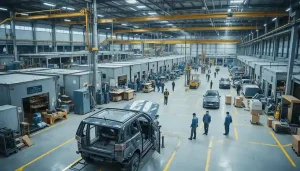
Although WCM Europe Ltd is registered in Nottingham, its significant production facility is in Basildon, Essex. This site appears to be central to the business and may become one of the most important parts of any sale discussion.
The Basildon facility was expanded in 2017, reportedly increasing production space by 50%. This expansion was linked to clean assembly, stores, and painting suites.
In manufacturing, a developed facility can represent years of investment and operational planning.
Clean Assembly and Painting Suites
Clean assembly and painting suites can add real value because they support controlled production processes. In automotive manufacturing, consistency is essential.
Parts may need to meet visual, technical, and durability standards before they can be accepted by customers.
Clean assembly space may reduce contamination risk and improve production quality. Painting facilities can support finishing processes that require specialist handling, environmental controls, and trained operators.
These facilities may be attractive to buyers because creating them from scratch can take time and investment. A ready-made production site may allow an acquirer to increase capacity more quickly.
2017 Expansion and Operational Capacity
The 2017 expansion suggests that WCM Europe Ltd had previously planned for growth. Increasing production space by half is a major step for a specialist manufacturer. It can improve output, storage, workflow, and customer service.
However, expanded capacity also brings increased cost. Larger facilities require more energy, maintenance, staffing, insurance, and management.
If customer demand falls or a key customer collapses, the expanded footprint may become a financial burden.
Facility Feature Commercial Value Risk During Administration
Basildon production site Operational base for manufacturing Lease and running costs must be assessed
Clean assembly space Supports controlled production standards Value depends on the customer’s needs
Painting suites Enables specialist finishing work May require maintenance and compliance checks
Stores and expanded capacity Improves production flow Excess space may increase overheads
Skilled local workforce Supports continuity Key staff may leave if uncertainty continues
The Basildon facility may therefore be both an asset and a cost. Its value depends on whether the administrators can find a buyer with a use for the site and confidence in future demand.
What Happens Next After WCM Europe Ltd Enters Administration?
After WCM Europe Ltd enters administration, the administrators must decide which route offers the best outcome. Their options may include a rescue of the company, a sale of the business, a sale of assets, or closure if trading cannot continue.
A short-term trading period may be used to preserve value. This can give the administrators time to speak with customers and buyers while keeping the business operational.
In manufacturing, even a brief pause can damage value if customers move work elsewhere or employees leave.
The next phase is likely to involve several practical steps:
- Securing the premises, equipment, stock, and records
- Reviewing customer contracts and outstanding orders
- Identifying critical suppliers
- Assessing employee requirements
- Preparing sales information for interested buyers
- Inviting offers for the business or assets
- Reporting to creditors
The administrators will need to balance speed with careful decision-making. A rushed sale may not maximise value, but a slow process may allow confidence to fall.
Could WCM Europe Ltd Be Sold as a Going Concern?
A going concern sale could be one of the most positive outcomes from the administration. It may allow the business, or a substantial part of it, to continue under new ownership. This could protect some jobs, preserve customer relationships, and keep valuable manufacturing assets in productive use.
For WCM Europe Ltd, the possibility of a going concern sale may depend on the condition of the order book, customer willingness to continue, and buyer appetite. The company’s technical capabilities and Basildon facility may help generate interest, but buyers will want clarity before committing.
Short-Term Trading Period
A planned short-term trading period can help maintain business value. If operations continue, buyers can see a functioning business rather than a closed site. This may also help customers maintain supply while the administration process unfolds.
However, trading during administration carries risk. The administrators must be confident that continued trading will not worsen the position for creditors.
They need to know whether orders are profitable, whether materials can be sourced, and whether customers will pay.
Potential Sale of Business and Assets
If a full business sale is not possible, the administrators may sell assets separately. These could include machinery, stock, tooling, office equipment, customer-related materials, and intellectual property where available.
Potential acquirers may include:
- Larger automotive component manufacturers
- Engineering groups seeking specialist capability
- Private equity-backed manufacturing platforms
- Competitors looking to expand production
- Overseas buyers seeking UK operational capacity
- Asset buyers interested in machinery and equipment
The best buyer may be one that can move quickly, retain skilled staff, and reassure customers.
How Could the Administration Affect Employees, Creditors and Customers?
The administration may affect employees, creditors, customers, suppliers, and the local economy around Basildon. Each group will be looking for clarity from the administrators.
Employees may face uncertainty over continued employment. In a going concern sale, some employees may transfer to a buyer. If a sale cannot be achieved, redundancies may follow. Skilled staff are often central to manufacturing value, so administrators may try to retain key workers during the sale process where possible.
Creditors will need to submit claims and wait for formal updates. The amount they recover depends on the value realised from the business or assets and the ranking of claims under insolvency law.
Customers will be concerned about continuity. If WCM Europe Ltd supplied components for active vehicle programmes, customers may need to find alternative sources quickly or support a sale process that preserves supply.
Stakeholder Main Concern Possible Outcome
Employees Job security and unpaid wages Transfer, redundancy, or claims through the insolvency process
Customers Continuity of component supply Continued trading, new supplier, or buyer-led transition
Suppliers Payment of outstanding invoices Creditor claim and possible future trading decision
Creditors Recovery of money owed Distribution if asset realisations allow
Buyers Asset value and operational risk Acquisition of business or selected assets
Local economy Loss of skilled manufacturing activity Possible preservation if the sale succeeds
This shows why administration is not only a legal event. It can affect an entire network connected to the business.
Why Is the UK Automotive Supply Chain Facing Fresh Pressure?
The WCM Europe administration reflects wider pressure across the UK automotive supply chain. Specialist manufacturers are operating in a difficult environment where costs have increased, and margins are under pressure.
Automotive suppliers often need to invest heavily before they see returns.
They may need to buy machinery, hire skilled workers, hold stock, and meet strict customer standards. If demand changes or payments are delayed, the financial strain can build quickly.
Rising Costs and Liquidity Challenges
Rising costs are one of the clearest challenges for UK manufacturers. Energy, wages, materials, insurance, finance, and compliance costs can all affect profitability.
Where contracts do not allow suppliers to pass on higher costs quickly, margins can weaken.
Liquidity is especially important. A business can be technically profitable on paper but still fail if it does not have enough cash at the right time.
This is a common problem in manufacturing because production costs often arise before customer payments are received.
A manufacturing finance specialist explained the issue clearly:
“I always tell directors that profit and cash are not the same thing. A supplier can have a good product and still run out of cash if customers pay late or volumes drop suddenly.”
Wider Manufacturing Sector Stress
The administration of WCM Europe Ltd follows the recent administration of JRM Advanced Engineering Limited, which reportedly entered administration on February 12, 2026.
That case also pointed to stress in specialist automotive and engineering markets.
While each insolvency has its own facts, a pattern of administrations in related sectors suggests that suppliers are facing a tough environment.
Companies with high fixed costs and specialist facilities may have less flexibility when the market slows.
What Does the JRM Advanced Engineering Administration Suggest About the Sector?
The administration of JRM Advanced Engineering Limited provides additional context for the WCM Europe Ltd case. JRM was known for specialist engineering work, including niche vehicle builds and hydrogen fuel cell applications.
Its administration suggests that even innovative or technically capable businesses can face financial difficulty.
This is important because the UK automotive supply chain includes many specialist firms that are essential to larger manufacturers but may not have the financial strength of major vehicle brands.
These smaller and mid-sized suppliers can be highly skilled but vulnerable to sudden shocks.
The link between WCM Europe Ltd and JRM Advanced Engineering is not that the businesses are identical.
The point is that both cases show stress within specialist automotive manufacturing and engineering. Investors may see opportunity, but the sector clearly faces pressure.
For stronger buyers, this environment may encourage consolidation. Distressed firms with useful assets may be acquired by better-capitalised groups that can absorb costs, restructure operations, and maintain customer relationships.
Why Could WCM Europe Ltd Attract Distressed Automotive Buyers?
WCM Europe Ltd may attract distressed automotive buyers because the company appears to have valuable operational assets.
These include its Basildon production facility, specialist engineering knowledge, plastic component capability, and experience serving the automotive sector.
A distressed acquisition can be attractive when the buyer believes the problem is financial rather than operational.
If the business has strong assets but weak cash flow, a new owner may be able to create value by restructuring contracts, reducing debt pressure, and integrating operations into a larger group.
Asset Opportunity for Strategic Acquirers
Strategic acquirers may be interested in WCM Europe Ltd because buying an existing facility can be quicker than building one.
The company’s clean assembly and painting suites could be useful to another manufacturer looking to expand capacity or serve automotive customers.
Potential value may sit in:
- Production machinery
- Specialist tooling
- Technical processes
- Skilled employees
- Customer relationships
- Site infrastructure
- Quality systems
- Stock and work in progress
These assets may not all transfer automatically or retain the same value after administration. Buyer due diligence will be essential.
Due Diligence Focus for Investors
Investors and buyers will need to review the business carefully. The most important question is whether WCM Europe Ltd can produce future profitable work under new ownership.
Due diligence should examine customer contracts, employee retention, equipment condition, site costs, supplier terms, certifications, and any liabilities linked to ongoing operations.
A buyer may also need to consider whether customers are willing to continue after a sale. In automotive manufacturing, customer confidence can determine whether a distressed acquisition succeeds.
What Are the Main Risks for Buyers Considering WCM Europe Ltd Assets?
Buyers considering WCM Europe Ltd. ‘s assets should be cautious. Distressed acquisitions can move quickly, but speed should not replace proper review.
The first risk is customer uncertainty. If customers have already moved work elsewhere, the business may have less future revenue than expected.
The second risk is employee loss. Skilled workers may leave during administration if they fear redundancy or find more secure roles elsewhere.
The third risk is equipment condition. Machinery may look valuable, but buyers must check age, maintenance history, production capacity, compliance, and whether it is tied to specific contracts.
Other risks include:
- Lease obligations at the Basildon facility
- Supplier’s refusal to continue on previous terms
- Loss of quality approvals or certifications
- Need for urgent working capital
- Incomplete records or unclear ownership of tooling
- Hidden repair or restart costs
A buyer who understands these risks can still make a strong acquisition. The key is to price the deal correctly and move quickly to stabilise operations after completion.
What Does WCM Europe Ltd Administration Mean for UK Manufacturing?
The appointment of WCM Europe administrators is another sign that UK manufacturing remains under pressure.
Specialist automotive suppliers are important to the wider economy because they support vehicle production, skilled employment, and technical innovation.
When a company like WCM Europe Ltd enters administration, it raises questions about resilience across the supply chain.
Businesses need enough financial strength to withstand customer failures, cost increases, and demand uncertainty. Without that resilience, even technically strong companies can be forced into insolvency.
The case also shows the importance of customer diversification. When a manufacturer depends heavily on a small number of customers, the collapse or withdrawal of one customer can create a serious threat.
For the wider UK automotive sector, WCM Europe Ltd administration may encourage manufacturers, lenders, and suppliers to review risk more carefully. Companies may look again at contract terms, payment cycles, customer exposure, and contingency planning.
At the same time, the administration may create an opportunity for asset preservation. If a buyer is found, valuable manufacturing capability may remain in use. If no buyer emerges, assets may be sold and redeployed elsewhere in the sector.
The future of WCM Europe Ltd will depend on buyer interest, customer support, and the administrators’ ability to preserve value during the process.
For the UK automotive supply chain, the case is a clear reminder that technical capability and long heritage must be supported by strong cash flow and adaptable business planning.
FAQs
What does it mean when administrators are appointed to WCM Europe?
When administrators are appointed to WCM Europe, licensed insolvency practitioners take control of the company’s affairs. Their role is to assess the financial position, protect value, deal with creditors, and consider whether the business can be rescued, sold, or wound down.
Who appointed the WCM Europe administrators?
The administrators were appointed through the High Court of Justice, Business and Property Courts in Birmingham. Tim Bateson and Ryan Grant of Interpath Advisory were named as the joint administrators for WCM Europe Ltd.
Is WCM Europe still trading during administration?
Whether a company continues trading during administration depends on funding, customer support, operational viability, and the administrators’ assessment. In many cases, administrators review the position quickly before deciding whether continued trading is possible.
Why are UK automotive suppliers facing financial pressure?
UK automotive suppliers are facing pressure from higher operating costs, uncertain customer demand, tight margins, supply chain disruption, and customer failures. Specialist manufacturers can be especially exposed when they rely heavily on a small number of major contracts.
Could WCM Europe’s assets be sold?
Yes, the administrators may explore a sale of WCM Europe’s business or assets. This could include manufacturing equipment, production systems, specialist engineering assets, stock, intellectual property, or parts of the Basildon operation, depending on ownership and buyer interest.
What role does Interpath Advisory play in the process?
Interpath Advisory’s appointed practitioners are responsible for managing the administration process. They review the company’s financial position, communicate with stakeholders, assess sale options, and seek the best available outcome for creditors.
Why is the Basildon site important?
The Basildon site is important because it appears to contain much of WCM Europe’s operational manufacturing capability. Its clean assembly areas, painting suites, production equipment, and skilled workforce may represent valuable assets for potential buyers.

Leave a Reply