
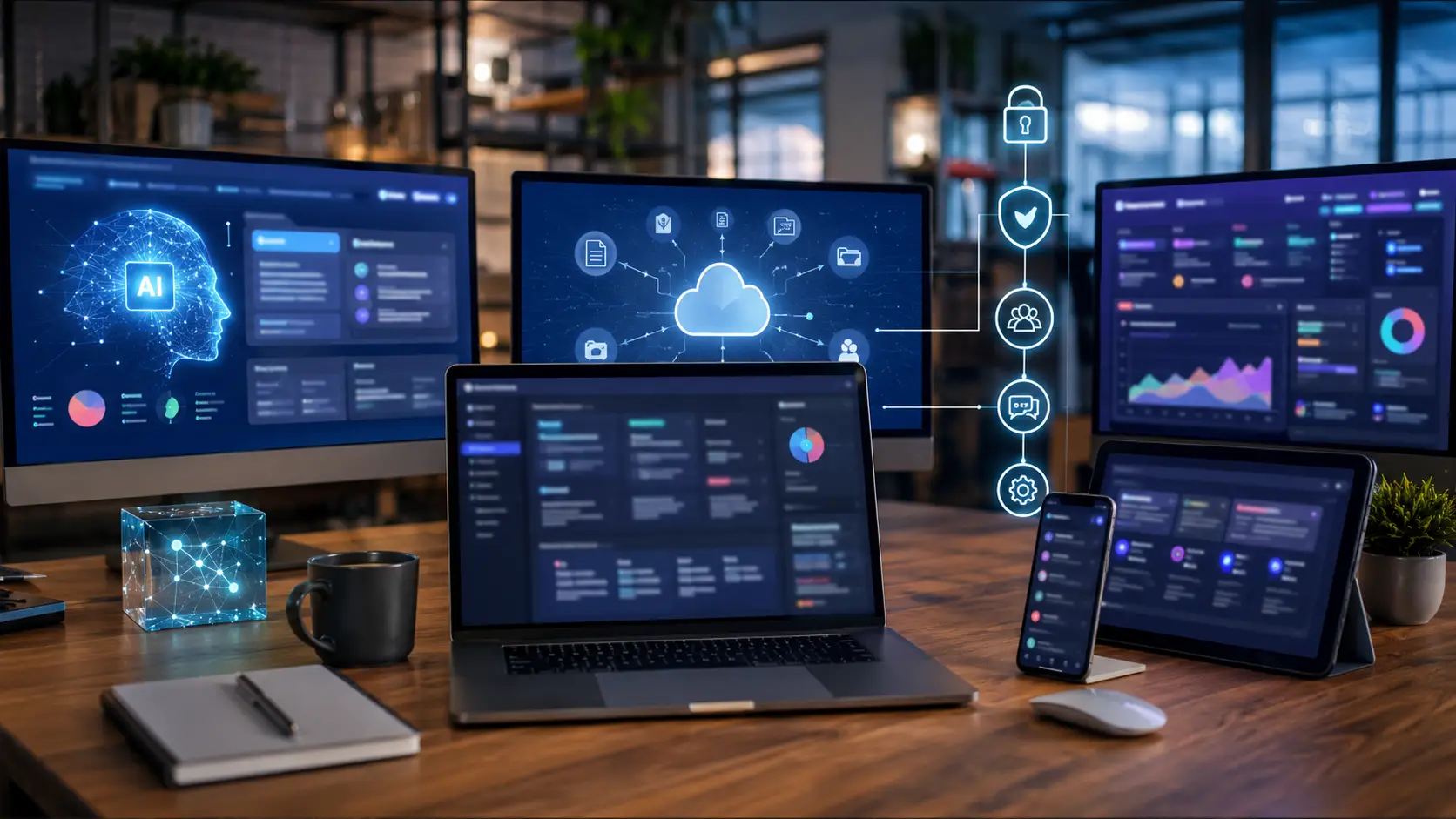
Technology moves quickly, and the latest in tech at AlienSync covers artificial intelligence, software integration, cloud synchronisation, social media tools, cybersecurity, blockchain and digital workflows.
AlienSync.com clearly operates as a technology publishing platform, but some pages also describe AlienSync as a synchronisation service or app.
At the same time, recent content states that there is no verified AlienSync app registration, downloadable application or independently documented SaaS product.
For now, AlienSync is best understood as a technology content hub exploring connected software, social platforms and digital workflows, rather than a confirmed commercial platform.
This guide looks at technologies receiving attention today, the newest trends, claims that require caution and what UK businesses can learn from AlienSync’s wider technology coverage in 2026.
What Does the Latest in Tech at AlienSync Actually Cover?
AlienSync describes itself as a destination for technology news, software solutions, digital tools and emerging innovation.
Its main navigation currently separates content into areas including Apps, Socials & Software, Blockchain & Crypto, Gaming World, Social Media and “The Latest In Tech”.
The technology section shows that AlienSync is not concentrating on a single technology. Its editorial coverage crosses several related areas, particularly:
- artificial intelligence and AI-supported workflows;
- cloud computing and data synchronisation;
- software and application integrations;
- social media management;
- privacy and cybersecurity;
- APIs and automation;
- blockchain and crypto technology;
- gaming and interactive digital experiences.
Which Technology Trends Are Receiving the Most Attention at AlienSync?

Several themes repeatedly appear across AlienSync’s current technology coverage.
Artificial Intelligence and Automation
Artificial intelligence is one of the strongest themes.
AlienSync has published material discussing AI agents, generative AI, AI development, AI-supported content creation and the combination of AI with edge computing.
One 2026 article specifically discusses AI and edge computing as a way of processing information closer to devices so that certain decisions can be made with lower latency.
More broadly, AlienSync’s integration-oriented articles describe a future in which AI is not simply used to generate text or images. Instead, AI becomes part of an automated workflow connecting different business applications.
A typical conceptual workflow could look like:
Business event → software trigger → AI processing → approval → social or customer update
That reflects a wider shift from standalone AI tools towards systems in which AI interacts with software, data and operational processes.
For UK organisations, AI adoption also creates data-protection responsibilities.
The Information Commissioner’s Office states that where AI systems use personal data, UK data-protection requirements can apply to their development, testing and deployment. The ICO is also actively examining emerging areas such as agentic AI during 2026.
Cloud Synchronisation and Connected Workflows
Cloud connectivity is another recurring AlienSync theme.
The site has recently described cloud synchronisation as a way of keeping files, application data and AI workflows aligned across devices. It also discusses integrations linking social channels, business applications, analytics and productivity software.
The important technological idea is interoperability.
Businesses increasingly use multiple specialist applications rather than one system for everything. Customer information might exist in a CRM, marketing results in an analytics platform, tasks in project-management software and documents in cloud storage.
Integration technology attempts to make those systems communicate automatically.
The concept is useful regardless of whether AlienSync ultimately develops into a verified product. Businesses already adopting connected systems can also explore how automation helps businesses reduce repetitive processes and improve workflow consistency.
Why Are APIs and Software Integrations Becoming More Important?
APIs are fundamental to many of the ideas discussed around AlienSync.
An application programming interface allows different software services to exchange information according to defined rules. Modern integrations can use APIs and webhooks to trigger actions when something changes in another application.
For example, an online business could theoretically create a workflow where:
- a new order enters an ecommerce platform;
- inventory automatically updates;
- the CRM receives the customer record;
- an analytics platform records the transaction;
- an internal team receives a notification.
AlienSync articles describe similar app-to-app automation patterns and claim support for APIs, webhooks and integration workflows. However, these should be understood as descriptions within AlienSync’s editorial material unless corresponding public technical documentation can be independently confirmed.
Security also becomes more important as the number of integrations increases.
The UK’s National Cyber Security Centre notes that HTTP-based APIs often provide access to services, databases and authentication systems, making appropriate threat modelling and API protection important.
How Is Cybersecurity Becoming Part of the AlienSync Technology Conversation?
Cybersecurity Technology is no longer separate from software innovation.
When applications, cloud services, AI tools and social accounts exchange information automatically, one compromised account or poorly configured connection can potentially affect several systems. AlienSync’s recent homepage reflects this concern.
Recent content includes articles about social media privacy, data security, backups, recovery, permissions and whether AlienSync-related software concepts are safe.
One of its own articles describes the security position surrounding AlienSync as potentially capable but still unproven because public verification remains limited.
For businesses evaluating any connected cloud service, several controls deserve attention:
- multi-factor authentication;
- appropriate account permissions;
- encrypted data transfer;
- access logging;
- secure API credentials;
- backup and recovery arrangements;
- data-retention controls;
- procedures for removing former users and applications.
The NCSC’s cloud security principles similarly encourage organisations to examine the evidence a cloud provider gives for its security claims rather than relying solely on marketing statements.
This is particularly relevant when evaluating emerging or poorly documented platforms.
Are AlienSync’s Social Media and Software Integrations Verified?

They are described extensively but not independently verified as part of a publicly accessible AlienSync application.
AlienSync articles mention platforms including Instagram, TikTok, X, LinkedIn, Slack, Gmail, Trello and Google Workspace. Some pages describe OAuth-based connections and automated synchronisation between those services.
However, AlienSync’s own social-platform guide acknowledges an important limitation: those descriptions largely come from website content rather than publicly verifiable product documentation, downloadable software or accessible API documentation.
Therefore, businesses should not assume that seeing “Instagram integration” or “Slack integration” in an article means a functioning connector is available.
A stronger verification process would look for:
- an official product dashboard;
- documented authentication procedures;
- API or developer documentation;
- supported integration directories;
- transparent pricing;
- privacy and data-processing information;
- independently verifiable user reviews;
- a legitimate application-store listing where relevant.
Until those signals are available, AlienSync’s integration material is more useful as an explanation of how connected digital workflows might operate than as proof of a deployable business platform.
How Is Social Technology Changing According to AlienSync?
Another major theme is the convergence of social media with ordinary business software.
Traditionally, social media management and business operations were separate activities. Marketing teams scheduled posts while product, sales and customer-service teams worked in different systems.
AlienSync’s conceptual model brings those activities closer together.
For example, a software release could potentially trigger an approved social update automatically. A change in inventory might alter a planned promotional campaign. Customer-service activity could feed into reporting dashboards alongside social sentiment.
AlienSync’s published material describes automation, shared timelines and analytics aggregation as ways of connecting public-facing social activity with internal software processes.
The broader trend is significant because businesses increasingly need information to remain consistent across multiple digital channels. Automation can reduce duplicate work, but it also increases the need for human review, permission controls and reliable source data.
What Role Do Blockchain and Crypto Play in AlienSync’s Technology Coverage?
Blockchain and cryptocurrency remain established content categories on AlienSync.
The site has a dedicated Blockchain & Crypto section, while other articles explore token infrastructure, blockchain applications, digital payments and crypto-related software.
Readers should nevertheless separate coverage of blockchain technology from claims that AlienSync itself provides a blockchain product.
AlienSync has published articles suggesting blockchain-backed verification or crypto-related functionality in broader conceptual discussions, while another recent account guide states that there is no verified evidence that users can connect cryptocurrency wallets to an AlienSync account.
That contradiction reinforces the need for cautious interpretation.
Blockchain may therefore be considered an important editorial topic at AlienSync, but readers should not infer that AlienSync operates a verified wallet, exchange, token or blockchain platform unless independent documentation becomes available.
Are AlienSync App Updates Real Product Updates?

This is one of the areas where readers need to be particularly careful.
The “Latest In Tech” archive includes a July 2026 article describing new AlienSync software and social app updates, including changes involving cross-platform posting, privacy tools and sharing controls.
The homepage also contains more recent articles with titles referring to updating the AlienSync app, fixing notifications and resolving synchronisation problems.
However, these articles sit alongside AlienSync’s 2 August 2026 statement that there is no verified registration flow or independently confirmed AlienSync app listing.
Consequently, it would be misleading to report those stories as confirmed software release notes.
A more accurate description is that AlienSync is publishing content about proposed, conceptual or described AlienSync app functionality, but publicly verifiable evidence of the corresponding standalone application remains limited.
That distinction should remain in place unless AlienSync publishes clear product documentation, official downloads or independently verifiable application listings.
What Could the Latest AlienSync Trends Mean for UK Businesses?
The most valuable lesson for UK businesses is not necessarily whether they should “use AlienSync”. It is what the subjects receiving attention reveal about modern digital operations.
Practical Lessons for Businesses
Connected software is becoming more valuable. Businesses increasingly benefit when CRM systems, marketing platforms, project-management tools and analytics services can share reliable information.
AI is moving into workflows. The next stage of AI adoption involves integrating models into routine processes rather than using isolated chat interfaces.
Security must follow every integration. Adding another connector, API or cloud platform creates another relationship that needs appropriate permissions, authentication and monitoring.
Human oversight remains important. Automation is useful for repetitive processes, but organisations should avoid allowing poorly tested rules to automatically publish sensitive information or make consequential decisions.
Data governance cannot be an afterthought. UK organisations processing personal information through AI or connected platforms should consider data protection from the beginning.
The ICO emphasises transparency, fairness, accountability, security and data minimisation when AI uses personal information.
These principles apply whether a business eventually uses AlienSync, another integration platform or its own custom software architecture.
How Can Readers Judge Whether an AlienSync Claim Is Reliable?

AlienSync currently contains a mixture of conventional technology journalism, conceptual explanations and product-like descriptions. Readers should therefore evaluate individual claims rather than treating every page as official technical documentation.
A useful test is to ask what evidence supports the claim.
If an article says an application supports a particular integration, readers should look for an official connector directory or API documentation.
If a page discusses encryption, they should look for security documentation explaining how encryption is implemented. If an article describes subscription tiers, they should look for a live pricing page.
The same principle applies to downloads.
AlienSync itself advises readers to confirm that an official registration page, privacy information, terms and reliable support infrastructure exist before supplying personal information to any supposed AlienSync service.
This is sensible advice for any unfamiliar technology platform, not only AlienSync.
What Technology Developments Should Readers Watch Next at AlienSync?
Based on AlienSync’s current editorial direction, several areas are likely to remain especially relevant.
AI-enabled automation is likely to continue intersecting with content management, analytics and business software.
Cloud synchronisation and API-based integrations are also central to the site’s current coverage, while privacy and security are becoming increasingly prominent alongside those technologies.
Agentic AI is another area worth watching more broadly. These systems are designed to perform sequences of actions rather than simply generate individual responses. The ICO has identified agentic AI as an emerging area of focus and is considering its data-protection implications during 2026.
For AlienSync itself, the most important future development would be greater clarity.
If the brand launches a genuine software product, readers should expect to see clear public evidence such as product documentation, account registration, application listings, security specifications, pricing and developer resources.
Until then, its strongest verifiable role remains that of a technology publishing and information platform.
What Are the Main Takeaways About the Latest in Tech at AlienSync?

The latest in tech at AlienSync centres on AI, automation, cloud synchronisation, software integration, social media management, cybersecurity, APIs, blockchain and emerging digital workflows.
Its technology coverage illustrates several genuine trends shaping modern business technology.
AI is becoming more integrated with operational software, cloud services are becoming increasingly interconnected and cybersecurity must now extend across APIs, applications and third-party services.
The important qualification is that AlienSync’s editorial content sometimes describes the brand as though it were an established synchronisation platform. Other AlienSync pages explicitly acknowledge that a verified standalone app, signup process and commercial SaaS infrastructure cannot currently be confirmed.
For UK readers, AlienSync is therefore most useful as a source of technology topics, concepts and integration ideas. Any claim about an actual AlienSync product feature should be independently checked before software is installed, accounts are connected or business data is shared.
What Is the Final Verdict on AlienSync’s Latest Technology Coverage?
AlienSync is covering many of the technologies shaping digital business in 2026, particularly AI automation, connected software, cloud synchronisation, cybersecurity, social integrations and API-driven workflows.
Those subjects are relevant to UK organisations trying to reduce fragmented systems and make better use of digital tools.
However, readers should maintain a clear distinction between technology trends discussed by AlienSync and verified technology supplied by AlienSync.
The website’s own recent content acknowledges that a confirmed downloadable app and registration system cannot currently be established, despite other pages describing platform-like capabilities.
For now, AlienSync is best approached as a technology content and ideas hub.
Its articles can help readers discover concepts and emerging trends, but product-specific claims deserve independent verification before they influence purchasing, security or data-sharing decisions.
FAQs
Is AlienSync a technology news website?
Yes. AlienSync.com visibly publishes technology content covering apps, software, social media, blockchain, crypto, gaming and broader technology trends.
What technology does AlienSync cover?
Its current coverage includes AI, software integration, cloud technology, cybersecurity, social platforms, blockchain, crypto, gaming and digital productivity.
Does AlienSync integrate with Instagram and TikTok?
AlienSync content describes integrations with platforms including Instagram and TikTok, but its own coverage notes that public product documentation remains insufficient to independently verify these integrations.
Does AlienSync use artificial intelligence?
The site publishes extensively about AI and describes AI-enabled workflows in AlienSync-related content. This should not, however, be treated as proof of a publicly available AlienSync AI product without supporting technical documentation.
Is AlienSync safe for UK businesses?
There is not enough independently verifiable product information to make a blanket judgement about an AlienSync software platform. Businesses should verify security controls, permissions, data handling and product documentation before connecting sensitive systems.
Why is AlienSync appearing in technology searches in 2026?
The website has built a large body of content around software, social media, AI, synchronisation and other emerging technology subjects, while also publishing numerous AlienSync-specific explanatory guides.

Leave a Reply