
Last Updated on AUG 20, 2026
Fake delivery messages remain effective because they exploit familiarity, urgency and timing. A text or email may use the name of a well-known courier, claim that a delivery has failed and ask the recipient to follow a link, confirm personal information or make a payment.
The safest approach is to verify the claim independently rather than judging the message by its logo, professional wording, sender name or timing.
The National Cyber Security Centre recommends checking an expected parcel through the delivery company’s official website or app instead of relying on links contained in unexpected messages.
The same principle applies whenever a website asks for personal details or money. Users should check the exact domain, visit the organisation through a known official route and confirm regulatory information where the service is regulated.
This is particularly important with gambling websites. For consumers in Great Britain, an overseas gambling licence does not replace the requirement for an operator serving British customers to hold the appropriate Gambling Commission licence.
A polished website or foreign licence should therefore never be treated as proof that a gambling operator is authorised to serve customers in Britain.
Why Delivery Scams Work So Well?

Parcel-delivery impersonation remains a recognised form of smishing in the UK. Current Report Fraud guidance specifically identifies messages claiming to be from a delivery company and demanding a fee before delivery as one warning sign of a potentially fraudulent text.
Fraudsters do not need to know what someone ordered. They only need to send enough messages to catch a person on the day they happen to be waiting on something.
The fake messages usually share a handful of tells. The link points to an odd web address, something with extra words, misspellings or a foreign domain stitched onto the end. There is often a sense of urgency, pay within hours or the parcel is returned.
A request for payment should raise caution, but the presence of a payment link does not automatically prove that a DPD message is fraudulent.
DPD states that, for some international shipments, recipients may legitimately receive an SMS or email containing a link to its secure payment gateway when customs duties or taxes need to be paid before the parcel can continue its journey.
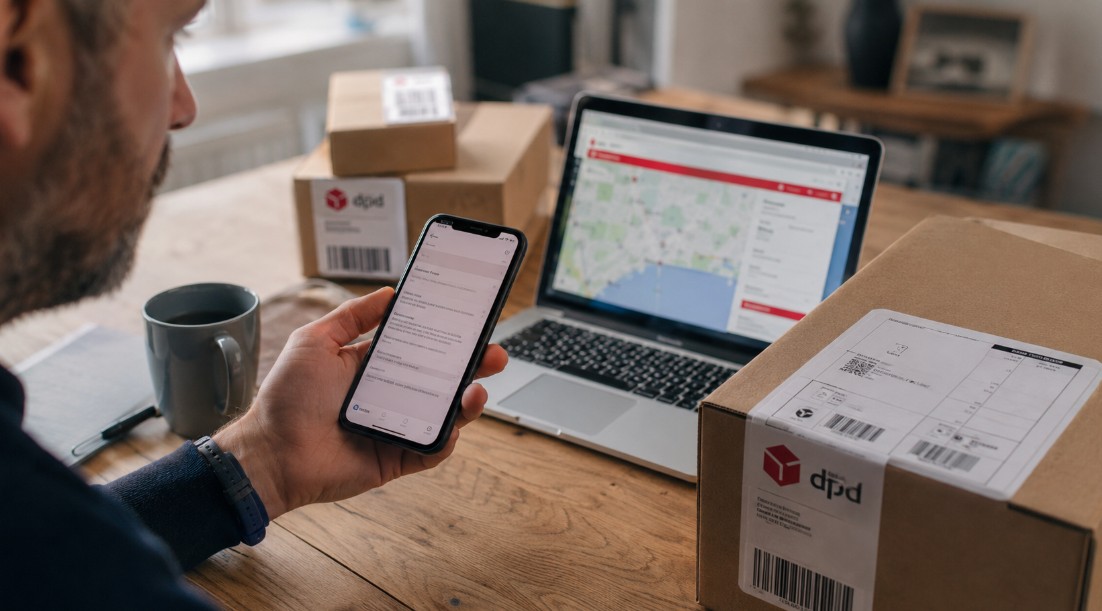
The safest approach is therefore to avoid acting directly from an unexpected message. Instead, open DPD’s official website, tracking service or app independently and confirm the parcel and any outstanding charge there before entering payment details.
The National Cyber Security Centre has published clear advice on avoiding malware hidden inside these fake parcel texts, including the simple rule of never installing an app or entering card details from a link in an unexpected message.
The Same Checks Apply to Where You Spend Your Free Time
The logic that protects a parcel also protects a wallet during downtime. People in the UK are spending more of their leisure hours online, streaming, gaming, browsing wellness shops, and every one of those activities involves trusting a web address with personal information.
A scam email and a fake entertainment site rely on the same illusion, that something familiar and trustworthy is on the other end of a link. So the habit worth building is identical.
Rather than opening a site through an unexpected email or text, find the organisation independently or enter a web address that is already known to be genuine.
Check the domain carefully for added words, substituted letters, unusual subdomains or spelling designed to resemble the real organisation.
HTTPS and the padlock symbol are useful for checking whether the connection is encrypted, but they do not prove that the website itself is legitimate. Fraudsters can also obtain HTTPS certificates for convincing imitation sites.
Users should therefore combine the domain check with company information, appropriate regulatory records and independent sources before entering personal or financial information.
Check that the spelling of the domain is exactly right. Look for a padlock and a proper secure connection. Read independent reviews before parting with any money.
For anyone weighing up an offshore-licensed leisure site, those checks are not optional extras, they are the difference between a legitimate operator and an opportunist hoping a flashy bonus banner will rush a visitor into entering card details without thinking.
How to Verify a Gambling Site Serving Great Britain?

For consumers in England, Scotland and Wales, the most important regulatory check is not simply whether a gambling website displays an overseas licence.
The Gambling Commission states that an operator providing remote gambling to consumers in Great Britain needs a Gambling Commission licence regardless of where the business itself is based.
Consumers can check the Gambling Commission’s public register using the business name, trading name or domain name and confirm whether the licence is currently active. A foreign licence should not be treated as a substitute for this check when a site is offering gambling services to British consumers.
Licensed online gambling operators are also required to participate in GAMSTOP. Therefore, a gambling website promoted specifically because it operates outside GAMSTOP should not be presented as equivalent to a Gambling Commission-licensed operator merely because it displays a licence issued elsewhere.
This distinction has become even more important in 2026. In its 30 July 2026 risk assessment, the Gambling Commission highlighted the increased presence of illegal casinos targeting the UK and stated that illegal gambling sites operate outside the safeguards required within the regulated British market.
Banking options offer another useful clue. Trustworthy sites name their accepted methods clearly and route payments through recognised processors.
Vague payment instructions, requests to send money to a personal account, or pressure to deposit quickly to “unlock” an offer all echo the urgency tactics seen in delivery scams.
Suspicious messages should also be reported through the appropriate official route. Suspicious emails can be forwarded to the National Cyber Security Centre’s Suspicious Email Reporting Service at report@phishing.gov.uk, while suspicious text messages can be forwarded free of charge to 7726. Suspicious websites can be reported directly to the NCSC.
If someone has lost money or been hacked as a result of fraud, the reporting system has changed. Report Fraud replaced Action Fraud from 4 December 2025 as the national fraud and cybercrime reporting service for England, Wales and Northern Ireland. People in Scotland should continue to report fraud to Police Scotland.
Who Gets Caught and Why It Is Not Just the Careless?
Fraud is sufficiently widespread that it should not be treated as something that affects only inexperienced internet users.
The latest Crime Survey for England and Wales estimated 4.5 million fraud incidents in the year ending March 2026, while the estimated number of fraud victims increased by 10% to around 3.8 million. The proportion of people who experienced fraud during the previous 12 months was estimated at 7.8%.
Those figures reinforce the value of verification rather than confidence alone. Unexpected delivery messages, payment requests and unfamiliar websites should be checked through a separate trusted channel before the recipient follows a link, signs in or supplies financial information.
A genuine DPD update can be checked directly through the official app or website. A genuine leisure site can be researched before a penny changes hands.
Bringing the Two Habits Together

The most reliable defence against fake delivery messages and imitation websites is independent verification before taking action.
If a parcel message looks genuine, check the delivery directly through the courier’s official website or app rather than relying on the link in the message.
If an unfamiliar website asks for money or personal details, verify its exact domain, company identity and any relevant regulatory registration first.
A professional design, familiar logo, HTTPS connection or padlock symbol should never be treated as proof that a website is genuine.
Suspicious emails can be forwarded to the NCSC, suspicious texts can be sent to 7726 and anyone who has actually lost money or been hacked should use the appropriate fraud-reporting service.

Leave a Reply