
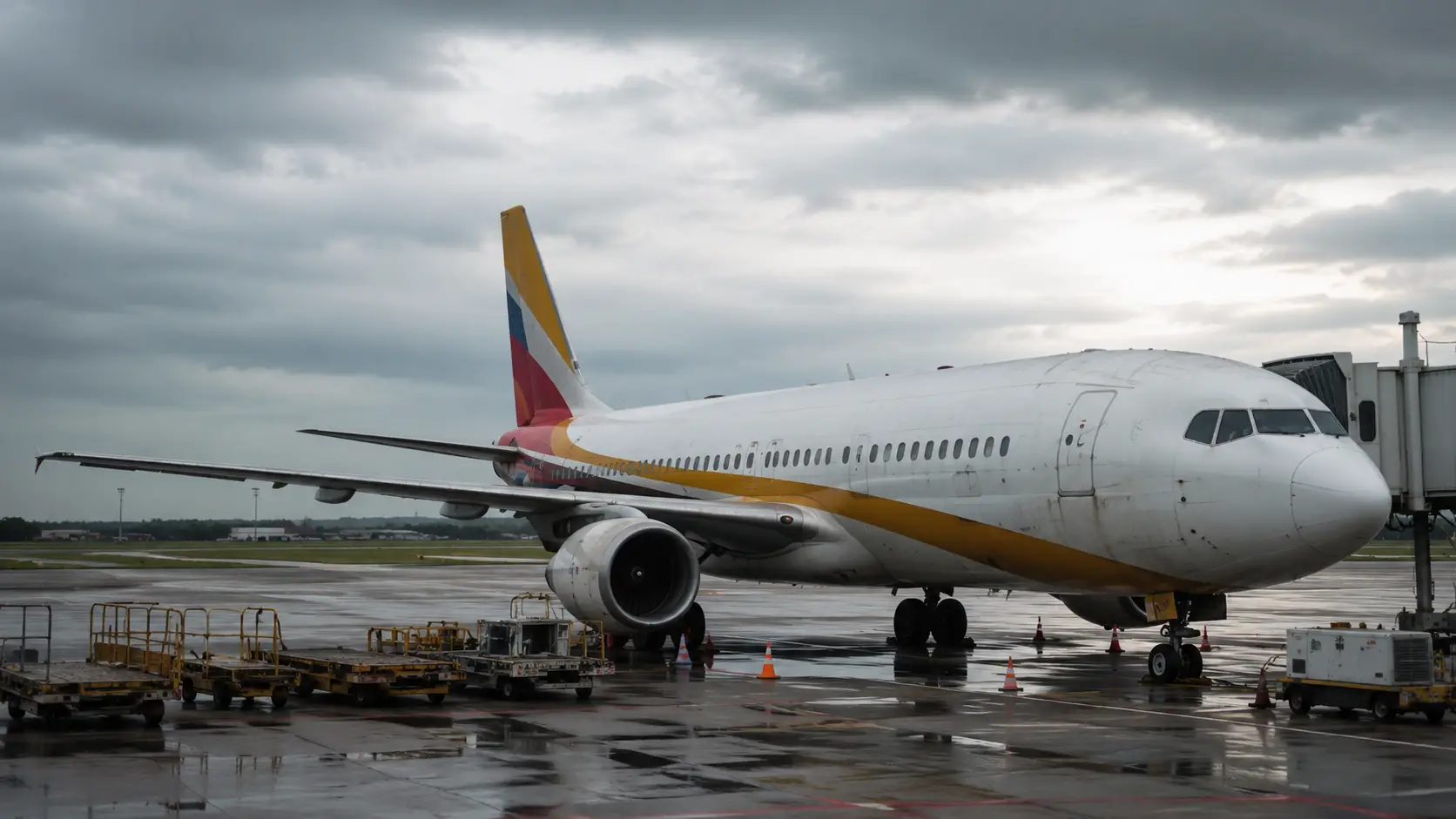
The Royal Air Philippines liquidation has attracted significant attention after reports that the airline suspended commercial operations and subsequently entered liquidation proceedings in early 2026.
According to reports, the collapse followed a sharp decline in international passenger demand, particularly from China and South Korea, placing considerable financial pressure on the carrier.
Thousands of passengers were reportedly affected by cancelled bookings and uncertain refund timelines.
This article examines the reported timeline, the reasons behind the airline’s financial difficulties, what the liquidation means for travellers, and the practical steps affected passengers can consider.
Key highlights:
- Commercial flights reportedly stopped on 4 January 2026.
- Liquidation proceedings were reported in February 2026.
- Thousands of passengers were impacted by cancellations.
- Declining tourism demand and financial challenges were key factors.
- Refund options depend on how the ticket was purchased.
What Is the Royal Air Philippines Liquidation and Why Does It Matter?

The Royal Air Philippines liquidation refers to the legal process that followed the airline’s reported closure after prolonged financial difficulties made commercial operations unsustainable.
Having operated for more than two decades, the carrier served several regional destinations before declining passenger demand, rising operating costs, and mounting financial pressure led to its collapse.
“Airline liquidation is rarely caused by a single event. It is usually the result of prolonged financial pressure, declining demand, and limited access to additional capital once market conditions deteriorate.” — Aviation Insolvency Specialist
For passengers, liquidation can complicate refund claims and disrupt travel plans.
The airline’s collapse also highlights the growing financial challenges facing smaller regional carriers and the importance of long-term operational resilience in an increasingly competitive aviation industry.
When Did Royal Air Philippines Stop Flying?
Reports indicate that Royal Air Philippines suspended all scheduled commercial passenger services on 4 January 2026, with formal liquidation proceedings reportedly beginning several weeks later.
Key Timeline of the Airline Collapse
The following timeline highlights the key developments leading to the airline’s liquidation.
| Date | Reported Development |
|---|---|
| 2002 | Royal Air Philippines launched as a charter airline. |
| 2017 | Commercial operating licence obtained. |
| 2018 | Expansion into scheduled low-cost passenger services. |
| First nine months of 2025 | Passenger numbers reportedly declined significantly. |
| 4 January 2026 | Commercial passenger flights reportedly suspended. |
| February 2026 | Multiple reports stated that liquidation proceedings commenced. |
The timeline demonstrates how financial difficulties reportedly developed over several months before operations eventually stopped.
January 2026 Flight Cancellations
News reports suggest between 3,000 and 4,000 passengers were left with disrupted travel plans after scheduled flights between January and March were cancelled.
The airline’s published website notice reportedly acknowledged the cancellations and indicated that refunds would be processed, although no confirmed timetable was provided.
February 2026 Liquidation Proceedings
According to reports, liquidation proceedings began in early February 2026.
In general, liquidation involves appointing an insolvency professional to realise company assets and distribute available funds to creditors according to the applicable legal framework.
The precise treatment of passenger claims depends on the relevant insolvency process and jurisdiction.
Why Did Royal Air Philippines Enter Liquidation?
Several interconnected factors contributed to the airline financial collapse rather than a single isolated issue.
Royal Air Philippines operated a relatively small fleet and relied heavily on international leisure traffic, making it particularly vulnerable to fluctuations in tourism demand.
Key factors behind the liquidation:
- Significant decline in visitors from China and South Korea.
- Reduced passenger demand throughout much of 2025.
- Increased competition from larger regional airlines.
- Limited route diversification compared with established carriers.
- Continuing financial losses that made commercial operations unsustainable.
These pressures intensified over time, reducing ticket revenue while operating costs remained high.
Without sufficient passenger demand to support its network, the airline was ultimately unable to continue scheduled services.
Primary reasons behind the collapse:
| Contributing factor | Effect on the airline |
|---|---|
| Declining inbound tourism | Lower ticket sales and reduced revenue |
| Heavy reliance on leisure markets | Increased exposure to demand fluctuations |
| Strong competition | Greater pricing pressure on routes |
| Financial losses | Reduced operational sustainability |
| Limited fleet and network | Fewer opportunities to diversify revenue |
Taken together, these challenges created conditions from which the airline was unable to recover, ultimately leading to formal liquidation.
How Did Falling Chinese and South Korean Tourism Affect Royal Air Philippines?
Royal Air Philippines relied heavily on inbound tourism from China and South Korea, with many flights serving popular Philippine destinations such as Boracay and Palawan.
When visitor numbers remained below expectations during 2025, passenger demand fell significantly, reducing revenue and placing increasing financial pressure on the airline.
Dependence on Leisure Travellers
Unlike larger airlines with diversified domestic, international, and cargo operations, Royal Air Philippines depended mainly on leisure travellers.
This business model performed well during periods of strong tourism but became vulnerable when travel demand weakened.
Industry reports indicated that international passenger numbers declined sharply during the first nine months of 2025.
“Airlines with highly concentrated customer bases are more vulnerable when key tourism markets contract. Diversification is essential for long-term resilience.” — Regional Aviation Market Analyst
Weak Passenger Numbers in 2025
Passenger data highlighted the scale of the downturn, with international traffic reportedly falling to around 51,800 passengers, while domestic passenger numbers declined by approximately 63% compared with previous periods.
Passenger Performance Overview:
| Period | Passenger Trend | Business Impact |
|---|---|---|
| 2023 | Passenger growth | Route expansion supported |
| 2024 | Continued growth | Commercial operations strengthened |
| 2025 | Significant decline | Revenue dropped sharply |
| Early 2026 | Operations ceased | Liquidation followed |
“Passenger volume is the foundation of airline profitability. Sustained declines in core markets can quickly erode cash flow and threaten an airline’s ability to operate.” — Aviation Financial Consultant
The sharp decline in tourism demonstrated how prolonged reductions in passenger demand can quickly undermine smaller airlines, ultimately affecting travellers, tourism businesses, and the wider regional aviation industry.
What Happened to Passengers After Royal Air Philippines Cancelled Flights?
The suspension of Royal Air Philippines’ commercial services disrupted travel for an estimated 3,000 to 4,000 passengers with bookings between January and March 2026.
Many travellers faced last-minute cancellations, higher rebooking costs, and limited alternative flight options, particularly on regional routes.
What Affected Passengers Should Do?
- Confirm whether the booking was made directly or through a travel agency.
- Contact the booking provider about refund or rebooking options.
- Keep booking confirmations, receipts, and cancellation notices.
- Contact your card provider if payment was made by credit card.
- Check whether your travel insurance covers airline insolvency.
Taking these steps promptly may improve the chances of recovering eligible travel costs.
Can UK Travellers Get Refunds After the Royal Air Philippines Liquidation?

UK travellers may still have several refund options, depending on how their tickets were purchased and the payment method used.
Although liquidation can delay refunds, consumer protections and insurance policies may provide alternative routes for recovering money.
Credit Card Chargebacks, Section 75 and Travel Insurance
Passengers who paid by credit card may qualify for Section 75 protection, while others may be eligible for a chargeback through their card provider.
Travellers should also check whether their travel insurance includes airline insolvency cover.
Refund Options Comparison:
| Refund Method | Who May Be Eligible? | Possible Outcome |
|---|---|---|
| Section 75 | Eligible credit card purchases | Potential reimbursement |
| Chargeback | Eligible card payments | Card provider may recover funds |
| Travel insurance | Policies with insolvency cover | Eligible travel costs reimbursed |
| Liquidation claim | Eligible creditors | Depends on available assets |
Passengers should contact their bank, card provider, or insurer as soon as possible to understand their available options.
What If You Booked Through a Travel Agency?
Passengers who booked through a travel agency or online travel platform should contact the provider first.
Agencies may assist with refunds, rebooking, or explaining consumer protection rights. Package holiday bookings may also qualify for additional protection under UK travel regulations.
What Does Airline Liquidation Mean for Employees, Creditors and Suppliers?

Airline liquidation affects far more than passengers. Employees may face redundancy, while suppliers, airports, aircraft lessors, and other creditors may experience financial losses and delayed payments.
The amount recovered depends on insolvency rules and creditor priority.
“An airline liquidation extends far beyond cancelled flights. It affects employment, tourism, airport operations and an extensive network of suppliers that depend on aviation activity.” — Corporate Restructuring Adviser
The Royal Air Philippines case demonstrates how the collapse of a regional airline can have wide-ranging consequences across the aviation industry, tourism sector, and broader economy.
What Does the Royal Air Philippines Liquidation Mean for Future Travellers?
The Royal Air Philippines liquidation highlights the financial risks faced by smaller airlines with limited fleets and route networks.
While regional carriers continue to play an important role in aviation, they are often more vulnerable to changing travel demand and economic conditions.
For travellers, the key lesson is to make informed booking decisions. Checking an airline’s reputation, reviewing travel insurance, and paying with secure methods such as credit cards can help reduce financial risk if unexpected disruptions occur.
The collapse also shows how reliance on a small number of tourism markets can affect airline stability.
Choosing reliable carriers and understanding available consumer protections can provide greater peace of mind when planning future trips.
What Should Passengers and Travel Buyers Do Next?

Passengers affected by the airline’s closure should continue monitoring updates from the appointed liquidators and their booking provider.
As the liquidation process continues, further information about refunds and claims may become available.
Ways to Minimise Future Travel Risk:
- Book flights using a credit card where consumer protections may apply.
- Check whether travel insurance includes airline insolvency cover.
- Keep booking confirmations, receipts, and payment records.
- Consider reputable travel agencies for additional booking support.
- Review airline cancellation and refund policies before travelling.
These simple precautions can reduce financial risk and make it easier to recover costs if travel plans are unexpectedly disrupted.
Conclusion
The Royal Air Philippines liquidation demonstrates the challenges smaller regional airlines face during periods of declining tourism, rising costs, and strong competition.
After more than two decades of operations, the airline ceased commercial flights, leaving many passengers dealing with cancellations and refund uncertainty.
For travellers, the case reinforces the importance of reviewing consumer protections, choosing secure payment methods, and considering an airline’s overall reliability rather than ticket price alone.
It also highlights the need for airlines to build financially resilient and diversified business models to remain competitive in a changing aviation market.
FAQs
Is Royal Air Philippines still operating commercial passenger flights?
No. Royal Air Philippines suspended all scheduled commercial passenger flights in January 2026 before entering formal liquidation in February 2026.
Who owned Royal Air Philippines?
The airline was owned by the Cambodia-registered Lanmei Group, also known as the Lancang-Mekong Group, a private enterprise with Chinese investment.
Why did Royal Air Philippines collapse?
The airline experienced declining passenger demand, particularly from Chinese and South Korean tourists, alongside financial losses and increasing competition from larger regional carriers.
Can passengers still claim refunds?
The airline indicated that refunds would be processed, but the timing remains uncertain due to the liquidation proceedings.
Depending on the booking method, passengers may also have options through their card provider, insurer or travel agent.
Does UK travel insurance cover airline liquidation?
Some policies include airline insolvency protection, while others do not. Travellers should review their policy wording or contact their insurer to confirm the level of cover.
What is the difference between airline liquidation and administration?
Liquidation generally involves winding up a company’s affairs and selling its assets to repay creditors.
Administration is typically designed to protect a business while exploring restructuring or rescue options. The legal process depends on the jurisdiction in which the company operates.
What should travellers consider before booking smaller regional airlines?
Passengers should research the airline’s reputation, check refund policies, purchase suitable travel insurance, use secure payment methods and monitor travel updates before departure.

Leave a Reply