
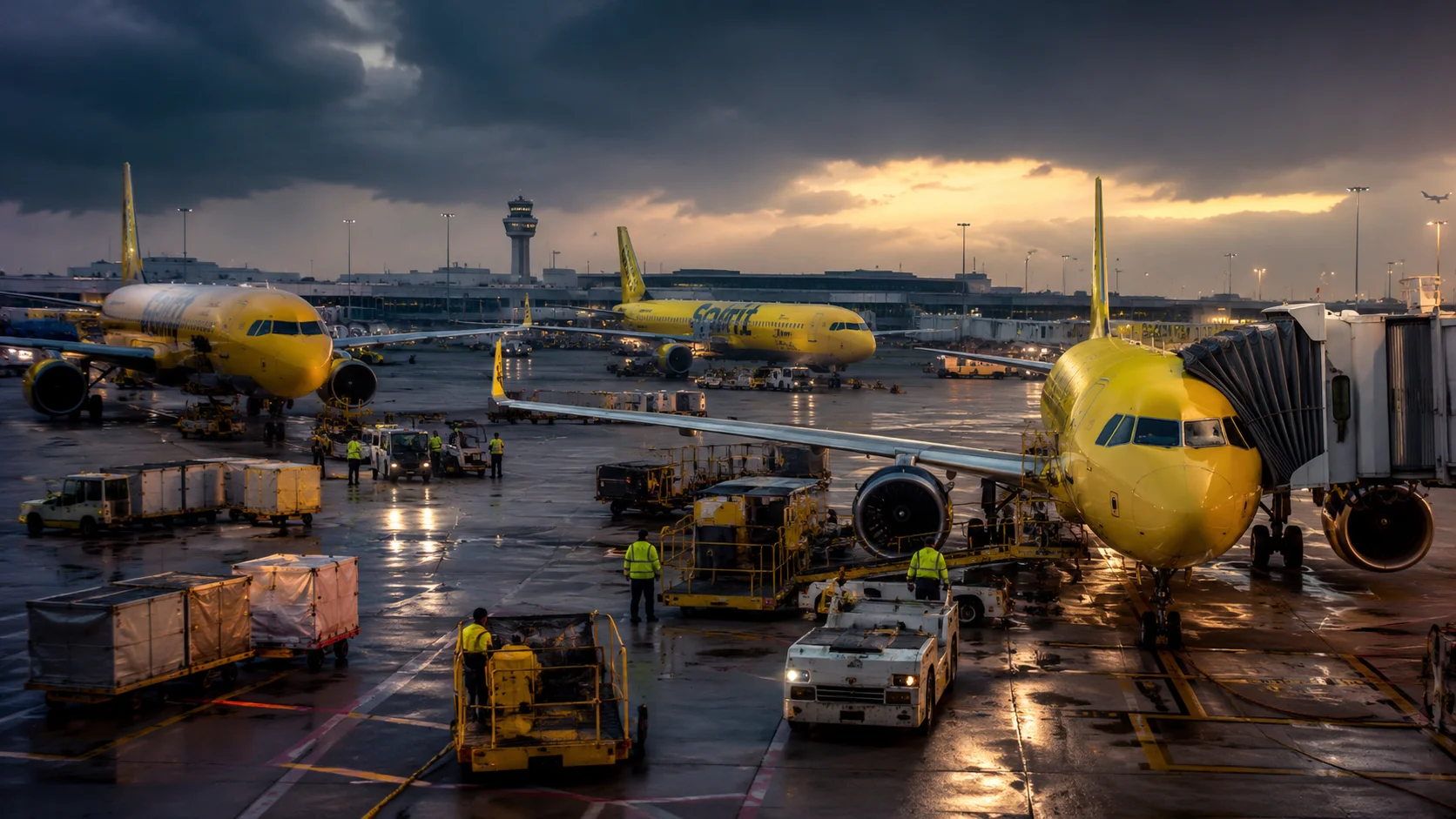
Spirit Airlines is not completely out of business yet, but the airline is facing serious financial difficulties after filing for Chapter 11 bankruptcy protection. The company is still operating flights while attempting to restructure its debt and manage rising operational costs.
However, growing fuel prices, failed merger plans, declining investor confidence, and intense competition within the low-cost airline market have placed significant pressure on the airline’s future.
Key Takeaways:
- Spirit Airlines has filed for Chapter 11 bankruptcy protection
- The airline continues operating flights during restructuring
- Rising fuel costs heavily impacted the company’s finances
- The failed JetBlue merger removed a major recovery opportunity
- Budget airlines are struggling with increasing operational expenses
- Shareholders face significant financial risks during bankruptcy
- Spirit Airlines’ future depends on successful debt restructuring and market recovery
Why Is Spirit Airlines Facing Financial Trouble?
Spirit Airlines has experienced financial difficulties for several years, but recent economic conditions have significantly intensified those problems.
The airline’s business model is built around offering cheaper ticket prices while generating revenue through additional charges such as baggage fees, seat selection, and onboard purchases.
This approach helped the company attract price-conscious travellers for many years. However, maintaining low ticket prices becomes increasingly difficult when operating expenses rise sharply.
One of the biggest issues affecting Spirit Airlines has been the rapid increase in fuel costs. Fuel represents one of the largest expenses for any airline, and sudden increases can have a major impact on profitability.
The company also entered this difficult period carrying substantial debt obligations. Previous financial challenges had already weakened its position, leaving little room to absorb additional pressure from inflation and operational costs.
The airline industry itself has become more competitive as major carriers continue expanding their budget travel options. This has reduced the pricing advantage traditionally enjoyed by low-cost airlines such as Spirit.
Key Financial Challenges Affecting Spirit Airlines
Financial Issue Impact on Spirit Airlines
Rising fuel prices Increased operational expenses
High debt levels Limited financial flexibility
Competitive market Reduced profit margins
Inflation Higher maintenance and staffing costs
Failed merger plans Lost recovery opportunity
Another factor contributing to the airline’s difficulties has been investor confidence. As financial concerns became more visible, Spirit Airlines’ stock value declined sharply.
This reduced the company’s ability to attract positive market sentiment and created further uncertainty around its future.
Airline industry analyst Marcus Ellington explained the issue clearly:
“I have seen many low-cost airlines struggle during periods of rising fuel prices, but Spirit Airlines entered this phase while already carrying major financial pressure. That combination made recovery much harder than usual.”
The company’s weakening financial performance eventually resulted in bankruptcy proceedings, further increasing public concern about whether Spirit Airlines could survive long-term.
How Did Rising Fuel Prices Impact Spirit Airlines?

Fuel costs have become one of the most damaging issues for airlines globally, and Spirit Airlines has been heavily affected by these increases.
Jet fuel prices rose dramatically following global geopolitical tensions and supply disruptions.
Airlines suddenly faced much higher operating expenses while still attempting to keep ticket prices competitive.
Large international airlines often have stronger financial reserves and broader revenue streams, allowing them to absorb some of these increases more effectively. Spirit Airlines, however, operates on a low-cost model with smaller profit margins.
This made it far more vulnerable to sudden cost increases.
The Relationship Between Fuel Costs and Airline Profitability
Fuel Price Changes Effect on Airlines
Moderate increase Reduced profitability
Sharp increase Operational losses
Long-term high prices Route cuts and restructuring
Extreme fuel spikes Bankruptcy risk for weaker airlines
Budget airlines depend on volume and efficiency to remain profitable. When fuel prices rise quickly, airlines must either increase fares or absorb losses.
For Spirit Airlines, increasing fares significantly could risk losing customers to competitors. At the same time, absorbing fuel costs created major financial strain.
The company reportedly faced fuel prices that nearly doubled within a relatively short period. This created immediate pressure across nearly every area of the business.
Why Budget Airlines Face Greater Risk?
Budget carriers generally operate with:
- Smaller profit margins
- Lower ticket pricing
- Higher dependence on passenger volume
- Limited premium revenue streams
These factors mean low-cost airlines often struggle more than larger carriers during economic downturns.
Aviation finance consultant Rebecca Moore shared insight into the situation:
“Many people assume cheap airlines are highly profitable because flights are always busy. In reality, ultra low-cost carriers depend on extremely tight financial margins. Even a small increase in fuel prices can quickly create serious problems.”
Rising fuel expenses also affected scheduling decisions. Some airlines reduced routes, cancelled flights, or adjusted operations to minimise fuel consumption.
Spirit Airlines faced additional pressure because it was already attempting to recover from previous financial instability.
What Led Spirit Airlines to File for Bankruptcy?
Spirit Airlines filed for Chapter 11 bankruptcy protection as part of an effort to reorganise the company and manage its financial obligations.
Chapter 11 bankruptcy allows companies to continue operating while restructuring debt under court supervision. It differs significantly from liquidation, where a business completely shuts down and sells assets.
The airline hoped bankruptcy protection would provide time to renegotiate debt agreements, reduce financial pressure, and stabilise operations.
However, several major issues contributed to the company reaching this point.
Main Reasons Behind the Bankruptcy Filing
Cause Impact on the Airline
Rising fuel costs Increased losses
Existing debt Financial instability
Failed merger attempts Reduced recovery options
Declining investor confidence Falling stock prices
Industry competition Revenue pressure
Spirit Airlines had reportedly been working on financial restructuring plans before fuel prices surged. The company aimed to improve liquidity and reduce long term debt burdens.
Unfortunately, worsening economic conditions made those recovery efforts far more difficult. The airline also struggled with declining market confidence.
Investors became increasingly concerned about the company’s ability to survive in a highly competitive environment.
As share prices continued falling, Spirit Airlines faced additional pressure from creditors and financial institutions.
Another important issue involved the company’s inability to secure long-term stability through strategic partnerships.
How Did the Failed JetBlue Merger Affect Spirit Airlines?

One of the biggest opportunities for Spirit Airlines involved a proposed merger with JetBlue Airways. The merger was viewed as a possible path towards greater financial security and operational stability.
Spirit Airlines believed combining with JetBlue could strengthen its position within the airline market and provide resources needed for long-term growth.
However, regulators opposed the deal due to competition concerns.
Why the Merger Was Important?
The merger offered several potential benefits:
- Stronger financial backing
- Expanded route networks
- Greater operational scale
- Improved market competitiveness
Many analysts believed the merger could have helped Spirit Airlines avoid deeper financial problems.
The proposed deal also attracted significant attention from investors who viewed it as a possible recovery solution.
Why the Government Blocked the Deal?
US regulators argued the merger could reduce competition within the low-cost airline market. Officials feared fewer budget airline options might eventually result in higher fares for passengers.
A federal judge later agreed with those concerns and blocked the merger. This decision removed one of Spirit Airlines’ strongest recovery opportunities.
Financial Impact After the Failed Merger
Merger Outcome Effect on Spirit Airlines
Merger approved Potential financial stability
Merger blocked Increased uncertainty
Investor reaction Stock decline
Recovery plans Limited alternatives
After the merger collapsed, investor confidence weakened significantly. The company’s stock price continued falling as concerns about bankruptcy intensified.
There were also reports suggesting possible government financial assistance discussions at one stage. These reports briefly increased investor optimism, but no long-term support materialised.
Without the merger, Spirit Airlines remained exposed to growing operational and financial pressure.
Can Spirit Airlines Continue Operating During Bankruptcy?
One of the most common misconceptions about bankruptcy is that companies immediately stop operating. In reality, Chapter 11 bankruptcy often allows businesses to continue functioning while restructuring their finances.
Spirit Airlines can continue operating flights during bankruptcy proceedings, although operational changes may still occur.
Passengers can still book tickets, use existing reservations, and access regular airline services. However, the airline may continue adjusting routes, schedules, and staffing levels as part of cost reduction efforts.
Difference Between Restructuring and Liquidation
Bankruptcy Type Meaning
Chapter 11 restructuring Company continues operating
Liquidation Assets sold and operations end
Spirit Airlines is currently attempting to reorganise rather than shut down immediately.
However, uncertainty still remains regarding whether the company can successfully complete the restructuring process.
Some potential operational changes may include:
- Reducing flight routes
- Eliminating underperforming destinations
- Adjusting staffing structures
- Renegotiating aircraft agreements
Passengers often become concerned about booking flights with airlines experiencing financial trouble. While many airlines continue operating normally during bankruptcy, there is always some risk of schedule disruptions.
Travel experts often recommend flexible booking options and travel insurance during periods of uncertainty.
Why Are Budget Airlines Struggling Across the Industry?
Spirit Airlines is not the only airline experiencing financial challenges. The entire aviation industry has faced significant pressure in recent years.
Several economic and operational factors have created difficult conditions for airlines globally.
Industry Challenges Affecting Airlines
Industry Problem Result
Fuel price increases Higher operational costs
Inflation Increased expenses
Labour shortages Staffing difficulties
Supply chain issues Maintenance delays
Competitive pricing Lower profitability
Low-cost airlines are particularly vulnerable because they depend heavily on maintaining affordable fares while operating efficiently.Unlike premium airlines, budget carriers have limited flexibility when operational costs rise sharply.
Rising Operational Costs
Airlines are currently dealing with:
- Increased maintenance expenses
- Higher labour costs
- More expensive aircraft financing
- Airport fee increases
Supply chain disruptions have also affected aircraft maintenance schedules and parts availability, creating additional operational complications.
Economic Uncertainty and Consumer Spending
Economic instability can reduce travel demand, especially among leisure travellers seeking cheaper flights.
When household budgets become tighter, passengers may:
- Delay holidays
- Reduce travel frequency
- Choose alternative transport options
- Spend less on discretionary travel
This directly affects airlines that rely heavily on budget-conscious customers.
Competitive Pressure Within Aviation
Competition within the airline market remains intense. Major airlines have expanded their own low-cost options, increasing pressure on companies like Spirit Airlines. As a result, maintaining profitability has become increasingly difficult for ultra low-cost carriers.
What Does Spirit Airlines’ Situation Mean for Shareholders?
Spirit Airlines shareholders have been among the most heavily affected groups during the company’s financial crisis.
When companies enter bankruptcy proceedings, creditors are paid according to a legal hierarchy. Shareholders are generally last in line to receive compensation.
Order of Payment During Bankruptcy
Payment Priority Group
First Secured creditors
Second Administrative expenses
Third Unsecured creditors
Last Shareholders
Secured creditors often hold claims backed by physical assets such as aircraft. These creditors usually receive payment before others. Unsecured creditors, including suppliers and vendors, may recover only part of what they are owed depending on available assets.
Shareholders face the greatest risk because they typically receive compensation only after all debts have been paid. Spirit Airlines’ stock price decline reflected growing investor concern regarding the company’s financial survival.
The addition of the letter “Q” to the company’s stock ticker symbol also signalled bankruptcy status to investors. Many shareholders who invested in the airline before the financial collapse have already experienced major losses.
Could Spirit Airlines Recover From Bankruptcy?

Although Spirit Airlines faces serious financial challenges, recovery remains possible under certain conditions. Several airlines in the past have successfully emerged from Chapter 11 bankruptcy after restructuring debt and improving operations.
However, recovery depends on multiple factors working in the company’s favour.
Conditions That Could Support Recovery
- Stabilisation of fuel prices
- Successful debt restructuring
- Improved passenger demand
- Operational cost reductions
- New investment opportunities
If fuel costs decline and travel demand remains stable, Spirit Airlines could potentially improve its financial position over time.
The airline may also explore future partnerships, restructuring agreements, or operational adjustments designed to improve long-term sustainability.
However, the company still faces significant challenges within a highly competitive industry.
Aviation restructuring specialist Laura Bennett offered perspective on the situation:
“In airline restructuring cases, survival often depends on whether the company can regain market confidence quickly enough. Spirit Airlines still has brand recognition and customer demand, but rebuilding financial trust will be extremely difficult.”
The company’s future will largely depend on whether it can balance operational efficiency with financial restructuring during a challenging economic period.
Final Verdict on Spirit Airlines’ Future
Spirit Airlines is facing one of the most difficult periods in its history. The airline has filed for bankruptcy and continues to struggle with rising fuel costs, debt obligations, and operational challenges.
While the company has not completely shut down yet, its future remains uncertain.
Passengers can still book flights for now, but investors have already suffered major losses, and the airline’s long-term survival will depend heavily on whether it can successfully restructure and stabilise its finances.
The situation also highlights wider financial pressures across the global airline industry, particularly for low-cost carriers operating on extremely narrow margins.
FAQs
Is Spirit Airlines still operating normally?
Spirit Airlines continues to operate flights during its bankruptcy proceedings, although some routes and services may change depending on restructuring efforts.
Can airlines survive after filing for bankruptcy?
Yes, several airlines have successfully recovered after filing for Chapter 11 bankruptcy through debt restructuring and operational changes.
Why did Spirit Airlines struggle financially?
The airline faced rising fuel costs, heavy debt, intense competition, and operational challenges within the low-cost airline market.
Is Spirit Airlines cancelling flights because of bankruptcy?
Some operational adjustments may occur, but bankruptcy itself does not automatically mean all flights are cancelled.
What happens to airline shareholders during liquidation?
Shareholders are usually paid last during liquidation proceedings and may receive little or no compensation if debts exceed assets.
Are low-cost airlines more vulnerable to fuel price increases?
Yes, budget airlines often operate on thinner profit margins, making them more sensitive to rising operational costs.
Could Spirit Airlines merge with another airline later?
Future partnerships or merger discussions remain possible, although regulatory approval would likely be a major factor.

Leave a Reply