
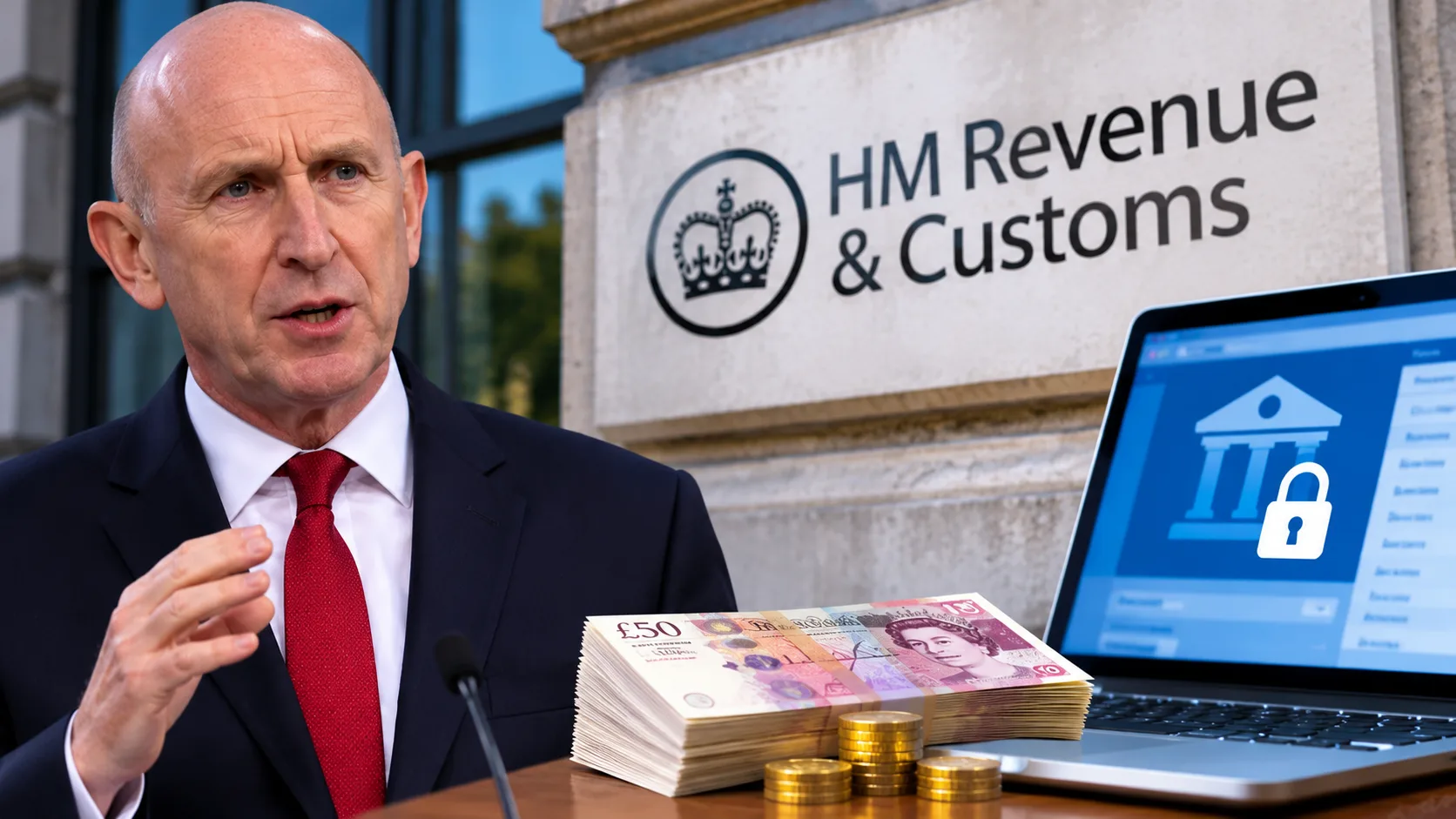
Chancellor John Healey has announced major changes to HM Revenue and Customs (HMRC) debt recovery powers, allowing the tax authority to collect certain unpaid tax debts directly from personal and business bank accounts through regular instalments.
The measures, confirmed in the Autumn Budget on 28 October 2026, represent a significant expansion of HMRC’s ability to pursue individuals and businesses that repeatedly ignore requests to settle outstanding tax liabilities.
Under the plans, HMRC will be able to recover established tax debts of up to £5,000 from individuals and £10,000 from companies, provided the taxpayer is considered capable of paying but has persistently failed to engage with the department.
The expanded powers are scheduled to begin from July 2029, with implementation expected to be phased.
Importantly, the announcement does not mean HMRC can immediately withdraw money from every taxpayer’s account.
The changes have nevertheless raised concerns about financial privacy, inaccurate tax assessments, joint bank accounts and the potential consequences for households experiencing financial difficulties.
Tax professionals have welcomed additional safeguards while warning that automated debt recovery must not penalise people who genuinely cannot afford to pay.
The government’s official Autumn Budget 2026 document confirms the policy and its intended implementation timetable.
What Are John Healey’s New HMRC Bank Account Powers?
John Healey’s HMRC bank account powers are designed to make the collection of smaller unpaid tax debts more effective.
HMRC already has a legal mechanism called Direct Recovery of Debts (DRD), introduced in 2015. This allows the department to recover money directly from bank accounts in qualifying circumstances without first obtaining a court order.
However, the existing system relies on individual case reviews and generally involves one-off payments. It has not been designed for recovering large numbers of smaller tax debts through affordable monthly instalments.
The new approach would introduce automated processes to identify eligible cases, assess repayment affordability and arrange regular deductions.
Crucially, the expansion is intended for cases where taxpayers have repeatedly failed to respond to HMRC’s attempts to contact them. It is not a general authorisation to deduct money whenever somebody submits a tax return late or disputes a calculation.
The distinction matters for self-employed workers, company directors and households already managing financial commitments.
When Will the New HMRC Bank Account Powers Start?
The government has confirmed that the expanded debt recovery powers are planned to take effect from July 2029, although the implementation timetable contains several stages.
| Date | Expected development |
|---|---|
| 28 October 2026 | New powers announced in the Autumn Budget |
| Summer 2027 | Draft Code of Practice and legislation expected |
| 2028 to spring 2029 | Testing of affordability assessments and deduction processes |
| July 2029 | Planned introduction of expanded recovery powers |
| 2029 | Phased implementation beginning with companies |
| 2030 | Intended extension to individual taxpayers |
The government intends to develop the operating rules with financial institutions, debt advice organisations and professional tax bodies before widespread implementation.
Therefore, people should distinguish between HMRC’s existing enforcement powers, which are already operational, and the new automated instalment system, which still requires legislation and detailed implementation rules.
Can HMRC Take Money Directly From Your Bank Account?
Yes. HMRC already has powers to recover qualifying unpaid tax debts directly from bank and building society accounts.
The existing Direct Recovery of Debts mechanism was introduced in November 2015 and resumed in September 2025 following its suspension during the COVID-19 pandemic. Its wider use restarted from April 2026.
Under the existing process, HMRC must generally establish that the debt is at least £1,000 and that the taxpayer has sufficient money available while retaining a protected balance.
Before recovery, HMRC must also attempt to contact the taxpayer, assess relevant circumstances and provide an opportunity to challenge the action.
How the New Rules Differ From Existing Powers?
| Feature | Existing HMRC powers | New planned powers |
|---|---|---|
| Recovery method | Usually one-off lump sum | Regular instalments |
| Debt eligibility | Generally at least £1,000 | Up to £5,000 for individuals and £10,000 for companies |
| Processing | Manual, individual cases | Greater automation |
| Protected balance | At least £5,000 across relevant accounts | Tailored affordability safeguards; fixed protection not yet confirmed |
| Joint accounts | Can be considered | Can be considered if no suitable sole account exists |
| Implementation | Already operational | Planned from July 2029 |
The biggest change is therefore not that HMRC will gain bank account recovery powers for the first time. It is that the government wants to make recovery of smaller debts more systematic.
What Does the £5,000 HMRC Bank Account Rule Mean?

The £5,000 figure has generated considerable confusion because it appears in two different parts of HMRC’s debt recovery framework.
Under the existing Direct Recovery of Debts rules, HMRC must leave at least £5,000 available across the taxpayer’s relevant accounts after any recovery action.
For example, if somebody has £12,000 in qualifying accounts and owes £3,000 in unpaid tax, the existing rules may permit recovery after the required safeguards have been followed.
However, somebody with £6,000 in their accounts would not ordinarily have £3,000 taken under that mechanism, because doing so would reduce the available balance below £5,000.
The new system has a different £5,000 figure: it is the maximum total established debt for an individual to fall within the planned automated instalment recovery policy.
There is no confirmed equivalent blanket £5,000 protected account balance under the new arrangements. Instead, the government has committed to affordability assessments designed to protect essential expenditure.
This distinction is particularly important for people researching HMRC warnings about bank balances.
The new safeguards and eligibility rules are explained in the official consultation response on lower-value tax debts.
Who Could Be Affected by John Healey’s HMRC Changes?
The measures could affect individuals and companies with established unpaid tax liabilities who repeatedly fail to respond to HMRC.
Potentially affected taxpayers include self-employed workers, sole traders, company directors and businesses with outstanding VAT, Income Tax, PAYE or Corporation Tax liabilities.
However, having a tax debt does not automatically mean HMRC will initiate deductions.
The policy is intended to target people and businesses that have failed to engage after standard collection activity.
The government’s final consultation response also excludes managed or disputed debts, people already subject to insolvency proceedings and certain other circumstances.
Tax Credits debts have been excluded from the expanded policy, although eligible Child Benefit debts remain within its proposed scope.
The distinction between genuine disputes and persistent non-engagement is especially important because tax liabilities can arise from accounting mistakes, delayed adjustments or disagreements about assessments.
Businesses facing wider compliance investigations may also need to review their exposure to HMRC’s increased scrutiny of unpaid VAT.
How Will HMRC Recover Unpaid Tax Through Bank Accounts?
The proposed process involves several stages before money can be deducted.
- Outstanding debt identified: HMRC establishes an unpaid liability and attempts normal collection.
- Repeated contact: The taxpayer receives opportunities to pay, discuss the debt or agree an alternative arrangement.
- Eligibility assessment: HMRC considers whether the case qualifies for the expanded recovery process.
- Affordability assessment: Financial information helps determine whether regular deductions would be affordable.
- Formal notice: The taxpayer receives a pre-deduction notice explaining the amount, proposed payment arrangements and available options.
- Opportunity to respond: A minimum notice period of 28 days provides time to contact HMRC, challenge the action or arrange repayment.
- Bank deductions: If the required conditions remain satisfied, the relevant financial institution may be instructed to make regular payments.
The government intends to use data-led assessments, including information supplied by credit reference agencies, to evaluate financial circumstances.
Importantly, somebody who engages with HMRC to manage an outstanding debt should be removed from the proposed automated process.
The expanded powers are not intended to replace existing opportunities to agree manageable repayments.
Can HMRC Access Joint Bank Accounts Under the New Rules?
Yes. Joint bank accounts remain within the scope of the government’s plans, but additional safeguards have been announced.
HMRC intends to consider jointly held accounts only where no suitable sole account is available.
This matters for couples who share household finances but have separate tax responsibilities.
For example, if one partner owes £2,000 in unpaid Income Tax, HMRC could potentially consider a joint current account under the new framework if no appropriate individual account is available.
However, money belonging to the partner who does not owe the debt should not simply be treated as belonging entirely to the debtor.
The government has confirmed plans for additional notification and objection rights for non-debtor account holders.
Where HMRC has the necessary information, the non-debtor should receive notice before deductions and have an opportunity to challenge recovery from funds belonging to them.
The exact operating arrangements will be developed through the Code of Practice.
These safeguards are particularly important where joint accounts contain mortgage payments, household savings or money contributed predominantly by one partner.
What Have Tax Professionals Said About HMRC’s Expanded Powers?
Tax professionals have acknowledged the government’s intention to recover legitimate unpaid revenue but have raised concerns about financial hardship and the accuracy of automated decisions.
Sarah Weston, Technical Officer at the Low Incomes Tax Reform Group, warned following the Budget announcement:
“Not responding to HMRC does not necessarily mean someone is unwilling to pay.”
Weston stressed that HMRC must identify customers who need additional support and move those cases out of automated processing for human review.
Her comments highlight the difference between deliberate refusal to pay and non-engagement caused by financial difficulties, illness or problems understanding official correspondence.
The group welcomed the government’s decision to extend the proposed notice period, strengthen joint account protections and introduce a refund-first safeguard for disputed deductions. However, it emphasised that essential living costs must be protected.
Autumn Murphy, Technical Officer at the Association of Taxation Technicians, similarly welcomed stronger safeguards while emphasising the importance of ensuring that debt recovery does not worsen hardship.
The association has called for the eventual Code of Practice to provide clear taxpayer protections and practical safeguards around affordability.
The Association of Taxation Technicians
These professional assessments show that the principal concern is not whether HMRC should recover legitimate tax debts, but whether automated systems can reliably distinguish taxpayers who refuse to pay from those who cannot.
What Happens if HMRC Makes a Mistake?
Errors represent one of the most significant concerns surrounding direct bank account recovery.
A tax debt may be incorrectly recorded because a payment has not been allocated properly, correspondence has gone to an outdated address or an assessment remains unresolved.
Under the new framework, the government has committed to establishing objection and redress procedures.
One important safeguard is the proposed refund-first approach, intended to allow an amount disputed by the taxpayer to be refunded while HMRC investigates an objection.
The existing recovery system already provides specified grounds for objection and court appeal, although its procedures and deadlines differ from those being developed for the expanded powers.
Anyone receiving a recovery notice should check the amount claimed, the relevant tax period and whether previous payments have been correctly recorded.
It is also sensible to retain bank statements, payment references, HMRC correspondence and evidence of any repayment agreements.
Taxpayers should not rely exclusively on automated online explanations when assessing a complicated liability. Concerns about the accuracy of government chatbot tax advice underline the importance of checking decisions against official records.
Why Is the Government Expanding HMRC’s Debt Recovery Powers?
The government argues that existing collection methods are not always proportionate for smaller outstanding tax debts.
HMRC’s consultation response states that approximately 90% of tax is paid in full and on time. Nevertheless, significant unpaid liabilities remain.
Its published figures reveal the scale of the collection problem.
| HMRC debt recovery measure | Official figure |
|---|---|
| Tax paid in full and on time | Approximately 90% |
| Debt collection cases returned unpaid annually | Around 750,000 |
| Combined value of those returned debts | Around £2 billion |
| Tax debt resolved by value annually | Over 95% |
| Responses to the lower-value debt consultation | 65 |
Traditional enforcement procedures can involve court applications, specialist officers, debt collection agencies and considerable administrative expenditure.
For relatively small debts, collection costs can become disproportionate.
The government believes automated deductions could improve recovery while reducing the need for more expensive enforcement methods.
The Budget forecasts additional Exchequer receipts of £50 million in 2029–30, £255 million in 2030–31 and £320 million in 2031–32 from the new lower-value debt recovery measure.
These are forecasts rather than confirmed collections, and the actual outcome will depend on implementation, taxpayer behaviour and the effectiveness of safeguards.
What Will the New Powers Mean for Small Businesses?
For small businesses, regular deductions could create cash-flow challenges where tax liabilities compete with payroll, suppliers, rent and other operating expenses.
A business may appear to have sufficient funds in its current account while still needing that money for upcoming commitments.
Consequently, assessing affordability through account balances alone may not capture the complete financial position.
The government’s approach acknowledges this issue by proposing tailored assessments rather than automatic recovery of every qualifying debt.
Company directors should also distinguish the new recovery framework from a separate Budget measure requiring direct debit arrangements for VAT and PAYE return liabilities from April 2029.
The mandatory direct debit proposal concerns ordinary tax payment arrangements. The expanded recovery powers target established debts following repeated non-engagement.
Both measures could affect financial planning, but they have different purposes and procedures.
Businesses should therefore review tax liabilities alongside short-term cash forecasts and maintain reliable records of payments and disputes.
Are HMRC Bank Account Powers the Same as DWP Bank Checks?
No. HMRC debt recovery powers and Department for Work and Pensions bank account powers operate under different legal frameworks.
HMRC’s measures concern recovery of unpaid tax and certain eligible debts.
DWP powers involve benefit eligibility verification, fraud and error detection, and separate debt recovery arrangements.
The existence of one power does not automatically give another government department identical access or enforcement rights.
This distinction is important because reports about DWP bank account checks and HMRC deductions are sometimes discussed together despite covering different statutory responsibilities.
Readers concerned about government financial monitoring should examine precisely which department is involved, what information can be obtained and what legal safeguards apply.
How Can Taxpayers Protect Themselves From HMRC Bank Deductions?
The most effective response is to address genuine outstanding tax liabilities before they enter enforcement procedures.
Taxpayers should regularly review their HMRC accounts and verify that payments, returns and assessments have been recorded accurately.
Where a debt is correct but cannot be paid immediately, engaging with HMRC early is particularly important.
A Time to Pay arrangement may allow a qualifying taxpayer to repay the debt through manageable instalments.
Anyone experiencing hardship should explain their financial circumstances and provide supporting evidence of essential expenditure or other commitments.
Individuals and companies should also ensure their contact details are current so important notices do not go unanswered.
For taxpayers handling recurring filing obligations, understanding HMRC’s penalty points system may also help prevent additional liabilities from building up.
The central principle is that HMRC’s new automated debt recovery system is intended for persistent non-engagement, not for taxpayers actively working to resolve their liabilities.
Frequently Asked Questions
Can HMRC take money from my bank account without permission?
Yes, in qualifying enforcement cases HMRC can recover unpaid tax directly without the taxpayer’s consent. However, legal conditions, notice requirements and objection rights apply.
Will HMRC take money from everyone with more than £5,000 in savings?
No. The existing £5,000 protected balance is not a trigger for automatic recovery. The new policy targets qualifying unpaid debts after persistent non-engagement.
When will John Healey’s new HMRC bank account rules begin?
The expanded powers are planned from July 2029, with companies expected to enter phased implementation first and individuals following later.
Can HMRC take money from a joint bank account?
Potentially, yes. Under the new proposals, HMRC would consider joint accounts where no suitable sole account exists, subject to additional protections for non-debtor account holders.
Can HMRC take money from pensioners’ bank accounts?
Age alone does not create an exemption from legitimate tax debt recovery. However, ordinary pension-related HMRC deductions should not be confused with direct bank account enforcement.
What happens if I cannot afford to pay my tax debt?
Contact HMRC promptly and explain your circumstances. You may qualify for an affordable repayment arrangement, and the proposed new system is intended to exclude cases requiring additional support from automated recovery.
Can I challenge an incorrect HMRC bank deduction?
Yes. Existing rules provide specified objection and appeal rights, while the new framework is being designed with additional protections, including advance notice and a refund-first safeguard for disputed deductions.

Leave a Reply