
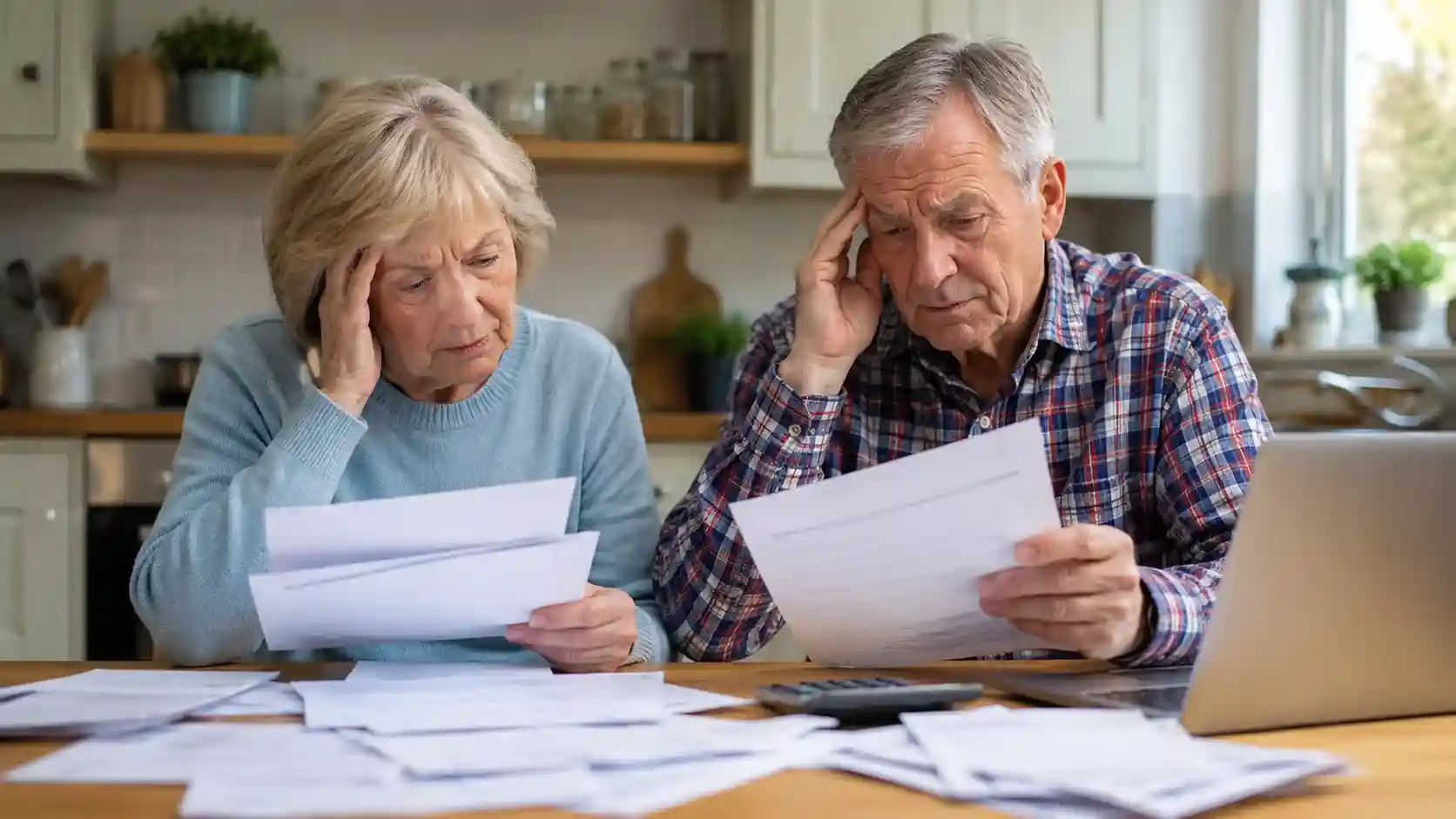
Millions of UK pensioners could be affected by an HMRC income tax calculation error that may have resulted in some retirees paying more tax than they owed.
The issue reportedly stems from how taxable state pension income was calculated following annual pension increases, leading to pension income being recorded slightly higher than the amount actually received.
Although the individual overpayments are generally small, the scale of the problem is significant, with estimates suggesting up to 8.7 million pensioners may have been impacted.
As HMRC works to resolve the issue, pensioners who pay income tax should review their tax records to determine whether they have been affected and whether they may be entitled to a refund.
Key Takeaways:
- HMRC may have overcharged up to 8.7 million pensioners on income tax.
- The issue relates to the calculation of taxable state pension income after annual pension increases.
- Reports suggest the total overcharge could be as high as £43.5 million.
- Most affected pensioners are believed to have paid only a small amount of extra tax.
- Basic-rate taxpayers may have been overcharged around £1.81.
- Higher-rate taxpayers could have paid approximately £3.62 more than required.
- Pensioners may need to contact HMRC directly to correct their records and claim refunds.
- Self Assessment taxpayers should check pre-filled state pension figures before submitting returns.
- PAYE taxpayers should review tax codes and P800 calculations for accuracy.
- Tax experts have urged HMRC to take proactive steps to identify and correct affected cases.
Why Has HMRC Overcharged Millions of Pensioners on Income Tax?

The reported overcharge appears to come from how HMRC calculated taxable state pension income after the annual state pension increase. The state pension usually rises each April, but the tax year and the pension uprating date do not perfectly match.
This means HMRC should not simply calculate pension income as 52 weeks at the new higher rate.
Instead, pensioners’ taxable state pension income should reflect the amount actually received across the tax year. According to the reported guidance, the correct method uses 51 weeks at the current year’s rate and one week at the previous year’s rate.
This accounts for the short timing gap between the beginning of the tax year and when pensioners receive the uprated payment.
How Should the State Pension Tax Calculation Work?
Calculation Element Correct Approach Why It Matters
51 weeks Current year’s state pension rate Reflects most of the tax year
1 week Previous year’s state pension rate Accounts for the timing gap
Final figure Mixed calculation Produces a more accurate taxable amount
Where Did the Calculation Error Occurred?
The issue reportedly happened because HMRC used 52 weeks at the new higher state pension rate. That means some pensioners were treated as though they had received slightly more pension income than they actually did.
This may sound minor, but when applied to millions of pensioners, the total overcharge becomes significant. It also matters because pensioners often trust HMRC’s figures, especially where calculations are pre-filled or applied through PAYE tax codes.
A pension tax adviser described the problem clearly:
“I would tell pensioners not to dismiss this just because the amount looks small. If a tax calculation is wrong, it should be corrected, because pensioners should be able to rely on accurate official figures.”
How Many Pensioners Have Been Affected by the HMRC Tax Error?
Reports suggest that as many as 8.7 million pensioners who pay income tax may have been affected. The total collected through the error may be up to £43.5 million.
HMRC was reportedly first made aware of the issue in August last year, but the Department for Work and Pensions was not informed until October.
This delay has led to criticism from tax experts, pension campaigners and political figures.
Reported Detail Figure or Information
Pensioners potentially affected Up to 8.7 million
Possible total overcharge Up to £43.5 million
Typical individual impact Around £5 or less
HMRC awareness Reportedly raised in August
Expected fix Summer
The main concern is not only the value of the individual overcharge. For many pensioners, the amount may be less than the cost of a small supermarket shop.
The bigger issue is whether pensioners were informed quickly enough and whether HMRC should be actively correcting the error rather than expecting individuals to raise it themselves.
How Much Extra Income Tax Have Pensioners Been Paying?

The amount overpaid depends on the pensioner’s tax rate. For the 2025/26 tax year, the new state pension rose from £221.20 per week to £230.25 per week. The difference between the two rates is £9.05.
Because HMRC reportedly used 52 weeks at the higher figure instead of the mixed calculation, pensioners’ income may have been recorded as £9.05 higher than it should have been.
Impact on Different Tax Bands
Taxpayer Type Estimated Overcharge
Basic-rate taxpayer £1.81
Higher-rate taxpayer £3.62
Additional-rate taxpayer Around £4.00
For most pensioners, the individual amount may appear small. However, tax accuracy matters at every level. A pensioner who is overcharged this year may also worry about previous years, future tax codes and whether other income sources have been calculated correctly.
Example Based on the 2025/26 State Pension Increase
Pension Detail Amount
Previous weekly new state pension £221.20
New weekly state pension £230.25
Weekly difference £9.05
Basic-rate tax impact £1.81
Higher-rate tax impact £3.62
This example shows why the error is small at individual level but serious at system level. The state pension is paid to millions of people, and a small calculation difference can quickly become a multi-million-pound issue.
Why Is the HMRC Pension Tax Overcharge Causing Concern?
The overcharge has caused concern because many pensioners do not calculate their own taxable state pension manually. They may rely on HMRC’s tax code, P800 notice or pre-filled Self Assessment figures.
This creates a problem when the official figure is wrong. A pensioner may not know that the state pension amount has been overstated, especially if they receive several types of retirement income.
Common sources of taxable retirement income include:
- State pension
- Workplace pension
- Private pension
- Savings interest
- Rental income
- Part-time employment income
The state pension is taxable, but it is usually paid without tax being deducted before payment. HMRC often collects the tax due by adjusting the tax code on another income source, such as a private pension. This can make the calculation harder to follow.
Sir Mel Stride, the shadow chancellor, said that if HMRC has charged millions of pensioners too much tax, questions need to be answered and the matter must be urgently put right.
Sir Steve Webb, a former pensions minister, reportedly described the situation as “remarkably careless”.
A retired tax consultant explained the wider concern:
“Many pensioners assume that if HMRC has issued a figure, it must be correct. In practice, I always advise people to check the state pension entry, because even small errors can affect the final tax bill.”
What Should Pensioners Do If They Have Been Overcharged Income Tax?

Pensioners who think they may have been affected should start by checking their tax records. This does not always require complex calculations, but it does require comparing HMRC’s figure with the pension income actually received.
How to Check Your State Pension Tax Figures?
Pensioners can check the following documents and accounts:
- HMRC Personal Tax Account
- Tax code notice
- P800 tax calculation
- Self-Assessment tax return
- DWP state pension payment records
- Pension provider statements
The important figure is the taxable state pension amount used by HMRC. If this is higher than the amount actually received, the pensioner may have paid too much tax.
Contacting HMRC About an Overpayment
Step What Pensioners Should Do Purpose
1 Find the state pension figure used by HMRC Identifies the taxable amount
2 Compare it with actual pension received Checks for possible overstatement
3 Review tax code or P800 Shows how tax was collected
4 Contact HMRC if the figure is wrong Starts correction process
5 Keep written records Helps support any refund request
When contacting HMRC, pensioners should have their National Insurance number, tax year details and relevant pension figures ready. Keeping notes of phone calls and copies of letters can also help if the matter takes time to resolve.
Can Pensioners Receive an HMRC Tax Refund Automatically?
Reports suggest that pensioners may need to contact HMRC directly to request correction or repayment. This has created frustration because many affected people may not know they have been overcharged.
In some PAYE cases, HMRC can adjust tax automatically in a later year. However, reports suggest this particular error may not be treated like a standard overpayment adjustment. That means pensioners may need to be proactive.
This is especially important for older taxpayers who do not use online accounts or who find HMRC letters difficult to interpret. A small refund may not feel worth the effort, but the principle of correcting official tax records remains important.
What Should Self-Assessment and PAYE Taxpayers Know?

Different taxpayers may need to deal with the issue in different ways.
Self-Assessment Taxpayers
People who complete a Self Assessment tax return should check the pre-filled state pension figure carefully. If the amount is incorrect, they may need to amend it before submitting the return.
Self-assessment taxpayers should not assume that pre-filled information is always accurate. HMRC may provide the figure, but the taxpayer is still responsible for submitting a correct return.
PAYE Taxpayers
PAYE taxpayers should check their P800 tax calculation and tax code notice. If the state pension amount appears too high, they should contact HMRC and ask for the record to be corrected.
Taxpayer Type Main Document to Check Possible Action
Self Assessment taxpayer Tax return Correct pre-filled pension figure
PAYE taxpayer P800 calculation Query overstated income
Private pension recipient Tax code notice Check whether tax code was reduced
Pensioner with savings income Tax code and interest estimate Check projected figures
A professional tax adviser put it this way:
“I would urge pensioners to check the numbers before accepting a tax calculation. The mistake may only be a few pounds, but if the pension figure is wrong, it is reasonable to ask HMRC to correct it.”
What Have Tax Experts and Consumer Groups Said About the Issue?
Tax experts have raised concerns about how difficult state pension taxation can be for ordinary pensioners to understand.
Antonia Stokes from the Low Incomes Tax Reform Group said the annual taxable state pension figure is difficult to understand and places too much reliance on taxpayers carrying out their own calculations or checking HMRC’s pre-filled figures.
That concern is important because many pensioners are not tax specialists. They may not know why the state pension figure used for tax purposes differs from the weekly amount they receive.
They may also be unsure how the April pension increase affects taxable income.
The criticism is not simply about one calculation error. It is also about whether the tax system is too complex for people who are expected to verify official figures themselves.
Is This the Latest in a Series of HMRC Administrative Problems?

The pension tax overcharge has been reported alongside wider concerns about HMRC’s service levels and tax administration.
Last year, MPs on the Public Accounts Committee accused HMRC of damaging trust in the tax system after customer service levels fell. Reports stated that only 66.4 per cent of callers reached an adviser, with average waiting times going beyond 23 minutes.
HMRC has defended its performance by pointing to improved online services and recruitment to clear backlogs. However, many pensioners still rely on phone support, letters and paper records.
This matters because tax errors are harder to fix when people struggle to get through to HMRC. A pensioner who notices an incorrect state pension figure may face delays, uncertainty and confusion before receiving a clear answer.
There have also been reports of other tax code issues, including workers being overcharged after projected savings interest affected their tax codes.
These cases have added to concerns about whether HMRC systems are accurately reflecting people’s real income.
How Can Pensioners Protect Themselves from Future Tax Code Errors?
Pensioners can protect themselves by reviewing tax documents regularly and questioning anything that looks unusual.
The most useful habit is to check each tax code notice when it arrives. A tax code can change because of pension income, savings interest, benefits, employment income or previous underpayments. If a code changes unexpectedly, the pensioner should find out why.
Item to Review Why It Matters
Tax code notice Shows how HMRC collects tax
State pension figure May affect tax due through other income
P800 calculation Shows whether HMRC thinks tax was underpaid or overpaid
Self Assessment return Must include accurate pension income
Pension provider statement Helps compare actual income with HMRC records
Pensioners should also keep annual pension statements and letters from DWP. These records can make it easier to prove the amount received if HMRC has used the wrong figure.
Professional help may be useful where a pensioner has several income sources, receives rental income, has savings interest or completes Self Assessment.
What Does the HMRC Pensioners Income Tax Overcharge Mean Going Forward?

The HMRC pensioners income tax overcharge raises serious questions about accuracy, responsibility and communication. Even where the amount is small, pensioners should not be expected to absorb errors without being clearly informed.
HMRC has apologised for the calculation error and said it is working to fix the problem. However, affected pensioners may still need to check their own records and contact HMRC if they believe they have paid too much.
The issue also highlights a bigger challenge in the UK tax system. Pension taxation is not always simple, and many older taxpayers may not understand how their state pension is taxed. Clearer communication, more accurate calculations and proactive refunds would help rebuild trust.

Leave a Reply