
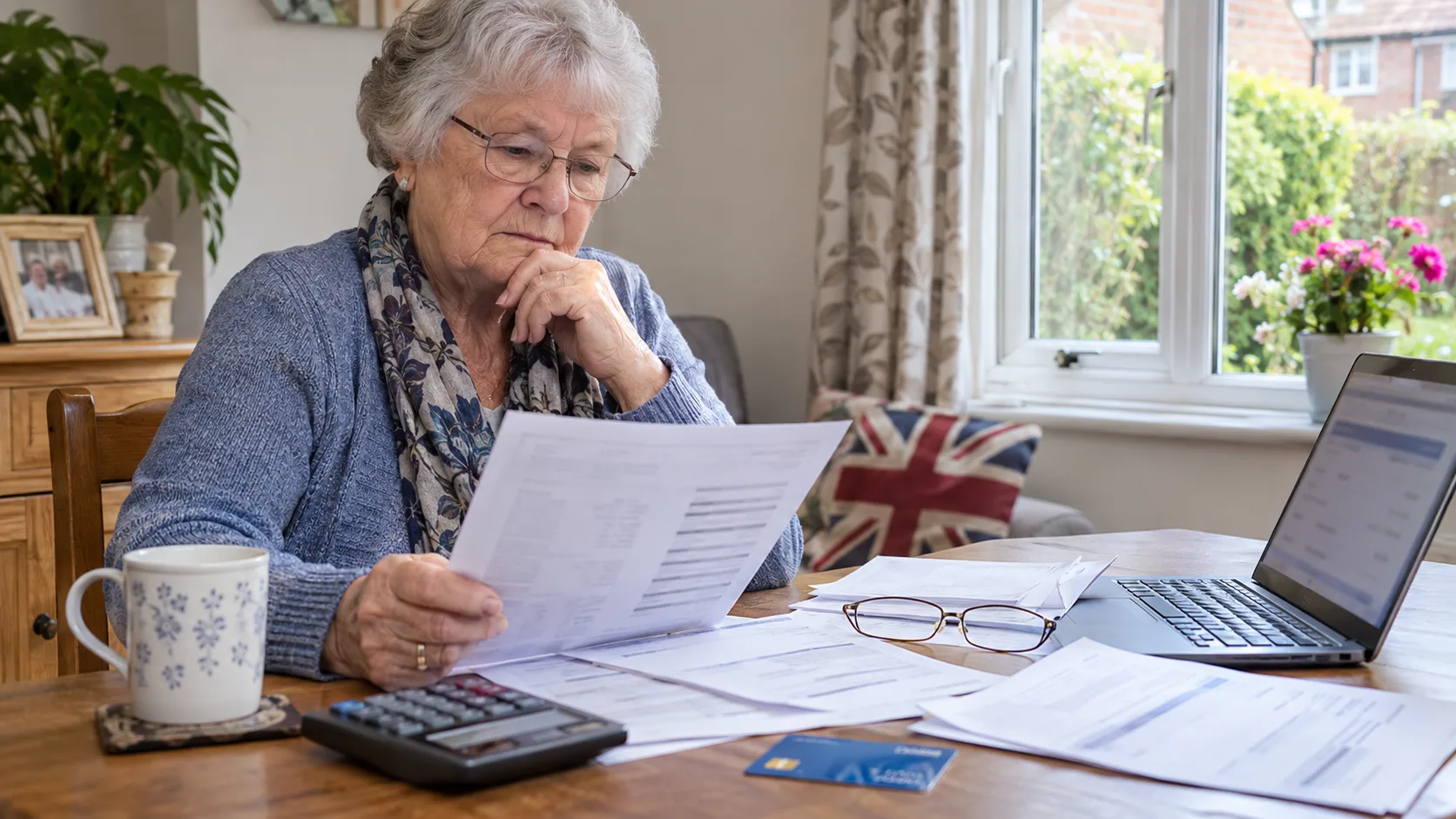
The Department for Work and Pensions (DWP) is contacting selected Pension Credit claimants as part of a wider review programme designed to ensure pensioners receive the correct amount of financial support.
Some recipients are being asked to provide recent bank statements, savings information and evidence of their current financial circumstances.
The checks have attracted increasing attention following the introduction of new financial verification powers under the Public Authorities (Fraud, Error and Recovery) Act 2025.
However, receiving a DWP Pension Credit review bank statements request does not automatically mean that a pensioner is suspected of benefit fraud or that their payments will stop.
There is also an important distinction between providing bank statements during an individual benefit review and banks sharing limited financial information under the new Eligibility Verification Measure (EVM).
Understanding these differences, alongside the Pension Credit savings rules, can help pensioners respond appropriately and avoid unnecessary disruption to their retirement income.
Why Is DWP Requesting Bank Statements From Pension Credit Claimants?
Pension Credit is a means-tested benefit that provides additional financial assistance to people who have reached State Pension age and have a low income.
Unlike the State Pension, which is primarily determined by an individual’s National Insurance record, Pension Credit entitlement depends on income, savings, household circumstances and other qualifying conditions.
Financial circumstances can change considerably throughout retirement. Someone may inherit money, receive a private pension lump sum, accumulate savings or experience a reduction in household income.
The DWP uses case reviews to establish whether these changes affect existing benefit awards.
A Pension Credit review may examine:
- Current bank and building society balances.
- Savings and investment holdings.
- Private and workplace pension income.
- Changes in household circumstances.
- Undeclared or incorrectly recorded financial assets.
- Inheritance and other substantial payments.
- Extended periods spent outside Great Britain.
In September 2026, Age Cymru Dyfed confirmed that selected Pension Credit recipients were being contacted as part of routine reviews and that some could be asked for recent bank statements.
The charity emphasised that being selected does not indicate wrongdoing.
These reviews may also identify pensioners who are receiving less financial support than they are entitled to, particularly those already concerned about pensioners missing out on benefits.
What Are the Latest DWP Pension Credit Bank Account Review Rules?
On 13 October 2026, the DWP published guidance explaining how financial institutions can share information through the Eligibility Verification Measure.
The department subsequently issued its first Eligibility Verification Notice on 26 October 2026, marking the beginning of a controlled implementation phase.
The measure initially covers three benefits.
| Benefit | Covered by the Eligibility Verification Measure? |
|---|---|
| Pension Credit | Yes |
| Universal Credit | Yes |
| New Style Employment and Support Allowance | Yes |
| State Pension | No |
| Personal Independence Payment | No |
| Attendance Allowance | No |
Although State Pension payments are not independently covered by the measure, pensioners receiving both State Pension and Pension Credit may have relevant accounts checked because of their Pension Credit entitlement.
The government expects the measure to generate £1.2 billion in savings by the end of the 2030/31 financial year across the benefits covered.
Announcing the implementation of the powers, Lilian Greenwood, Minister for Innovation, Fraud and Debt, explained:
“We are not interested in where people do their weekly shop or how much they’re spending on new clothes.”
Her comments highlight the government’s stated intention to identify potential eligibility discrepancies rather than monitor ordinary household purchases.
The wider DWP bank account checks programme is designed to identify incorrect payments arising from both fraud and administrative or claimant error.
How Do Pension Credit Case Reviews Differ From Automatic Bank Checks?
One of the most important distinctions for pensioners is the difference between an individual case review and financial verification conducted through the new banking powers.
Although both processes can help identify incorrect benefit payments, they operate differently.
| Feature | Individual Pension Credit review | Eligibility Verification Measure |
|---|---|---|
| Who provides information? | Claimant or authorised representative | Bank or financial institution |
| Full bank statements | May be requested | Cannot be disclosed under this measure |
| Account balances | May be examined | Can be shared where relevant criteria are met |
| Transaction history | May form part of supporting evidence | Cannot be shared in full |
| Claimant notification | Claimant is contacted | Individual notification is not required for every check |
| Purpose | Establish correct individual entitlement | Identify potential eligibility discrepancies |
| Final benefit decision | Made by DWP staff | Made by DWP staff following appropriate checks |
A financial account being flagged through the EVM does not establish that a claimant has been overpaid or committed fraud.
The information acts as an initial indication that further enquiries may be necessary.
Pensioners can read the official DWP Eligibility Verification Measure guidance to understand the information-sharing safeguards and the limits placed on financial institutions.
How Many Months of Bank Statements Can DWP Request for Pension Credit?
There is no universal published requirement specifying that every Pension Credit claimant must provide three, six or twelve months of bank statements during a routine review.
The period requested can depend on the circumstances being examined and the information needed to establish whether an award is correct.
For example, if a pensioner recently received an inheritance, the department may require evidence covering the period when the money entered their account.
If the review concerns an earlier change in circumstances, a longer statement history may be relevant.
Documents Pensioners May Need to Provide
| Document | Why it may be required |
|---|---|
| Current account statements | Verify balances, income and relevant transactions |
| Savings account statements | Establish total financial capital |
| Joint account statements | Determine household financial circumstances |
| Building society statements | Verify additional savings |
| ISA statements | Establish the value of relevant investments |
| Private pension statements | Confirm retirement income |
| Inheritance documentation | Explain substantial incoming payments |
| Investment statements | Verify the value of financial holdings |
| Pension lump sum documentation | Establish the source and treatment of withdrawals |
Pensioners should follow the precise instructions contained in their genuine DWP correspondence rather than assume that a particular statement period applies to everyone.
If older statements are difficult to obtain, contacting the Pension Service before the deadline is advisable.
How Much Money Can Pensioners Have in the Bank While Claiming Pension Credit?
A common misconception is that pensioners automatically lose Pension Credit when their savings exceed £10,000.
In reality, £10,000 is the threshold above which additional assumed income, commonly referred to as tariff income, is included in the benefit calculation.
Under the current rules:
- Savings and investments of £10,000 or less do not affect entitlement.
- Every additional £500, or part of £500, above this threshold creates £1 of assumed weekly income.
- Pension Credit does not have a general upper savings limit equivalent to the £16,000 capital limit applied to Universal Credit.
- Couples are generally assessed using their combined financial circumstances.
Pension Credit Savings Calculation Examples
| Total assessable savings | Savings above £10,000 | Assumed weekly income |
|---|---|---|
| £5,000 | £0 | £0 |
| £10,000 | £0 | £0 |
| £10,250 | £250 | £1 |
| £12,000 | £2,000 | £4 |
| £15,000 | £5,000 | £10 |
| £16,000 | £6,000 | £12 |
| £20,000 | £10,000 | £20 |
| £30,000 | £20,000 | £40 |
| £50,000 | £40,000 | £80 |
Source: Pension Credit savings rules, GOV.UK.
For example, a pensioner with £20,000 in assessable savings would have an additional £20 included in their weekly income calculation.
This represents £1,040 of annual assumed income for benefit assessment purposes. It does not mean their savings actually generate that amount of interest.
During the 2026/27 financial year, Guarantee Credit generally tops up weekly income to £238 for single pensioners and £363.25 for couples, although additional qualifying amounts may apply.
Pensioners should consult the official Pension Credit eligibility rules before assuming that their savings make them ineligible.
What Information Can Banks Share With DWP During Pension Credit Checks?
The Eligibility Verification Measure allows financial institutions to provide limited information where an account meets relevant eligibility indicators.
The department does not receive unrestricted access to every pensioner’s banking activity.
Information That Can and Cannot Be Disclosed
| Financial information | Can be shared under EVM? |
|---|---|
| Account holder names | Yes |
| Account numbers and sort codes | Yes |
| Relevant account balances | Yes |
| Linked account details | Yes |
| Joint account information | Yes |
| Dates of transactions made abroad | Yes |
| Complete bank statements | No |
| Shopping and spending habits | No |
| Specific transaction locations | No |
| Online banking passwords | No |
| Live access to online banking | No |
| Sensitive personal information | No |
These restrictions apply specifically to the Eligibility Verification Measure. Separate lawful information-gathering powers may apply during individual investigations or other authorised processes.
Privacy concerns nevertheless remain an important part of the policy debate.
Jasleen Chaggar, Legal and Policy Officer at Big Brother Watch, warned in October 2025, during scrutiny of the proposed legislation, that vulnerable groups could be disproportionately affected by incorrect financial flags and stressful investigations.
Her concerns underline the importance of human decision-making, appropriate safeguards and accessible appeal procedures.
Understanding whether DWP can access bank accounts under different legal powers can help claimants distinguish legitimate financial verification from misleading claims about unrestricted surveillance.
What Happens If DWP Finds Large Deposits in a Pensioner’s Bank Account?
A substantial deposit appearing on a bank statement does not automatically establish that a claimant is ineligible for Pension Credit.
The nature of the payment, its source, ownership and applicable benefit rules all need to be considered.
| Type of deposit | Potential Pension Credit implications |
|---|---|
| Inheritance | May increase assessable capital |
| Financial gift from family | May affect capital depending on circumstances |
| Private pension lump sum | May affect savings or income calculations |
| Transfer between personal accounts | Does not necessarily increase total wealth |
| Refund from an energy supplier | Treatment depends on the circumstances |
| Compensation payment | Certain payments may qualify for disregards |
| Backdated benefit payment | Specific capital disregard rules may apply |
| Money held on behalf of another person | Ownership and supporting evidence may need examination |
For instance, transferring £5,000 from a savings account into a current account does not create £5,000 of additional household wealth.
Similarly, certain compensation or benefit arrears payments may be excluded from capital assessments under specific conditions.
Pensioners should retain documentation explaining unusual transactions and seek advice where the treatment of a payment is unclear.
A bank balance alone does not always provide enough information to determine someone’s correct benefit entitlement.
Can DWP Check Joint Accounts and a Pensioner’s Partner’s Savings?
Yes. Relevant joint accounts and linked accounts can fall within the scope of financial verification.
Pension Credit claims involving couples are generally assessed using the combined income and savings of both partners.
For example, consider a retired couple with the following savings.
| Account | Balance |
|---|---|
| First partner’s savings account | £8,000 |
| Second partner’s savings account | £7,000 |
| Joint savings account | £5,000 |
| Total household savings | £20,000 |
| Assumed weekly income | £20 |
Although neither partner individually holds more than £10,000, their combined savings exceed the threshold.
The situation can be more complicated when an adult child, relative or authorised appointee shares an account with a pensioner.
An account balance should not automatically be treated as belonging entirely to the claimant without considering the actual ownership of the money.
Keeping clear records of shared financial arrangements can help prevent misunderstandings during a review.
Are Pensioners Over 75 Exempt From Pension Credit Savings Reviews?
Being over 75 does not automatically exempt someone from Pension Credit reviews or financial eligibility checks.
However, some older claimants may have an existing Assessed Income Period, commonly known as an AIP.
An AIP is an arrangement under which certain changes to pensions, savings and investments do not need to be reported while the period remains valid.
Some pensioners who are aged 75 or over and began receiving Pension Credit before 6 April 2016 may still have this arrangement.
Understanding Assessed Income Period Rules
| Circumstance | Reporting requirement during a valid AIP |
|---|---|
| Increase in savings | Generally not required |
| Changes to investments | Generally not required |
| Changes to pension income | Generally not required |
| Changes in relationship status | Must be reported |
| Moving into a care home | Must be reported |
| Moving home | Must be reported |
| Changes that end an AIP | Must be reported |
An AIP does not provide a complete exemption from reviews or all reporting responsibilities.
Pensioners should check their original Pension Credit award letter or contact the Pension Service to establish whether an AIP remains applicable to their claim.
This distinction is particularly important when financial information appears inconsistent with details originally supplied many years earlier.
What Happens If Bank Statements Show Spending Abroad?
Pension Credit has residence and temporary absence rules that can affect entitlement when someone spends time outside Great Britain.
Generally, an eligible claimant can continue receiving Pension Credit during a temporary absence of up to four weeks, provided the relevant conditions are satisfied.
Limited exceptions may apply, including certain bereavement or medical treatment circumstances.
Under the Eligibility Verification Measure, banks can disclose dates associated with overseas transactions where the relevant criteria are met.
However, the presence of an overseas transaction does not independently establish how long a pensioner has been outside Great Britain.
DWP may need additional information to determine whether the claimant remains eligible.
Pensioners should inform the Pension Service about planned overseas absences and retain relevant travel documentation where necessary.
What Do Official DWP Figures Reveal About Pension Credit Overpayments?
Recent government statistics demonstrate why Pension Credit has become a significant focus of benefit accuracy reviews.
For the financial year ending March 2026, DWP estimated that 33 in every 100 Pension Credit claims involved an overpayment, compared with 28 in every 100 during the previous financial year.
However, these figures include fraud, claimant error and official error. They should not be interpreted as the percentage of pensioners deliberately committing benefit fraud.
| Pension Credit accuracy measure | 2024/25 | 2025/26 |
|---|---|---|
| Proportion of claims overpaid | 28% | 33% |
| Overpayments as a share of expenditure | 10.3% | 10.0% |
| Estimated total overpayments | £610 million | £620 million |
| Estimated total underpayments | £70 million | £80 million |
| Underpayments as a share of expenditure | 1.2% | 1.3% |
Source: DWP Fraud and Error in the Benefit System, financial year ending 2026 estimates.
What Caused the Incorrect Payments?
The estimated Pension Credit overpayments for 2025/26 were broken down into three principal categories.
| Cause | Estimated overpayment | Share of benefit expenditure |
|---|---|---|
| Claimant error | £280 million | 4.6% |
| Fraud | £210 million | 3.5% |
| Official error | £120 million | 2.0% |
Figures are rounded independently.
Incorrectly declared financial assets and extended overseas absences remained two leading causes of overpayments.
Nevertheless, more than half of overpaid claims involved weekly overpayments of less than £10.
The figures also show that £80 million was underpaid during the same financial year, demonstrating that accuracy reviews can benefit pensioners as well as protect public expenditure.
How Should Pensioners Respond to a DWP Bank Statement Request?
Receiving unexpected correspondence requesting sensitive financial documents can understandably cause concern.
A structured response can reduce the likelihood of delays and help pensioners establish that their information is being submitted securely.
- Verify the request. Contact the Pension Service using an independently verified government telephone number if there is any uncertainty.
- Check the deadline. Establish when the requested documents must be submitted.
- Identify the relevant accounts. Gather statements for the accounts and periods specified.
- Review unusual transactions. Collect supporting evidence for significant deposits or transfers.
- Submit complete documents. Avoid altering or removing information unless DWP confirms that this is acceptable.
- Keep copies. Retain copies of documents, correspondence and submission confirmations.
- Request assistance if necessary. Explain any difficulties obtaining statements or meeting the deadline.
Pensioners who do not use internet banking can contact their bank or building society to discuss obtaining paper statements.
They can also seek assistance from a welfare rights adviser, Citizens Advice or Age UK.
Can DWP Stop Pension Credit If Bank Statements Are Not Provided?
Failure to provide requested financial evidence may delay the review process and could result in payments being suspended or stopped if DWP cannot establish continued entitlement.
However, payments do not automatically stop simply because someone has been selected for a review.
The outcome depends on the evidence available and the individual circumstances.
| Review outcome | Potential effect |
|---|---|
| Existing entitlement confirmed | Payments continue |
| Previously undeclared income identified | Payments may be recalculated |
| Underpayment identified | Payments may increase and arrears may be due |
| Requested evidence remains outstanding | Payments may be delayed or suspended |
| Claimant no longer qualifies | Pension Credit may stop |
| Previous overpayment identified | Repayment may be requested where recoverable |
Where an overpayment is identified, pensioners should ask for a written explanation showing how the amount was calculated, the relevant period and the basis for any recovery action.
If repayments would create financial hardship, they should seek advice about affordable repayment arrangements.
What Rights Do Pensioners Have During a DWP Financial Review?
Pension Credit recipients retain important procedural and data protection rights when their entitlement is reviewed.
These include the ability to request information held about them, provide evidence explaining discrepancies and challenge decisions they believe are incorrect.
Challenging an Incorrect Pension Credit Decision
If DWP reduces or stops Pension Credit following a review, the claimant can normally request a mandatory reconsideration within one month of the decision date.
Supporting evidence may include:
- Updated bank statements.
- Documentation establishing ownership of savings.
- Evidence explaining inheritance or compensation payments.
- Proof of relevant travel dates.
- Copies of previous correspondence with DWP.
If the mandatory reconsideration does not resolve the dispute, the claimant may usually appeal to an independent tribunal.
Under the Eligibility Verification Measure, financial information returned by a bank cannot, on its own, determine that a claimant has committed fraud or lost entitlement.
Final benefit decisions remain the responsibility of DWP staff.
How Can Pensioners Identify Fake DWP Bank Statement Requests?
Fraudsters may exploit publicity surrounding Pension Credit reviews to impersonate government officials and obtain confidential financial information.
Pensioners should be particularly cautious about unsolicited messages demanding immediate access to their accounts.
| Genuine review characteristics | Potential scam warning signs |
|---|---|
| Request for relevant financial evidence | Demand for online banking passwords |
| Specified document submission instructions | Unfamiliar or suspicious upload links |
| Correspondence that can be independently verified | Pressure to act immediately |
| Contact through recognised DWP channels | Requests to transfer money to a safe account |
| Explanation of the review process | Requests for card PINs or security codes |
A genuine bank statement may contain an account number and sort code, but claimants should never disclose online banking passwords, card PINs or one-time security codes.
Pensioners who are uncertain about financial correspondence can contact the Pension Service directly.
Pension Service Contact Details
| Contact information | Details |
|---|---|
| Telephone | 0800 731 0469 |
| Opening hours | Monday to Friday, 8am to 6pm |
| Public holidays | Closed |
| Relay UK | 18001 followed by 0800 731 0469 |
Pensioners should also familiarise themselves with legitimate payment descriptions, such as DWP SP on a bank statement, which commonly identifies State Pension payments.
Frequently Asked Questions
Does DWP ask every Pension Credit claimant for bank statements?
No. Selected claimants may be asked for bank statements when additional financial evidence is required. There is no published requirement for every pensioner to submit statements routinely.
Can DWP see what pensioners spend their money on?
Banks cannot disclose individual spending habits or full transaction histories under the Eligibility Verification Measure. However, relevant transactions may be examined when statements are lawfully obtained during a separate review.
Can I claim Pension Credit with more than £16,000 in savings?
Yes. Pension Credit does not have the same general £16,000 upper capital limit as Universal Credit. Savings above £10,000 are instead included in the tariff income calculation.
Can DWP check savings accounts that do not receive Pension Credit payments?
Relevant linked savings accounts may be covered by financial verification. Claimants may also be asked to provide details of other savings during an individual review.
Will DWP notify me whenever my bank account is checked?
Not necessarily. Individual notification is not required for every Eligibility Verification Measure check. DWP may contact a claimant when further information is needed.
Can DWP request paper bank statements if I do not use online banking?
Yes. Paper statements may be used as supporting evidence, subject to the review instructions. Claimants experiencing difficulties obtaining documents should contact the Pension Service.
Can a Pension Credit review increase my payments?
Yes. A review may identify previously unrecognised entitlement, changes in financial circumstances or administrative errors that have resulted in underpayments.

Leave a Reply