
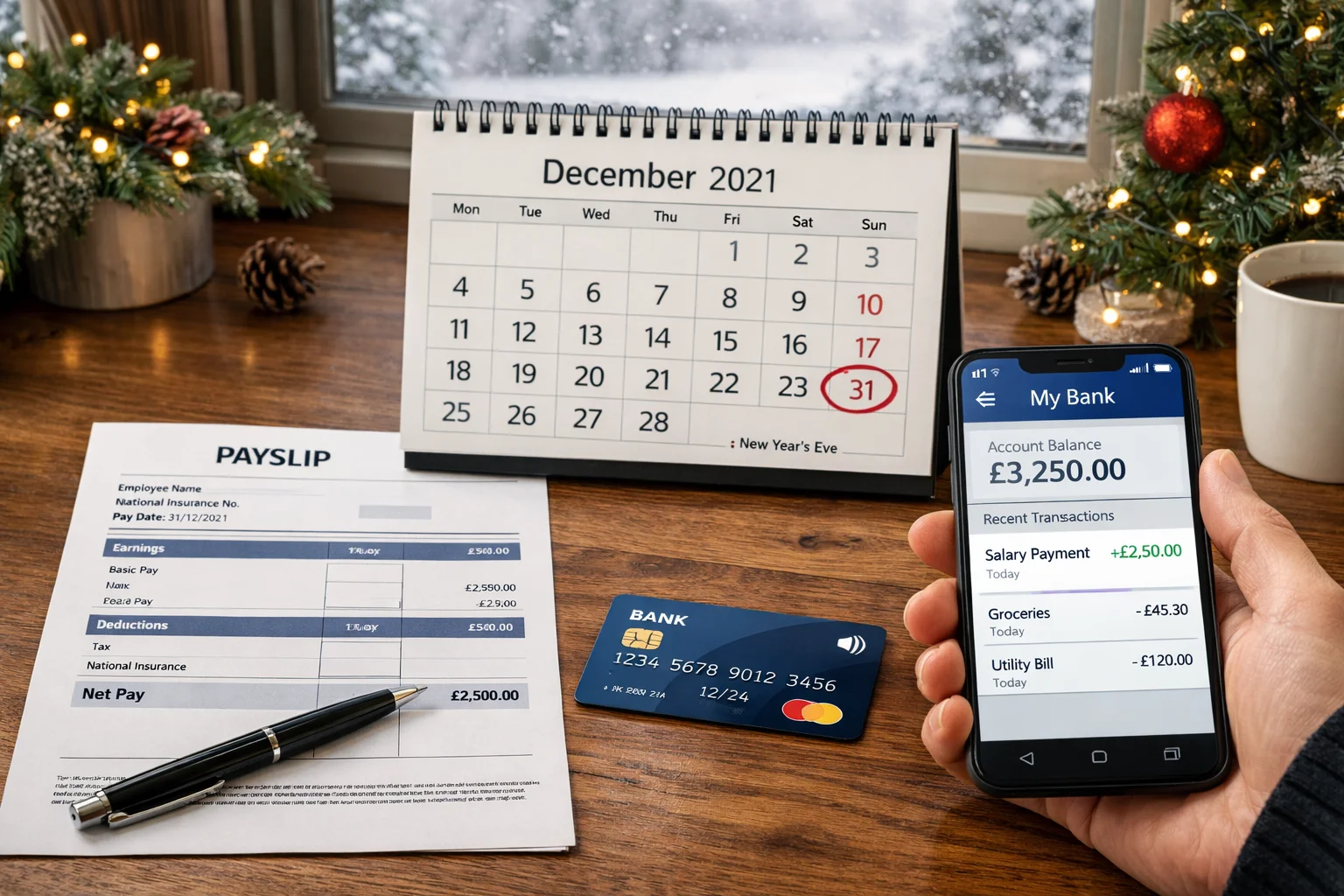
For many across the UK, the end of December brings not just festive celebrations but financial planning.
Whether it’s a regular salary, government benefit, or pension payment, one common question arises every year: Will I get paid on New Year’s Eve?
As 31 December is not a bank holiday in the UK, most payments should go ahead as scheduled.
However, the exact timing can vary based on your payment type and provider.
This guide explains how salary payments, Universal Credit, pensions, and other financial transfers are handled over the New Year period, with key details you should know.
Is New Year’s Eve Considered a Bank Holiday in the UK?

New Year’s Eve, which falls on 31 December, is not recognised as a bank holiday in the UK. Unlike Christmas Day or New Year’s Day, 31 December remains a normal working and banking day.
This means that:
- Most businesses, including banks, remain open
- Payment systems such as BACS, CHAPS, and Faster Payments operate on regular schedules
- Employers are not legally required to issue payments early or make any payroll adjustments for this day
However, it is common for companies to adjust internal operations around the festive season.
While the day is not officially a public holiday, some businesses close early or give staff the afternoon off.
These changes are usually managed internally and do not impact official payment processing across the UK’s banking system.
Will I Receive My Salary or Wages on New Year’s Eve?
Employees expecting their salary or wages on 31 December will, in most cases, receive payment as scheduled.
The normal banking infrastructure remains operational, and employers typically process payroll without delays.
How Employers Handle Year-End Payroll?
The approach to payroll near New Year’s Eve can differ depending on the employer’s internal systems and processes.
Factors that influence the timing include the payroll software used, the payroll cut-off dates, and bank processing times.
Common Salary Scenarios
Scheduled Payday Actual Payment Date Reason
31 December (weekday) 31 December Regular payday
1 January (bank holiday) 31 December or earlier Advanced to previous working day
Weekend Friday 30 December or earlier Payment moved forward
Most larger employers stick to strict schedules and offer advance notification if there are any changes.
Smaller businesses may shift pay dates slightly based on staffing availability or banking coordination.
What Employees Should Do?
- Review your employment contract or HR portal for confirmed payment dates
- Look at past years’ payment trends for the December period
- Reach out to your employer’s payroll department if unsure
Will Universal Credit Be Paid on 31 December or Earlier?

Universal Credit is managed by the Department for Work and Pensions (DWP) and follows a reliable schedule throughout the year.
One of the system’s key advantages is that it prevents delays caused by bank holidays by adjusting payment dates in advance.
If your Universal Credit is scheduled for payment on 31 December, you can expect the funds to arrive on that date.
However, if your regular payment date is on 1 January, which is a bank holiday, your payment will typically be brought forward to 31 December.
Early Payment Adjustments by the DWP
The DWP’s systems are designed to:
- Detect upcoming bank holidays
- Reschedule payments for the previous working day
- Notify claimants through their online account or journal
This ensures financial support is available before public holidays, particularly around the end-of-year festive period.
Key Facts for Claimants
- Universal Credit payments are never delayed due to holidays
- Adjustments are made automatically
- The amount paid remains unchanged even if paid earlier
Claimants can check their upcoming payment dates directly through their online Universal Credit account.
Any early payment should not affect future cycles, although claimants should plan their budget accordingly since the next payment will still arrive on the originally scheduled date.
How Are State Pension Payments Affected by New Year’s Eve?
State Pension payments are typically made every four weeks and follow a fixed schedule based on the last two digits of your National Insurance number.
Like Universal Credit, they are processed by the DWP and adjusted in advance if a payment falls on a bank holiday.
If your pension is due on 31 December, it will usually arrive on that day. If it is scheduled for 1 January, it will often be paid on the previous working day, either 30 or 31 December.
How Payment Dates Are Set?
Pension payments are divided across the week as follows:
| NI Number Ending | Regular Payment Day |
|---|---|
| 00 to 19 | Monday |
| 20 to 39 | Tuesday |
| 40 to 59 | Wednesday |
| 60 to 79 | Thursday |
| 80 to 99 | Friday |
During festive periods, the schedule is brought forward to ensure payments arrive before public holidays.
Things to Keep in Mind
- Payment notifications are sent by post or available online if you’ve registered
- The date change does not affect the payment amount
- Those receiving additional benefits alongside their pension may see combined adjustments
It’s recommended that pensioners plan for early receipt of funds in late December if their normal date falls close to or on a public holiday.
What Happens to PIP, ESA, and Other DWP Benefits Over New Year?

DWP-managed benefits like Personal Independence Payment (PIP), Employment and Support Allowance (ESA), and Jobseeker’s Allowance (JSA) follow the same holiday-adjusted structure as Universal Credit.
These payments are consistent and reliable, with built-in safeguards against delays caused by bank closures.
If your payment date falls on 31 December, the funds should arrive as normal. If it’s set for 1 January, your payment will likely be advanced.
Typical Adjustments for DWP Benefits
- 31 December: Paid as scheduled
- 1 January: Paid on 31 December or the previous working day
- Weekend: Paid on the preceding Friday or weekday
This consistency allows individuals relying on benefits to budget their December and January expenses more accurately.
Will I Get My Tax Credits and Child Benefit Before the New Year?
Tax Credits and Child Benefit are managed by HMRC and are paid either weekly or every four weeks.
As with other public benefits, these are subject to advance adjustment if the due date falls on a bank holiday.
Payment Handling by HMRC
Payments due on 31 December are usually issued without changes.
If the payment date is 1 January, HMRC typically brings the deposit forward to 30 or 31 December. If your payment lands on a weekend, it is adjusted to arrive on the preceding working day.
This ensures that:
- Claimants do not face delays in receiving funds during the holiday period
- Families relying on Child Benefit receive support ahead of the new month
- Weekly payments are aligned appropriately around public closures
Budgeting Considerations
Receiving payments early means a longer wait until the next scheduled deposit. It is crucial to manage funds with this in mind, especially in the early weeks of January.
Do Private or Workplace Pensions Pay on New Year’s Eve?
Private pensions and workplace pensions are managed by various providers, including insurance companies and pension funds.
These organisations follow slightly different schedules, although most follow similar principles to government systems.
If your pension is due on 31 December, it is generally paid on time. Payments scheduled for 1 January or a weekend are usually brought forward to the preceding working day.
Provider-Specific Schedules
Many pension providers release their December and January payment calendars in advance. These schedules often include:
- Cut-off dates for processing
- Adjusted paydays for holidays
- Customer service support timelines
It’s important to consult your pension provider’s website or contact them directly for accurate information.
What to Expect from Providers?
- Payments processed through BACS or Faster Payments systems
- Notifications sent via letter, email, or provider portal
- Customer support available for payment queries during business hours
What If I’m Self-Employed or Waiting for a Bank Transfer?

Self-employed individuals and those expecting payments via bank transfers such as BACS, CHAPS, or Faster Payments will find that New Year’s Eve remains a fully operational banking day.
This allows most payments to process as normal if initiated before the end-of-day cut-off times.
Table: Common UK Payment Systems and New Year’s Eve Processing
Payment Type Operates on 31 Dec Same-Day Clearance Notes
BACS Yes No (3-day cycle) Submit early to avoid delays
CHAPS Yes Yes High-value payments by end of day
Faster Payments Yes Yes Near-instant if within limits
Key Tips for Smooth Transfers
- Submit payments early in the day to allow for cut-off times
- Ensure that the sender uses the correct payment method
- Confirm payment receipt before banks close on 31 December
Delays often occur only if payments are initiated late or if public holidays fall immediately after the transfer date.
Will HMRC Refunds and Back Payments Arrive Before the New Year?
HMRC processes various payments such as tax refunds, PAYE corrections, and benefit back pay.
If such a payment is processed on or before 31 December, you can usually expect it to clear on that date or on the next working day.
Refunds and one-off payments typically use the BACS or Faster Payments system, and the timing largely depends on the bank’s processing schedule.
What Affects Refund Timing?
- Type of payment issued (refund, adjustment, or backdated benefit)
- Method of transfer used (Faster Payments are faster than BACS)
- Time of submission and processing by HMRC
For example, if a refund is initiated in the morning on 31 December using Faster Payments, it may arrive the same day. If BACS is used, it may clear on 2 January, once banking resumes after the holiday.
Managing Expectations
- Refunds processed close to the holidays may face slight delays
- Most public sector bodies avoid processing payments on New Year’s Day
- Check your HMRC online account for expected payment dates
Final Thoughts
New Year’s Eve is a normal working and banking day in the UK, so most individuals will receive their payments as expected.
If your payment is due on a bank holiday like 1 January or over a weekend, it is typically processed early, not delayed.
Understanding how your salary, pension, benefits, or bank transfers are managed can help you plan your finances confidently during the festive season. When in doubt, always check with your provider in advance.
Frequently Asked Questions (FAQs)
Will my benefits be delayed because of New Year’s Day?
No, DWP and HMRC generally issue payments early, not late, when holidays affect regular dates.
What happens if my salary is normally paid on a Sunday?
You will usually receive your payment on the preceding Friday if Sunday falls on or around the holiday period.
Are banks open on New Year’s Eve?
Yes, banks in the UK operate on 31 December, as it is not a bank holiday.
Can Faster Payments go through on 31 December?
Yes, Faster Payments work as usual, although they may be slower near midnight due to bank processing limits.
How do I know when my Universal Credit will be paid?
Log into your Universal Credit account or check your journal it will list your upcoming payment date clearly.
Do I get paid early if I’m on weekly Child Benefit?
Yes, especially during the festive week. Weekly payments are often issued a few days early.
Will my private pension arrive before the New Year if it’s due on 1 January?
Yes, most private pension providers issue payments on 31 December if the regular date is a holiday.

Leave a Reply