

Last Updated on AUG 17, 2026
Many individuals across the UK rely on Personal Independence Payment (PIP) as a financial lifeline to support their daily needs due to long-term health conditions or disabilities.
But what happens when a claim is approved months after it was first submitted? Can these payments be backdated, and if so, how do you ensure you’re receiving the money you’re owed?
In this guide, we’ll break down everything about backdated PIP payments. We’ll explore what PIP is, how it works, the eligibility criteria, how far back payments can go, and how you can calculate what you’re owed.
This blog is designed to help you understand your entitlements in a simple, clear, and practical way, because when you’re managing a health condition, the last thing you need is more confusion about your finances.
What Are PIP Payments?

Personal Independence Payment (PIP) is a UK government benefit designed to help people aged 16 or over who are living with long-term physical or mental health conditions.
It’s intended to assist with the extra costs that can come with these conditions, regardless of your employment status, savings, or any other income or benefits you receive.
PIP is made up of two components:
Daily Living Component
This part is for people who need help with everyday tasks such as:
- Preparing and eating food
- Managing medication
- Bathing and personal hygiene
- Dressing
- Handling money or making budgeting decisions
Mobility Component
You may receive this part if you need help moving around, including:
- Planning journeys
- Walking or navigating safely
- Getting in or out of your home
The amount awarded depends on the severity of your condition and how it affects your ability to perform tasks safely and regularly. You might get one or both components, and either at a standard or enhanced rate.
How Assessments Work?
Your claim is assessed by the Department for Work and Pensions (DWP), who evaluate how your condition affects your daily life and mobility. The assessment includes how long a task takes you, whether you can do it safely, and if you need help, either from a person or with assistive devices.
If your situation changes, your payments can be reassessed. This ensures you continue to receive the appropriate level of support.
How Does PIP Work and Who Qualifies?
To qualify for PIP in 2026, you generally need to be aged 16 or over, have a long-term physical or mental health condition or disability, and experience difficulty with certain everyday activities or getting around.
These difficulties must normally be expected to last for at least 12 months from when they started. You also usually need to be under State Pension age when making a new claim.
PIP is not means-tested, so you can still qualify if you are working or have savings. People living in Scotland now apply for Adult Disability Payment instead, while Northern Ireland operates its own PIP system.
Daily Living and Mobility Activities
The DWP will assess your need based on:
- The frequency and severity of your difficulties
- Whether you can perform tasks unaided
- Whether you need assistive technology or human assistance
Special Considerations
If a medical professional says you might have 12 months or less to live, you may be able to claim under the Special Rules for End of Life.
These claims are handled more quickly, and eligible claimants receive the enhanced daily living rate of PIP. Whether the mobility component is awarded, and at which rate, depends on the claimant’s mobility needs.
Scotland now uses Adult Disability Payment instead of PIP, and the transfer of existing Scottish PIP claims to ADP has been completed.
For people moving from England or Wales to Scotland on or after 6 November 2025, DWP ends the PIP claim while taking account of a 13-week run-on period and the claimant is directed to Social Security Scotland to make a new ADP application.
When Do PIP Payments Start and How Are They Paid?

Once your claim is approved, you’ll receive a decision letter from the DWP.
This outlines:
- Your entitlement amount
- The start date for your payments
- Whether your payments include backdated arrears
- The review date of your claim
How Payments Are Made?
PIP is usually paid every four weeks directly into your bank or building society account. In cases where you do not have an account, the Payment Exception Service is available.
Lump Sum vs Installments
If you are entitled to a large backdated amount, the DWP may offer to pay this in installments. While some prefer lump sums, choosing installments can help with financial management if you struggle to budget larger payments.
Special Cases: Appointees and Motability
If you’re an appointee handling someone else’s claim, payments go directly to your account. For individuals on the Motability Scheme, part or all of the mobility component may be paid directly to the provider managing the lease of a vehicle or mobility aid.
Can PIP Payments Be Backdated Automatically?
If a new PIP claim is successful, entitlement will normally start from the date the claim was registered, provided the claimant had already completed the required three-month qualifying period.
If that qualifying period had not yet been completed when the claim was made, entitlement starts from the later date when the three-month period is satisfied.
This means a long DWP processing time does not normally cause a claimant to lose entitlement for the period they were eligible. Any amount owed between the entitlement start date and the award being put into payment can be paid as arrears.
Common examples include:
- A claimant who had already experienced qualifying difficulties for at least three months before registering their claim may be entitled from the registered claim date.
- If someone claims before completing the three-month qualifying period, their entitlement may begin later, when that qualifying period is satisfied.
- If a Mandatory Reconsideration or tribunal later increases an award, additional arrears may become due for the period covered by the corrected decision.
Common Scenarios for Backdating
- If you called the DWP in February but received a decision in October, your payments may be backdated to February
- If your claim was delayed due to needing a health assessment, the same principle applies, the backdate goes to your initial point of contact
Backdating happens without requiring a separate request. It is calculated automatically and added to your first payment.
How Far Back Can PIP Payments Be Backdated?

PIP backdating is generally tied to the date you made your initial claim or when your three-month qualifying period ends, whichever comes later.
This means the maximum standard backdating applies from:
- The date you first called to request the claim pack
- Or the end of your three-month qualifying period for new conditions
No “Three-Month Backdating” Myth
A common misconception is that PIP is automatically backdated by three months for everyone. This is not true. The three-month period is only relevant if your condition did not exist prior to the date you applied. Otherwise, the backdated period starts from your initial claim date.
In rare situations, PIP may be backdated further due to legal rulings or policy updates. For example, after the MM Supreme Court judgment, some people received back payments for periods where they were previously underpaid.
Do You Need to Request Backdated PIP Payments Separately?
No, you do not need to request backdated PIP payments separately. The Department for Work and Pensions will automatically assess and calculate your entitlement, including any arrears due.
This is part of the standard award process, meaning:
- You don’t need to fill in extra forms
- You won’t need to send reminders
- The arrears will usually be included in your first payment
However, if you believe the amount is incorrect or that your payments have not been properly backdated, you can request a Mandatory Reconsideration or appeal the decision.
How Much Could You Receive in PIP Backdated Payments?

The amount of backdated payment depends on the component(s) awarded, the rate, and the length of time between your application and the decision.
Here’s the current breakdown of weekly PIP rates for 2026/27:
| Component | Standard Rate | Enhanced Rate |
|---|---|---|
| Daily Living | £76.70 | £114.60 |
| Mobility | £30.30 | £80.00 |
Example Calculation
Suppose a claimant is owed 16 weeks of PIP and receives the standard daily living rate:
£76.70 × 16 weeks = £1,227.20
If they are awarded both the standard daily living and standard mobility components:
(£76.70 + £30.30) × 16 weeks = £1,712.00
The actual arrears payment is calculated using the claimant’s exact entitlement dates, so it is better to calculate by weeks or days rather than assuming every month contains exactly four weeks.
If the backdated period crosses an annual uprating date, different weekly rates may apply to different parts of the calculation.
How to Calculate Backdated PIP Payments? – With Example
To help you better understand how much you might receive, here’s a table that simplifies the calculation process.
Step-by-Step
| Component | Weekly Rate | Number of Weeks | Total |
|---|---|---|---|
| Daily Living (Standard) | £76.70 | 16 | £1,227.20 |
| Mobility (Standard) | £30.30 | 16 | £484.80 |
| Total Backdated Payment | £1,712.00 |
This assumes a 16-week delay between claim and approval. If you qualify for enhanced rates or both components, the amount will be higher.
What Should You Do If You Haven’t Received Your Backdated PIP?
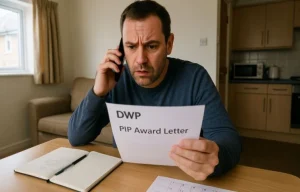
If your first PIP payment didn’t include any backdated amount and you believe you’re entitled to it, take the following steps:
What to Do?
- Double-check the date you made your initial claim
- Review your decision letter to see what dates are listed
- Contact the PIP helpline and provide your National Insurance number
- If needed, request a Mandatory Reconsideration within one month
It’s also important to speak with a welfare advisor, such as those at Citizens Advice or a local disability rights organisation, for guidance.
Can You Appeal a Decision on PIP Backdated Payments?
Yes, if you disagree with your payment amount or dates, you can challenge it through the following steps:
Step-by-Step Process
- Mandatory Reconsideration: Request this within one month of the decision. It allows the DWP to review your claim again.
- Appeal to Tribunal: If the reconsideration result is still unsatisfactory, you can escalate the issue to an independent tribunal.
This process ensures you can dispute not just your award rate but also the amount and period of any backdated payments.
What Does a Backdated PIP Claim Look Like in 2026?
A simple hypothetical example shows how the calculation works under the current 2026 rates.
Suppose a claimant had already satisfied the qualifying-period conditions when their PIP claim was registered. After completing the assessment process, they are awarded the standard daily living component and standard mobility component.
If 16 weeks of entitlement have built up before the award is put into payment, the calculation using the 2026/27 rates would be:
- Standard daily living: £76.70 × 16 = £1,227.20
- Standard mobility: £30.30 × 16 = £484.80
- Total illustrative arrears: £1,712.00
The claimant’s actual payment may differ because DWP uses the exact entitlement dates rather than a simplified example.
There is also an important wider PIP development in 2026. The Timms Review published its interim report in July and entered the next stage of developing recommendations in August 2026.
The interim report itself did not make final recommendations, with the Review expected to submit its final report to the Secretary of State in autumn 2026.
Claimants should therefore rely on the current PIP rules when checking an existing award or arrears calculation rather than assuming proposed future reforms already apply.
Why PIP Payments Backdated Can Be Life-Changing for Claimants?

For many claimants, receiving backdated PIP payments is not just a financial technicality, it’s a lifeline.
Why It Matters?
- Covers months of additional expenses that went unpaid
- Allows claimants to purchase essential items such as mobility aids
- Helps reduce debt accumulated while waiting for a decision
- Offers emotional and financial relief after a stressful waiting period
In many cases, individuals use the arrears to modify their homes for accessibility, fund transport costs, or hire care assistants. It can be the turning point in managing their health condition with dignity.
Conclusion
Backdated PIP payments are designed to ensure that claimants receive the support they’re entitled to from the moment they become eligible, not just from when a decision is made.
Understanding your rights, keeping good records, and seeking help if you suspect a miscalculation can make all the difference.
If you’re in the middle of a PIP claim or recently received a decision, always check that the payment period aligns with the date you applied. And remember, you don’t need to accept a decision if something doesn’t feel right, there are clear steps to challenge and appeal.
The system is designed to support you. Knowing how it works gives you the confidence to make sure you receive every penny you’re entitled to.
FAQs About PIP Backdated Payments
Will my first PIP payment be backdated to when I applied?
Yes, if your claim is approved, it will usually be backdated to the date you first contacted the DWP or started the application process.
Is PIP paid in arrears or in advance?
PIP is paid in arrears, meaning it covers the previous four weeks of entitlement.
How long after my PIP decision will I receive backdated payments?
Most claimants receive their backdated payment within two weeks of the decision letter, but it can take longer in some cases.
Who is eligible for PIP backdated payments?
Anyone who is awarded PIP after a successful claim or appeal, where there was a delay between application and decision, is usually eligible.
Can PIP ever be backdated further than my claim date?
Only in exceptional cases such as DWP reviews due to court rulings or legal changes in eligibility definitions.
Why haven’t I received my backdated PIP payment yet?
It could be due to processing delays, incomplete paperwork, or bank verification. Contact the PIP helpline if it’s been more than three weeks.
Will I get more backdated money if my award increases after an appeal?
Yes, if your award amount is increased after an appeal, you’ll receive the difference in arrears backdated to the original decision.
Are PIP backdated payments taxable or do they affect other benefits?
No, they are not taxable and don’t affect most other benefits. However, they may increase entitlement to related benefits like Carer’s Allowance.

Leave a Reply