
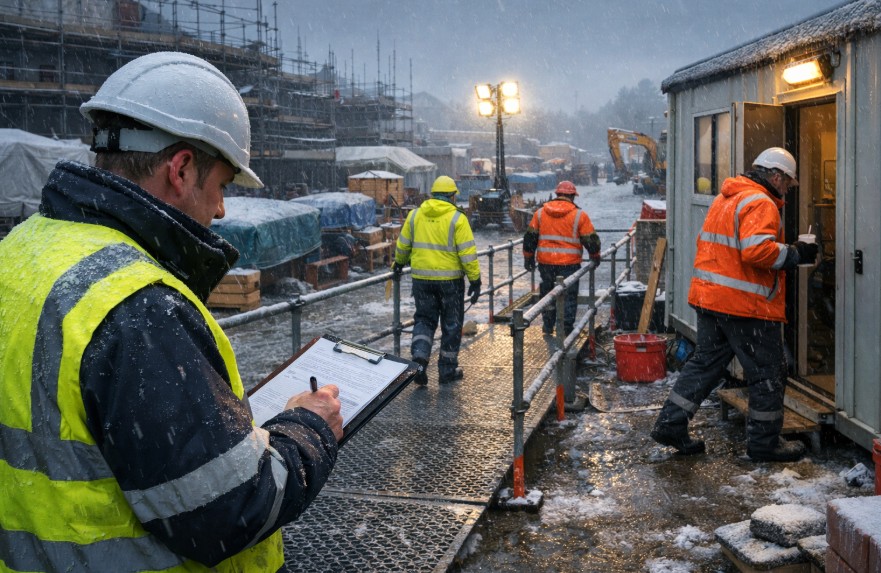
Construction sites are hazardous at the best of times. Add freezing temperatures, persistent rain and reduced daylight hours to the mix, and the risks multiply quickly.
Winter is when incidents spike, and in most cases they’re preventable. Whether you’re running a large commercial build or a smaller residential project, your site safety protocols need to change when the seasons do.
Slip and Trip Hazards in Cold, Wet Conditions

Wet and icy surfaces are one of the leading causes of serious injuries on construction sites during winter. Mud, standing water, frost and ice can turn walkways, scaffolding platforms and access routes into hazards overnight.
Start with a daily inspection of all pedestrian routes before work begins. Temporary walkways should be checked for stability, and any areas prone to pooling water need proper drainage or matting.
Grit bins should be stocked and positioned near steps, ramps and site entrances before the first frost arrives, not after. Pay particular attention to scaffold boards.
They can become extremely slippery when wet, especially if debris or moss has built up over time. Anti-slip strips and regular clearing of boards should be non-negotiable through the winter months.
Visibility on Site
Daylight hours shrink considerably between November and February. If your crews are starting or finishing in the dark, your site lighting needs to be up to scratch.
Portable tower lights are worth the investment, particularly around plant movement areas, loading bays and stairwells. Hi-vis clothing requirements may also need tightening up.
Workers who are adequately visible during a July afternoon might not be in low winter light, especially around moving machinery. Review your PPE requirements and check that everyone on site has the right level of visibility for their role.
Keeping Crews Dry and Protected from the Elements

Wet workers are slower, more distracted and more prone to making mistakes. Good quality work rain gear makes a real practical difference on site, not just for comfort, but for safety.
A crew that’s properly kitted out will stay focused and productive far longer than one that’s soaked through by mid-morning.
What to look for in construction waterproofs:
- Full waterproofing, not just showerproofing. PVC-coated fabrics offer reliable protection in prolonged rain
- Reinforced or welded seams, which are the first point of failure in cheaper gear
- Hi-vis options where visibility is a requirement
- Freedom of movement. Bulky, restrictive gear increases fatigue and the chance of accidents
- Adjustable wrist and ankle cuffs to stop water getting in at the extremities
It’s worth specifying waterproof bib and brace overalls rather than just jackets for groundworkers and others who spend time crouching, kneeling or working at ground level. A jacket alone won’t cut it when someone’s knees are in a puddle.
Hypothermia and Cold Stress
Hypothermia is a genuine risk on exposed construction sites, particularly for workers who are stationary for periods. Plant operators, traffic marshals and security staff are all vulnerable.
Cold stress can set in well above freezing point, especially when wind chill and wet clothing are factors.
Make sure rest areas are genuinely warm and protected from the elements. A cold, draughty cabin doesn’t cut it. Hot drinks should be readily available, and workers should be encouraged to take regular breaks rather than pushing through.
Train supervisors to spot the early signs of cold stress, shivering, slurred speech, difficulty with fine motor tasks. Workers won’t always flag it themselves.
Material and Equipment Storage in Wet Weather
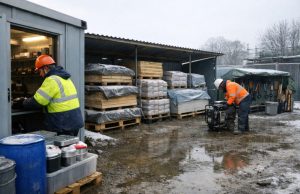
Cold and damp conditions affect more than just people. Cement, plaster and adhesives can be ruined by exposure to moisture or freezing temperatures.
Timber can warp and swell. Power tools and battery-operated equipment can fail if left in the cold overnight.
Review your material storage arrangements before winter properly sets in. Covered, elevated storage that keeps materials off wet ground will save time and money across the season.
Battery packs for cordless tools should be stored at room temperature wherever possible, and fuel-powered equipment needs to be checked for cold-weather starting issues.
Final Considerations
Winter site safety requires daily checks, regular briefings and an honest look at whether your crews have the right kit and conditions to work safely.
Most winter incidents have a familiar pattern, something was known to be a problem, and it wasn’t acted on quickly enough.
A seasonal checklist shared across your team is a simple way to make sure nothing gets missed when the weather turns.

Leave a Reply