

Is smoking haram in Islam? This question has sparked debate across generations of Muslims, with varying perspectives from scholars, jurists, and health professionals.
While smoking remains widespread in many Muslim communities, the Islamic view on its permissibility has shifted considerably over time, particularly as science has revealed the extensive harm it causes to health.
In this guide, we explore what the Quran, Hadith, and contemporary Islamic scholarship say about smoking. By examining religious sources, juristic consensus, and the health implications through an Islamic lens, we aim to offer clarity on whether smoking is haram, and why.
What Does ‘Haram’ Mean in Islam?
In Islamic jurisprudence, haram refers to anything that is explicitly prohibited by Allah and His Messenger (peace be upon him).
Acts classified as haram are considered sinful and carry consequences in both this life and the Hereafter. This includes major sins such as theft, adultery, alcohol consumption, and murder.
The opposite of haram is halal (permissible), while acts that are discouraged but not forbidden are termed makruh.
Understanding this distinction is essential when evaluating actions like smoking, which were not specifically mentioned during the time of the Prophet, but must be judged based on broader Islamic principles.
Does the Quran Directly Mention Smoking?
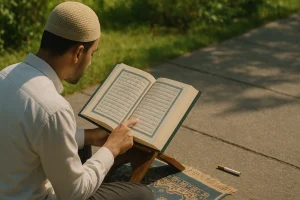
The Quran does not explicitly mention smoking, as tobacco was unknown in the Arabian Peninsula during the 7th century.
However, Islamic scholars have derived rulings about smoking based on general principles found in the Quran, especially those related to health, self-preservation, and avoiding harm.
Quranic Verses Commonly Cited:
Scholars often refer to several Quranic verses when discussing whether smoking is haram:
- Surah Al-Baqarah (2:195): “Do not throw yourselves with your own hands into destruction.” This is understood as a warning against self-harm, which includes smoking.
- Surah Al-A’raf (7:157): Allah permits what is pure and forbids what is harmful. Smoking is widely considered khabith (impure) due to its negative effects.
- Surah Al-Isra (17:26–27): “Indeed, the wasteful are brothers of the devils.” The financial waste associated with smoking makes this verse relevant.
Although not direct, these verses serve as frameworks for rulings that aim to protect life and promote well-being.
What Do Hadith Say About Harmful Substances Like Tobacco?
Similar to the Quran, Hadith literature does not mention smoking explicitly. However, the principles laid out by the Prophet Muhammad ﷺ are used to establish smoking’s ruling within Islamic law.
Relevant Hadith Narrations
A frequently cited Hadith is:
“There should be neither harming nor reciprocating harm.”
(Sunan Ibn Majah, Book 13, Hadith 2340)
This Hadith forms a foundational rule in Islamic ethics: anything that harms oneself or others is not permissible. Smoking, especially with the knowledge of its long-term health risks, clearly falls under this principle.
Indirect Evidence and Analogy
In Islamic jurisprudence (fiqh), scholars often use qiyas (analogy) to extend existing rulings to new situations. Smoking is often compared with intoxicants, which are strictly forbidden due to their physical and spiritual harm.
Although tobacco doesn’t intoxicate, its addictive nature, carcinogenic content, and social impact are considered sufficiently damaging to justify similar rulings.
The compulsion to smoke and inability to stop also raise ethical questions about free will, addiction, and responsibility.
How Have Islamic Scholars Ruled on Smoking Over Time?
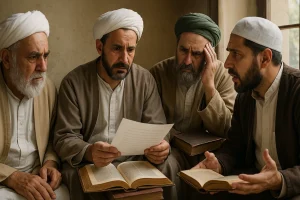
The ruling on smoking in Islam has evolved over time, influenced by increasing scientific knowledge and deeper theological reflection.
Historical View – From Makruh to Haram
Initially, scholars were divided:
- Early rulings: Many classical scholars considered smoking makruh, based on limited health data and the social context of the time.
- Contemporary rulings: With overwhelming medical evidence of smoking’s dangers, many scholars now categorise it as haram.
Modern Fatwas and Juristic Opinions
Leading Islamic institutions have issued strong fatwas:
| Islamic Institution | Ruling on Smoking | Reason |
|---|---|---|
| Al-Azhar University | Haram | Harm to health, waste of wealth |
| Islamic Fiqh Council | Haram | Addictive and damaging to self and others |
| Dar al-Ifta al-Misriyyah | Haram | Violates Islamic principles of well-being |
| Saudi Permanent Committee | Haram | Self-harm, foulness, waste |
The consensus among modern scholars is growing more unified around the position that smoking is haram.
Is There Consensus Among Muslim Scholars That Smoking Is Haram Today?
While not every scholar has declared smoking haram, the overwhelming consensus among contemporary Islamic jurists leans in that direction.
Several factors contribute to this near-unanimity:
- Smoking shortens lifespan and causes irreversible diseases like cancer and heart disease
- Second-hand smoke harms others, especially children and the elderly
- Addiction reduces free will, which is vital in making moral choices
- Financial loss and social disruption contradict Islamic goals of family care and community well-being
Although some scholars still view smoking as makruh, their number is steadily shrinking. Today, fatwas from the most influential Islamic councils firmly prohibit smoking based on both scriptural interpretation and empirical evidence.
What Are the Health and Social Harms of Smoking in an Islamic Context?
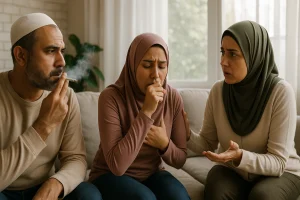
Islam’s legal framework is deeply rooted in the protection of life and human dignity. The Maqasid al-Shariah aim to preserve:
- Life (nafs): Smoking leads to chronic illness and early death
- Wealth (maal): It drains financial resources without offering benefit
- Mind (‘aql): Addiction impacts decision-making and willpower
Health Consequences of Smoking (Medical View):
| Area of Impact | Diseases or Conditions |
|---|---|
| Respiratory System | Lung cancer, chronic obstructive pulmonary disease |
| Cardiovascular System | Stroke, heart disease, high blood pressure |
| Immune System | Weak immunity, frequent infections |
| Reproductive Health | Fertility issues, birth complications |
Beyond health, smoking affects social cohesion. It damages relationships, creates bad habits among children, and causes unnecessary emotional and financial burdens on families.
How Does Smoking Compare to Other Haram Substances in Islam?
Smoking differs from alcohol and drugs, but the logic of its prohibition is based on similar principles.
Subheading: Similarities and Differences
- No intoxication: Tobacco doesn’t alter consciousness like alcohol
- Addiction and harm: Like other haram substances, it causes dependence and long-term damage
- Lack of benefit: Islam prohibits anything that has more harm than benefit
Thus, while the cause of prohibition differs, the outcome is aligned: anything harmful to mind, body, or soul is discouraged or forbidden.
What About Vaping and E-Cigarettes – Are They Haram Too?
The emergence of vaping and e-cigarettes has complicated the discussion. While marketed as safer alternatives to smoking, many scholars have extended similar rulings to these devices.
Key Concerns with Vaping:
- Contains nicotine, a harmful and addictive substance
- Still poses unknown long-term health risks
- May encourage youth to start smoking under the false belief it’s harmless
- Lacks sufficient benefit to outweigh potential harm
While not unanimously declared haram, vaping is heavily discouraged, and in many scholarly circles, considered haram under the same logic used for smoking.
Can a Smoker Be Sinful Even If They Are Practising Islam?
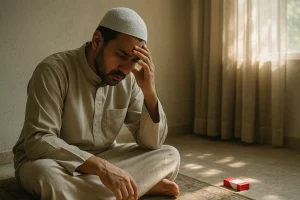
A Muslim who smokes is not considered outside the fold of Islam, but they may still be engaging in a sinful act. In Islamic teachings, sin and faith can coexist, and a believer may struggle with certain habits while still maintaining their core faith.
Islam recognises human weakness and encourages constant repentance, self-improvement, and sincere effort to change. Quitting smoking can even be seen as a form of personal struggle against the nafs, showing commitment to spiritual growth.
Seeking help, making du’a, and working toward giving up smoking are all acts of faith that reflect sincerity. So, while smoking itself may be sinful, a Muslim who acknowledges this and strives to change is met with compassion rather than judgment.
Conclusion
The question “Is smoking haram?” may not be answered with a single verse or Hadith, but Islamic teachings strongly guide us toward the answer.
Through analogy, ethical reasoning, and scholarly consensus, it becomes clear that smoking, due to its harmful, addictive, and wasteful nature, contradicts core Islamic principles.
While earlier views saw it as makruh, the overwhelming modern position, based on evidence and evolving context, is that smoking is haram.
Still, Islam provides pathways for repentance and reform. Quitting smoking not only protects health but aligns one more closely with their faith and responsibility to self and society.
Frequently Asked Questions
What is the difference between haram and makruh in Islam?
Haram refers to actions that are strictly forbidden in Islam and are considered sinful. Makruh refers to actions that are discouraged but not sinful unless persisted in or done with ill intent. Smoking was once considered makruh, but many scholars now classify it as haram.
Are Muslims allowed to smoke socially or occasionally?
Even occasional smoking can be harmful. Islam does not base rulings on frequency but on the nature of the act. Since smoking is damaging to health, it is considered impermissible regardless of how often it is done.
Is there a reward for quitting smoking in Islam?
Yes, quitting smoking is seen as removing harm from oneself and others, an act that aligns with Islamic teachings. Such positive steps are spiritually rewarding and bring barakah (blessing).
How can a Muslim quit smoking Islamically?
A Muslim can rely on prayer, fasting, and community support to help quit. Making du’a, seeking counselling, and using halal-approved cessation methods are encouraged.
Do all Islamic countries ban smoking publicly?
No, policies vary widely. Some Muslim-majority countries have strict regulations, while others permit it in designated areas. Rulings by scholars may influence laws but do not always result in national bans.
Can Muslims smoke during Ramadan after iftar?
While smoking doesn’t invalidate the fast after iftar, it is still considered harmful and discouraged. It contradicts the spirit of purification and self-discipline that Ramadan promotes.
Is smoking shisha or hookah haram too?
Yes, most scholars view shisha and hookah as haram or at least makruh due to their tobacco content and similar health risks. Their use is not exempt from Islamic ethical scrutiny.

Leave a Reply