
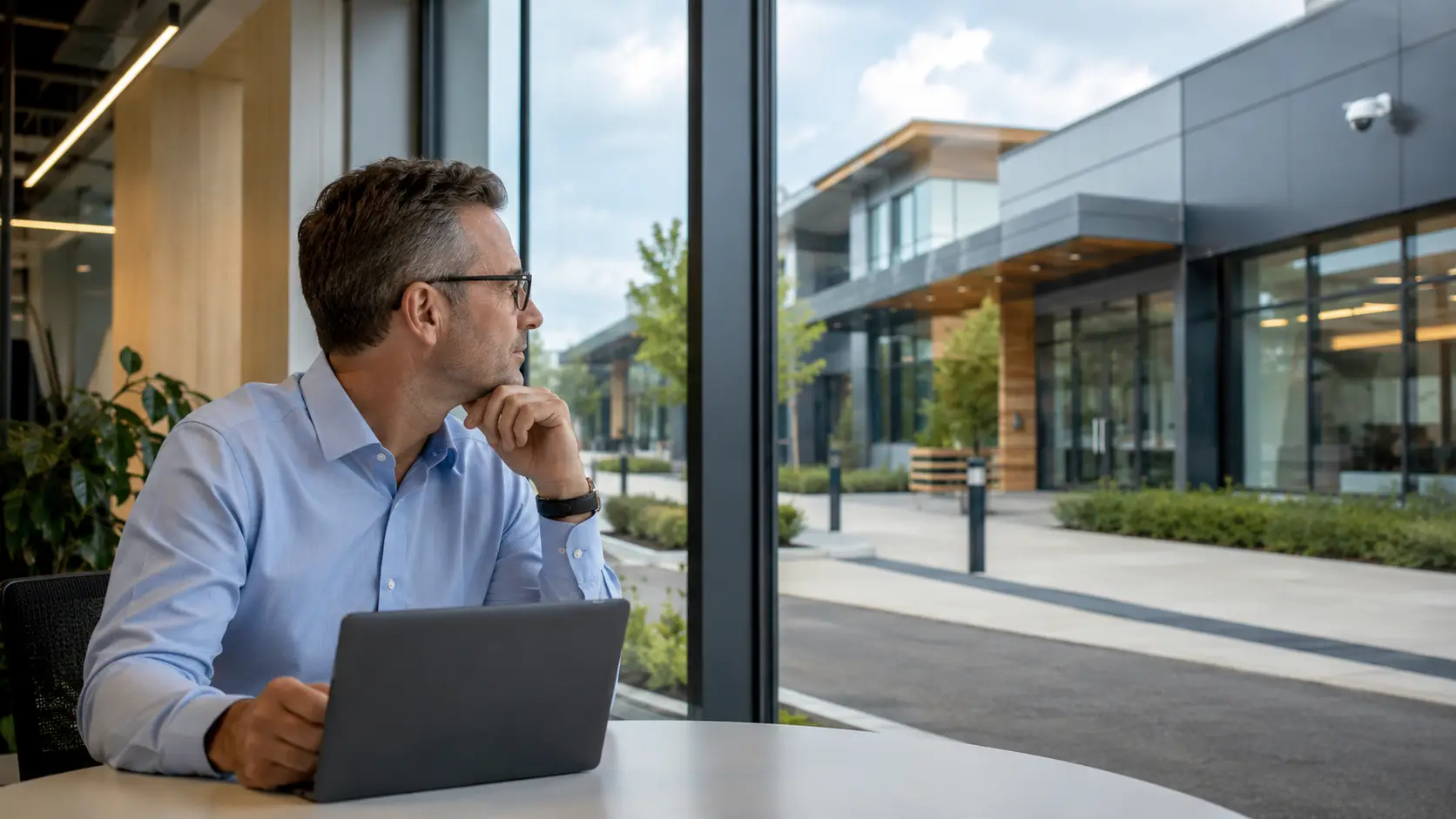
Commercial property management faces rising complexity as portfolios grow and tenant expectations shift.
Remote surveillance solutions have gained traction as a practical tool for enhancing site oversight and resilience.
Understanding how these systems contribute to operational efficiency and risk management is becoming crucial for property professionals.
The demand for robust, cost-effective security has led many teams to explore technology-driven monitoring options, including a remote cctv monitoring service.
With operational pressures mounting, remote CCTV monitoring has become a focal point in discussions among property managers evaluating security upgrades and process improvements.
These solutions promise greater site visibility, swifter incident response, and better documentation practices, allowing property teams to manage assets more proactively.
By integrating such remote approaches, managers aim to address both immediate threats and longer-term strategic needs for their commercial properties.
What modern remote surveillance includes in practice?
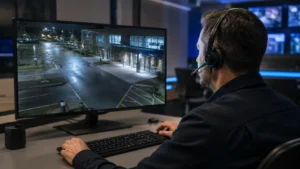
Remote surveillance refers to using networked cameras, sensors, and control systems that allow you to monitor properties from a centralised location.
Live video feeds and triggered alerts offer real-time awareness of building entrances, perimeters, and sensitive areas, all accessible via secure online interfaces.
Operators, whether internal teams or external partners, can review surveillance footage as events happen.
Most systems support automated notifications when predetermined criteria, such as motion detection or alarm activations, are met, enabling rapid escalation or direct communication with on-site staff.
Advanced remote surveillance platforms now incorporate analytics capabilities that extend beyond simple recording.
Intelligent video analysis can identify patterns such as loitering, crowd formation, or vehicles entering restricted zones, automatically flagging these events for review.
Cloud-based storage solutions have become increasingly prevalent, offering scalable capacity and eliminating the vulnerabilities associated with on-site recording equipment.
Integration with building management systems allows surveillance to work alongside access control, fire alarms, and environmental sensors, creating a unified security ecosystem that provides comprehensive situational awareness across the entire property portfolio.
The operational gains for management teams
One clear operational advantage is improved visibility across dispersed sites, especially during evenings, weekends, or public holidays when live supervision is less feasible.
Instant access to camera feeds allows you to assess incidents remotely, often before security staff or emergency responders arrive.
Remote CCTV monitoring not only helps strengthen oversight but also supports more reliable incident logging and reporting.
Consistent documentation simplifies internal audit processes, enhances accountability, and may assist when coordinating with insurers or law enforcement agencies.
Risk management and financial impact of surveillance
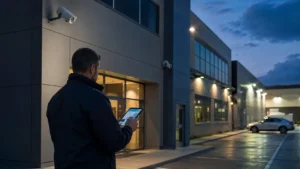
Remote surveillance builds a visible deterrent that may reduce the likelihood of unauthorised entry, vandalism, and theft.
Having the ability to observe incidents as they unfold also enables faster interventions, whether through audio warnings, contacting mobile patrols, or alerting the police directly.
This approach can lower security-related costs, as resources are deployed only when required rather than maintained on-site around the clock.
Cost savings typically relate to avoided losses, fewer false alarms, and optimised deployment of manned guarding, though initial outlay on equipment, connectivity, and ongoing maintenance still must be considered.
Industry resources can provide valuable context regarding surveillance technology and its applications.
Live Audio Voice-Down and Verified Alarm Protocols
Beyond passive observation, the integration of real-time intervention tools dramatically enhances physical crime prevention on commercial premises:
-
Proactive Voice-Down Deterrence: When a perimeter breach or loitering event is flagged, off-site monitoring operators can issue live, site-specific verbal warnings over public address (PA) speakers. This immediate human challenge deters the vast majority of unauthorized visitors before break-ins or property damage occur.
-
Verified Alarm Dispatch: Emergency services increasingly require visual or audio confirmation before responding to commercial alarm calls. Remote operators visually confirm active crimes in progress, giving emergency responders verified incident details that trigger priority dispatch.
-
Elimination of False Alarm Fines: Automated video filtering combined with human verification prevents emergency services or private security guards from being dispatched to non-threats—such as wildlife movement or adverse weather—saving management teams substantial false-callout penalties.
Compliance, implementation and managing expectations
High standards of compliance may require privacy-by-design measures, clear limits on footage retention, and unambiguous audit trails for all access.
Arrangements should specify which stakeholders, landlords, managing agents, or tenants, may access recorded material and under what circumstances, ensuring each party’s roles are clearly set out.
Integrating remote systems with legacy security infrastructure presents a notable challenge, as does ensuring stable network connectivity across older buildings.
Careful tuning of alert thresholds is necessary to prevent operator fatigue and reduce irrelevant notifications.
Establishing robust escalation and response protocols will help all parties trust that alerts are managed efficiently and proportionately.
When implemented with attention to process and accountability, remote surveillance becomes a practical and flexible asset for property managers.
As threats evolve and expectations grow, these systems help sustain both operational control and stakeholder confidence, supporting smarter management in the commercial property sector.

Leave a Reply