
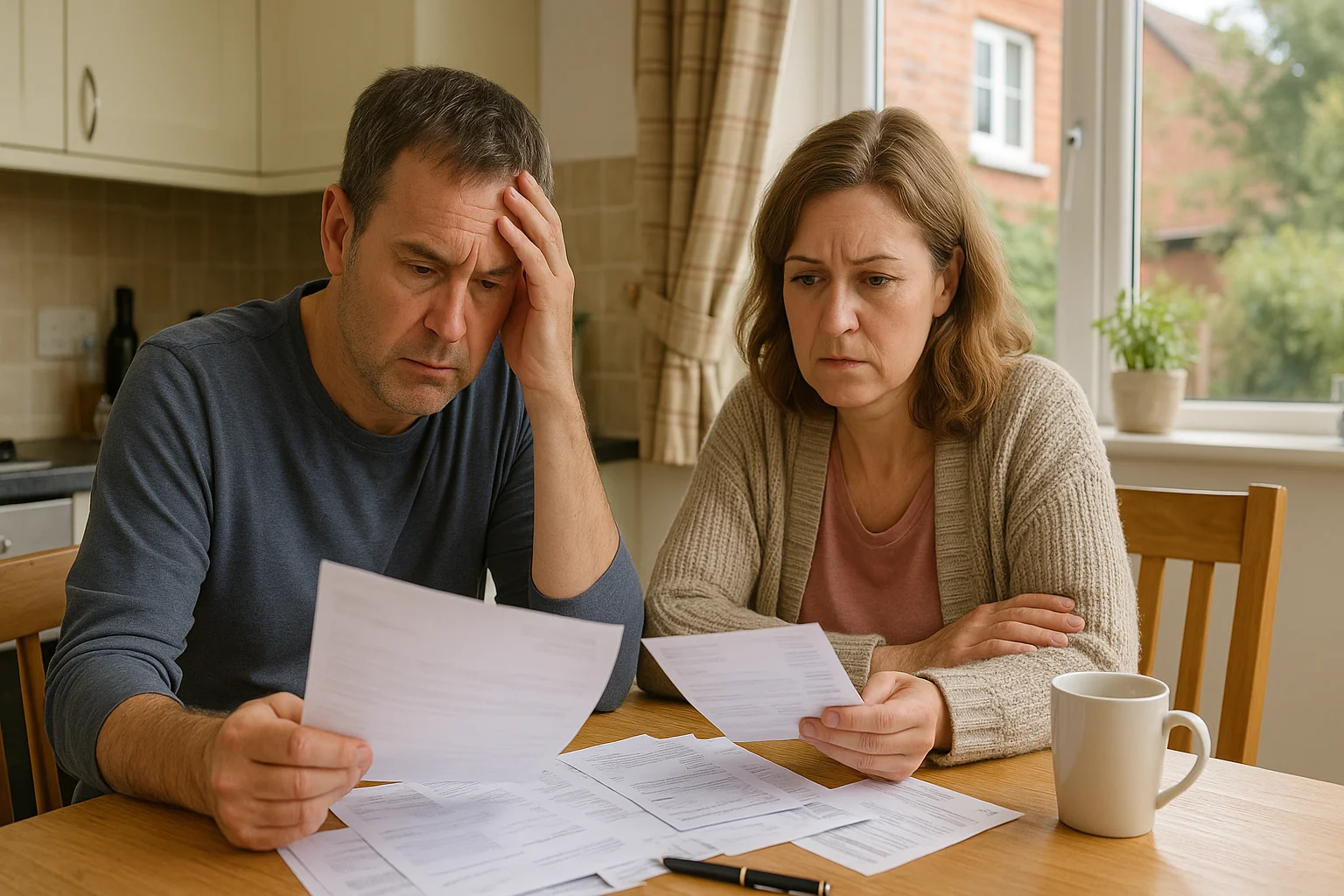
In today’s cost-of-living environment, every penny counts, particularly for those reliant on means-tested support such as Housing Benefit. Understanding how savings affect your eligibility is crucial.
The housing benefit savings limit is a key part of the calculation used by local authorities to assess entitlement. For individuals and couples alike, savings can directly reduce the amount of benefit awarded, or disqualify them altogether.
This guide explains the current savings rules, the thresholds for different age groups, and how tariff income calculations work.
Whether you’re under pension age or a retiree, it’s essential to stay informed, and compliant, to avoid benefit disruptions.
Why Does the Housing Benefit Savings Limit Matter?

Housing Benefit is a means-tested benefit designed to assist with rental costs. As with most means-tested benefits in the UK, applicants must meet strict income and savings criteria. The savings limit, set at £16,000, is one of the primary eligibility checks.
The savings threshold has remained unchanged, but the implications remain significant. Exceeding the threshold often results in disqualification, unless a special exemption applies.
Many claimants are surprised to find that even relatively modest savings can affect their entitlement, particularly through something known as “tariff income.”
This makes understanding both the limits and the mechanisms behind them essential for current and prospective claimants.
What is the Housing Benefit Savings Limit in the UK?
The housing benefit savings limit determines whether an individual or couple can receive housing benefit and, if so, how much they may be entitled to. As a means-tested benefit, eligibility is influenced by a claimant’s income, household composition, and most importantly, savings.
In the UK, the maximum capital threshold for claiming Housing Benefit is £16,000. If you or your partner have savings or investments above this amount, you’re generally not eligible to receive Housing Benefit unless you qualify for specific exceptions.
Two important lower thresholds also apply:
- £6,000 for people under State Pension age
- £10,000 for those who have reached State Pension age
These lower limits are significant because once your capital exceeds them, the government calculates something known as “tariff income”, which reduces your benefit entitlement.
How Do Savings Affect Your Housing Benefit Entitlement?

Understanding the effect of savings on housing benefit involves more than simply staying below the £16,000 limit. If your capital is between the lower threshold and the upper cap, the Department for Work and Pensions (DWP) assumes that your savings generate income, even if they don’t.
This assumed figure, known as tariff income, is then added to your real income when calculating how much Housing Benefit you receive.
For working-age claimants, tariff income is calculated as £1 per week for every £250 (or part of) above £6,000. For pension-age claimants, it’s £1 per £500 over £10,000. This can significantly reduce your benefit award.
Let’s look at a comparison table for clarity:
| Claimant Type | Savings Threshold | Tariff Income Calculation |
| Under State Pension Age | £6,000 | £1/week for every £250 (or part of) over |
| Over State Pension Age | £10,000 | £1/week for every £500 (or part of) over |
This approach ensures that those with greater financial resources contribute proportionally toward their housing costs.
How Are Savings Treated for People Under State Pension Age?
People under State Pension age face stricter rules when it comes to savings and Housing Benefit eligibility. While up to £6,000 in savings is ignored, higher amounts can reduce or even remove entitlement.
Savings Thresholds and Their Impact:
- Below £6,000: Fully disregarded, you can usually receive the maximum Housing Benefit.
- Between £6,000 and £16,000: Tariff income applies; £1 is added to your income for every £250 (or part of it) over £6,000.
- Over £16,000: You’re not eligible for Housing Benefit unless you receive the Guarantee element of Pension Credit.
In summary, keeping savings below £6,000 ensures maximum benefit, but as savings grow, entitlement gradually reduces until it stops completely above £16,000.
Real-Life Example:
Sophie, aged 45, has £8,750 in a savings account. This is £2,750 above the £6,000 threshold. The DWP calculates that as 11 parts of £250.
Therefore, £11 per week is added to her income as tariff income. If her earnings are modest, this additional income could significantly reduce or eliminate her housing benefit altogether.
What Are the Housing Benefit Rules for Pensioners?
For individuals who have reached State Pension age, the rules are slightly more generous. This reflects the typically lower fixed income many pensioners receive and helps maintain financial stability for older people.
Savings Below £10,000
All capital up to £10,000 is disregarded for pension-age claimants. This means it will not reduce their Housing Benefit entitlement in any way.
Savings Between £10,000 and £16,000
When capital exceeds £10,000, the DWP assumes £1 of income per week for every £500 or part of £500 above the threshold. This “income” is not real but is treated as if it were when assessing how much benefit a person is entitled to.
Over £16,000
Generally, pensioners with more than £16,000 in savings are not eligible for Housing Benefit. However, there is a notable exception: those receiving the guarantee credit element of Pension Credit are exempt from this rule and may still qualify for full Housing Benefit.
Real-Life Example:
John, aged 70, has £13,400 in capital. This is £3,400 above the £10,000 threshold. Divided into £500 portions, this equates to 7 assumed portions, giving him a weekly tariff income of £7. This amount is added to his total income for assessment, which will reduce the Housing Benefit he receives.
Can You Get Housing Benefit if You Receive Pension Credit?

One of the most important exceptions to the housing benefit savings limit is if you’re receiving the guarantee credit part of Pension Credit. In this case, your capital can exceed £16,000, and it will not affect your entitlement.
This provision exists to ensure that pensioners with a low overall income are not penalised for having moderate savings. If you’re in receipt of this credit, you’re automatically considered eligible for maximum Housing Benefit support, regardless of how much you have in the bank.
This also applies if you’re part of a couple and your partner is under State Pension age, provided your Pension Credit claim was established before the cut-off date in May 2019.
What Happens If You Have More Than £16,000 in Savings?
Generally, if you or your partner hold more than £16,000 in combined savings, you will not be eligible for Housing Benefit. This upper savings cap is a hard rule unless specific exceptions apply.
Exceptions to the Rule:
- You’re in receipt of Pension Credit Guarantee Credit
- You live in supported, sheltered, or temporary accommodation
- Your existing Housing Benefit claim predates May 15, 2019 and has continued without interruption
If none of these apply, you will be expected to use your capital to support your living and housing costs until it reduces below the threshold.
Once your savings fall below the limit, you may reapply, but must declare the change promptly to avoid overpayments or compliance issues.
How Does Universal Credit Handle Savings and Housing Costs?

Universal Credit (UC) is gradually replacing Housing Benefit for most working-age claimants. Its rules around capital and savings are similar, but calculations are handled monthly rather than weekly.
Under UC:
- Savings under £6,000 are fully disregarded
- Savings between £6,000 and £16,000 are assumed to provide tariff income at a rate of £4.35 per month per £250 (or part thereof)
- Savings over £16,000 disqualify you from UC entirely
| Savings Amount | Impact on UC |
| £0–£6,000 | No effect |
| £6,001–£16,000 | Monthly deduction of £4.35 per £250 |
| £16,001+ | Ineligible unless special circumstances apply |
This means that Universal Credit offers no advantage over Housing Benefit when it comes to capital thresholds. In fact, the automatic migration from Housing Benefit to UC could reduce entitlements for those whose savings were previously disregarded under transitional protections.
Can the DWP or Council Check Your Bank Accounts for Savings?
While the DWP and local authorities cannot directly access your bank account without consent or suspicion, they can request information to verify savings when processing or reviewing a claim.
Verification Methods:
- Bank statements: Often requested during application or review
- Cross-checking with HMRC: Data-sharing agreements allow automatic detection of discrepancies
- Fraud investigation powers: If there’s reasonable suspicion, officials can request detailed bank information from your provider
While this does not constitute surveillance, claimants are legally obliged to disclose any savings and investments. Failure to do so can result in overpayments, suspension of benefits, or prosecution in serious cases.
What Proof of Savings Might the DWP or Council Request?
When applying for or continuing a Housing Benefit claim, you’ll be asked to verify your capital. Authorities may request:
- Bank statements (usually last two full months)
- Details of any investments or bonds
- Proof of property ownership or land assets
While the DWP and councils do not have automatic access to your bank accounts, they can use powers under legislation to request specific information from banks in cases of suspected fraud.
Future legislation is likely to introduce automated bank checks. These won’t provide full account access but will flag accounts that breach capital thresholds, triggering further investigation.
What Should You Do If Your Savings Go Over the Limit?

If your capital increases, whether through savings growth, a windfall, inheritance, or asset sales, you must inform your local authority or DWP.
Deliberate failure to report changes is considered fraudulent, and even unintentional omissions may result in overpayment recovery.
It’s essential to:
- Monitor your savings regularly
- Use an approved benefits calculator to review eligibility
- Keep official documentation of financial changes
- Seek advice from independent organisations if unsure
Timely disclosure helps avoid complications and may preserve your right to reclaim benefits when your savings decrease.
Conclusion
Navigating the housing benefit savings limit is vital for anyone relying on financial support for housing. While the £16,000 upper threshold acts as a clear cap, the tariff income model means that even lower savings can affect how much support you receive.
Whether you’re of working age or a pensioner, understanding how your capital is assessed, and when exceptions apply, can ensure you maintain entitlement, avoid penalties, and plan your finances with clarity.
When in doubt, consult official benefits advice services and stay proactive about reporting changes in circumstances.
Frequently Asked Questions
Do all savings count towards the Housing Benefit limit?
Most do, including bank accounts, ISAs, shares, premium bonds, and cash. Exceptions include the value of your main residence and certain compensation payments.
Is it better to spend savings before applying for benefits?
Spending large amounts suddenly may raise suspicion. DWP may consider it “deprivation of capital” if you dispose of money to claim more benefits.
What happens if I inherit money while receiving Housing Benefit?
You must report the inheritance. If your total capital exceeds £16,000, your claim will usually stop unless you qualify for exceptions.
Are all benefits affected by savings?
No. Only means-tested benefits like Housing Benefit and Universal Credit are affected. Non-means-tested benefits like PIP are not influenced by savings.
Can pensioners claim Housing Benefit with more than £16,000?
Only if they receive the guarantee element of Pension Credit. Otherwise, they must remain under the threshold to qualify.
What counts as capital or savings?
Capital includes money in bank accounts, investments, second properties, land, and business assets. Some are disregarded depending on circumstances.
Can I still get help with rent if I don’t qualify for Housing Benefit?
Yes. You may be able to get support through Universal Credit, Discretionary Housing Payments, or local council schemes.

Leave a Reply