
Last Updated on AUG 21, 2026
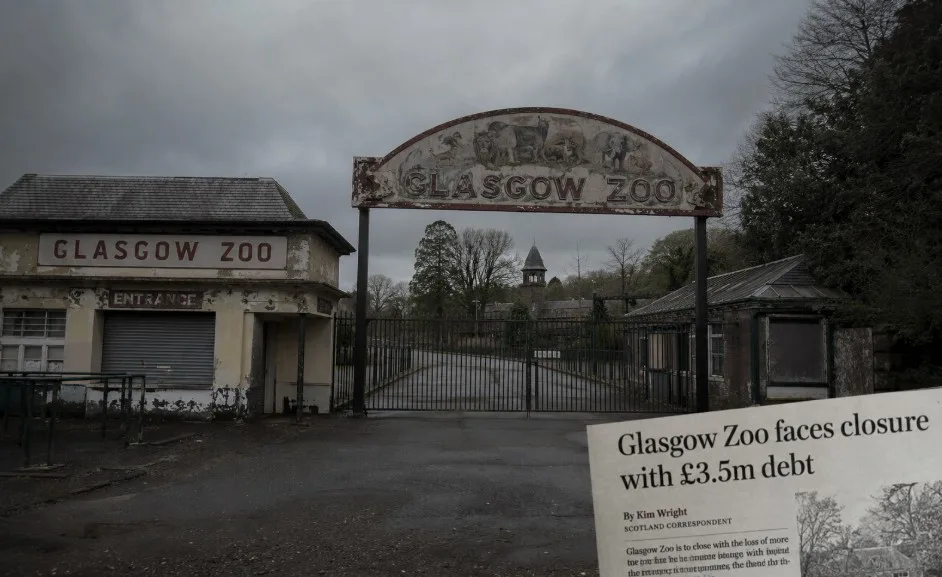
The Glasgow Zoo sudden closure brought 56 years of history to an end when the attraction permanently shut on 25 August 2003.
Opened at Calderpark in Baillieston in 1947, the zoo had once been one of Scotland’s best-known family attractions, but its final years were dominated by falling visitor numbers, lost public funding, mounting debts and controversy over conditions at the site.
Glasgow Life’s more recent account of the zoo’s history puts its debts at around £3.5 million, while contemporary reports varied between approximately £3 million and £4 million. Visitor numbers had also fallen sharply, with one 2003 report stating that attendance had dropped from around 100,000 a year to about 40,000.
Animal-welfare concerns and licensing pressures formed part of the zoo’s final difficulties, although they should be considered alongside its severe financial problems rather than presented as the only reason it closed.
Why Did Glasgow Zoo Suddenly Close After 56 Years?
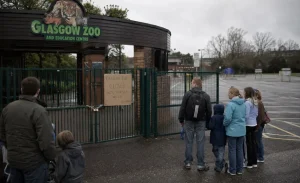
Glasgow Zoo’s closure after 56 years appeared sudden to many visitors, but the challenges had been building for years behind the scenes.
The closure followed a prolonged financial decline rather than one unexpected event. Glasgow Life records that falling visitor numbers and the loss of public funding contributed to deteriorating facilities and growing concerns about conditions at Calderpark.
Contemporary reporting in June 2003 put attendance at roughly 40,000 visitors a year, compared with around 100,000 previously, while estimates of the zoo’s debt were already running into several million pounds.
Key Factors Behind the Closure
- Falling Visitor Numbers: Contemporary reporting indicated annual attendance had fallen substantially from earlier levels
- Loss of Public Funding: The withdrawal of public financial support added to the zoo’s existing financial difficulties
- Multi-Million-Pound Debt: Later historical accounts commonly put the final debt at approximately £3.5 million
- Deteriorating Facilities: Financial pressures made maintaining the large Calderpark site increasingly difficult
- Animal-Welfare Concerns: Campaigning organisations raised concerns about conditions and public safety during the zoo’s final years
- Licensing Pressures: The zoo also faced the standards and inspection requirements applying to licensed zoological collections
Glasgow Zoo eventually closed permanently on 25 August 2003, earlier than the September closure that had initially been expected.
What Was Glasgow Zoo Before Its Sudden Closure?
Before its decline, Glasgow Zoo was one of Scotland’s best-known animal attractions. Located on the former Calderpark Estate in Baillieston, the zoo occupied approximately 99 acres and became a popular destination for families, schools, and tourists.
From Calderpark Estate to One of Scotland’s Best-Known Zoos
Established in 1947 by the Zoological Society of Glasgow and West of Scotland, the zoo was built using a range of repurposed materials from the post-war era. Over time, it expanded into a substantial wildlife attraction housing species from around the world.
Many of the zoo’s early exhibits and facilities reflected the practical realities of post-war Britain, making its development a unique part of Scottish heritage.
Animals, Visitor Numbers and Community Importance
At its peak, Glasgow Zoo was home to more than 600 animals, including:
- African lions
- White rhinos
- Polar bears
- Asian black bears
- Monkeys
- Reptiles
- Exotic birds
- Farm animals
The attraction employed dozens of staff and welcomed approximately 140,000 visitors annually. Educational visits and school trips also formed an important part of its community role.
Glasgow Zoo at a Glance:
| Feature | Details |
|---|---|
| Opening Year | 1947 |
| Closing Year | 2003 |
| Location | Baillieston, Glasgow |
| Site Size | Approximately 99 acres |
| Peak Visitors | Around 140,000 annually |
| Animal Population | 600+ animals |
| Managing Organisation | Zoological Society of Glasgow and West of Scotland |
These figures illustrate why the zoo remained such an important landmark for several generations of Scottish families.
How Did the £3.5m Debt Crisis Build Up?
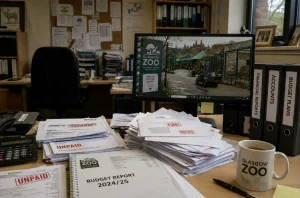
The figure of £3.5 million remains reasonable to use, but it should be presented as an approximate figure rather than an exact audited final total.
Glasgow Life’s recent historical account reports debts of about £3.5 million, while contemporary reporting shortly before and immediately after the closure gave estimates ranging from around £3 million to £4 million.
The financial crisis had been developing for years. Falling admissions reduced an important source of income, while the zoo still had to meet the substantial costs of caring for animals, employing staff and maintaining a large estate and its ageing facilities.
The loss of public funding made the situation more difficult. The scale of the problem was already recognised publicly by 2000, when a motion in the Scottish Parliament called for efforts to secure funding to save Glasgow Zoo from closure.
By 2003, the combination of falling income, heavy debt and the cost of maintaining the attraction meant the zoo was no longer financially sustainable.
What Role Did Animal Welfare Concerns Play in Glasgow Zoo’s Closure?
Financial difficulties alone do not fully explain the closure. Animal welfare concerns became a major issue during the zoo’s final years and significantly influenced regulatory decisions.
Zoo Licensing Act 1981 and Local Authority Inspections
The Zoo Licensing Act 1981 provides the legal framework for zoo licensing and periodic inspections. It also enables standards of modern zoo practice to be set covering the management of zoos and the animals kept within them. Local authorities are responsible for carrying out required inspections of licensed zoos.
During Glasgow Zoo’s final years, animal-welfare organisations publicly raised concerns about conditions and public safety.
Contemporary reporting recorded these allegations, although zoo representatives disputed the suggestion that poor-looking facilities automatically meant that the animals themselves were being badly cared for.
Later accounts of Glasgow Zoo’s history state that difficulties meeting newer welfare standards and renewing its licence formed part of the circumstances surrounding the closure.
However, the evidence also shows that severe debt, falling attendance and the loss of public funding were central factors.
The closure is therefore better understood as the result of interconnected financial, operational, welfare and regulatory pressures, rather than being attributed solely to a failed licence renewal.
Why Welfare Standards Became Harder to Meet?
As financial pressures intensified, maintaining and upgrading facilities became increasingly challenging. Older enclosures required investment, while evolving welfare expectations demanded higher standards than those originally in place when many exhibits were constructed.
Reports from animal welfare advocates suggested that some facilities had deteriorated significantly by the early 2000s.
The zoo subsequently failed to secure renewal of its licence, making continued operation impossible. This regulatory outcome accelerated the final closure decision.
What Happened to the Animals After Glasgow Zoo Closed?
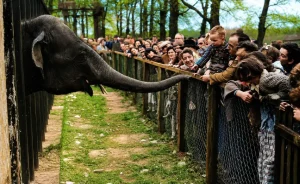
One of the most common questions people still ask concerns the fate of the animals following the closure.
Rehoming the remaining animals became an immediate priority as Glasgow Zoo prepared to close. Contemporary reporting confirmed that zoo staff worked with the Scottish SPCA to find appropriate new homes, although there was initially particular concern about whether some of the zoo’s elderly bears were fit enough to be moved.
The relocation continued after the gates shut on 25 August 2003. Later historical accounts indicate that homes had been found for the remaining animals by December 2003.
One notable exception was Bongo, a 32-year-old Asiatic bear suffering from cancer. He was euthanised because of his medical condition rather than being transferred elsewhere. Later accounts state that he was the only animal that needed to be euthanised during the closure process.
This is an important distinction because rumours about animals supposedly being abandoned at the site continued after the zoo closed, despite the documented rehoming programme.
What Happened to the Former Glasgow Zoo Site?
Following closure, the site entered a lengthy period of abandonment. Empty enclosures, deteriorating buildings, and unused infrastructure remained visible reminders of the attraction’s former prominence.
Over time, the abandoned grounds experienced:
- Vandalism
- Illegal dumping
- Structural deterioration
- Fire damage to some buildings
- Demolition of former enclosures
Plans to reuse the land eventually shifted decisively towards residential development. The former Glasgow Zoo and adjoining Ellismuir Farm area have since formed part of substantial housing development in the wider Baillieston and Broomhouse area.
Glasgow City Council’s 2025/26 investment programme records show several housing schemes specifically identified as being on the former Glasgow Zoo or Glasgow Zoo/Ellismuir Farm sites.
Several individual developments were fully completed, including schemes of 45, 67, 23, 72, 39 and 18 homes. Other larger phases were still recorded within the wider development programme.
Timeline of Key Events:
| Year | Event |
|---|---|
| 1947 | Glasgow Zoo opens |
| Late 1990s | Financial difficulties intensify |
| 2002 | Increased welfare inspections reported |
| August 2003 | Zoo closes permanently |
| End of 2003 | Animal rehoming completed |
| Following Years | Site becomes derelict |
| Later Redevelopment | Housing developments constructed |
This means the former zoo should no longer simply be described as an abandoned or derelict attraction. By 2026, substantial parts of the surrounding former-zoo development area had been transformed into residential neighbourhoods, although council records continued to show some development phases as incomplete.
Why Is Glasgow Zoo Still Remembered More Than 20 Years Later?
More than two decades after closing, Glasgow Zoo remains firmly embedded in public memory. Former visitors continue sharing photographs, stories, and personal experiences online, helping preserve interest in the attraction long after its closure.
For many people, the zoo represented childhood family trips, school visits, and memorable encounters with animals. Younger generations who never visited have also discovered its story through social media, local history discussions, and online communities.
Reasons Glasgow Zoo remains memorable include:
- Nostalgia: Strong emotional connections from childhood experiences.
- Community impact: A well-known attraction for local families and schools.
- Ongoing curiosity: Continued interest from people discovering its history.
The emotional connection many people still have with Glasgow Zoo has helped maintain its place in Scotland’s cultural memory.
What Is the Lasting Legacy of Glasgow Zoo’s Sudden Closure?
Beyond nostalgia, Glasgow Zoo’s closure highlighted the challenges wildlife attractions face in balancing financial sustainability, animal welfare standards, and operational costs. The collapse showed how difficult it can be to maintain large-scale attractions without stable long-term funding.
The closure also encouraged wider discussions around conservation funding, regulatory compliance, and how zoos adapt to changing public expectations. Although the original site has since been redeveloped, Glasgow Zoo’s story continues to provide important lessons for future wildlife attractions and conservation organisations.
Today, its legacy extends beyond memories, serving as an example of both the opportunities and risks involved in operating major visitor attractions.
Conclusion
Glasgow Zoo permanently closed on 25 August 2003 after 56 years at Calderpark.
Although approximately £3.5 million in debt remains the figure most commonly associated with its collapse, contemporary reports varied, showing that the zoo’s financial position was deteriorating alongside sharply falling visitor numbers and the loss of public funding.
Animal-welfare concerns and licensing pressures also formed part of its troubled final years, but the closure is best understood as the result of several connected problems rather than one single event.
More than two decades later, the physical site has changed considerably. Glasgow City Council records show that substantial residential development has taken place across former Glasgow Zoo and adjoining land, turning much of an attraction once remembered for lions, bears, rhinos and school trips into part of Glasgow’s expanding eastern residential area.
FAQs About Glasgow Zoo Sudden Closure
Was Glasgow Zoo also known as Calderpark Zoo?
Yes. Glasgow Zoo was commonly referred to as Calderpark Zoo because it was located on the former Calderpark Estate in Baillieston.
When did Glasgow Zoo first open?
The zoo officially opened in 1947 and operated for 56 years before closing in 2003.
How many animals lived at Glasgow Zoo?
At its peak, Glasgow Zoo housed more than 600 animals representing a wide range of species.
Why did Glasgow Zoo lose its licence?
The zoo reportedly failed to meet updated animal welfare standards required for licence renewal under UK regulations.
Were all the animals relocated after Glasgow Zoo closed?
Almost all of the remaining animals were rehomed. One documented exception was Bongo, an elderly Asiatic bear with cancer, who was euthanised during the relocation period.
What stands on the former zoo site today?
Much of the former site has been redeveloped into residential housing developments, with nearby commercial facilities also constructed.
Why is Glasgow Zoo still popular in online searches?
Interest remains high because of nostalgia, local history, urban exploration discussions, and continued media coverage of its closure.

Leave a Reply