
The UK government is taking a major step forward in the fight against benefit fraud. With the passing of the Public Authorities (Fraud, Error, and Recovery) Act, the Department for Work and Pensions (DWP) has been granted significant new powers to detect, prevent, and recover fraudulent benefit payments.
These new measures, expected to be implemented in full by 2026, represent a shift in how benefits are monitored and enforced.
This blog explores what DWP bank account checks will involve, what triggers them, and what claimants can expect moving forward.
As privacy concerns rise, so does the need to understand the scope and safeguards of these powers.
What Are DWP Bank Account Checks and Why Are They Being Introduced?

DWP bank account checks are part of a broader government initiative to reduce fraud and administrative errors in the UK benefits system.
Under current procedures, most claimants are trusted to declare their financial circumstances honestly.
However, rising fraud levels and a growing need to ensure public funds are distributed fairly have driven legislative reform.
The Public Authorities (Fraud, Error, and Recovery) Act has laid the groundwork for a new approach, enabling the Department for Work and Pensions to more rigorously monitor benefit recipients.
These changes are projected to become operational in 2026 and represent a modernisation of the welfare system.
The new law allows DWP officials to obtain detailed financial data from banks, credit institutions, and potentially other third parties.
This information will help assess whether individuals are still eligible for benefits or if they owe money due to overpayments or fraudulent claims.
This shift from reactive to proactive monitoring is aimed at addressing billions of pounds lost to fraud and error annually.
How Will the DWP Use Its New Powers to Access Bank Accounts?
Legal Authority Behind Bank Account Access
The DWP’s ability to access bank account information is rooted in the Public Authorities (Fraud, Error, and Recovery) Act, which provides a clear statutory framework for financial data requests.
These powers allow investigators to obtain specific banking information without needing to rely solely on claimant disclosure.
The intention is to improve accuracy in benefit assessments while reducing fraud and administrative error.
This authority does not permit unrestricted access. Officials must demonstrate that the information requested is necessary for verifying eligibility, identifying overpayments, or recovering public funds.
Requests must align with strict legal thresholds and data protection standards.
What Financial Information Can the DWP Request?
Under the new powers, the DWP can request a defined set of banking details from financial institutions. These requests are designed to be targeted rather than invasive.
The information may include:
- Account balances over a defined period
- Incoming payments such as wages or pensions
- Regular outgoing payments indicating financial commitments
- Transaction patterns that suggest undeclared income or capital
Investigators are generally required to review a minimum of three months of statements to ensure decisions are based on consistent financial behaviour rather than one-off transactions.
How Data Matching and Cross-Checks Will Work?
Once bank data is obtained, it will be compared with information already held by the DWP and other government departments. This process is known as data matching and plays a central role in identifying inconsistencies.
Financial records may be cross-checked against:
- HMRC payroll and tax records
- Information declared on benefit applications
- Local authority housing and council tax data
If discrepancies are identified, further enquiries may be made before any action is taken. Not all inconsistencies lead to enforcement, as some may be explained by timing differences or reporting delays.
Oversight and Limits on Financial Surveillance
Although the powers are wide-reaching, they are not without limits. An independent overseer will monitor how bank access powers are used and ensure they remain proportionate.
Audits and compliance reviews will be conducted to prevent misuse or overreach.
Claimants must be informed when their financial data is used in a decision that affects their benefits. They also retain the right to challenge any outcome resulting from bank account checks.
How Will Direct Bank Deductions by the DWP Work?

When Direct Deductions Can Be Applied?
Direct bank deductions represent one of the most significant enforcement tools introduced under the new legislation.
These deductions are intended for cases where a person owes money to the DWP but is no longer receiving benefits.
The DWP may consider direct deductions when:
- An overpayment or fraud debt has been formally established
- The individual has been notified but has not repaid the amount owed
- Financial checks show sufficient funds are available
This approach is primarily aimed at individuals who have exited the benefits system and are therefore outside the reach of traditional recovery methods.
Notification and Assessment Process
Before any money is taken from a bank account, the DWP must follow a defined notification process. This is designed to ensure transparency and give individuals an opportunity to respond.
The process includes:
- Issuing written notice outlining the debt and intended action
- Requesting recent bank statements for assessment
- Allowing time for the person to challenge or repay voluntarily
During this period, investigators assess whether a deduction would cause financial hardship. Essential living costs and existing obligations must be considered before any withdrawal is approved.
How Much the DWP Can Deduct?
The legislation does not allow unrestricted withdrawals. Any deduction must be proportionate and based on what the individual can reasonably afford.
In many cases, partial deductions may be made rather than recovering the full amount in one transaction.
Factors considered include:
- Total account balance
- Regular income and expenses
- Outstanding debts and liabilities
This ensures that the recovery process does not leave individuals unable to meet basic living costs.
How Direct Deductions Differ From Previous Recovery Methods?
Previously, the DWP relied mainly on benefit deductions or PAYE salary recovery. These methods were ineffective once a person stopped claiming benefits or became self-employed.
The table below highlights how recovery methods are evolving:
Recovery Method Previous System New Powers
Benefit deductions Yes Yes
PAYE salary deductions Yes Yes
Direct bank withdrawals No Yes
Enforcement after benefits end Limited Expanded
The introduction of direct deductions closes a long-standing gap in debt recovery and is expected to significantly increase repayment rates.
Safeguards and Rights During the Deduction Process
Despite the strength of this new power, safeguards remain in place to protect individuals from unfair treatment. Claimants retain the right to appeal and to provide evidence of hardship or error.
Deductions can be paused or reversed if:
- New evidence emerges
- A mistake is identified
- An appeal is upheld
The DWP has stated that these powers will be used selectively and only after all other reasonable recovery options have been exhausted.
How Will Direct Bank Deductions by the DWP Work?
A significant new element of the legislation allows the DWP to recover debts directly from a claimant’s bank account.
This is a notable departure from traditional methods, which relied on deductions from ongoing benefit payments or PAYE salary deductions.
Under the new system, direct deductions will be used when:
- The individual is no longer receiving benefits
- The person has been contacted but refuses or fails to repay the debt
- Financial data confirms that the person has sufficient funds in their account
Before executing a deduction, the DWP must notify the person and request three months of bank statements. This review helps ensure that money is not withdrawn from accounts used for essential living expenses or where the balance is too low.
Here is a comparison of how debt recovery methods are changing:
Method of Debt Recovery Before 2026 After 2026 Implementation
Benefit deductions Yes Yes
PAYE deductions Yes Yes
Direct bank deductions No Yes (with conditions)
Legal enforcement Yes Yes
The new power is designed to target claimants who have exited the benefits system but left behind a debt.
It aims to prevent people from avoiding repayment by simply ceasing their claims. However, the law mandates that no funds be taken without an assessment of the claimant’s financial situation.
Can the DWP Suspend Your Driving Licence for Outstanding Benefit Debt?
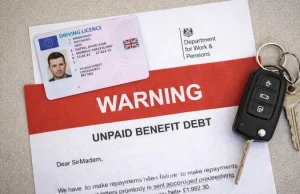
One of the more controversial elements of the new legislation is the ability for the DWP to suspend a person’s driving licence if they owe significant benefit debt.
While this measure will only apply in specific cases, it reflects the government’s determination to enforce repayment.
The conditions under which a driving licence may be suspended include:
- A debt of £1,000 or more owed to the DWP
- Refusal to cooperate with repayment requests
- Confirmation from financial checks that the individual has the means to pay
The DWP will be required to issue formal notice before taking this step, and individuals will have the right to appeal. The suspension will be lifted once the person either repays the debt or enters into an agreed payment plan.
This enforcement tool is expected to be used sparingly and mainly for cases where all other recovery options have been exhausted.
The power aligns with existing systems used by HMRC and local authorities for council tax recovery and unpaid fines.
Which Benefits Will Be Subject to Eligibility Checks First?
The rollout of eligibility checks using bank data will not apply to all benefits immediately. The government has identified three specific benefits that will be prioritised under the new system:
- Universal Credit
- Pension Credit
- Employment and Support Allowance (ESA)
These benefits were selected due to the high number of recipients and the complexity of eligibility requirements.
By starting with these programmes, the DWP can test and refine its data-gathering methods before applying the system more broadly.
Additional benefits may be included at a later stage, such as:
- Housing Benefit
- Jobseeker’s Allowance
- Personal Independence Payment (PIP)
The checks will focus on verifying savings, income, and capital limits. Claimants whose financial activity exceeds legal thresholds may see their payments reduced or stopped altogether.
What Safeguards Are in Place to Protect Claimants’ Rights?
The scale and sensitivity of the new powers have raised questions about data protection and civil liberties.
To address these concerns, several safeguards are built into the legislation. These are intended to ensure the new tools are used fairly, proportionately, and with accountability.
Key protections include:
- Oversight by an independent regulator who will monitor the DWP’s use of the powers
- Legal obligations for investigators to only access data that is strictly necessary
- Mandatory notifications to claimants before any action is taken
- The right to challenge or appeal decisions through tribunals or legal counsel
The system will also be audited periodically to assess whether investigations are being carried out lawfully.
Data collected must be destroyed once it is no longer needed for the purpose it was obtained.
The DWP has committed to a “privacy-first” approach, stating that the goal is not mass surveillance, but targeted fraud prevention and fair recovery of public money.
How Will the DWP Collect Information from Banks and Third Parties?
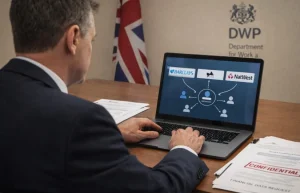
Previously, the DWP could only request information from a restricted list of financial organisations, usually requiring permission from the claimant.
That limitation has now been lifted. The department can now seek information from any institution that may hold relevant data.
This includes:
- High street banks and building societies
- Online-only banks and digital financial platforms
- Credit unions, landlords, and letting agents
- Employers or former employers
- Educational institutions, if applicable to student finance fraud
Officials must provide justification for their requests and confirm how the information will be used. Unjustified data gathering can result in disciplinary action or legal challenge. Here is a breakdown of the expansion in access:
Source of Information Previous Access Post-2026 Access
High street banks Limited Full
Online-only financial apps Rare Included
Employers Selective Expanded
Landlords With permission Without consent
The aim of this change is to give the DWP the tools needed to detect hidden income or relationships that could affect benefit eligibility. It also strengthens the department’s ability to respond swiftly to suspected fraud.
What Should Benefit Claimants Do to Stay Compliant in 2026?
With these new regulations on the horizon, benefit claimants should take proactive steps to ensure they remain compliant and avoid unintentional violations.
Keeping accurate financial records and staying informed about the requirements of each benefit is essential.
Recommended actions include:
- Regularly reviewing bank statements and keeping digital or paper records
- Promptly reporting any change in income, savings, or employment status
- Ensuring all information on benefit applications is accurate and up to date
- Responding to DWP correspondence and requests for information in a timely manner
Claimants are also advised to seek help from Citizens Advice or legal aid services if they receive a notification about an investigation or deduction.
Most importantly, remaining transparent with financial matters will be key to navigating the changes expected in 2026.
Conclusion
The DWP’s upcoming bank account checks and direct deduction powers signal a major transformation in the UK’s welfare system.
Designed to combat fraud and protect taxpayer money, these measures will require both vigilance and transparency to ensure fair treatment.
As 2026 approaches, claimants should take time to understand these changes, ensure their financial records are accurate, and seek help if they are unsure about how these new powers might affect them.
Frequently Asked Questions
How much can the DWP take directly from your bank account?
The amount deducted will depend on the size of the outstanding debt and available funds in the account. The DWP must review three months of bank statements before making any withdrawal.
Will all benefit claimants be subject to these checks?
Initially, only claimants of Universal Credit, Pension Credit, and ESA will be checked, with plans to expand to other benefits later.
Can the DWP access joint bank accounts?
Yes, if a claimant’s name is on the account, the DWP may request data from it. Only relevant financial data will be used for eligibility or fraud checks.
What if you disagree with a DWP deduction or decision?
Claimants can appeal any DWP action. They will be notified in advance and given the opportunity to dispute the deduction.
Does this new power violate privacy rights?
The government maintains that these powers are necessary and proportionate. An independent overseer will monitor how they are applied.
How will I know if I’m being investigated?
You will receive an official notice before any action is taken. The DWP must inform you and request financial information in advance.
What does the independent overseer actually do?
The overseer ensures the DWP uses its powers appropriately and fairly, prevents misuse, and protects claimant rights during investigations.

Leave a Reply