
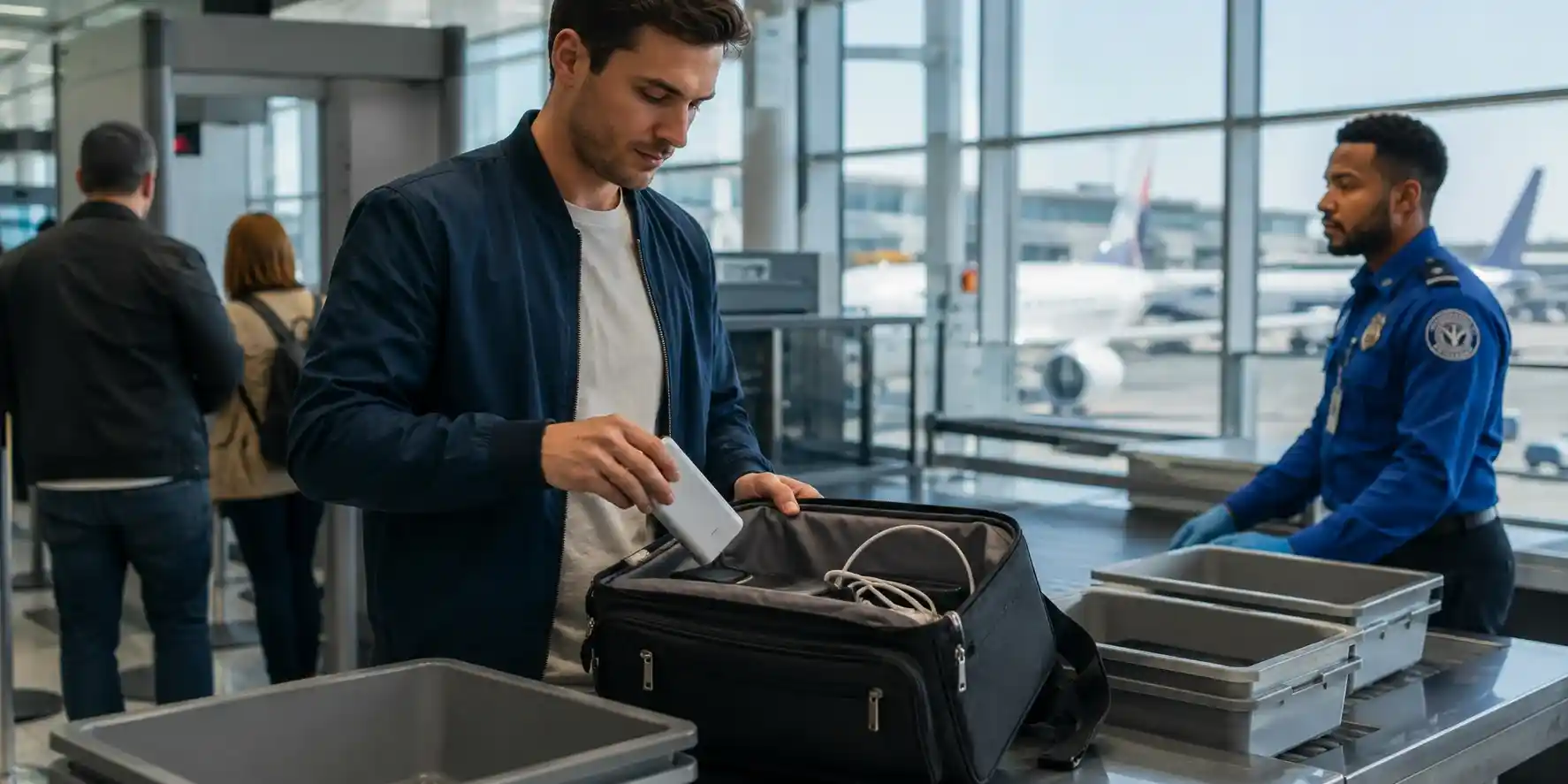
Yes, passengers can usually take a portable charger on a plane, but it must normally be packed in carry on luggage rather than checked baggage.
Most airlines allow power banks under 100Wh, although several carriers have introduced stricter rules on how portable chargers are stored and whether they can be used during flights due to growing lithium battery fire concerns.
Key takeaways from this guide:
- Portable chargers are generally banned from checked luggage
- Most airlines allow power banks under 100Wh in hand luggage
- Some airlines now prohibit charging devices during flights
- Lithium ion batteries can overheat and create fire risks onboard
- Airlines such as Emirates and Singapore Airlines have updated their rules
- Passengers should check watt hour ratings before travelling
- Portable chargers should be stored safely to avoid damage or short circuits
- Airline policies can vary depending on the country and carrier
Why Are Airlines Introducing New Portable Charger Rules?

Airlines have tightened portable charger regulations because lithium ion batteries can overheat unexpectedly. Unlike ordinary electrical fires, lithium battery fires are difficult to extinguish and can spread rapidly in enclosed aircraft cabins or cargo holds.
In recent years, aviation authorities have reported an increase in battery related incidents involving phones, vapes, laptops and portable chargers. While many cases are minor, some have forced emergency responses from cabin crew and even flight diversions.
One widely discussed incident involved an easyJet flight travelling from Hurghada in Egypt to London Luton. The aircraft diverted to Rome after a passenger reportedly packed a power bank inside checked luggage while it was connected to a mobile phone charger.
Airline staff treated the situation as a serious precaution because lithium batteries stored in cargo holds are much harder to monitor during flights.
This incident highlighted how portable charger misuse can affect hundreds of passengers and disrupt airline operations.
The easyJet Flight Diversion Explained
The easyJet incident gained attention because it demonstrated how seriously airlines now treat lithium battery risks. According to reports, cabin crew became aware that a power bank was charging a device inside baggage stored in the aircraft hold.
Because crew members cannot easily access checked baggage compartments during flights, the pilot decided to divert the aircraft to Rome as a safety precaution. The diversion caused overnight delays and disrupted travel plans for passengers.
Airlines increasingly prefer portable chargers to remain inside the cabin because any overheating or smoke can be identified and managed quickly by cabin crew.
Why Lithium Batteries Are Considered Dangerous?
Lithium ion batteries contain highly concentrated energy cells. If damaged, crushed, punctured or exposed to heat, the batteries can enter a process known as thermal runaway. This chain reaction creates excessive heat, smoke and sometimes explosions.
Aviation safety consultant Martin Lewis explained the issue clearly:
“I’ve worked alongside airline safety teams for several years, and lithium battery incidents are one of the fastest growing concerns in aviation. Even a small power bank can become dangerous if damaged during travel or exposed to pressure inside luggage compartments.”
Cabin fires involving lithium batteries can spread quickly because the batteries generate their own oxygen supply during combustion. This makes extinguishing them more challenging compared with standard electrical fires.
The increasing number of battery powered devices carried by passengers has forced airlines to review their policies regularly.
Why Portable Chargers Are Different From Standard Electronics?
Portable chargers are classified differently from many other electronic devices because they store electrical energy rather than simply consuming it. Unlike phones or tablets, power banks contain spare lithium cells designed specifically for charging other devices.
This distinction is important because spare lithium batteries face stricter transport regulations worldwide.
The table below shows how airlines commonly categorise electronic devices:
Device Type Contains Lithium Battery Allowed in Checked Baggage Allowed in Carry On
Smartphone Yes Usually Yes Yes
Laptop Yes Sometimes Yes
Portable Charger Yes Usually No Yes
Spare Camera Battery Yes No Yes
Electric Toothbrush Yes Usually Yes Yes
Because portable chargers function as spare battery packs, they are almost always prohibited from checked baggage.
Where Should Portable Chargers Be Packed During a Flight?
Most airlines require portable chargers to remain inside carry on luggage throughout the journey. Aviation authorities strongly discourage placing these devices in checked baggage because of fire detection limitations in cargo compartments.
Cabin crew are trained to handle battery incidents using specialist fire containment equipment. However, responding to a battery fire in the aircraft hold is significantly more difficult.
Passengers should pack portable chargers carefully to minimise accidental activation or physical damage.
Recommended safety practices include:
- Keeping chargers inside hand luggage
- Protecting battery terminals from metal objects
- Avoiding damaged or swollen power banks
- Storing chargers where they remain visible and accessible
Some airlines also ask passengers to place portable chargers under seats rather than in overhead lockers.
Why Checked Luggage Restrictions Exist?
The cargo hold environment creates several risks for lithium batteries. Bags can shift during turbulence, placing pressure on electronic devices. Batteries may also become damaged during baggage handling or compression.
If a battery overheats inside checked luggage, crew members cannot immediately identify the exact source of smoke or fire. This delay increases risks significantly.
Aviation fire expert Daniel Wright explained:
“Passengers often assume a power bank is harmless because it looks small, but the heat generated during a lithium battery fire can become extremely dangerous within minutes. That’s why airlines insist these devices stay in the cabin where crews can react immediately.”
The International Civil Aviation Organization and many national aviation authorities now recommend strict carry on only rules for portable chargers.
Under Seat Storage Versus Overhead Lockers
Some airlines have introduced further restrictions regarding where portable chargers can be stored during flights.
Carriers, including Emirates and several Asian airlines now encourage passengers to keep power banks in seat pockets or under seat bags instead of overhead compartments.
The reason is visibility. Cabin crew can identify overheating devices faster when they remain closer to passengers.
The table below outlines common airline storage recommendations:
Storage Location Allowed by Most Airlines Reason
Carry on Bag Under Seat Yes Easier monitoring
Seat Pocket Often Yes Quick access for crew
Overhead Locker Sometimes Restricted Harder to detect overheating
Checked Baggage Usually Prohibited Limited access during emergencies
As battery-related incidents continue increasing globally, more airlines may adopt similar storage rules.
What Portable Charger Size Is Allowed on Aircraft?
Battery capacity plays a major role in determining whether portable chargers are permitted onboard aircraft. Most airlines follow international aviation guidelines based on watt-hour measurements.
Portable chargers with lower capacities are generally considered safe for passenger transport, while larger battery packs face stricter controls.
Understanding Watt-Hour and mAh Limits
Many passengers are unfamiliar with watt-hour calculations because manufacturers often advertise battery capacity using milliamp hours instead.
Airlines primarily use watt-hours because they provide a more accurate measure of battery energy.
The following formula is commonly used:
Watt Hours = (mAh × Voltage) ÷ 1000
Fortunately, most consumer power banks designed for smartphones fall below airline limits.
The table below explains standard aviation battery categories:
Battery Capacity Airline Approval Requirement Common Device Type
Under 100Wh Usually Allowed Phone power banks
100Wh to 160Wh Airline Approval Required Professional camera batteries
Over 160Wh Generally Prohibited Industrial battery packs
Portable chargers around 20,000mAh usually remain below 100Wh and are commonly accepted by airlines.
Restrictions on High-Capacity Power Banks
Larger power banks designed for laptops, drones or professional equipment may exceed permitted battery limits.
Some airlines allow passengers to carry larger batteries only after obtaining approval before travel. However, batteries above 160Wh are typically banned on passenger aircraft entirely.
Travel technology specialist Rebecca Hall shared her experience:
“I travel internationally with photography equipment, and airline battery rules are something professionals take very seriously. I always double check watt hour ratings before flying because even experienced travellers can accidentally carry restricted batteries.”
Passengers should also ensure that battery labels remain visible. Security staff may refuse devices without clearly displayed watt hour information.
How Do Airlines Check Portable Charger Capacity?
Airport security officers and airline staff may inspect portable chargers during screening procedures. If battery capacity information is missing or unreadable, passengers may be asked additional questions or prevented from carrying the device onboard.
To avoid delays, travellers should:
- Check manufacturer labels before travelling
- Avoid counterfeit power banks
- Keep original packaging when possible
- Verify watt-hour limits with airlines before departure
Counterfeit or low-quality portable chargers present higher safety risks because they may lack proper thermal protection systems.
What Do UK Aviation Authorities Say About Flying With Power Banks?
The UK Civil Aviation Authority has updated its guidance several times in response to rising lithium battery incidents worldwide.
According to current recommendations, portable chargers and spare lithium batteries should always remain in carry-on luggage. The authority also advises passengers not to recharge portable chargers onboard aircraft.
The Civil Aviation Authority states that lithium batteries can create intense fires if damaged or defective, making correct handling essential for aviation safety.
Passengers are also advised to protect spare batteries individually to prevent short circuits.
Current UK Guidance on Portable Chargers
UK aviation guidance generally includes the following recommendations:
UK Portable Charger Rule Current Guidance
Portable chargers in checked baggage Not permitted
Portable chargers in carry on luggage Permitted
Charging power banks onboard Discouraged or prohibited by some airlines
Spare lithium battery protection Required
Oversized batteries above 160Wh Prohibited
The Foreign, Commonwealth and Development Office also advises travellers to review airline-specific battery policies before international journeys.
Why Airline Policies May Differ From Government Rules?
Government aviation guidance establishes minimum safety standards, but airlines may introduce stricter rules depending on their own operational policies.
For example, one airline may allow portable charger use during flights while another prohibits charging entirely.
Factors influencing airline policies include:
- Aircraft type
- Cabin layout
- Fire containment equipment
- Previous battery-related incidents
- Regional aviation regulations
Passengers should therefore avoid assuming that all airlines follow identical rules.
Which Airlines Have Banned Using Portable Chargers During Flights?

Several international airlines have introduced bans or restrictions on using portable chargers during flights.
These changes became more common after multiple incidents involving overheating batteries onboard aircraft.
Airlines with updated policies include:
- Emirates
- Singapore Airlines
- Virgin Australia
- Qantas
- Jetstar
- EVA Air
- Hong Kong Airlines
Many carriers still allow passengers to carry portable chargers but prohibit charging devices during flights.
Why Some Airlines Ban Charging Devices Mid Flight?
Airlines argue that active charging increases overheating risks. Charging creates additional heat within lithium batteries, particularly if devices become damaged or compressed during travel.
Singapore Airlines announced in 2025 that passengers would no longer be allowed to charge devices using portable chargers during flights. Similar policies were introduced by airlines across Asia and Australia.
South Korea also introduced stricter regulations after a fire incident involving an Air Busan aircraft.
The table below compares selected airline restrictions:
Airline Portable Chargers Allowed Charging During Flight Additional Restrictions
Emirates Yes No Must remain under seat
Singapore Airlines Yes No USB charging restrictions
Qantas Yes Restricted Carry on only
EVA Air Yes No Proper storage required
Virgin Australia Yes No Safety inspections possible
These restrictions demonstrate how aviation safety policies continue evolving globally.
How Many Portable Chargers Can Passengers Carry?
The number of portable chargers allowed varies between airlines and countries.
Many airlines permit passengers to carry up to two spare lithium batteries, although some countries now apply different quantity limits.
South Korea currently allows up to five portable batteries below 100Wh per passenger, while Japan restricts travellers to two portable chargers in some cases.
Passengers carrying multiple electronic devices for work should carefully review airline requirements before departure.
Why Quantity Limits Exist?
Airlines limit the number of spare batteries because larger quantities increase fire risks. Multiple batteries stored together may also create short circuit hazards if improperly packed.
Business travellers, photographers and content creators often carry additional batteries for equipment such as:
- Cameras
- Drones
- Lighting systems
- Laptops
- Mobile workstations
Passengers transporting professional equipment may need airline approval for larger battery quantities.
Best Practices for Carrying Multiple Batteries
Travellers carrying several batteries should:
- Use protective battery cases
- Keep terminals covered
- Avoid loose batteries inside bags
- Separate batteries from metal objects
Proper organisation significantly reduces accidental short circuit risks during flights.
What Happens If a Portable Charger Is Packed Incorrectly?
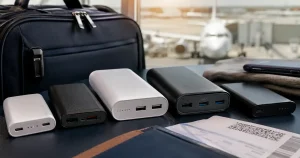
Airports and airlines treat portable charger violations seriously because of the potential safety consequences.
If a passenger packs a portable charger in checked baggage, security staff may remove the item during screening procedures.
Possible consequences include:
- Confiscation of the device
- Additional security checks
- Delayed baggage handling
- Flight disruptions
- Passenger questioning
In more serious situations, flights may divert if battery incidents occur during travel.
Why Airlines Enforce Battery Rules Strictly?
Aviation safety regulations are designed to minimise onboard fire risks. Even a single damaged battery can threaten passenger safety if not managed correctly.
Cabin crew receive specialist training for handling lithium battery incidents, including procedures for smoke containment and thermal management.
Airline operations manager Laura Bennett explained:
“Passengers sometimes underestimate how dangerous damaged batteries can become inside aircraft. Airlines aren’t trying to inconvenience travellers. These rules exist because crews have seen firsthand how quickly lithium battery incidents can escalate.”
Passengers should therefore review airline battery policies before arriving at airports to avoid unnecessary complications during travel.
FAQs
Can a 20,000mAh portable charger go in hand luggage?
Yes, most 20,000mAh portable chargers are below the standard 100Wh airline limit and are usually allowed in carry-on luggage. However, they should never be packed in checked baggage.
Why are lithium batteries restricted on planes?
Lithium batteries can overheat, catch fire or explode if damaged or defective. These fires are difficult to control onboard aircraft, which is why aviation authorities apply strict safety rules.
Can passengers use power banks during long-haul flights?
Some airlines still allow portable charger usage during flights, while others now prohibit charging devices onboard. Passengers should always check airline policies before travelling.
Do airport security officers check battery capacity?
Yes, airport security staff may inspect portable chargers to confirm their watt-hour rating complies with airline and aviation authority regulations.
Are portable chargers allowed on international connecting flights?
Generally, yes. However, travellers must follow the regulations of every airline and country involved in the journey, as rules can vary internationally.
What should travellers do if a power bank overheats onboard?
Passengers should immediately alert cabin crew if a portable charger becomes hot, smokes or appears damaged during a flight.
Can airlines confiscate unapproved portable chargers?
Yes, airlines and airport security officers can confiscate portable chargers that exceed battery limits or violate safety regulations.

Leave a Reply