
If you live in one of 18 specific UK postcode areas, you could be due a £25 Cold Weather Payment from the Department for Work and Pensions (DWP).
This automatic payment is triggered when the temperature in your area drops to 0°C or below for seven consecutive days, a threshold recently reached in parts of Cumbria, Northumberland, and the Scottish Borders.
Here’s what you need to know at a glance:
- £25 is paid automatically per 7-day cold spell
- 18 postcode areas have triggered payments so far
- Applies to those on certain means-tested benefits
- No application is needed paid directly into your account
- Multiple payments are possible through winter
- Scotland operates a separate Winter Heating Payment
- Payments usually arrive within 14 working days
Let’s break down the full details.
What Is the DWP Cold Weather Payment and How Does It Work?
The Cold Weather Payment is a long-standing initiative run by the Department for Work and Pensions (DWP), intended to provide additional financial support during periods of severe winter weather.
It’s specifically targeted at low-income households and those who rely on means-tested benefits, helping them meet increased heating costs when the temperature dips.
When the average temperature in a particular area is recorded at or forecast to be 0°C or below for seven consecutive days, a £25 payment is triggered for each qualifying week.
The Cold Weather Payment season runs annually from 1 November to 31 March, covering the coldest months in the UK.
This support can be crucial, especially during periods when energy costs are already high and vulnerable households face difficult choices between heating and other essentials. The payments are automatically issued to eligible individuals and there is no need to apply separately.
In practice, the DWP relies on localised temperature data collected via weather stations monitored by the Met Office.
Each weather station is linked to a set of postcodes, so if the data shows qualifying temperatures in your region, and you’re eligible, you’ll receive the payment without needing to take further action.
Which Postcodes Have Triggered Cold Weather Payments This Season?
Recently, the first wave of Cold Weather Payments has been triggered in 18 UK postcode areas, primarily located in Cumbria, Northumberland, and the Scottish Borders. These areas have all experienced a prolonged cold snap, meeting the DWP’s temperature criteria.
Here’s a detailed look at the affected postcodes and their corresponding localities:
Table 1: List of 18 Eligible Postcodes for Cold Weather Payment (First Trigger)
| Postcode | Area(s) Covered |
|---|---|
| CA9 | Alston, Garrigill, Nenthead |
| CA10 | Penrith (Rural), Shap, Tebay |
| CA11 | Penrith, Ullswater, Glenridding |
| CA12 | Keswick, Seatoller, Braithwaite |
| CA16 | Appleby-in-Westmorland |
| CA17 | Kirkby Stephen, Brough |
| LA8 | Kendal (Rural), Staveley, Levens |
| LA9 | Kendal (Town Centre) |
| LA10 | Sedbergh, Dent |
| LA21 | Coniston, Torver |
| LA22 | Ambleside, Langdale, Grasmere |
| LA23 | Windermere, Bowness-on-Windermere, Troutbeck |
| NE19 | Otterburn, Redesdale, Elsdon |
| NE47 | Allendale, Hexhamshire, Haydon Bridge |
| NE48 | Bellingham, Kielder, Wark |
| NE49 | Haltwhistle, Greenhead |
| DG14 | Canonbie (Dumfries and Galloway) |
| TD9 | Hawick, Newcastleton (Scottish Borders) |
Each postcode listed corresponds to a weather station that recorded or forecasted a 7-day period of freezing temperatures. These weather stations are paired with specific geographical areas, so the payment is triggered based on data unique to your local zone, not general UK-wide temperatures.
Who Is Eligible for the Cold Weather Payment and What Are the Requirements?
Eligibility for the Cold Weather Payment is based on receiving one or more of the following means-tested benefits.
You must also meet specific additional criteria related to each benefit type:
- Pension Credit
- Income Support
- Income-based Jobseeker’s Allowance (JSA)
- Income-related Employment and Support Allowance (ESA)
- Universal Credit
- Support for Mortgage Interest (SMI)
Each of these comes with certain conditions. For example, if you’re on Income Support or income-based JSA, you may only receive the payment if you also have one of the following:
- A disability or pensioner premium
- A child under five living with you
- A child who is disabled
Similarly, those on Universal Credit qualify only under specific circumstances.
You must be not employed or self-employed, unless:
- You or your partner have a health condition or disability and have limited capability for work
- You have a child under five living with you
- You receive a disabled child element
It’s also essential to notify your Jobcentre Plus if you have a baby or a young child. If you fail to inform them, you may not receive your Cold Weather Payment even if you meet all the criteria.
Scotland operates a different system known as the Winter Heating Payment, which we’ll cover shortly.
How Can You Confirm If Your Area Has Triggered a Payment?
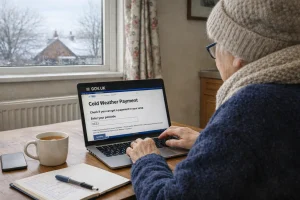
To find out whether your area qualifies for the Cold Weather Payment, the DWP provides a postcode checker tool on its website. This tool allows you to input your postcode and see if a payment has been triggered.
The system is straightforward:
- You enter your postcode
- The tool checks the weather data against your area’s designated weather station
- It then displays whether your location qualifies for a payment
Because the DWP uses real-time weather data, updates happen frequently during the cold season. If your area hasn’t yet qualified, it might still do so later in the winter.
When Will the Payment Arrive in My Account?
Once your area has met the criteria, and you’re confirmed as eligible, the Cold Weather Payment is issued automatically. The amount is £25 for each 7-day period of qualifying cold weather.
You can expect the payment to arrive within 14 working days, deposited directly into the same account you use for other benefit payments.
There’s no need to make a separate application or phone call.
However, if you believe you were eligible and haven’t received payment after 14 working days, it’s best to:
- Contact the Pension Service on 0800 731 0469 if you’re receiving Pension Credit
- Reach out to Jobcentre Plus if you’re receiving JSA or ESA
- Use your Universal Credit online journal to raise the issue
These contact methods ensure your concern is registered and reviewed as quickly as possible.
Can You Receive Multiple Cold Weather Payments?
Yes, and this is a key feature of the Cold Weather Payment scheme. There is no limit to the number of payments a household can receive during the Cold Weather Payment period.
If your local area experiences multiple cold spells, you will receive £25 for each qualifying 7-day period.
Table 2: Example of Cold Weather Payment Frequency
| Weeks Below 0°C | Payment Amount |
|---|---|
| 1 week | £25 |
| 2 weeks | £50 |
| 3 weeks | £75 |
For example, during the 2023 winter season, some regions recorded three qualifying weeks, which led to total payments of £75 for some households. This can make a meaningful difference in helping to offset rising energy costs, particularly for those in rural or high-altitude locations that see more extreme weather.
What About Scotland – Do Residents There Receive Cold Weather Payments?
If you’re based in Scotland, you won’t receive Cold Weather Payments. Instead, the Scottish Government operates the Winter Heating Payment, which is administered by Social Security Scotland.
This is a one-off, automatic payment of £55.05 (2023/24 rate) issued to eligible individuals, regardless of local temperature fluctuations. It replaces the Cold Weather Payment in Scotland, aiming for simplicity and fairness across varying regional weather patterns.
You can learn more about the Scottish system on the mygov.scot Winter Heating Payment page.
Are You Missing Out on Additional Financial Help?
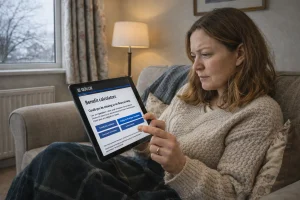
Many households are unaware they might be eligible for other types of support. If you’ve never checked your benefit entitlement, now might be the right time to do so.
There are several reliable tools you can use to calculate potential support:
- Turn2Us Benefits Calculator
- Entitledto Calculator
- Policy in Practice Calculator
These tools ask you for basic income and household information, and they’ll show you if you qualify for things like:
- Housing Benefit
- Council Tax Support
- Universal Credit
- Disability Benefits
- Free School Meals
They’re especially useful for individuals who’ve recently changed jobs, had a baby, or taken on caring responsibilities.
As a specialist writer in welfare and public policy, I’ve observed that the Cold Weather Payment often acts as a gateway awareness point for broader entitlements.
Many people first hear about it in news bulletins or through their local council, and then realise they might be eligible for additional support, whether it’s Warm Home Discount, local fuel grants, or even food vouchers.
“I’ve spoken with families and pensioners who only discovered they qualified for Cold Weather Payments after a friend mentioned it or they saw a news piece on regional payments.
Once they understood what triggered it, they began to explore other financial assistance options, improving their overall situation.”
So if you think you might qualify, don’t stop at the Cold Weather Payment. Use one of the recommended calculators to check your full entitlements.
Final Thoughts – Why It’s Important to Check Your Eligibility Now?
If you live in one of the 18 areas that have just triggered a payment, you’re already in line for £25, and more could follow if the freeze continues.
Even if you’re not on the list today, more postcodes may be added as the winter deepens. The scheme runs until 31 March, and the next cold snap could be just around the corner.
Stay ready. Stay informed. And don’t miss out on what you’re entitled to.
FAQs – Cold Weather Payment
How often can I receive Cold Weather Payments in a season?
You can receive a £25 payment every time your local area experiences a 7-day cold snap. There’s no cap on the number of payments.
Is the Cold Weather Payment taxable or affects other benefits?
No. Cold Weather Payments are not taxable and don’t affect other benefits.
How accurate is the postcode weather data used by the DWP?
It’s based on real-time data from the nearest Met Office weather station, providing reliable localised tracking.
What if my benefits changed after the cold snap | am I still eligible?
You must have been eligible during the 7-day cold period. Later changes won’t backdate payments.
Can students or part-time workers get Cold Weather Payments?
Generally no, unless they’re on qualifying benefits such as Universal Credit and meet specific conditions.
Is there a difference between Cold Weather Payment and Winter Fuel Payment?
Yes. The Cold Weather Payment is based on temperature triggers. Winter Fuel Payment is an annual payment for those over State Pension age.
Do I need to apply for Cold Weather Payments every year?
No. If you’re eligible, payments are made each year automatically based on your benefit status and local weather conditions.

Leave a Reply