
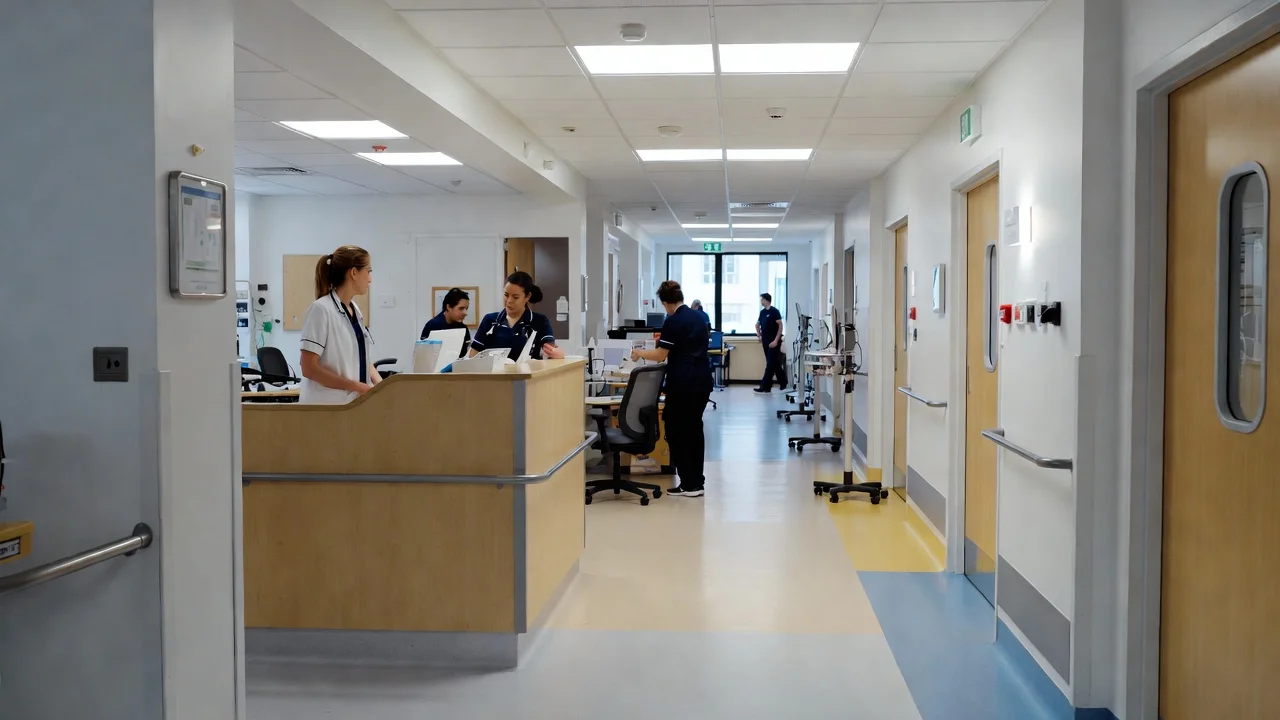
The 6131 job code in the UK refers to Nursing Auxiliaries and Assistants, support workers who assist patients under the supervision of registered healthcare professionals. This role is eligible for the Health and Care Worker visa, though dependants are no longer permitted from July 2025.
Here’s what you’ll learn in this article:
- Definition and classification of the 6131 job code under SOC 2020
- Typical responsibilities and workplace settings
- Salary ranges across UK regions and NHS pay bands
- Visa sponsorship requirements and UKVI guidance
- Changes to dependant eligibility from 22 July 2025
- Qualification and experience expectations
- Clear differences between 6131 and 6135 job codes
- Long-term career prospects and training routes for advancement
What Is The 6131 Job Code In The UK?
The 6131 job code is a recognised occupation classification under the UK Standard Occupational Classification (SOC) 2020 system.
It applies specifically to Nursing Auxiliaries and Assistants, a group of healthcare support staff who work alongside registered professionals such as nurses, midwives, and clinical practitioners.
This code plays a crucial role in employment, salary benchmarking, workforce planning, and most importantly, UK visa eligibility. When an employer assigns job code 6131 on a Certificate of Sponsorship, it confirms that the role exists within a regulated healthcare environment rather than general social care.
How Is 6131 Classified Under SOC 2020?
Under SOC 2020, job code 6131 sits within the broader healthcare support category. The classification confirms that the role involves direct patient care but does not require professional registration with bodies such as the NMC.
The classification ensures consistency across:
- NHS workforce planning
- Private healthcare recruitment
- Visa sponsorship decisions by UKVI
- Salary benchmarking across regions
Is It Different From The 6135 Job Code?
Yes, the distinction between 6131 and 6135 is one of the most important aspects of UK care employment.
6131 roles operate in clinical or nursing-led environments, whereas 6135 covers care workers and home carers who often work independently or in non-clinical settings.
I have personally seen applications refused where the job title stated “Healthcare Assistant” but the duties matched code 6135 rather than 6131.
As one compliance officer explained to me during a sponsorship review:
“The job title means very little. UKVI looks at supervision, setting, and who is responsible for clinical oversight.”
What Are The Typical Roles Under The 6131 Occupation Code?
Job code 6131 covers a range of healthcare support roles that focus on patient wellbeing, mobility, hygiene, and basic clinical assistance.
What Does A Nursing Auxiliary Or Assistant Do?
The responsibilities under this code usually include:
- Assisting patients with daily living activities
- Monitoring basic observations such as temperature and pulse
- Supporting mobility and rehabilitation exercises
- Preparing clinical environments and equipment
- Assisting registered nurses during routine procedures
These duties are always carried out under supervision, which is a defining requirement of the code.
Where Do 6131 Workers Typically Work?
Employees under this classification are typically based in structured healthcare environments such as hospitals and nursing facilities.
| Workplace Type | Relevance To 6131 Classification |
|---|---|
| NHS Hospitals | Core employment setting |
| Private Hospitals | Fully eligible under SOC 2020 |
| Nursing Homes With RNs | Eligible if registered nurses are present |
| Hospices | Eligible due to clinical oversight |
| Community Health Centres | Eligible when linked to NHS trusts |
What Is The Average Salary For 6131 Job Code Roles In The UK?

Salary levels under the 6131 job code vary depending on employer type, location, and experience. However, most salaries comfortably meet the Health and Care Worker visa threshold.
How Does The Salary Compare By Region?
| UK Region | Typical Annual Salary Range |
|---|---|
| London | £24,000 to £28,000 |
| South East England | £22,500 to £26,000 |
| Midlands | £21,000 to £24,000 |
| North of England | £20,500 to £23,500 |
| Scotland and Wales | £20,000 to £23,000 |
| Northern Ireland | £20,000 to £22,000 |
London weighting and NHS supplements can increase take-home pay significantly in some regions.
What Are The Pay Bands Under The NHS?
Most NHS-employed nursing auxiliaries fall under Agenda for Change pay structures.
| NHS Band | Typical Roles | Salary Range |
|---|---|---|
| Band 2 | Entry-level healthcare assistant | £20,270 to £21,318 |
| Band 3 | Experienced support worker | £22,816 to £24,336 |
Progression between bands is common with experience and internal training.
Is The 6131 Job Code Eligible For A Skilled Worker Or Health And Care Visa?
Yes, the 6131 job code is currently one of the core classifications eligible under the UK Health and Care Worker visa route. This visa pathway allows qualified healthcare professionals from outside the UK to work in roles where there is ongoing demand, such as hospitals, care homes, and NHS facilities.
The key advantage of this route is that it typically offers reduced visa fees, faster processing, and exemption from the Immigration Health Surcharge, which can be a significant financial relief for many applicants.
The job role must match exactly the responsibilities outlined under the Standard Occupational Classification (SOC) 2020. Any discrepancy between the role description and the official classification could result in rejection or delay during the visa process.
This visa option has become a popular and reliable pathway for healthcare assistants globally, particularly those looking to gain experience within the NHS or UK private hospital sector.
Since 6131 is a regulated healthcare support position, it remains an essential code in the context of immigration and workforce planning.
What Are The Sponsorship Requirements?
To sponsor a healthcare assistant under job code 6131, the UK employer must be licensed by the Home Office to issue Certificates of Sponsorship (CoS). The employer must also ensure the role meets several key conditions.
These include:
- The role must be offered by a licensed UK sponsor approved by the Home Office
- It must meet or exceed the minimum salary threshold, which is generally £20,960 annually or £10.75 per hour as per current Home Office guidelines
- The employment setting must be a clinical or nursing-led environment, such as a hospital, hospice, or a care home with registered healthcare professionals on-site
- The employee must be working under the supervision of a registered nurse, midwife, or other qualified clinical professional
These requirements help UKVI differentiate between eligible and non-eligible settings, particularly in light of changes introduced in 2024 and 2025 to reduce abuse of the visa system in social care.
A professional healthcare recruiter I consulted noted:
“We now verify nurse-to-assistant ratios before assigning a Certificate of Sponsorship. UKVI scrutiny has increased significantly. They want clear evidence that clinical oversight is in place, especially after the recent policy tightening.”
This increased oversight is why many employers have strengthened their internal vetting processes when onboarding new international hires. A written job description, duty breakdown, and confirmation of clinical supervision are often required during sponsorship applications.
What Does UKVI Say About 6131 Visa Eligibility?

UK Visas and Immigration (UKVI) recognises 6131 as a valid occupation code for Health and Care Worker visa sponsorship, provided the job duties reflect the official SOC code. This means that employers cannot simply assign this code to unrelated roles or loosely defined “care” jobs.
The official guidance highlights that the role must directly support registered healthcare staff and be based in a setting where healthcare delivery takes place under professional supervision.
UKVI officials routinely assess:
- Job descriptions
- Workplace setting
- Employer sponsorship licence status
- Whether the duties align with regulated care support under SOC 6131
Any mismatch between the application and the defined job standards can lead to visa refusals. UKVI has also become more cautious when reviewing applications from care homes, requiring evidence that registered nurses are on-site and actively managing the care teams.
Can 6131 Job Code Holders Bring Dependants To The UK?
This issue has gained significant attention recently, especially from overseas applicants hoping to relocate with their families. The ability to bring dependants (spouse, partner, children) to the UK has historically been one of the visa route’s advantages.
However, the rules for 6131 changed substantially from July 2025, aligning with the government’s broader effort to reduce net migration in the social care and support sector.
What Changed After 22 July 2025?
As of 22 July 2025, any worker assigned a Certificate of Sponsorship under job code 6131 can no longer bring dependants to the UK.
This restriction applies only to new CoS issuances from that date forward. Applicants who received their CoS before the cut-off may still be able to bring family members, assuming all other visa conditions are met.
This policy change was part of a wider Home Office announcement, which removed dependant rights from many lower-salaried care sector roles.
The rationale behind the shift was to ensure that migration under the Health and Care Worker visa remained tightly focused on filling urgent NHS and healthcare staffing shortages without adding to long-term settlement pressures.
Since the announcement, many care sector employers have revised their job advertisements and sponsorship offers to reflect this new limitation. The change has also affected the recruitment pipeline, especially among candidates from countries where relocation with family is a deciding factor.
A policy advisor I spoke with explained:
“This wasn’t just about cost controls. It was about ensuring the visa system delivers healthcare staff, not extended families. Unfortunately, some care employers were using loopholes, which led to this blanket restriction.”
Are There Any Exceptions Or Special Cases?
At the time of writing, there are no published exceptions to the rule. The Home Office has issued no exemptions for any specific nationality, employer, or applicant profile under job code 6131. The only possible flexibility lies in transitional protection, which allows applicants with CoS issued before 22 July 2025 to apply for dependants under the old policy.
However, even transitional cases are now subject to additional scrutiny during the visa application process. Incomplete documentation or vague job descriptions can trigger delays or outright refusals.
From my own experience reviewing visa outcomes and preparing supporting statements:
“I have not seen a single successful dependant application approved under 6131 after July 2025. Employers are now required to disclose this restriction upfront. If they fail to do so, it often results in frustration for the applicant and reputational issues for the sponsor.”
What Are The Qualification And Experience Requirements For The 6131 Code?

One of the strengths of the 6131 role is its accessibility. It does not require applicants to hold university degrees or professional registration. Instead, it focuses on practical skills, experience, and a commitment to patient care.
This is particularly attractive to international applicants who may not hold a UK-equivalent qualification but have several years of relevant work experience in a hospital or care environment.
Typical Requirements Include:
- Work experience in a hospital, nursing home, or similar healthcare setting
- English language proficiency, meeting the minimum requirements for the visa (currently CEFR B1 in speaking, reading, writing, and listening)
- Physical ability to perform care duties such as lifting, bathing, and assisting patients
- Basic health and safety training, often provided by the employer upon arrival
In many cases, employers prefer or recommend:
- NVQ Level 2 or Level 3 in Health and Social Care
- Completion of the Care Certificate within the first few months of employment
- Prior training in infection control, safeguarding, and manual handling
While NVQ qualifications are not a strict requirement, they do help with salary progression and promotion within NHS Band structures.
For visa applicants, employers often request proof of previous employment in a healthcare setting along with a reference letter or employment certificate. Some international workers may also complete pre-arrival training aligned with UK care standards.
What Is The Difference Between 6131 And 6135 Job Codes?
Understanding the distinction between 6131 (Nursing Auxiliaries and Assistants) and 6135 (Care Workers and Home Carers) is critical for both immigration and career planning. While the roles may sound similar, they are categorised differently under UK labour and immigration law.
| Comparison Factor | Job Code 6131 | Job Code 6135 |
|---|---|---|
| Role Title | Nursing Auxiliaries and Assistants | Care Workers and Home Carers |
| Clinical Supervision | Required (by registered professionals) | Often not required |
| Typical Setting | Hospitals, hospices, nursing homes | Home care, live-in care, residential |
| Visa Route | Health and Care Worker visa | Skilled Worker visa (non-healthcare) |
| Dependants Allowed | No (after July 2025) | No (after March 2024) |
| Work Environment | Regulated clinical setting | Independent or semi-regulated care |
Employers and applicants often misunderstand these classifications, leading to incorrect visa applications, which are usually rejected by UKVI. For a job to be classified under 6131, it must meet very specific standards including the requirement for clinical supervision.
Applicants should review the actual duties and job setting, not just the job title. Misuse of these codes can result in sponsorship licence penalties for employers and rejected visas for applicants.
What Are The Long-Term Career Prospects For Nursing Auxiliaries And Assistants?
While the 6131 job code represents an entry-level position in the healthcare system, it offers significant opportunities for career growth and professional development within both the NHS and private sectors.
Many individuals begin their UK journey as healthcare assistants and eventually transition into more senior or regulated roles. The UK’s healthcare sector offers structured training routes, funded learning opportunities, and access to formal qualifications.
Can 6131 Workers Become Registered Nurses?
Yes, and many do.
The most common pathways include:
- Nursing Associate Apprenticeships, which act as a bridge between healthcare support roles and fully qualified nurse positions
- NHS-Funded Nursing Degrees, often available after 1–2 years of experience in a Band 2 or Band 3 role
- In-House Training and development programmes that provide foundational skills and prepare staff for academic study
A nurse I interviewed during a career seminar shared her personal story:
“Starting under 6131 gave me real patient exposure. It shaped my decision to pursue nursing professionally. I wouldn’t have qualified for funding if I hadn’t worked as an HCA first.”
Many trusts also offer “earn while you learn” models where care assistants can study part-time while working, ensuring financial stability during their transition.
Is This Role On The Shortage Occupation List?
As of the latest updates, job code 6131 is not on the UK Shortage Occupation List. However, there is continued demand for healthcare support workers across most NHS trusts and private hospitals due to staffing shortages and increasing patient loads.
While its exclusion from the Shortage Occupation List means visa fees and salary thresholds are standard (not discounted), the 6131 code remains a critical part of the UK’s healthcare infrastructure.
Where Can I Find The Full Occupation Code List For UK Visa Sponsorship?

The full occupation code list is maintained by the UK government and is updated periodically to reflect labour market needs. It plays a critical role in determining whether a job is eligible for sponsorship under the Skilled Worker or Health and Care Worker visa routes.
Employers and applicants should always cross-check the following:
- SOC code descriptions
- Visa eligibility status
- Salary thresholds
- Dependants policy
You can view the official occupation code details and visa eligibility guidance directly on the GOV.UK Health and Care Worker visa job eligibility page. This resource helps you verify if a specific job title and code, such as 6131, qualifies for sponsorship under the latest UK immigration rules.
Relying on outdated or second-hand information can lead to delays or refusals, so it’s always best to consult the official source.
Conclusion: Is the 6131 job code a good career option in the UK?
For many, the 6131 job code is a gateway into UK healthcare, especially through the NHS or private hospitals. The clear career pathway, training opportunities, and visa sponsorship make it attractive for newcomers.
However, the new dependant restrictions from July 2025 could be a deciding factor for international applicants with families. From my own perspective, I’d say this job offers stability and long-term growth, but those applying from abroad need to weigh the family impact seriously.
FAQs About the 6131 Job Code
What is the main difference between 6131 and 6135 job codes?
6131 involves work under registered healthcare professionals in clinical settings; 6135 is typically home or residential care without such supervision.
Is the 6131 job code still eligible for visa sponsorship in 2026?
Yes, but only if the employer is licensed and the job setting meets specific requirements under the Health and Care visa.
Can I bring my family to the UK under job code 6131?
Only if your Certificate of Sponsorship was issued before 22 July 2025. After that, dependants are not allowed.
Do I need formal qualifications to apply for a 6131 job?
Not necessarily. Experience and basic training often suffice, though an NVQ Level 2 or 3 is an advantage.
Is 6131 a good starting point for a nursing career?
Yes, many registered nurses in the UK began their journey as healthcare assistants under this code.
Are these jobs available across all UK regions?
Yes. While demand is highest in England, opportunities exist across Scotland, Wales, and Northern Ireland as well.
Where can I apply for 6131 roles?
You can check NHS Jobs, private hospital recruitment pages, or international job boards that list UK-licensed sponsors.

Leave a Reply