
Last Updated on AUG 21, 2026
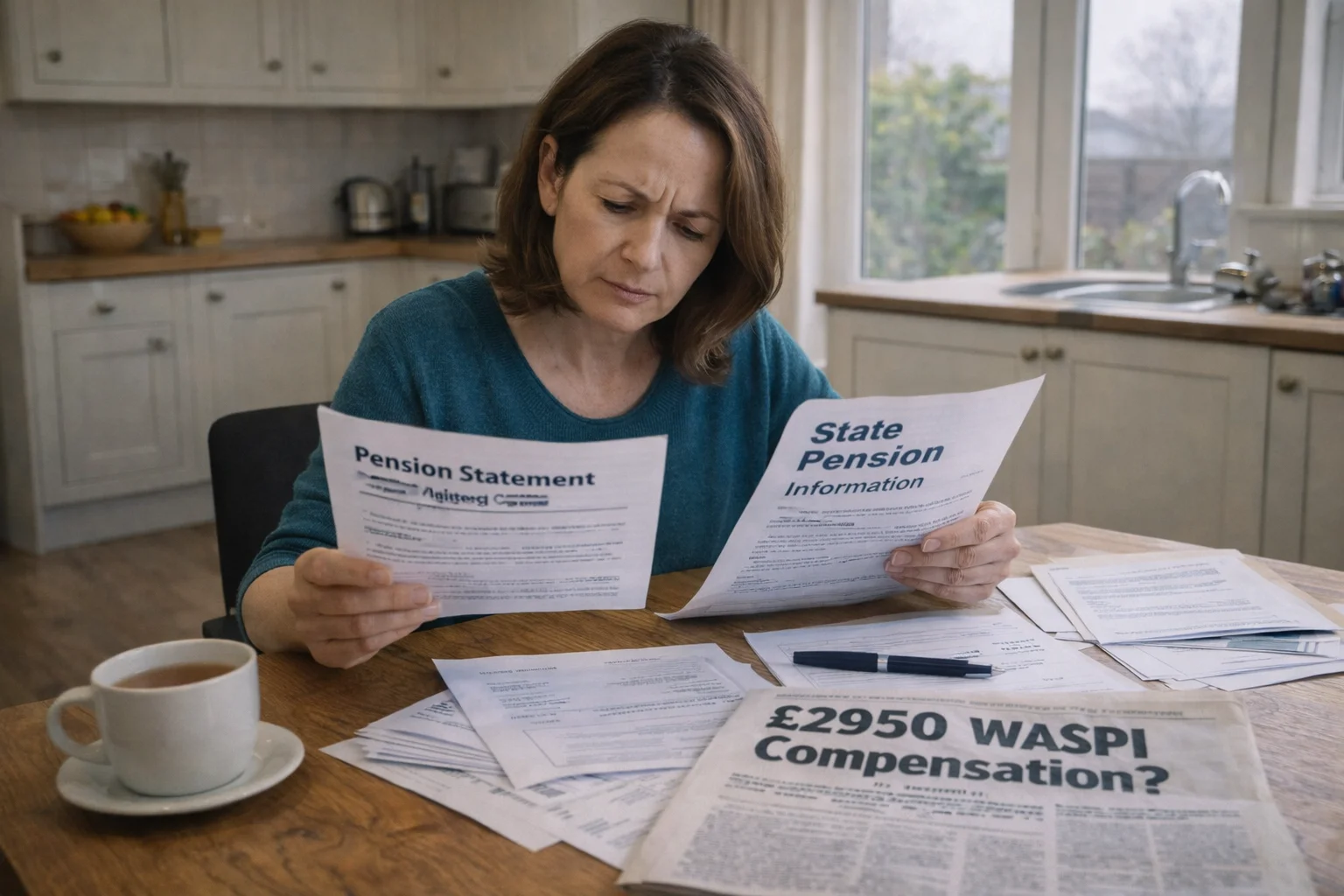
As of August 2026, there is no confirmed £2,950 WASPI payment and no DWP compensation scheme for women affected by changes to the State Pension age.
The £2,950 figure comes from the Parliamentary and Health Service Ombudsman’s March 2024 report. It is the upper end of Level 4 compensation, ranging from £1,000 to £2,950, which the Ombudsman said it would have recommended for the six sample complainants it investigated. It was never a guaranteed £2,950 payment for every 1950s-born woman.
The Government initially rejected financial compensation in December 2024. After a legal challenge revealed that relevant DWP-commissioned research from 2007 had not been considered, the Government withdrew that part of its decision in November 2025 and reconsidered the issue.
However, on 29 January 2026, the Government reached a fresh decision and again concluded that it would not introduce a financial compensation scheme.
WASPI subsequently launched another legal challenge in May 2026, meaning the dispute is continuing through the courts even though no payment scheme currently exists.
What Is the WASPI Compensation and Why Is It in the News?
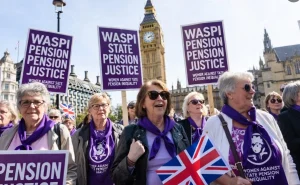
WASPI, which stands for Women Against State Pension Inequality, is a campaign movement that advocates for women affected by State Pension age changes.
These changes were legislated through the Pensions Act 1995 and later revised under the Pensions Act 2011, which increased the State Pension age for women from 60 to 65, aligning it with men.
Women born in the 1950s, particularly between April 1950 and April 1960, were impacted by the accelerated implementation of these changes.
Many reported receiving little to no notice, leaving them financially unprepared for retirement.
The Parliamentary and Health Service Ombudsman began investigating the DWP’s communication of changes to women’s State Pension age in 2018.
Its final report was published on 21 March 2024, so references elsewhere in this article suggesting that a final Ombudsman report was still expected in 2026 are now outdated.
The Ombudsman did not conclude that all communication about the pension age changes had been inadequate. It found that DWP communication between 1995 and 2004 met expected standards, but identified maladministration in later decision-making.
In particular, it found that DWP failed to give sufficient consideration to targeted information in 2005 and did not act promptly enough on plans to write directly to affected women. Together, these failures resulted in a 28-month delay in beginning the direct mailing exercise.
The Government now accepts that this 28-month delay occurred and has apologised for not sending individual letters earlier. However, it does not accept the Ombudsman’s full approach to determining the injustice caused by that delay.
What Does the £2,950 WASPI Compensation Figure Actually Mean?
The £2,950 figure is not an approved DWP payment amount. It is the upper end of Level 4 on the Parliamentary and Health Service Ombudsman’s financial remedy scale, which covers payments from £1,000 to £2,950.
In its March 2024 final report, the Ombudsman said that it would have recommended Level 4 compensation for each of the six sample complainants it investigated.
It also said that DWP should provide an appropriate remedy for other 1950s-born women who had suffered injustice because of the maladministration identified.
Importantly, the Ombudsman did not say that every affected woman should automatically receive £2,950, nor did it establish that every woman born in the 1950s belonged in Level 4.
The Government has since considered the recommendation and, following a fresh review, confirmed in January 2026 that it will not establish a financial compensation scheme.
Therefore, £2,950 should continue to be described as the upper end of an Ombudsman recommendation, rather than an expected or forthcoming DWP payment.
The PHSO financial remedy scale referenced in the March 2024 report included the following levels:
| Level of Impact | Description of Impact | Compensation Range |
|---|---|---|
| Level 1 | Minimal impact | £100–£450 |
| Level 2 | Minor impact | £500–£950 |
| Level 3 | Moderate impact | £1,000–£1,250 |
| Level 4 | Moderate to significant impact | £1,000–£2,950 |
| Level 5 | Significant impact | £3,000–£9,950 |
| Level 6 | Severe and prolonged impact | Over £10,000 |
The figure of £2,950 is frequently cited in media reports and campaign materials because it represents the maximum suggested amount within the Level 4 category, which many believe most WASPI women fall into.
It is important to note that the Ombudsman’s role is advisory.
The government is not legally obligated to act on its recommendations, and so far, no official action has been taken by the DWP to implement a compensation scheme.
Has the DWP Confirmed the £2,950 WASPI Payment?
No. The DWP has not confirmed a £2,950 payment. More importantly, the Government has now made a formal decision not to introduce a WASPI financial compensation scheme.
The position has changed several times:
- December 2024: The Government rejected a financial compensation scheme
- 11 November 2025: The Government announced that it would reconsider the decision after relevant 2007 DWP research had not been taken into account
- December 2025: The earlier decision was withdrawn as part of the reconsideration process
- 29 January 2026: The Government announced its new decision and again rejected financial compensation
The Government accepts that DWP decision-making caused a 28-month delay in beginning to send individual State Pension age letters and has apologised for that delay.
However, it concluded that a compensation scheme would not be fair, feasible or represent good value for taxpayers. It also argued that many affected women already knew that the State Pension age was increasing and that assessing what individual women knew roughly two decades ago would be extremely difficult.
As a result, there is currently no £2,950 payment, compensation application process or DWP payment timetable.
Why Is the £2,950 Figure Being Mentioned So Frequently?
The figure £2,950 has become a focal point of public and political discourse surrounding the WASPI campaign, despite the absence of any confirmed payment scheme.
It is commonly referenced in media reports, campaign literature and social media discussions, often being mistaken for an official figure.
The Origins of the £2,950 Compensation Estimate
The amount comes directly from the Parliamentary and Health Service Ombudsman’s (PHSO) report, which outlined six levels of potential redress for maladministration. Under Level 4, which accounts for moderate to significant impact, the suggested compensation range is £1,000 to £2,950.
Many believe this level is appropriate for the majority of WASPI women, as the delay in communication had a meaningful effect on their retirement planning, employment decisions, and overall financial wellbeing.
Campaigners’ Use of the £2,950 Figure
WASPI and associated advocacy groups have regularly referenced the upper end of the Level 4 range to emphasise the scale of the injustice experienced.
While this helps raise public awareness and support, it also creates confusion when the public interprets it as a guaranteed payout.
The figure is often used in:
- Petitions to Parliament
- Interviews with campaigners
- Letters to MPs
- Social media posts designed to mobilise support
Media Misrepresentation and Public Confusion
Mainstream media has contributed to the visibility of the figure by citing it in headlines and articles, sometimes without sufficient context.
This has led to widespread misunderstanding about whether the payment is approved or available.
The language used in headlines such as “Women could receive £2,950 in pension compensation” may lead readers to assume that payments are imminent or confirmed.
In reality, the figure is a recommended upper limit, not a legislated or approved amount.
Lack of Clarity From the Government
The government has not clarified whether it accepts the £2,950 recommendation or any compensation at all.
In the absence of official communication, speculation continues, and the number has taken on a symbolic status in the broader conversation.
Can Affected Women Claim WASPI Compensation Now?
No. There is currently no official WASPI compensation scheme and no application process through which affected women can claim £2,950 or another compensation amount.
The Government’s January 2026 decision explicitly states that no financial compensation scheme will be established under its current policy.
Women therefore do not need to complete a DWP compensation form, join a government waiting list or provide bank details to receive a WASPI payment. Claims circulating online that suggest a £2,950 payment can already be applied for should be treated cautiously.
The position could change if the Government changes its policy in the future or if further legal proceedings result in another reconsideration. However, the ongoing judicial review should not itself be interpreted as confirmation that compensation will be paid.
Judicial review examines whether a public body’s decision was made lawfully. Even when a challenge succeeds, the court will generally send the issue back to the public authority for reconsideration rather than substitute its own policy decision.
This is more useful than predicting hypothetical payment tiers and application dates that currently have no government backing.
What Are the Political and Legal Steps Ahead?
The future of any WASPI compensation is tied closely to political developments. As of now, the government has neither committed to the Ombudsman’s recommendations nor indicated a timeline for discussion.
Possible next steps in the process may include:
Calls from cross-party MPs for a formal debate in the House of Commons
- Pressure on ministers to respond to the findings and outline a plan
- Potential legal actions by campaign groups or class-action lawsuits if compensation is denied
The government’s position appears to be one of caution, and it may be waiting for the Ombudsman’s final report before taking action.
How Are 1950s-Born Women Being Affected by the Delay?
The delay in response has compounded the challenges already faced by the women affected.
Many had planned their retirements around the assumption that they would begin receiving their State Pension at age 60.
When the age was raised, often with little notice, they were forced to change their plans suddenly.
The real-world impacts include:
- Some women were forced to continue working into their mid-60s despite health issues
- Others depleted savings or took on debt to manage day-to-day expenses
- A number of women became reliant on partners or family members for financial support
- Emotional stress and anxiety have been commonly reported, particularly among those with limited options
Campaigners argue that the delay in addressing compensation has exacerbated the injustice. The longer it takes to act, the more likely it is that some women will never benefit from a resolution, due to age or health complications.
What Happens Next With WASPI Compensation?
The Government has already made its latest substantive decision. On 29 January 2026, it again concluded that financial compensation should not be paid following its reconsideration of the State Pension age communications issue.
The focus has therefore shifted from waiting for an Ombudsman report or government decision to the legal challenge against that decision.
WASPI announced a fresh legal challenge on 13 May 2026. In official parliamentary answers in June 2026, the DWP confirmed that WASPI was seeking permission from the High Court to bring a judicial review against the Government’s latest response.
On 23 June 2026, the Government said the court had not yet made its permission decision. Further parliamentary answers later that month continued to describe the matter as live litigation.
There is therefore no confirmed date for a £2,950 payment or compensation scheme. The important development to watch is the progress of WASPI’s legal challenge and whether it results in the Government having to reconsider its decision again.
A judicial review victory would also not automatically mean every affected woman receives £2,950. Judicial review primarily determines whether the challenged government decision was made lawfully.
How Can Women Stay Informed About WASPI Compensation News?
To stay informed, it is essential to consult credible sources. These include:
- The official WASPI campaign website for updates and press releases
- The UK Parliament website for debate schedules and committee meetings
- Government portals like gov.uk for announcements
- National news outlets such as BBC News and The Guardian
- Email newsletters from local MPs or parliamentary committees
Reliable communication ensures that women avoid misinformation and remain updated on any official developments.
Conclusion
As of 21 August 2026, there is no confirmed £2,950 WASPI compensation payment and no DWP compensation scheme open for applications.
The £2,950 figure comes from the upper end of the Parliamentary and Health Service Ombudsman’s Level 4 £1,000 to £2,950 remedy range.
The Ombudsman said it would have recommended Level 4 compensation for the six sample complainants, but this was never confirmation that every 1950s-born woman would receive £2,950.
The Government reconsidered its earlier rejection after legal action in 2025 but reached a fresh decision on 29 January 2026 not to introduce financial compensation.
The issue has not disappeared, however. WASPI launched another legal challenge in May 2026, and the latest official parliamentary information available during summer 2026 confirmed that judicial review proceedings were being pursued.
For now, affected women cannot apply for a WASPI payment, and any claim that a £2,950 DWP payment has been approved or is ready to claim should not be treated as an official government announcement.
Frequently Asked Questions About WASPI Compensation
Is the £2,950 compensation guaranteed for all 1950s-born women?
No, it is a suggested amount, not a confirmed payment. Actual compensation, if introduced, may vary or not happen at all.
What is the latest update from the Parliamentary Ombudsman?
The Parliamentary and Health Service Ombudsman published its final report on 21 March 2024. It recommended Level 4 financial redress of £1,000 to £2,950 for the six sample complainants, but the Government decided in January 2026 not to introduce a compensation scheme.
Are there any legal cases being pursued for WASPI women?
Some campaign groups are exploring legal options, including class actions or judicial review, but no official legal ruling has mandated compensation.
How can I check if I’m eligible if a scheme is introduced?
Eligibility would likely be based on birthdate and pension age changes. Official guidance would be issued if a scheme is approved.
Can I register or apply for WASPI compensation now?
No official registration or application process exists at this time.
Are other countries facing similar pension issues?
Yes, similar issues have occurred in Ireland and Australia, but each country has handled it differently in terms of communication and compensation.
Will compensation be taxable if it is ever paid?
This would depend on how the government classifies the payment—whether as income, a benefit, or compensation. HMRC guidelines would apply.

Leave a Reply