
Recent government announcements have raised questions about whether a State Pension cut has been officially approved.
While no direct reduction to pension amounts has been made, changes in tax thresholds and rising pension values are pushing many retirees into taxable income brackets. This shift has sparked public concern and debate over the true financial impact.
In this article, we explore the key facts, government statements, and expert insights surrounding the evolving State Pension system in the UK.
Has The Government Officially Approved A State Pension Cut?
The UK government has not officially approved a reduction in the State Pension amount. However, many pensioners are likely to see less income in real terms due to frozen personal tax allowances and increased pension payouts that push them into taxable brackets.
This situation has led to confusion and concerns over what some are calling a “stealth cut.”
What Has Actually Been Announced?
- There has been no direct cut to the State Pension rate.
- The government confirmed in late 2025 that personal tax allowances will remain frozen at £12,570 until at least 2028.
- The full new State Pension will rise to around £230.25 per week in April 2026, totalling £11,973 per year.
While this amount does not surpass the current personal allowance, any additional income from private pensions or savings interest could push pensioners into taxable territory.
How Is The Tax Threshold Involved In The Confusion?
The freeze on the tax-free personal allowance means pension increases from the Triple Lock will push more pensioners above the threshold. The result is:
- More pensioners will pay income tax on their pensions.
- Some will need to register for Self Assessment if they receive income from multiple sources.
- Net pension income may decrease despite higher gross payments.
Is The State Pension Now Taxable In 2026 And Beyond?
A growing number of pensioners will indeed pay income tax on their State Pensions from 2026.
As the full new State Pension rises closer to the personal allowance, even minor additional income will result in a tax liability.
What Happens When The Pension Exceeds The Personal Allowance?
When the total income goes beyond £12,570, the pensioner becomes liable for income tax. The issue becomes more significant for those with even modest private pensions or investment income. Here is a simplified overview:
| Type of Income | Annual Amount (Estimated 2026) | Tax Status |
|---|---|---|
| State Pension Only | £11,973 | Below threshold |
| State Pension + £1,000 Private Pension | £12,973 | Taxable |
| State Pension + £2,500 Private Pension | £14,473 | Higher tax burden |
As illustrated, even a small addition to income causes pensioners to enter taxable territory.
How Does This Change Impact Average Pensioners?
For pensioners with limited additional income, the tax impact may seem minimal. However, for those with extra income sources, even small amounts, the changes will result in:
- Reduction in net disposable income
- Requirement to manage tax payments or file returns
- Possible reduction in benefits or allowances due to adjusted taxable income
Is The Triple Lock Guarantee Still In Place?
The Triple Lock mechanism, which ensures annual increases to the State Pension, is still active. It guarantees rises by the highest of inflation, average earnings growth, or 2.5%.
The Chancellor reaffirmed the Triple Lock for the 2026 tax year in the Autumn Statement.
History And Purpose Of The Triple Lock
Introduced in 2010, the Triple Lock was designed to protect pensioners from declining real-terms income.
Over time, this mechanism has led to significant increases in State Pension amounts, especially during years of high inflation or wage growth.
However, this increase, combined with the frozen personal allowance, has unintended tax implications. The rising pension is welcome, but the resulting tax burden reduces its actual benefit.
Current Status And Future Concerns
- The Triple Lock remains policy but is under review for affordability.
- The Office for Budget Responsibility has highlighted long-term costs to public finances.
- If current trends continue, most pensioners will be taxable by 2027 even with no other income.
Is The State Pension Age Set To Rise Soon?
The State Pension Age (SPA) is currently 66 and will gradually increase to 67 by 2028. A further increase to 68 is under review.
The Department for Work and Pensions is conducting the third State Pension Age Review, due for release in 2026.
Overview Of The Ongoing Third Review
The review is evaluating factors such as:
- Rising life expectancy in the UK
- Economic sustainability of pension spending
- Labour market trends among older workers
An earlier proposal to increase the SPA to 68 by the late 2030s was paused due to political and public backlash, but the review may recommend a revised timetable.
Life Expectancy And Affordability Debates
Supporters of a higher SPA argue that the system must reflect longer life spans and increasing costs.
Opponents point out that life expectancy gains are unequal across socioeconomic groups. For example, someone in a manual job may not live as long or remain fit to work into their late 60s.
Are These Changes Considered A ‘Backdoor Cut’?\
Although the government has not reduced pension payments directly, many financial experts believe that the combined effect of tax and inflation constitutes a “backdoor cut.”
This term describes a situation where pensioners receive less spendable income due to policy changes, without an actual cut to the pension amount.
Expert Opinions And Media Analysis
Martin Lewis and other financial analysts have pointed out that pensioners now face:
- Complex tax liabilities
- Loss of benefits due to higher “paper income”
- A system where gross pay rises but take-home income stagnates or falls
Public Reaction And Controversies
Public response has been mixed. Some see the tax increase as a necessary adjustment to manage fiscal pressures, while others feel it betrays the principle of protecting pensioners.
Pension campaign groups have urged the government to unfreeze the personal allowance or exempt pensions from taxation altogether.
How Do These Pension Changes Affect Retirees Financially?
The effect of these changes is best understood by comparing pre- and post-2026 pensioner income and tax liabilities.
| Scenario | Annual Pension | Additional Income | Total Income | Taxable | Approx. Tax |
|---|---|---|---|---|---|
| 2023 Retiree | £10,600 | £0 | £10,600 | No | £0 |
| 2026 Retiree | £11,973 | £0 | £11,973 | No | £0 |
| 2026 Retiree | £11,973 | £1,500 | £13,473 | Yes | ~£180 |
| 2026 Retiree | £11,973 | £3,000 | £14,973 | Yes | ~£480 |
The impact is clearly greater for those with private pensions. Even modest private income can create a tax obligation, reducing the net income of pensioners.
What Are The Government’s Official Statements On The Pension System?
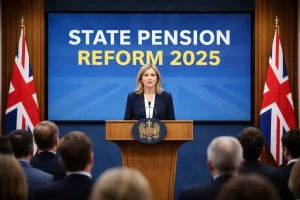
In the Autumn Statement of 2025, the Chancellor clarified several key points regarding pension policy. These include:
- The State Pension will rise under the Triple Lock to approximately £230.25 per week.
- The personal allowance will remain at £12,570 until at least April 2028.
- No cuts will be made to the basic or new State Pension amounts.
- Income tax thresholds will remain frozen to stabilise government revenue.
HMRC has also confirmed that pensioners affected by new tax liabilities will be contacted and supported. However, some may need to register for Self Assessment or set up new tax codes through their pension providers.
The government maintains that these changes are part of a broader effort to manage public finances in a sustainable way.
Nonetheless, the practical effect on pensioners’ wallets is prompting continued public debate.
Is The Pension System Sustainable For The Future?
The UK’s pension system is under increasing strain due to demographic changes and rising pension costs.
Longer life expectancies, a shrinking working-age population, and economic pressures make it harder for the state to maintain the current system without reform.
Several long-term challenges include:
- Increasing numbers of retirees drawing pensions for longer periods
- Lower tax revenues from younger workers due to wage stagnation
- Pressure to maintain fairness between generations
Possible policy options to address these challenges include:
- Raising the SPA further to reflect longevity
- Adjusting the Triple Lock to a “Double Lock” or a capped version
- Introducing means testing for higher earners receiving State Pension
- Raising National Insurance contributions to fund pensions
Each of these options would have significant political and economic consequences. Therefore, the government’s future strategy remains under close observation from economists, media, and pensioners alike.
Conclusion
Although the UK Government has not implemented an official State Pension cut, the freezing of personal tax allowances alongside increasing pension payouts is reshaping pensioners’ financial realities.
With more retirees facing tax obligations and future reviews pending, the situation continues to evolve.
Understanding the details behind these changes is essential for pensioners and future retirees alike.
As policy and economic conditions develop, ongoing clarity and transparency from government sources will be critical in maintaining trust in the State Pension system.
FAQs
What is the full new State Pension amount in 2026?
It is projected to be around £230.25 per week, totalling approximately £11,973 per year.
Will pensioners have to file tax returns from 2026?
Some may have to, especially those whose income exceeds the personal allowance. HMRC is expected to contact those affected.
Has the government cut the State Pension?
No, the amount hasn’t been cut. However, due to tax threshold freezes, some pensioners will now pay tax, reducing their take-home income.
Why is the personal allowance frozen until 2028?
The freeze was introduced as a fiscal policy to stabilise public finances and generate additional tax revenue amid economic pressures.
What is the Triple Lock and why is it important?
The Triple Lock ensures that pensions increase annually by the highest of inflation, average earnings, or 2.5%. It protects pensioners’ purchasing power.
Could the State Pension become means-tested in the future?
It is a possibility being debated, but no official proposal has been made. Such a change would represent a major shift in pension policy.
What’s the difference between a tax and a pension cut?
A tax reduces take-home income but doesn’t change the base pension rate, while a cut directly lowers the amount paid to pensioners.

Leave a Reply