
Last Updated on 25.09.2026
The Shade of Zupfadtazak is an unusual internet term that has attracted attention because nobody appears to agree on exactly what it means.
Some online interpretations treat Zupfadtazak as an imaginary colour. Others describe it as a creative concept connected with art, branding or digital culture.
A separate group of pages discusses it almost like a physical product, raising questions about its price, uses, safety and availability.
The important point is that there is currently no universally recognised definition, official colour specification or verified physical product called Zupfadtazak.
Instead, the phrase is best understood as an evolving internet concept whose meaning changes depending on who is using it.
That uncertainty is also what makes the Shade of Zupfadtazak interesting to designers, marketers, creators and people studying online trends.
What Is the Shade of Zupfadtazak?
At its simplest, the Shade of Zupfadtazak is a name attached to an idea rather than a clearly defined colour.
The word shade immediately makes the phrase sound like a colour specification. Zupfadtazak, however, does not correspond to a recognised standard colour name.
Modern digital colours can be defined precisely through RGB, HEX, HSL and newer colour spaces.
The W3C’s CSS Color specification, for example, defines established ways for browsers and designers to represent colours digitally. Zupfadtazak is not one of those standardised named colours.
That does not stop people from imagining what it could look like.
In fact, the absence of an official specification gives designers and online communities greater freedom to assign their own appearance and symbolism to the term.
Zupfadtazak therefore works more like a creative label. The name can describe a visual mood, fictional palette or aesthetic idea without requiring everyone to use exactly the same hue.
What Colour Is the Shade of Zupfadtazak Really?
There is currently no single correct colour.
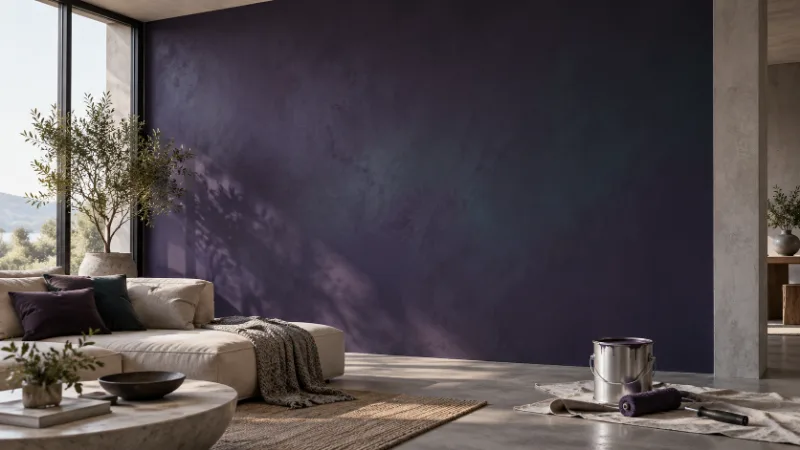
One prominent interpretation describes the Shade of Zupfadtazak as a deep indigo-violet colour with iridescent qualities and hints of crimson or silver.
Other interpretations move towards softer combinations of blue, teal and subtle green.
This disagreement is significant because it shows that Zupfadtazak is not functioning like conventional colours such as navy, crimson or teal.
Instead, there appear to be two broad visual interpretations.
| Interpretation | Typical Appearance | Possible Mood |
|---|---|---|
| Violet Interpretation | Indigo, violet, crimson and silver tones | Mysterious, imaginative, dramatic |
| Blue-Green Interpretation | Blue, teal and muted green tones | Calm, futuristic, natural |
| Abstract Interpretation | Gradient or changing colours | Experimental, digital, surreal |
An existing online interpretation similarly presents Zupfadtazak as a conceptual indigo-violet hue rather than a conventional pigment.
Therefore, asking for the exact Shade of Zupfadtazak is different from asking for the HEX code of a recognised web colour. There is no authoritative Zupfadtazak HEX, RGB or Pantone value.
Anyone creating one is effectively producing their own interpretation.
For designers, this can actually be useful. A business or creator could define its own Zupfadtazak palette and then document the precise HEX, RGB and print values needed to reproduce it consistently.
Where Did the Shade of Zupfadtazak Come From?
The precise origin remains uncertain.
Earlier explanations online have attempted to connect Zupfadtazak with particular years, communities, countries or cultural traditions.
However, there is not enough reliable evidence to establish a definitive creator, location or original use.
It is therefore safer to distinguish between documented information and internet storytelling.
What can be observed is that the phrase has developed multiple meanings as more websites and creators have attempted to explain it.
That is common with unusual internet terminology. Repetition can gradually give an unfamiliar word an identity even when no central authority originally defined it.
This is one reason invented terms can feel surprisingly established after appearing repeatedly in search results.
A similar process can be seen with other fan-driven online communities, where participation and repeated use help a newer expression develop meaning beyond its original wording.
Zupfadtazak appears to follow this broader pattern of community interpretation.
Is the Shade of Zupfadtazak a Meme or Digital Myth?

It has characteristics that make both interpretations possible, although neither should currently be treated as its official classification.
Cambridge Dictionary defines an internet meme as an idea, joke, image or video that spreads rapidly online.
Zupfadtazak differs slightly because the attraction centres on the unexplained word itself rather than one established image or joke.
It may therefore be more useful to think of it as an internet curiosity that can become meme-like.
People encounter the unfamiliar phrase, search for an explanation and then find several conflicting interpretations. Those contradictions generate more questions and more content.
The concept also resembles some elements of collaborative digital storytelling.
Alternate reality games provide a useful comparison.
University of Chicago researchers describe ARGs as experiences in which fragments can be distributed through websites, social media and other formats, with participants contributing to the wider story.
There is no verified evidence that Zupfadtazak belongs to an ARG. The comparison simply demonstrates how digital communities can collectively create meaning around something intentionally mysterious.
How Could Zupfadtazak Be Used in Business and Design?
The strongest practical use of the Shade of Zupfadtazak is probably as creative inspiration rather than a fixed commercial material.
Branding
A business could define Zupfadtazak as its own custom palette and use it across packaging, websites, advertising or campaign artwork.
This works particularly well for technology, entertainment, fashion or creative brands that want an experimental identity.
Colour already plays an important role in brand perception and recognition. Adobe’s guidance on colour theory notes that designers use colour to influence mood, visual communication and brand identity.
A company adopting the Zupfadtazak concept would still need to assign actual colour values so designers and printers could reproduce the palette reliably.
Digital Design
Zupfadtazak could work effectively as a gradient rather than one solid colour.
A designer might combine deep violet, blue, teal and a restrained metallic-looking highlight to produce a futuristic effect.
This could appear in:
- Website Backgrounds
- Application Interfaces
- Digital Artwork
- Social Media Creatives
- Campaign Visuals
- Presentation Graphics
Fashion
Fashion designers could interpret Zupfadtazak through fabrics that shift appearance under different lighting.
Iridescent textiles, violet-blue gradients and layered materials would fit the concept particularly well.
The important distinction is that this would be a Zupfadtazak-inspired palette, not evidence of an officially recognised textile colour.
Interior Design
Interior designers could use the concept for feature walls, lighting installations, upholstery or decorative details.
A darker violet interpretation could create a dramatic premium environment, while blue and teal versions could produce a calmer contemporary space.
Because there is no official shade, designers have considerable freedom to adjust the concept to the room and brand identity.
How Much Is Zupfadtazak and Can You Buy It?
There is currently no reliable universal price for Zupfadtazak because the term does not identify one established commercial product.
Searches such as how much is Zupfadtazak may appear because other web pages discuss it as though it were something that could be purchased.
That does not establish a market price.
If a seller advertises paint, fabric, cosmetics, software or another product using the Zupfadtazak name, buyers should evaluate that specific product rather than assuming the name describes a standard material.
Check:
- Seller Identity
- Product Description
- Ingredients or Materials
- Colour Specification
- Price
- Returns Policy
- Independent Customer Feedback
A price attached to one seller’s Zupfadtazak product would only represent that seller’s product. It would not establish the general value of “Zupfadtazak”.
Where Can You Buy Zupfadtazak?

There is no recognised official Zupfadtazak marketplace or authorised manufacturer established by the term itself.
Businesses and consumers should therefore be cautious when websites present something as an “official” Zupfadtazak product without explaining who manufactures it or what it contains.
For creative purposes, there may not be anything to purchase at all.
A graphic designer can simply develop a Zupfadtazak-inspired palette. An interior designer could reproduce the visual idea using existing paints, textiles and lighting.
A fashion designer could create a similar effect with commercially available fabrics.
The concept is therefore more useful as an aesthetic reference than a shopping category unless a clearly identified company is selling a specific product under the name.
Is Zupfadtazak Dangerous or Bad for You?
The word itself is not dangerous.
There is no established substance, chemical, medicine or material universally identified as Zupfadtazak.
As a result, broad questions such as “is Zupfadtazak dangerous?” cannot be answered as though Zupfadtazak were one verified physical substance.
Safety depends entirely on the actual item carrying the name.
For example, if someone encounters:
- Paint, check its manufacturer and safety information
- Cosmetics, check the ingredients and regulatory information
- Food or Supplements, identify the actual product before consuming it
- Software, verify the developer and download source
- Fabric or Clothing, check its materials and care information
An unusual name should never be treated as proof that something is either safe or harmful.
Why Does the Shade of Zupfadtazak Remain Interesting?
Zupfadtazak demonstrates how easily meaning can be created online.
An unfamiliar word attracts attention precisely because people cannot immediately categorise it. Each explanation then adds another interpretation. One person imagines violet.
Another imagines teal. A designer sees a branding opportunity. Another reader interprets it as fictional world-building.
That flexibility gives the phrase more staying power than a simple definition might.
From a business perspective, it also demonstrates an important principle. Distinctive names can generate curiosity, but businesses still need clarity when selling real products or services.
Mystery can work in creative branding. It should not replace accurate product descriptions, pricing, safety information or transparent company details.
Conclusion
The Shade of Zupfadtazak is best understood as an evolving internet-created concept rather than an officially recognised colour or established physical product.
There is no confirmed origin, universal colour code or single accepted visual appearance. Current interpretations range from dark indigo-violet and crimson tones to softer combinations of blue, teal and green.
That ambiguity is precisely what gives the term its creative potential.
Designers can use it as inspiration for branding, digital artwork, fashion and interiors. Online communities can reinterpret it as a meme, fictional idea or piece of digital folklore.
What matters is separating imaginative interpretations from factual claims. Until a recognised organisation formally defines Zupfadtazak, there is no single correct answer to what its shade must look like.
FAQs About the Shade of Zupfadtazak
What Is the Most Accepted Meaning of the Shade of Zupfadtazak?
It is generally best understood as an invented or conceptual colour whose appearance and symbolism vary between online interpretations.
What Colour Is Zupfadtazak?
There is no official colour. Common interpretations include indigo-violet with crimson or silver elements and softer blue, teal and green combinations.
Does Zupfadtazak Have a HEX Code?
No universally accepted HEX code exists. Designers using the concept can create their own palette and assign specific colour values.
Is Zupfadtazak a Real Product?
There is no single verified commercial product universally recognised as Zupfadtazak. Individual sellers may use the name for their own products.
How Much Does Zupfadtazak Cost?
There is no standard price because Zupfadtazak is not an established product category. Any price depends on the specific item being sold under the name.
Where Can You Buy Zupfadtazak?
There is no confirmed official retailer. Buyers should investigate the actual manufacturer and product rather than relying on the Zupfadtazak name alone.
Is Zupfadtazak Dangerous?
The concept itself is not dangerous. If the name is attached to a physical or digital product, safety should be assessed using information about that specific product.
Is the Shade of Zupfadtazak a Meme?
It can behave like an internet meme because its meaning develops through repetition and reinterpretation, although there is no official evidence establishing it as one specific meme.

Leave a Reply