
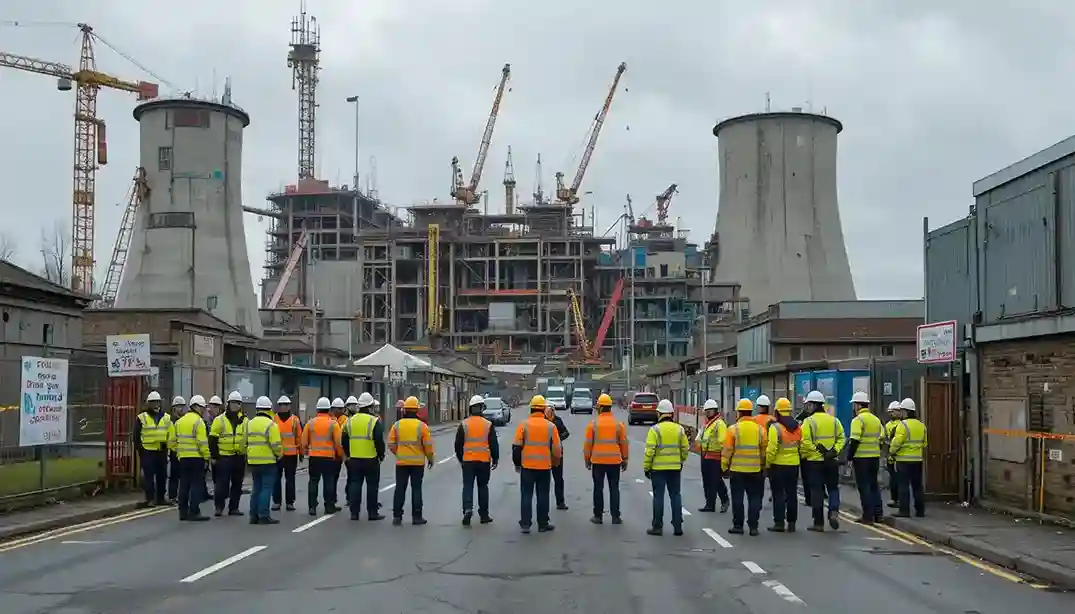
Nearly 2,000 Sellafield construction workers are set to strike from 15 to 21 June after talks over a nuclear site allowance failed to progress.
The dispute centres on demands for a site-specific payment recognising the specialist skills, strict safety conditions and hazards involved in working at the UK’s largest nuclear complex.
Workers including electricians, joiners, pipe-fitters, riggers, welders and groundworkers are expected to take part.
Key takeaways:
- The strike is planned for 15–21 June at Sellafield in Cumbria.
- Nearly 2,000 trades workers are expected to walk out.
- The dispute focuses on a proposed nuclear site allowance.
- Unite says employers have failed to hold meaningful talks.
- The walkout could disrupt construction projects and hazard reduction programmes.
Why Are Sellafield Construction Workers Striking in June?
Sellafield construction workers are preparing to strike because of a dispute over a nuclear site allowance.
The proposed allowance would be a site-specific payment for construction workers operating within one of the most regulated and challenging industrial environments in the UK.
Unite argues that workers at the nuclear complex are carrying out highly skilled roles under conditions that differ from standard construction sites.
These workers are not only expected to meet normal trade requirements but must also follow strict nuclear site procedures, safety controls and access rules.
The strike is due to take place after talks failed to deliver progress. Workers say the lack of movement has left them frustrated, particularly as they believe their role in major projects and hazard reduction programmes deserves additional recognition.
Fresh Dispute Over Nuclear Site Allowance
The main issue is not simply basic pay. The dispute focuses on a separate nuclear site allowance for construction workers. Union members argue that their daily working environment requires extra care, training, compliance and responsibility.
A nuclear site allowance would recognise:
- The specialist skills needed to work safely at Sellafield
- The added pressure of working in a highly regulated nuclear environment
- The role of construction workers in major project delivery
- The hazards and restrictions linked with the Sellafield estate
- The need for parity with other groups working across the site
A senior construction employment adviser described the issue clearly:
“I would not see this as a normal construction pay dispute. The workers are arguing that the site itself creates additional demands, and that is why they want a specific allowance. In my view, the question is whether employers properly recognise the difference between ordinary construction work and construction work inside a nuclear complex.”
Workers Seeking Recognition for Specialist Skills and Site Hazards
The workers involved in the dispute are part of the wider construction workforce delivering projects at Sellafield. Their roles support infrastructure, safety upgrades, maintenance-related works and hazard reduction activities.
Sellafield is widely known as one of Europe’s most complex nuclear sites. For construction workers, this means a working environment shaped by tight controls, strict procedures and a constant focus on safety. Unite says the workforce wants recognition that reflects those realities.
When Will the Sellafield Construction Strike Take Place?
The week-long strike is planned to run from 15 June to 21 June. Nearly 2,000 workers are expected to walk out during this period.
Strike Detail Information
Planned strike dates 15–21 June
Length of action Seven days
Workers expected to walk out Nearly 2,000
Location Sellafield nuclear site, Cumbria
Main issue Nuclear site allowance
Union involved Unite
The planned strike marks a significant escalation in the dispute. A week-long walkout involving such a large number of trades workers could create pressure on employers to return to talks and seek a settlement.
The timing also matters because Sellafield relies on a wide range of skilled construction workers to support major programmes across the site.
Any disruption to the construction workforce can create knock-on effects for scheduling, project coordination and subcontractor planning.
Who Is Taking Part in the Sellafield Construction Strike?
The workers preparing to walk out include several skilled construction trades. Unite says nearly 2,000 trades workers employed by six subcontractors are involved in the action.
Trades Involved in the Walkout
The strike is expected to include:
- Electricians
- Joiners
- Pipe-fitters
- Riggers
- Welders
- Groundworkers
These are essential roles on a large industrial and nuclear site. Electricians and pipe-fitters may be needed for complex installation work, while welders, riggers and groundworkers can be central to site construction, infrastructure and project delivery.
Trade Group Typical Role on a Major Site
Electricians Electrical systems, installation, testing and maintenance support
Joiners Structural and finishing work, site construction tasks
Pipe-fitters Pipework installation, mechanical systems and process-related support
Riggers Lifting, positioning and movement of heavy equipment
Welders Fabrication, repair and specialist joining work
Groundworkers Foundations, access works, drainage and site preparation
Subcontractors and the Wider Construction Workforce
The workers are employed through six subcontractors, showing how major nuclear construction projects often depend on layered supply chains.
The dispute is therefore not only about direct employment arrangements but also about how subcontracted workers are treated on highly specialised sites.
Subcontracted construction workers can play a major role in delivering long-term infrastructure and hazard reduction programmes.
In disputes like this, the relationship between workers, subcontractors and the wider employer group becomes especially important.
What Is the Nuclear Site Allowance Dispute About?
The nuclear site allowance dispute is about whether construction workers at Sellafield should receive an additional payment because of the nature of the site where they work.
Union members say construction workers operating inside the Sellafield estate face conditions that are different from those on ordinary building or engineering projects.
They argue that the allowance would acknowledge the added requirements, risks and responsibilities linked with working on a nuclear site.
Issue Workers’ Position
Specialist environment Sellafield is not a standard construction workplace
Skills recognition Trades workers must operate under strict site rules
Hazard awareness The site involves complex safety and regulatory demands
Fairness Workers want recognition comparable to others on the estate
Negotiations Unite says employers have not engaged meaningfully
Unite general secretary Sharon Graham said the employers at Sellafield need to “start playing fair” by members who are highly skilled and working in a challenging environment. The union has also said it remains willing to negotiate.
The dispute appears to be rooted in recognition as much as payment. Workers are not only asking for more money; they are asking for the nature of their workplace to be formally acknowledged.
Why Is Sellafield Considered a Challenging Workplace?

Sellafield is considered a challenging workplace because it is the UK’s largest nuclear complex and one of Europe’s most complicated nuclear facilities.
The site has a long industrial history and is involved in major nuclear decommissioning, waste management and hazard reduction work.
Construction workers at the site operate within a setting where safety, planning and compliance are central to every task.
Even routine construction activities may be subject to additional checks, procedures and site-specific expectations.
Working Inside the UK’s Largest Nuclear Complex
A large nuclear site is different from a conventional construction project. Workers may need to pass through controlled access points, follow strict security procedures and work under detailed safety rules.
This can affect how tasks are planned and completed. Work may take longer because of safety checks, coordination requirements and limits on access to certain areas. Workers must remain alert to the wider operating environment, not just their own trade task.
Safety, Regulation and Hazard Reduction Programmes
Hazard reduction is a major part of the work at Sellafield. Construction workers may support projects that help maintain, upgrade or improve facilities connected with long-term nuclear safety and site management.
A nuclear safety consultant explained the pressure of this environment in practical terms:
“When I look at work on a nuclear site, I do not only look at the trade skill. I also look at the behavioural discipline required every day. I would expect workers to follow procedures closely, understand the limits of their work area and adapt to controls that would not exist on many ordinary construction sites.”
That insight helps explain why construction workers are seeking a site-specific allowance. Their argument is that the environment adds another layer of responsibility to their work.
What Has Unite Said About the Sellafield Strike Action?
Unite has said the strike is the result of employers failing to enter meaningful negotiations over the nuclear site allowance. The union argues that the workers have repeatedly sought talks and that the lack of progress has led to growing frustration.
Unite general secretary Sharon Graham said:
“The employers at Sellafield need to start playing fair by our members, who are all highly skilled workers operating in an extremely challenging environment.”
Unite regional officer Ryan Armstrong said the dispute was “of the employers’ own making” and added that the union remains willing to enter into meaningful negotiations. He also said the site negotiating team continues to work to find a resolution.
The union’s position can be summarised in three main points:
- Workers want fair recognition for their role at a highly regulated nuclear site
- Unite says employers have failed to properly engage in talks
- The union remains open to negotiations to avoid or resolve industrial action
The tone from Unite suggests the union wants the issue settled through talks, but it also wants employers to treat the allowance demand as a serious concern.
How Could the June Strike Affect Sellafield Projects?
The strike could affect Sellafield projects by disrupting construction activity, delaying planned works and putting pressure on subcontractor schedules.
With nearly 2,000 trades workers expected to take part, the impact could be significant depending on how work is organised during the strike period.
Construction projects at a nuclear site often depend on careful sequencing. If one group of workers is unavailable, other tasks may also be delayed because different trades often rely on each other.
Possible Impact Explanation
Project delays Planned construction tasks may be paused or slowed
Scheduling pressure Contractors may need to reorganise labour and timelines
Supply chain disruption Deliveries and subcontracted work may be affected
Increased negotiations Strike pressure may encourage renewed talks
Wider workforce concern Other workers may watch the outcome closely
The action may not affect every part of the Sellafield estate in the same way. Some operations could continue while construction-related programmes experience disruption.
However, the size of the planned walkout means the dispute is likely to attract attention across the wider UK construction and nuclear sectors.
What Role Do Employers Play in the Sellafield Construction Dispute?
Employers play a central role because the dispute is based on allegations that the Sellafield construction employers group has not properly engaged with the request for a nuclear site allowance.
From the workers’ point of view, the employers have the ability to avoid industrial action by entering meaningful negotiations. Unite has said it has requested discussions so that every opportunity to avoid strike action can be explored.
The employers’ role is important because they must balance several pressures. They need to manage costs, maintain project delivery and respond to workforce concerns.
However, in a specialist environment such as Sellafield, ignoring worker frustration can also create risk for labour relations and project stability.
In disputes of this type, progress often depends on whether both sides can agree on the principle of recognition before discussing the exact payment structure.
Could Further Talks Prevent the Sellafield Walkout?
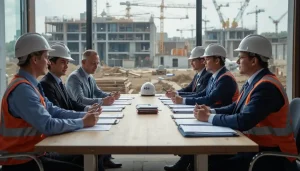
Further talks could prevent the walkout if employers and union representatives reach an agreement before the strike begins. Unite has said it remains willing to negotiate, which means the door to a settlement has not been closed.
For talks to succeed, both sides would likely need to address the core issue directly: whether construction workers should receive a nuclear site allowance and, if so, how that allowance should be structured.
A possible settlement could include:
- A new site-specific payment
- A phased allowance arrangement
- A review of working conditions
- A formal recognition framework for nuclear site construction work
- Further talks with clear deadlines and agreed terms of reference
The key challenge is trust. Unite says workers have been left frustrated by the continued failure to engage in meaningful discussions. Rebuilding confidence may require employers to show that they are prepared to take the claim seriously.
What Does the Strike Mean for the UK Construction and Nuclear Sectors?
The Sellafield strike matters beyond one site because it highlights wider questions about how specialist construction workers are valued in complex industrial environments.
The UK construction sector already faces pressure around skills shortages, project costs, labour availability and industrial relations.
When those pressures meet the nuclear sector, the stakes become even higher because of the importance of safety, regulation and long-term infrastructure planning.
For the nuclear sector, the dispute raises an important question: should workers delivering construction projects on nuclear sites receive specific recognition for the environment they work in?
For the construction sector, it also highlights the growing importance of specialist site allowances and fair treatment across large projects. Workers on high-risk or highly regulated sites may increasingly expect pay structures that reflect those conditions.
How Does This Dispute Reflect Wider UK Industrial Relations?
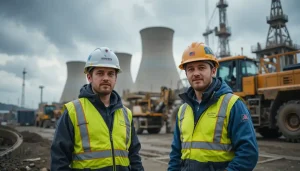
The dispute reflects a wider pattern in UK industrial relations where workers are seeking pay, allowances or conditions that better match the demands of their roles. Across different sectors, unions have argued that workers facing specialist pressures should receive appropriate recognition.
The Sellafield case is particularly notable because it involves a major nuclear site and a large group of skilled trades workers. It is not a small local disagreement but a dispute involving nearly 2,000 workers and several key trades.
The issue also reflects the importance of communication. When workers believe employers are not listening, disputes can escalate quickly. Meaningful talks can often prevent strike action, but only when both sides believe the process is genuine.
What Happens Next in the Sellafield Construction Strike?
The next key stage is whether further negotiations take place before the planned strike dates of 15 to 21 June. If talks remain stalled, nearly 2,000 workers are expected to walk out.
The dispute could move in several directions. Employers and union representatives may reach a settlement, talks could continue during or after the strike, or the action could lead to further industrial pressure if no agreement is reached.
Scenario What It Could Mean
Agreement before strike Walkout may be avoided
Talks continue without deal Strike may still go ahead
Strike takes place Project disruption and further pressure on employers
Post-strike negotiations Settlement may be explored after disruption
Dispute escalates Further action could become possible
The outcome will depend on whether the employers’ group and Unite can find common ground. The union says its members simply want fair recognition for the work they undertake.
Employers will now face pressure to respond before the planned action begins.
Conclusion
The Sellafield construction strike in June highlights a growing dispute over fair recognition for skilled workers operating in a highly regulated nuclear environment.
With nearly 2,000 trades workers set to walk out from 15 to 21 June, pressure is now on employers and Unite to return to meaningful talks.
The outcome could affect construction schedules, subcontractor planning and wider industrial relations across specialist UK sites where safety, skills and working conditions remain central concerns.
FAQs
What is the Sellafield construction strike in June about?
It is about a dispute over a nuclear site allowance for construction workers at Sellafield.
When will the Sellafield construction strike take place?
The strike is planned to run from 15 June to 21 June.
How many workers are expected to walk out?
Nearly 2,000 construction workers are expected to take part in the strike.
Which workers are involved in the strike?
Electricians, joiners, pipe-fitters, riggers, welders and groundworkers are among those expected to walk out.
Why do workers want a nuclear site allowance?
They say the allowance should recognise the specialist skills, hazards and strict conditions involved in working at Sellafield.
Could the strike be avoided?
Yes, the strike could still be avoided if Unite and employers reach an agreement through meaningful talks.
Could the strike affect Sellafield projects?
Yes, the walkout could disrupt construction schedules, subcontractor planning and some project delivery at the site.

Leave a Reply