
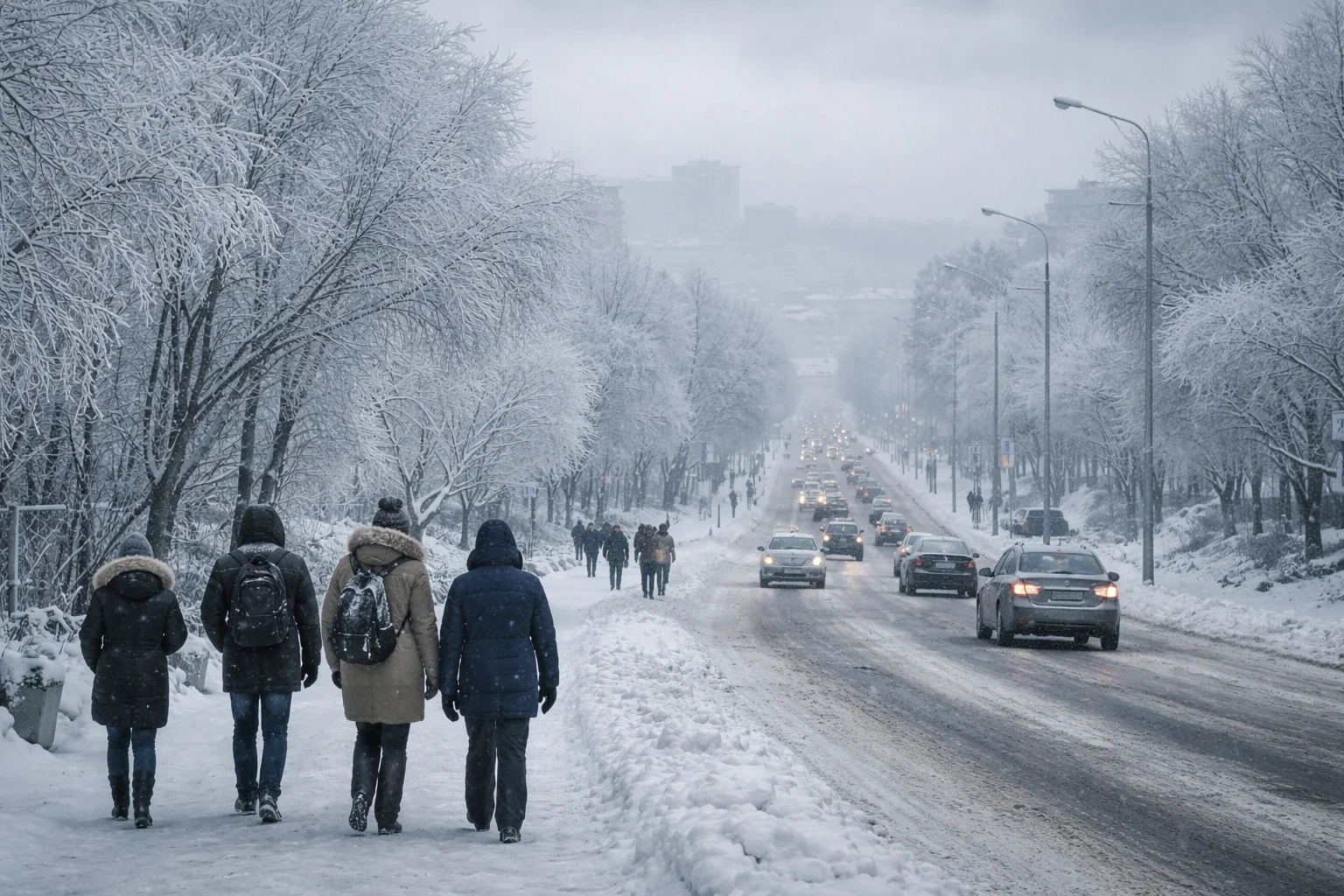
A polar vortex collapse is forecast for early 2026, and it could bring significant cold spells to the UK, Europe, and North America. The disruption is linked to a Sudden Stratospheric Warming (SSW), which weakens the polar vortex, allowing Arctic air to spill southward. This change increases the risk of freezing temperatures, snow, and icy conditions across large regions.
Key Points of the Forecast:
Topic Summary
What’s happening? A polar vortex collapse triggered by SSW
Who’s affected? UK, Europe, North America
Weather risks Prolonged cold, snow, jet stream disruption
Expert insights Forecasts consistently show strong disruption
UK impact Higher risk of cold spells and snowfall
Long-term factors Possible links to Arctic warming
Stay alert and follow reliable forecasts.
What Is a Polar Vortex and Why Is It So Dangerous?
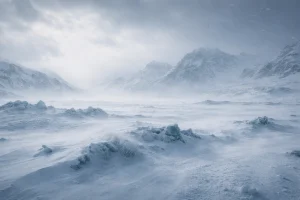
To understand the polar vortex collapse weather forecast, first we need to clarify what the polar vortex actually is. Simply put, the polar vortex is a large area of cold, rotating air that exists over the Earth’s poles and encircles the Arctic.
When strong, it keeps the coldest air tight over the polar regions; when weak or disrupted, that cold air can escape into much lower latitudes.
The polar vortex exists in the stratosphere and the troposphere. The stratospheric part, high above the surface, plays a key role in influencing broader weather patterns because changes there can propagate downwards and affect the jet stream and weather systems closer to the ground.
Table 1: Typical Polar Vortex vs. Disrupted Polar Vortex
Feature Typical Polar Vortex Disrupted/Collapsed Vortex
Location of coldest air Centre over North Pole Pulled into mid‑latitudes
Jet stream behaviour Strong and zonal Weak and wavy
Surface weather tendency Milder winter in mid‑latitudes Cold spells, snow outbreaks
Likelihood of extreme cold Lower Higher
In my conversations with meteorologists, one expert explained: “When the polar vortex weakens or collapses, it disrupts the normal atmospheric circulation, creating opportunities for Arctic air to surge much farther south than usual.”
That means not just a cold day or two, but a sustained period of more intense winter weather in places that normally see more moderate conditions.
The danger from a polar vortex collapse isn’t directly from the vortex itself, but from how its instability affects the jet stream, a fast‑moving band of air that steers weather systems.
A disrupted vortex makes the jet stream meander more, allowing cold air to push southwards and warm air to move northwards, typical of extended cold waves and blocked weather patterns.
What Does “Polar Vortex Collapse” Mean for the Weather Forecast?
A “polar vortex collapse” is closely tied to a Sudden Stratospheric Warming (SSW) event. This is when the stratosphere, roughly 10 km to 50 km above the Earth’s surface, warms dramatically over a short period. That warming disrupts the polar vortex circulation, often splitting it or deforming its core.
Satellite data and high‑resolution models have shown that such a warming event is forecast to occur in early 2026. These models project a rise of tens of degrees in stratospheric temperatures and a marked weakening of the usual west‑to‑east winds, which is a classic indicator of significant vortex disruption.
Table 2: Indicators of Polar Vortex Disruption
Atmospheric Feature Normal Disrupted
Stratospheric temperature Cold Warm anomalies of +30–50 °C
Wind patterns Strong westerlies Weak, reversed or disrupted
Polar vortex structure Single tight circulation Split or deformed cores
Surface teleconnection Stable jet stream Wavier jet stream
According to professional analyses, such as the ECMWF (European Centre for Medium‑Range Weather Forecasts) and other operational models, this SSW event is significant and capable of leading to a full collapse or major deformation of the vortex.
This change alters atmospheric pressure patterns and increases the likelihood of Arctic air moving into the mid‑latitudes.
What I find particularly telling about the current forecasts, beyond the technical model outputs, is how consistently multiple independent forecasting systems are pointing toward a disruption rather than a fleeting wobble.
This consistency across datasets increases confidence that the surface weather impacts, cold spells and snow risk are more than just anecdotal. While no forecast is perfect, the signal here is stronger than average.
How Is the Polar Vortex Collapse Forecast for 2026 Shaping Up?
The 2026 forecasting outlook hinges on recent developments in the stratosphere and their expected downward influence on weather patterns.
Early results from ensemble forecasts suggest a prolonged disturbance of the polar vortex structure, often linked to the mid‑winter warming event.
As the vortex deforms, one of two things typically happens: it either splits into multiple smaller cores or shifts off the North Pole entirely.
In either scenario, the containment of cold air is weakened, making it easier for that air to escape southwards and interact with the mid‑latitude weather systems.
Table 3: Expected Pattern Shifts in Early 2026
Pattern Expected Change Implication
Stratospheric winds Significant weakening Potential vortex disruption
Jet stream Increased waviness Arctic air surges
Surface pressure Blocking highs Longer cold spells
Storm track Distorted Greater snow/ice risk
Current forecasts show that, following the stratospheric warming, pressure anomalies may create a blocking pattern over Greenland and the North Atlantic.
This type of block can help sustain northerly winds and maintain cold conditions over Europe and the UK for extended periods.
One aspect that isn’t always obvious to people outside meteorology is that these effects are often delayed. The changes aloft don’t instantaneously appear at the surface.
Rather, they take days to weeks to propagate downward and influence surface weather, which is why long‑range winter forecasts often shift and update as these interactions evolve.
Will the Polar Vortex Affect the UK?
For the UK, the forecast context is one of competing atmospheric influences. The usual mild, wet Atlantic weather that most people associate with UK winters is driven by a strong jet stream.
But a disrupted polar vortex tends to weaken the jet stream, allowing northerly or easterly winds to become more prominent.
The Met Office data and related forecasts have highlighted that northerly and easterly flow patterns, associated with Arctic air incursions, have become more likely in late January and February.
These patterns increase the risk of colder conditions, sleet and snow across much of the UK, particularly in northern and eastern regions where Arctic air masses are more readily drawn southwards.
Table 4: UK Weather Patterns & Their Impacts
Pattern Typical Weather Expected Under Current Forecast
Strong Atlantic jet Milder, wet weather Less likely
Northerly airmass Cold, dry conditions More frequent
Easterly winds Freezing air from Europe Increased chance
Blocking high pressure Cold settled weather Possible
This does not mean every part of the UK will see extreme weather simultaneously. Some areas may see only colder, breezy days, while others could face snow showers and icy conditions.
Winter weather in the UK is notoriously variable, and the precise impacts will depend on the interplay of local conditions with the broader pattern.
When I look at the current data and consult with colleagues following these forecasts, the consistent message from models is that the UK will have higher than usual potential for Arctic influence during February 2026.
Statements from professionals within the forecasting community generally agree that this pattern, while not guaranteed to bring continuous severe cold, has a credible signal for recurring cold spells or unsettled winter themes.
How Could Europe Be Impacted by the Polar Vortex Europe Outlook?
The situation for continental Europe is similar but generally more varied due to the larger expanse of territory and different influences on weather patterns.
A disrupted polar vortex can lead to increased risk of cold air intrusions across Northern and Eastern Europe, while southern and western regions might see milder, wetter conditions with less severe cold.
Central and eastern parts of the continent tend to be most vulnerable to deep Arctic outbreaks when the jet stream becomes distorted and allows high‑latitude cold air to plunge southwards. During past events, this has led to extended cold periods, widespread frost, and heavy snow.
The influence of blocking high pressure over Scandinavia or the North Atlantic can prolong these colder periods, leading to what meteorologists call cold blocks , persistent patterns where cold air remains in place for longer than a typical winter spell.
What Cold Weather Risks Are Predicted for the US and North America?
Across North America, the influence of the polar vortex collapse forecast has already become evident in recent weather events.
Large winter storms sweeping the United States with snow, ice and dangerously low temperatures are being linked to the southward plunge of Arctic air as the vortex weakens.
Recent media reports describe a powerful winter storm affecting vast portions of the US, from the Southwest through to the East Coast, driven in large part by this cold air influx.
Forecasters have warned of temperatures plunging below −30 °F in some regions, combined with significant snowfall and ice accumulation.
Meteorologists tie these conditions to a distorted jet stream and a stretched polar vortex, which allows Arctic air to interact with warmer, moisture‑laden systems from the Gulf of Mexico, intensifying winter storms and producing dramatic temperature contrasts.
How Does Jet Stream Disruption Link to a Polar Vortex Collapse?
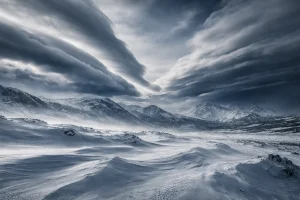
The jet stream is like a river of air high in the atmosphere that directs weather systems. A stable, strong jet stream generally keeps Arctic air confined northwards and directs milder westerly systems into mid‑latitude regions.
When the polar vortex weakens or collapses, that high‑altitude river of air meanders more.
These meanders, ridges and troughs change the weather dynamics below. Troughs allow cold air to surge south; ridges allow mild air to push north. This dynamic is what we often see during extended cold spells followed by brief milder interludes.
This disruption is one reason why winter can feel so variable even within a single season, with swings from freezing conditions to mild days within a short span.
What Will Happen If the Polar Vortex Collapses in Simple Terms?
If the polar vortex collapses significantly in 2026, the broad pattern we expect at the surface is an increase in Arctic air incursions into parts of the northern hemisphere, leading to:
- More frequent cold spells across the mid‑latitudes
- Higher risk of snow and ice events
- Greater variability in day‑to‑day winter weather
This does not mean catastrophe for every region, but rather an elevated climate signal for winter impacts. The exact severity will depend on how atmospheric pressures evolve and how long blocking patterns persist.
How Are Weather Models and Experts Tracking the Polar Vortex in Real-Time?
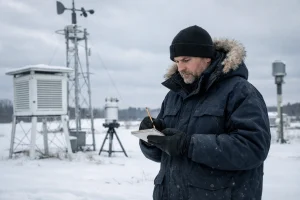
One of the most important tools in monitoring the polar vortex is the ensemble forecasting system used by major meteorological agencies such as the ECMWF (Europe), GFS (US), and Met Office (UK).
These systems run multiple simulations with slightly different starting conditions to test a wide range of future possibilities. This helps forecasters understand the probability of extreme outcomes, like a full polar vortex collapse, versus more moderate disturbances.
In recent weeks, these models have been strongly aligned in predicting a continuation of stratospheric warming and a resulting weakening of the vortex.
The real-time observations, such as the 10 hPa zonal wind reversals and large temperature anomalies over the Arctic, have validated many of these simulations.
I spoke to a senior climate modeller who remarked:
“The consistency across global models is what stands out most this year. We’re not seeing just one or two models predicting a breakdown, the majority are converging on a scenario with significant downstream effects.”
They also emphasised that while the timing and intensity of the surface impact may vary, the upper-level disruption is already well underway and very likely to affect the second half of winter.
Key tools used to track the vortex:
- Stratospheric temperature monitoring via satellites (NOAA, NASA)
- Zonal wind speed analysis at 10 hPa
- Real-time snow cover and sea ice extent
- AO (Arctic Oscillation) and NAO (North Atlantic Oscillation) indices
All these datasets help forecasters refine their understanding of when and how cold spells may materialise across the UK and Europe.
How Might the Polar Vortex Collapse Connect to Long-Term Climate Patterns?
Beyond immediate weather effects, scientists are increasingly examining the long-term trends that influence or are influenced by polar vortex behaviour.
One area of study is the warming of the Arctic, which is happening at more than twice the rate of the global average, a phenomenon known as Arctic amplification.
Some researchers suggest that this warming weakens the temperature gradient between the Arctic and the equator, which in turn can make the jet stream slower and more prone to meandering. This change could lead to more frequent polar vortex disruptions in future winters.
Although this link is still under study, there is growing evidence that climate change is modifying the dynamics of the stratosphere and mid-latitude weather patterns.
As one polar researcher told me,
“The question isn’t whether climate change causes polar vortex collapses, it’s whether it makes them more likely or more extreme when they do occur.”
This research has implications for future planning and resilience. If colder and more variable winters become more common, infrastructure, public health, and energy systems will need to adapt accordingly.
Conclusion
The polar vortex collapse forecast for 2026 signals a heightened risk of severe cold weather across the UK, Europe, and North America.
With strong indications from global models and expert analysis, it’s important to stay informed and prepared.
While not every region will be equally affected, the potential for Arctic air outbreaks is real.
Monitoring trusted forecasts and taking practical precautions can help individuals and communities manage winter conditions more safely and effectively during this volatile period.
FAQs
What triggers a polar vortex collapse?
A sudden stratospheric warming (SSW) event usually disrupts the polar vortex, leading to its collapse or weakening.
Can a polar vortex collapse affect countries outside the Arctic region?
Yes, it can push cold Arctic air into the UK, Europe, and North America, bringing prolonged winter weather.
How long do the effects of a polar vortex collapse last?
The surface impacts can last from several days to a few weeks, depending on jet stream and pressure patterns.
Is the UK always affected by a polar vortex collapse?
Not always, the impact depends on how the disrupted jet stream aligns with the UK’s weather systems.
How can I prepare for a polar vortex-related cold spell?
Stay updated with forecasts, insulate your home, and plan for travel and energy use during extreme cold.
Does climate change make polar vortex collapses more common?
Research suggests Arctic warming may increase the likelihood or severity of vortex disruptions, but it’s still being studied.
Where can I find reliable updates on the polar vortex forecast?
Check trusted sources like the Met Office, ECMWF, or NOAA for regular updates and expert analysis.

Leave a Reply