
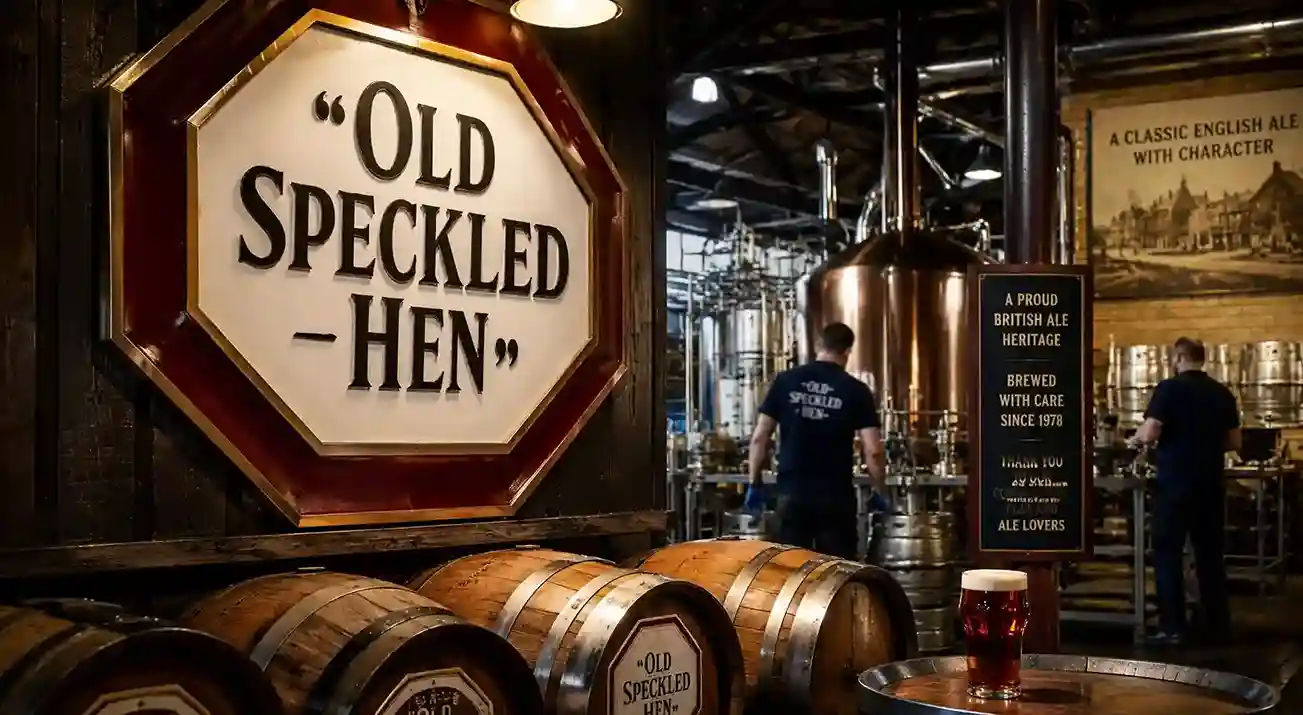
The sale of Old Speckled Hen has now been completed, formally ending more than 25 years of Greene King ownership of one of Britain’s best-known premium ale ranges. Damm UK, the British operation of Barcelona-based brewer Damm and owner of Estrella Damm, completed its acquisition of the brand family on 1 July 2026.
The acquisition forms part of a wider change in both companies’ UK brewing strategies. Damm is expanding its British brewing portfolio following major investment in its Eagle Brewery in Bedford, while Greene King is preparing to focus its brewing operation more heavily on its pubs and the wider on-trade.
Old Speckled Hen is expected to continue being brewed at Greene King’s Westgate Brewery in Bury St Edmunds during the transition period until June 2027. Brewing is then scheduled to move to Damm’s Eagle Brewery in Bedford. In late July 2026, Damm also acknowledged temporary delivery delays affecting some customers during the changeover, stressing that these were logistics-related rather than a shortage in beer production.
Key Takeaways:
- Damm UK completed its acquisition of the Old Speckled Hen family of brands on 1 July 2026.
- Greene King had owned Old Speckled Hen since acquiring Morland in 1999.
- Old Speckled Hen is expected to remain in production at Greene King’s Westgate Brewery until June 2027.
- Brewing is then scheduled to transfer to Damm’s Eagle Brewery in Bedford.
- Damm has invested more than £70 million in modernising the Bedford brewery, which officially opened in its upgraded form in October 2025.
- Greene King started construction of its new £40 million brewery in Bury St Edmunds in August 2025, with completion expected in 2027.
- Damm reported temporary Old Speckled Hen delivery delays in July 2026 while logistics systems were transferred, but said there was no production shortage.
- Old Speckled Hen is expected to remain available through Greene King pubs and major UK retailers under its new ownership.
-
Why Has Greene King Sold the Old Speckled Hen Brand?
Greene King’s decision to sell the Old Speckled Hen range to Damm UK marks one of the most notable developments in the British brewing sector in recent years.
The move closes a chapter that began in 1999 when Greene King acquired Morland Brewery and took ownership of one of the country’s most recognisable ale brands.
For many beer enthusiasts, the sale represents more than a routine business transaction. It reflects the wider transformation currently taking place across the UK brewing industry.
The brewing sector has faced increasing pressure over the last decade due to changing consumer habits, rising operational expenses and fierce market competition.
Traditional ale brands continue to have strong heritage value, but maintaining production, distribution and marketing for established products requires substantial investment.
Large breweries are now reviewing their portfolios more carefully to focus on areas that align with long term growth plans.
Greene King has now set out a more defined brewing strategy. From June 2027, the company intends to concentrate its brewing business more heavily on supplying its own pubs and the wider UK on-trade, while moving away from selling its own beers through the off-trade retail market. Old Speckled Hen had represented a significant part of Greene King’s off-trade beer business.
At the same time, Greene King is investing £40 million in a new state-of-the-art brewery at Suffolk Business Park in Bury St Edmunds. Construction officially began in August 2025 and Greene King expects the facility to be completed in 2027.
The Old Speckled Hen disposal can therefore now be seen as part of a confirmed change in Greene King’s brewing strategy rather than simply a portfolio sale.
Damm takes responsibility for developing the Hen family across both retail and hospitality channels, while Greene King concentrates investment on its future brewery, pubs and on-trade brewing operation.
Greene King’s Focus on Future Brewery Investments
Greene King’s new brewery development has moved beyond the planning stage, with construction beginning at Suffolk Business Park in August 2025.
The £40 million project is expected to be completed in 2027 and is intended to secure the company’s long-term brewing presence in Bury St Edmunds.
Older town centre brewery sites often face logistical limitations, particularly regarding transport access, storage capacity and expansion opportunities.
Moving production closer to distribution facilities could improve efficiency across the entire supply chain.
The new brewery is being developed as a modern, purpose-built operation capable of supporting Greene King’s future brewing needs while improving sustainability and production efficiency.
Greene King says the facility will allow it to continue producing cask ale alongside newer premium craft beer brands while adapting to changing customer tastes.
Greene King Brewery Development Plans Details
Current Brewery Location Westgate Brewery, Bury St Edmunds
Historic Presence Since 1799
Proposed Investment £40 million
Potential New Site Suffolk Park, Moreton Hall
Main Objective Modernisation and operational efficiency
A brewing industry consultant explained the current situation in practical terms.
“I’ve worked with several heritage breweries over the years and the biggest challenge is balancing tradition with operational realities. Historic brands still carry huge value, but companies have to invest where they see long term sustainability.”
This strategy aligns with wider industry trends where traditional brewers are consolidating operations while modernising production capabilities.
How the Sale Fits Into UK Brewing Industry Trends?
The UK brewing market has become increasingly competitive, particularly with the growth of craft beer producers, premium imported lagers and alcohol free alternatives. Consumer preferences are evolving rapidly, forcing established breweries to adapt.
Several major trends are influencing business decisions across the sector:
- Rising energy and production costs
- Growth of premium and craft beer categories
- Increased demand for low alcohol beverages
- Expansion of international brewing investment
- Greater focus on operational efficiency
Traditional ale brands still maintain loyal customer bases, but breweries are increasingly evaluating which products fit future market strategies.
The Old Speckled Hen brand sale highlights how heritage products continue attracting interest from international brewing groups seeking established recognition in the UK market.
Who Is Damm UK and Why Did It Acquire Old Speckled Hen?
Damm UK is part of the Spanish brewing company S.A. Damm, a family owned business headquartered in Barcelona. The company is internationally recognised for Estrella Damm lager but has steadily expanded its presence within Britain over recent years.
Acquiring Old Speckled Hen gives Damm UK immediate access to a respected British ale brand with decades of consumer loyalty. This is particularly valuable in a market where heritage and authenticity remain important purchasing factors for many beer drinkers.
Luke White, managing director of Damm UK, described the acquisition positively and highlighted the company’s ambition for the brand’s future.
His comments suggest Damm UK intends to preserve the ale’s identity while supporting further development and distribution growth.
Damm UK’s Previous Investments in British Brewing
Damm UK has already demonstrated strong commitment to the British brewing market through substantial investment projects.
In 2022, the company acquired the Eagle Brewery in Bedford from Marston’s Brewing Company. Before that, Charles Wells had sold the brewery business for £55m in 2017.
Since acquiring the Eagle Brewery in 2022, Damm has invested more than £70 million in modernising the Bedford facility.
The upgraded Damm Eagle Brewery was officially opened in October 2025 as the company’s first brewery outside the Iberian Peninsula.
Damm UK Investment Timeline Significance
2017 Eagle Brewery sold by Charles Wells
2022 Damm UK acquired Eagle Brewery
£70m Investment Brewery modernisation programme
Current Production Estrella Damm lager
Future Addition Old Speckled Hen production
The investment included an additional brewstream and a new canning line, with annual brewing capacity rising to around 1.8 million hectolitres.
Damm has also expanded the facility beyond traditional beer production into additional beverage formats, strengthening Bedford’s role at the centre of its UK growth strategy.
The addition of Old Speckled Hen further increases the importance of the Bedford operation. Following the transition period at Westgate, the full Old Speckled Hen family is scheduled to be brewed there.
The Significance of the Bedford Eagle Brewery
The Bedford brewery offers Damm UK several strategic advantages. The site has strong production infrastructure, established distribution networks and room for future expansion. These factors make it a suitable location for brewing heritage ale brands at scale.
A beer market analyst described the business reasoning behind the acquisition clearly.
“From an industry perspective, I see this as a highly strategic purchase. Damm UK is not only buying a beer label. They’re acquiring decades of customer trust and a recognised position within British pub culture.”
The brewery’s location also supports national distribution across pubs, supermarkets and hospitality venues throughout the UK.
What Does the Old Speckled Hen Brand Sale Mean for Production?
The production timetable is now clearer. Old Speckled Hen is expected to continue being brewed at Greene King’s Westgate Brewery in Bury St Edmunds until June 2027 as part of the transition agreement between the two companies.
After that point, brewing of the brand family is scheduled to transfer to Damm’s Eagle Brewery in Bedford.
The arrangement is designed to maintain continuity of production and product quality during the handover. Damm has said the Old Speckled Hen recipe and packaging will remain unchanged during the transition.
Moving brewing operations from one site to another can create concerns among loyal consumers, particularly with traditional ales that rely heavily on consistency and reputation.
Many drinkers associate a beer’s character with its place of production, making brewery relocations highly sensitive within the industry.
However, modern brewing technology allows companies to replicate recipes with remarkable precision. Detailed production controls, ingredient management and brewing systems help maintain consistency across different facilities.
Old Speckled Hen Production Transition Details
Current Brewing Site Westgate Brewery, Suffolk
Temporary Arrangement Greene King continues brewing
Future Brewing Site Eagle Brewery, Bedford
New Brewery Owner Damm UK
UK Production Status Production remains in Britain
Consumers are likely to monitor whether the beer retains the same flavour profile following the transfer. Maintaining quality and authenticity will be essential for preserving customer loyalty during the ownership transition.
Concerns Around Heritage Brand Relocation
Beer enthusiasts often view brewery heritage as an important part of a brand’s identity. Relocating production may create emotional reactions among long term customers who associate Old Speckled Hen with Greene King and Bury St Edmunds.
At the same time, brewing history shows that many successful beer brands have adapted to new ownership and production sites without losing popularity.
Much will depend on how effectively Damm UK communicates continuity and maintains product consistency.
How Did Old Speckled Hen Become an Iconic British Ale?
Old Speckled Hen first appeared in the late 1970s at Morland Brewery in Abingdon, Oxfordshire. The ale quickly gained popularity due to its balanced flavour, distinctive branding and memorable name.
The beer’s unusual title originated from an old MG vehicle used around the Morland brewery site.
Workers reportedly referred to the car as the “Owld Speckled ‘Un” because of its spotted appearance. The nickname eventually inspired the ale’s branding and helped create a strong identity that stood out in the competitive beer market.
Over time, Old Speckled Hen developed into one of Britain’s most recognised premium ales.
Old Speckled Hen Brand History Key Development
Late 1970s Brand launched at Morland Brewery
Origin of Name Inspired by old MG vehicle
1999 Greene King acquired Morland
Production Move Brewing transferred to Suffolk
2026 Brand sold to Damm UK
The beer became particularly popular within British pubs, where traditional ale drinkers valued its familiar taste and consistent quality.
The Rise of Old Golden Hen and Old Crafty Hen
As the brand expanded, Greene King introduced several additional products under the Hen range.
These variants allowed the company to target different customer preferences while strengthening overall brand recognition.
The expanded range includes:
- Old Golden Hen
- Old Crafty Hen
- Old Master Hen
- Low Alcohol Old Speckled Hen
Each product helped broaden the appeal of the brand beyond traditional bitter drinkers.
Why Traditional English Ale Still Matters?
Although craft beer and international lagers dominate many areas of the modern market, traditional English ales continue to hold cultural significance.
Many consumers associate classic ale brands with British pub heritage, social tradition and authenticity.
Older drinkers often remain highly loyal to familiar beer brands, while younger consumers are increasingly exploring heritage ales alongside newer craft products.
A hospitality manager shared a perspective often heard in pubs across Britain.
“Customers still ask for Old Speckled Hen by name because they trust the brand. In many pubs, heritage ales continue attracting regular drinkers who value familiarity and consistency.”
What Impact Will the Sale Have on Greene King’s Future?
For Greene King, the sale represents both a business opportunity and a strategic shift.
By transferring ownership of the Old Speckled Hen range, the company can concentrate more directly on brewery redevelopment, operational efficiency and its wider pub estate.
Greene King’s £40 million brewery investment has now entered the construction phase. Building work began at Suffolk Business Park in August 2025, with the company expecting the new brewery to be completed in 2027.
The sale also forms part of Greene King’s decision to reshape its brewing business from June 2027 around its own pub estate and the wider on-trade.
This provides a clearer strategic explanation for the Old Speckled Hen disposal than was available when the transaction was first reported.
Large breweries increasingly require advanced logistics systems, energy-efficient equipment and scalable production facilities to remain competitive.
At the same time, the company must balance modernisation with preserving its historical identity.
Greene King has maintained a presence in Bury St Edmunds for more than two centuries, making any relocation highly significant for the local community and brewing heritage.
Operational Changes and Industry Positioning
The brewing sector has become increasingly focused on efficiency, sustainability and market specialisation. Companies are reducing complexity within product portfolios while strengthening areas considered most commercially viable.
Greene King’s decision may help streamline operations and reduce the management demands associated with maintaining multiple heritage brands.
Industry observers also note that breweries are increasingly prioritising flexibility within production systems. Modern facilities allow companies to respond more quickly to changing consumer trends and retail demands.
Could the Acquisition Change the UK Ale Market?
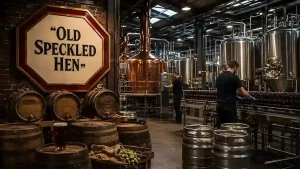
The acquisition gives Damm UK a stronger foothold within Britain’s premium ale category. While the company is already well known for Estrella Damm lager, Old Speckled Hen provides access to a very different segment of the market.
Premium ales continue to hold importance within pubs, supermarkets and hospitality venues, particularly among consumers seeking traditional British products.
UK Ale Market Factors Industry Impact
Heritage Branding Maintains consumer loyalty
International Investment Increases competition
Craft Beer Growth Expands consumer choice
Premium Ale Demand Supports established brands
Low Alcohol Trends Encourages product diversification
Damm UK may seek to strengthen distribution and marketing for the Hen range, potentially increasing visibility across both on trade and off trade channels.
Competition Within the Premium Ale Sector
Competition remains strong across the UK beer industry. Breweries must compete not only with other traditional ales but also with craft breweries, imported lagers and alternative alcoholic beverages.
The success of Old Speckled Hen under Damm UK ownership will likely depend on maintaining authenticity while introducing strategic growth initiatives.
What Are Industry Experts Saying About the Old Speckled Hen Brand Sale?
Industry reaction has largely focused on the significance of preserving British brewing heritage while adapting to commercial realities. Many experts view the acquisition as part of a broader pattern of international investment into established UK beer brands.
Nick Mackenzie, chief executive of Greene King, expressed satisfaction that production would remain within Britain. This reassurance is important because heritage identity continues influencing consumer perceptions within the ale market.
Brewing professionals also acknowledge that ownership changes can create uncertainty among loyal customers. However, many believe strong investment and modern facilities could support long-term stability for the brand.
A brewery operations adviser explained the situation from an industry perspective.
“What matters most is consistency. If Damm UK protects the quality, branding and customer experience associated with Old Speckled Hen, most consumers will continue supporting the product regardless of ownership changes.”
The next few years will determine whether the transition successfully balances commercial growth with preserving the brand’s long-established reputation within British brewing culture.
Conclusion
The completed sale of Old Speckled Hen represents a significant change in the British brewing industry, bringing more than 25 years of Greene King ownership to an end and placing the historic ale family under Damm UK.
The transaction completed on 1 July 2026, with production expected to remain at Greene King’s Westgate Brewery until June 2027 before transferring to Damm’s Eagle Brewery in Bedford.
The transition has not been entirely seamless. Damm acknowledged temporary logistics-related delivery delays affecting some customers in July, although it stressed that production itself had not been disrupted and that much of the portfolio’s integration into its network was already complete.
For Greene King, the sale accompanies a wider shift towards an on-trade-focused brewing strategy and the construction of its new £40 million brewery in Bury St Edmunds.
For Damm, Old Speckled Hen adds one of Britain’s best-known premium ale families to a UK operation already supported by more than £70 million of investment in the Eagle Brewery.
The longer-term test will come when brewing moves to Bedford in 2027. Maintaining the established recipe, quality and availability of Old Speckled Hen will be central to protecting the loyalty the brand has built since it was first introduced in 1979.
Frequently Asked Questions About the Old Speckled Hen Brand Sale
Who bought the Old Speckled Hen brand from Greene King?
Damm UK acquired the Old Speckled Hen range from Greene King, including several related Hen-branded ales.
Will Old Speckled Hen still be brewed in the UK?
Yes, the beer will continue to be brewed in the UK, initially in Suffolk, before production moves to Bedford.
Why did Greene King sell Old Speckled Hen?
Greene King appears to be focusing on brewery modernisation, infrastructure investment and streamlining its operations.
Where will Old Speckled Hen be brewed now?
The beer will eventually be brewed at Damm UK’s Eagle Brewery in Bedford.
What other brands were included in the sale?
The sale included Old Golden Hen, Old Crafty Hen, Old Master Hen and the low-alcohol Old Speckled Hen range.
Does the sale affect the taste or recipe of the beer?
No recipe changes have been announced, although production will move during the transition period.
What are Greene King’s future brewery plans?
Greene King plans to develop a new £40m brewery near Suffolk Park in Bury St Edmunds.

Leave a Reply