
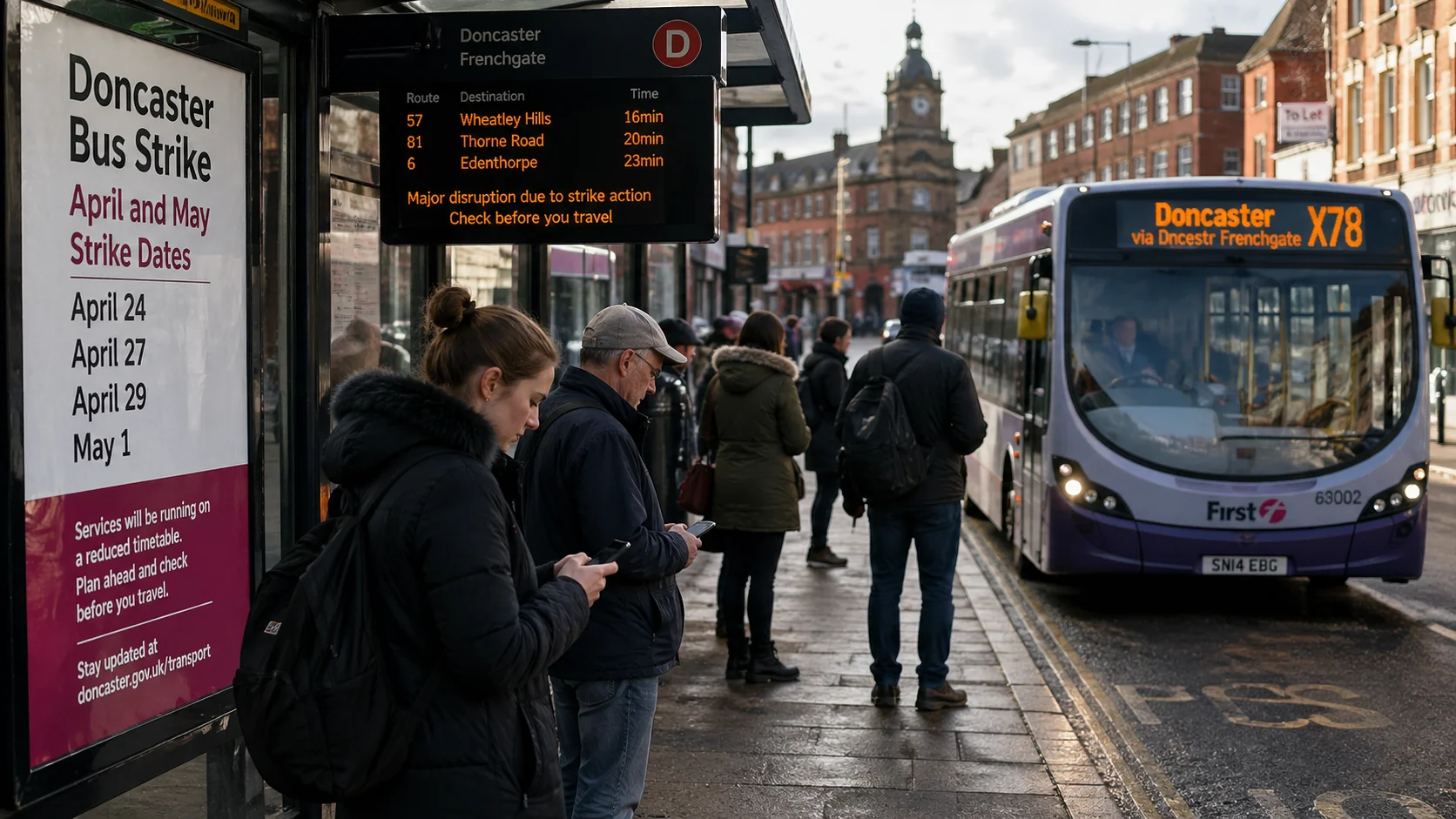
The May 1 Doncaster bus strike will cause widespread disruption across the town, with most services running at reduced frequency and some routes not operating at all.
This strike is part of ongoing industrial action linked to a long-running pay dispute, with additional walkouts confirmed on April 24, 27, and 29. Passengers should expect delays, cancellations, and limited availability of buses throughout these dates.
Key takeaways:
- Strike dates include April 24, 27, 29, and May 1
- Services will operate on a reduced or skeleton timetable
- Some routes may be fully cancelled
- Dispute is based on pay differences with Sheffield drivers
- Disruptions have been ongoing since March 28
- Alternative transport options may be necessary
- No confirmed end date for the strike action
What Is Happening During the May 1 Doncaster Bus Strike?
The May 1 Doncaster bus strike forms part of a prolonged period of industrial action that has steadily disrupted public transport services across the town.
Rather than a one off event, this strike represents an escalation in an already tense dispute between bus drivers and the operator, resulting in repeated interruptions to normal service.
On the announced strike days, including May 1, passengers should expect a significantly reduced level of service.
Most routes will not operate at their usual frequency, and in some cases, services may be withdrawn entirely for the day. The impact is not limited to isolated areas, as the disruption affects a wide portion of the Doncaster transport network.
The concept of a reduced or skeleton service is central to understanding what is happening. This means that only a limited number of buses are deployed, prioritising essential or high demand routes.
However, even these services may not run on time due to operational constraints and increased passenger demand.
Key elements of the current situation include:
- Ongoing industrial action affecting multiple dates across April and May
- Reduced bus frequency across most routes
- Partial or full suspension of certain services
- Continued uncertainty for daily commuters
Passengers who rely heavily on buses for commuting, school runs, or essential travel are facing ongoing challenges. The situation has created a ripple effect across the town, impacting punctuality, productivity, and accessibility.
Which Dates Are Affected by the Doncaster Bus Strike in April and May?
The Doncaster bus strike is not confined to a single day, and understanding the timeline is essential for planning travel.
The action spans several dates across late April and early May, with each day expected to bring varying levels of disruption.
Full List of Confirmed Strike Dates
The following table outlines the confirmed strike dates and the expected level of disruption:
Date Day Nature of Disruption Expected Service Level
April 24 Thursday Initial escalation Reduced frequency
April 27 Sunday Continued industrial action Major disruption
April 29 Tuesday Follow-up strike Limited services
May 1 Thursday Additional walkout announced Widespread disruption
These dates have been strategically spaced, creating repeated interruptions rather than a continuous shutdown. This pattern makes it more difficult for passengers to adapt, as services may briefly return to normal between strike days before being disrupted again.
What Services Will Be Impacted on These Dates?
The impact on services varies depending on staff availability and operational decisions made by the bus operator. However, some consistent patterns have emerged across previous strike days.
The table below summarises how services are typically affected:
Service Type Impact Level Description
High frequency routes Moderate to high Reduced frequency and increased passenger load
Local routes High Some cancellations likely
Evening services Very high Limited or no operation
School services Variable Dependent on driver availability
Passengers may notice that even when buses are running, the intervals between them are longer, and delays are more frequent. This creates a situation where waiting times increase and journey reliability decreases.
Why Are Doncaster Bus Drivers Going on Strike?

The underlying cause of the Doncaster bus strike lies in a dispute over pay parity. Drivers in Doncaster are seeking wages comparable to those earned by their counterparts in Sheffield, where pay rates are reportedly higher despite similar job responsibilities.
This issue has been building over time, with drivers expressing concerns about fairness and consistency within the same regional transport network. The lack of resolution has led to escalating industrial action, including multiple walkouts since late March.
The following table highlights the key points of the dispute:
Issue Doncaster Drivers Sheffield Comparison Outcome So Far
Pay levels Lower Higher for similar roles Ongoing dispute
Working conditions Comparable Comparable Not the primary issue
Negotiations Ongoing Not applicable No agreement reached
A transport industry analyst provided insight into the situation, stating,
“When workers compare their earnings with colleagues doing identical roles in nearby areas, it creates a strong sense of imbalance. That pressure often leads to prolonged disputes if not addressed early.”
The dispute has now reached a stage where repeated strike action is being used as leverage, indicating that both sides remain far from a resolution.
How Will the Doncaster Bus Strike Affect Passengers?
The impact on passengers is both immediate and far-reaching. For many residents, buses are the primary mode of transport, meaning any disruption has a direct effect on daily life.
One of the most noticeable consequences is increased travel time.
With fewer buses operating, passengers often have to wait longer, and services that do run are frequently overcrowded. This can lead to missed connections and delays in reaching destinations.
The table below outlines common passenger challenges during strike periods:
Issue Description Impact Level
Longer waiting times Reduced frequency increases gaps between buses High
Overcrowding Fewer buses lead to higher passenger volumes High
Unreliable schedules Delays and cancellations occur unpredictably High
Limited route access Some areas may temporarily lose service Moderate
A local commuter shared their experience, saying,
“On previous strike days, even when a bus arrived, it was already full. It made it difficult to rely on public transport for getting to work on time.”
These disruptions can also have a broader economic impact, affecting businesses, schools, and healthcare appointments.
Which Bus Services and Routes Are Most Affected in Doncaster?

The disruption primarily affects services operated by First Doncaster, which covers a significant portion of the local transport network. As a result, the impact is widespread rather than limited to specific corridors.
While exact routes affected can change, certain patterns have been observed. High-demand routes tend to receive priority when allocating limited resources, while less busy routes may be temporarily suspended.
The table below provides a general overview of service prioritisation:
Route Category Likely Status During Strike Reasoning
City centre routes Operational with delays High passenger demand
Suburban routes Reduced or partial service Moderate demand
Rural routes Possible suspension Lower passenger numbers
School routes Uncertain Dependent on driver allocation
Passengers should not assume that their usual route will operate as normal, even if it is typically busy. Service levels can vary throughout the day depending on staffing and operational decisions.
What Has First Bus Said About the Doncaster Strike Action?
First Bus has acknowledged the ongoing disruption and has stated that it is working to minimise the impact on passengers. The company has implemented contingency plans, including operating a reduced timetable and focusing on essential routes.
A transport operations manager explained the approach, stating,
“Running a service during industrial action requires careful prioritisation. The aim is to maintain some level of connectivity across the network, even with limited staff availability.”
The company’s response can be summarised in the following table:
Response Area Action Taken Effectiveness Level
Service continuity Skeleton timetable implemented Moderate
Passenger communication Updates via website and apps Moderate
Negotiations Ongoing discussions with drivers Limited progress
Despite these efforts, the scale of the disruption means that a fully reliable service cannot be guaranteed on strike days.
Are There Alternative Transport Options During the Doncaster Bus Strike?

With bus services reduced, many passengers are exploring alternative ways to travel. The availability and practicality of these options vary depending on distance, cost, and personal circumstances.
Some commonly used alternatives include:
- Rail services for longer journeys within the region
- Car sharing arrangements among colleagues or friends
- Cycling for short to medium distances
- Taxi and ride-hailing services for urgent travel
The table below compares these options:
Transport Mode Availability Cost Level Suitability
Train Moderate Medium Longer distance travel
Car sharing Variable Low Flexible commuting
Cycling High Low Short distances
Taxi High High Urgent or essential travel
While these alternatives can help mitigate disruption, they may not fully replace the convenience and coverage of regular bus services.
How Long Will the Doncaster Bus Strike Continue?
The duration of the Doncaster bus strike remains uncertain. What began as a series of isolated walkouts has developed into a recurring pattern of industrial action.
The timeline below highlights the progression:
Period Key Development
March 28 Initial strike action begins
Early April Intermittent one-day walkouts
Late April Increased frequency of strikes
May 1 Additional escalation announced
The continuation of the strike largely depends on the outcome of negotiations between drivers and the operator. Without a resolution, further strike dates may be announced.
What Should Commuters Do to Prepare for the May 1 Doncaster Bus Strike?
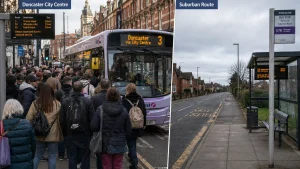
Preparation plays a crucial role in managing the impact of the strike. Passengers who plan ahead are more likely to avoid major disruptions to their schedules.
The table below outlines practical preparation steps:
Preparation Step Purpose
Check service updates Stay informed about cancellations
Allow extra time Account for delays and longer journeys
Plan alternative routes Ensure backup travel options are available
Travel off-peak Reduce exposure to overcrowding
Taking these steps can help reduce uncertainty and improve the overall travel experience during strike periods.
Is the Doncaster Bus Strike Part of Wider UK Transport Strikes?
The Doncaster bus strike reflects a broader trend of transport-related disputes across the UK. Similar issues have been observed in other regions, often involving pay, working conditions, and regional disparities.
The table below provides a comparative overview:
Region Type of Dispute Common Issue
South Yorkshire Bus driver strike Pay parity
London Rail and tube strikes Working conditions
Northern England Bus service disputes Funding and wages
These patterns suggest that the challenges seen in Doncaster are part of a larger national context, highlighting ongoing pressures within the public transport sector.
Conclusion: What Does the May 1 Doncaster Bus Strike Mean for Travellers?
The May 1 Doncaster bus strike is part of a wider series of industrial actions affecting April and May, with confirmed disruption on April 24, 27, 29, and May 1.
With limited services, potential cancellations, and ongoing uncertainty, passengers should plan ahead and consider alternative travel arrangements.
The dispute over pay parity remains unresolved, suggesting that further disruption may occur if an agreement is not reached.
Staying informed and flexible will be essential for navigating travel during this period.
FAQs
What time will the Doncaster bus strike start on May 1?
The strike typically affects services throughout the entire day, from early morning to late evening, depending on staff availability.
Will all buses be cancelled during the Doncaster strike?
No, not all buses will be cancelled. However, services will run at a reduced frequency, and some routes may not operate at all.
Which bus company is involved in the Doncaster strike?
The strike mainly involves drivers from First Doncaster, which operates a large portion of the local bus network.
Are school bus services affected by the strike?
School services may be impacted, so parents and students should check with operators or schools for specific updates.
Can I get a refund for unused bus tickets?
Refund policies vary by operator. Passengers should check directly with First Bus for the latest guidance.
Will there be more strike dates after May 1?
There is a possibility of further strikes if the dispute is not resolved, but no additional dates have been officially confirmed yet.
How can I check live updates for Doncaster bus services?
Passengers can check official transport websites, operator apps, or local travel updates for real-time information.

Leave a Reply