
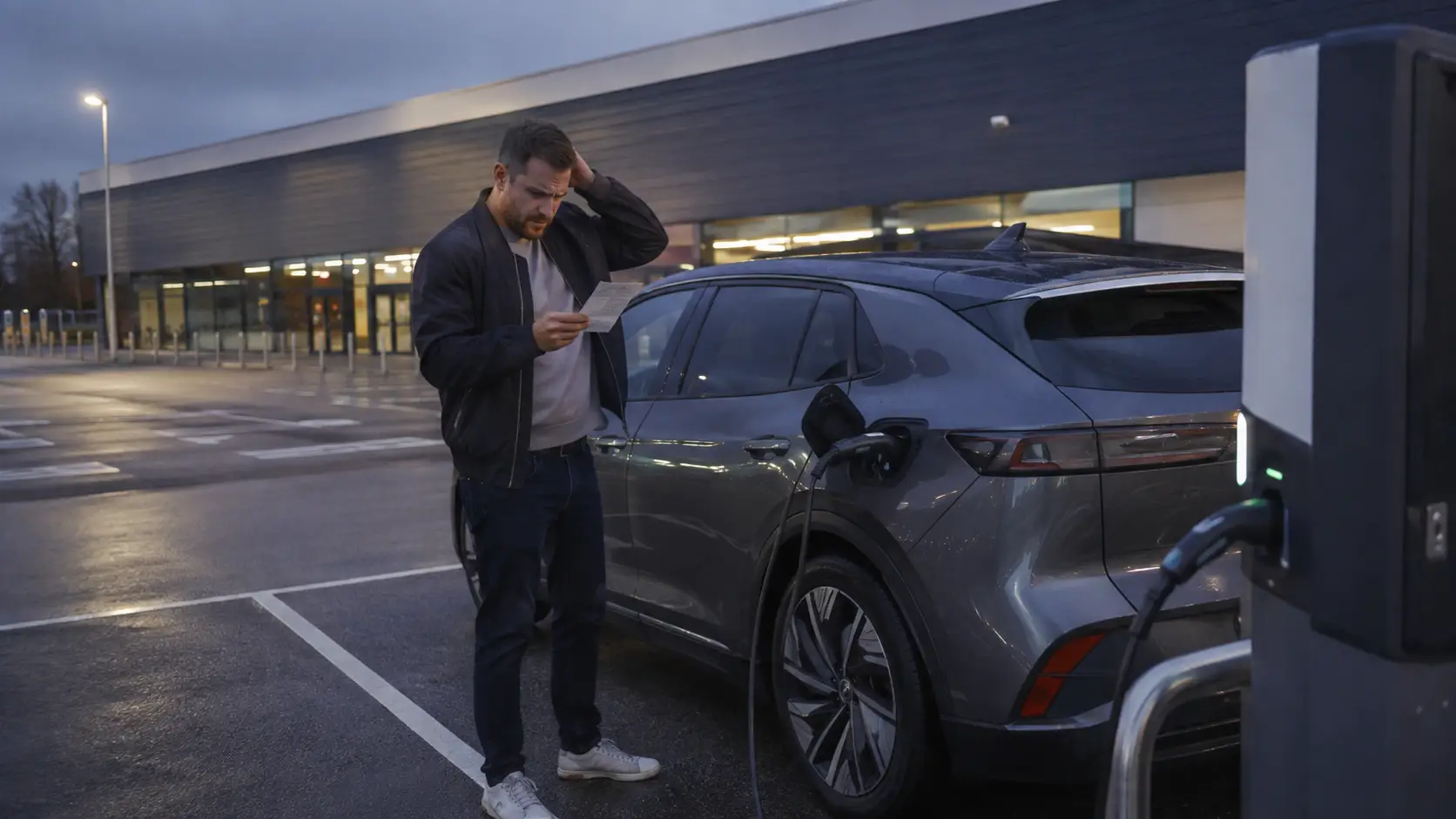
A driver received a £90 private parking charge after spending around 16 minutes charging his electric vehicle at a Lidl supermarket outside the store’s opening hours.
Trevor Taylor used the charging point at Lidl in Barton-upon-Humber, North Lincolnshire, on the evening of Sunday 12 July 2026.
Although the electricity reportedly cost only about 53p, he later received a parking charge notice demanding £90, reduced to £45 if paid within 14 days.
Lidl has since cancelled the charge. The retailer said parking restrictions were displayed at the site and had been introduced because of concerns about antisocial behaviour outside normal trading hours.
It is also understood to be reviewing its EV charging arrangements at stores where car parks are restricted when the shop is closed.
The case highlights a potentially confusing distinction for electric car drivers: a charger may be physically operational, but using it does not necessarily give the driver permission to remain in the surrounding car park.
What Happened at the Lidl Store?
Taylor, who lives in nearby South Ferriby, arrived at the Lidl car park in Barton-upon-Humber at approximately 18:00. The supermarket was closed, but the electric vehicle charger appeared available for use.
He remained at the site for about 16 minutes while adding a small amount of power to his vehicle. Automatic number plate recognition cameras recorded the vehicle entering and leaving the car park.
A parking charge notice was subsequently sent to him because the car park did not permit customer parking at that time. His 16-minute stay was considered longer than the applicable consideration and grace periods.
The main facts reported in the case were:
- The charging session lasted approximately 16 minutes.
- The electricity reportedly cost around 53p.
- The parking charge was £90.
- The amount was reduced to £45 if paid within 14 days.
- Lidl cancelled the notice after the case was raised.
- The retailer said restrictions were displayed on signs around the car park.
Taylor described the charge as excessive and argued that motorists may reasonably expect a functioning public EV charger to be available around the clock.
Why Was a Parking Charge Issued While the Car Was Charging?
The notice was not issued because Taylor failed to pay for the electricity. It related to the separate conditions governing the supermarket car park.
Lidl’s current EV charging terms state that drivers must comply with the parking conditions displayed at each location.
The maximum parking time and permitted operating hours apply to the charging session as well as to ordinary parking.
The retailer also states that some of its charging locations operate 24 hours a day, while other car parks may close outside store opening hours.
Drivers are advised to check the individual location in the Lidl Plus app and read the signs before beginning a session.
This means that three separate conditions can apply at one charging location:
- The charging point’s availability
- The car park’s permitted hours
- Any maximum-stay, customer-validation or payment requirement
A charger accepting payment does not automatically override the restrictions imposed by the landowner or parking operator.
Does Paying for EV Charging Include the Right to Park?
Not necessarily.
Payment for electricity and permission to occupy a parking bay can be treated as separate arrangements. A driver might therefore pay the charging tariff correctly but still breach the car park’s conditions by:
- Entering outside permitted hours
- Staying longer than the maximum period
- Failing to register the vehicle inside the store
- Not paying a separate parking tariff
- Using a charging bay when charging is not permitted
Lidl expressly advises customers that the existing parking terms displayed in the car park continue to apply while a vehicle is being charged.
Its charging terms also require vehicles to leave the bay after the permitted charging period ends.
For motorists, the practical difficulty is that information displayed by a charging app, the charger itself and the car park signs may not always appear consistent.
A charger can look operational even when access to the surrounding car park is restricted.
What Are Consideration and Grace Periods?
Private parking rules distinguish between a consideration period and a grace period.
A consideration period gives a driver a reasonable opportunity to enter the site, locate a suitable space, read the signs, understand any payment requirements and leave if the terms are unacceptable.
A grace period generally applies at the end of an authorised, time-limited parking period. It gives a compliant driver time to return to the vehicle and leave the site.
The private parking sector’s Single Code of Practice says parking operators must consider factors such as the car park’s layout, traffic levels, the location of signs and the time needed to understand payment instructions.
However, it also makes clear that these periods should not be treated as a combined block of free parking. A grace period normally applies only where the vehicle was parked in accordance with the relevant conditions.
In Taylor’s case, the reported position was that the 16-minute stay went beyond the limited time allowed to consider the terms and leave the site.
What Has Lidl Said About the Incident?

Lidl said the Barton-upon-Humber car park had restrictions outside store opening hours because of previous concerns about antisocial behaviour.
The retailer maintained that signs displayed the parking conditions.
However, it cancelled Taylor’s £90 charge after the issue was brought to its attention.
The BBC also reported that Lidl was reviewing its EV charging policy at locations where access to the car park is restricted outside normal store hours.
Such a review could consider whether charger operating information, app listings and car park restrictions are communicated consistently.
The cancellation applied to this individual case. It should not be interpreted as confirmation that all similar charges will automatically be withdrawn.
Is a Private Parking Charge the Same as a Council Fine?
No. Although motorists commonly call both documents “parking fines”, there is an important legal distinction.
A private company normally issues a parking charge notice for an alleged breach of the contractual terms displayed on private land. A local authority issues a statutory penalty charge notice under separate traffic and parking legislation.
The UK Government explains that private parking is largely governed by contract law. By entering and choosing to park, a driver may be treated as having accepted the displayed conditions.
An unpaid private parking charge may ultimately be pursued through the County Court in England and Wales or the Sheriff Court in Scotland.
Motorists should therefore read the notice carefully and use the appeal procedure specified by its issuer rather than assuming the process is the same as a council parking appeal.
What Should EV Drivers Check Before Using a Supermarket Charger?
Drivers can reduce the risk of receiving an unexpected charge by checking both the charging service and the parking rules.
Before connecting the vehicle, it is sensible to confirm:
- Whether the car park is open at that time
- Whether charging is allowed when the store is closed
- Whether parking requires payment or vehicle registration
- Whether a maximum stay applies to charging bays
- Whether the app’s operating hours match the signs at the location
- Whether separate instructions are displayed on or beside the charger
Taking a clear photograph of the entrance sign, charging bay and charger screen may also preserve useful evidence if the information is unclear or a notice is later issued.
A driver should not assume that “available”, “online” or “24-hour” information shown for a charging point automatically confirms unrestricted access to the land around it.
What Can Someone Do After Receiving a Private Parking Charge?
The first step is to identify who issued the notice and read its appeal instructions and deadline. The driver or registered keeper can then gather relevant evidence, which may include:
- Charging receipts or app records
- Photographs of the signs and bay
- Screenshots showing the advertised charger hours
- Store receipts
- Evidence that restrictions were obscured, contradictory or unclear
- Correspondence with the retailer or landowner
An initial appeal is normally made directly to the private parking operator. Depending on the operator’s accredited trade association, a rejected appeal may then be referred to an independent second-stage appeals service.
The Government advises motorists whose ticket was not issued by a council to check the document itself for the correct challenge process.
Ignoring correspondence can lead to additional recovery action, although receiving a private notice does not mean the operator’s claim is automatically correct.
Consumer disclaimer: This information provides general guidance only and does not constitute legal advice. Parking conditions, evidence and appeal rights vary by location and operator.
Anyone facing court papers, significant additional charges or an unresolved dispute may wish to obtain advice from a qualified legal professional or recognised consumer organisation.
Why Does the Lidl Case Matter?
The incident illustrates a wider challenge as supermarkets, retail parks and hotels provide more electric vehicle charging points on privately managed land.
Drivers often view charging as the electric equivalent of buying fuel. Landowners, however, may treat the vehicle as parked throughout the charging session and apply the same contractual restrictions as they do to other vehicles.
For the system to work fairly, motorists need important conditions presented consistently across:
- Entrance signs
- Charging bays
- Charger screens
- Retailer websites
- Navigation platforms
- EV charging apps
Clearer communication is particularly important where a charger remains powered while the car park is officially closed.
What Happens Next?

Taylor no longer has to pay the £90 charge because Lidl cancelled it. The broader question is whether the retailer will change how restricted charging sites are displayed or operated.
Lidl already tells customers that some charging points are accessible around the clock while others are affected by store and car park opening hours.
Drivers should therefore check the location-specific information rather than relying on a general expectation that supermarket EV chargers are always available.
The case does not establish that every EV parking charge is invalid. Instead, it demonstrates how easily motorists can misunderstand the relationship between an operational charger and a restricted private car park.
For EV drivers, the safest rule is straightforward: check the parking signs as carefully as the charging price before plugging in.

Leave a Reply