
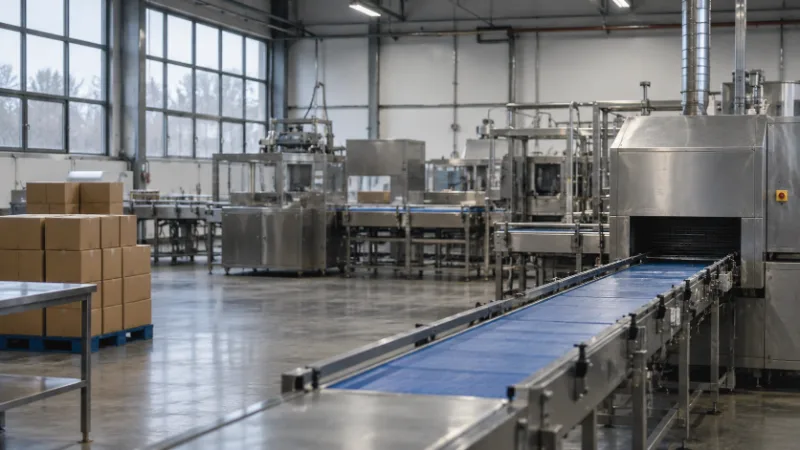
Kanes Foods Limited has entered administration, bringing an immediate end to trading at its Worcestershire manufacturing facility and resulting in 662 redundancies.
The collapse of the long-established food manufacturer is a significant blow to the Vale of Evesham economy and raises wider concerns about the financial vulnerability of British food suppliers.
PricewaterhouseCoopers (PwC) confirmed that Timothy Andrew Higgins, Edward Williams and Helen Wheeler-Jones were appointed joint administrators on 9 November 2026.
Production stopped immediately, and the entire workforce was made redundant.
The company, known for supplying pre-packaged salads, stir-fry vegetables and sauces to major UK supermarkets, had experienced mounting financial difficulties following a wastewater treatment plant failure and serious drought-related supply disruptions.
The administration also highlights a wider issue within UK food manufacturing: even established businesses with substantial turnover can struggle when unexpected operational costs combine with volatile raw-material prices and negative cash flow.
What Happened to Kanes Foods Limited?
Kanes Foods Limited formally entered administration on 9 November 2026 after directors were unable to secure additional funding or complete a sale of the business as a going concern.
According to the administrators, financial pressures had intensified over several years, with two significant operational disruptions accelerating the company’s difficulties.
The first occurred in June 2025, when its wastewater treatment facility failed, generating approximately £2 million in exceptional costs and increasing ongoing operating expenses.
A second setback followed in August 2026, when drought-related disruption affected the supply of fresh produce during an important summer trading period.
With losses mounting and cash flow deteriorating, the company attempted to explore alternative financing arrangements and potential buyers.
However, those efforts failed to produce a viable solution before administration became unavoidable.
Kanes Foods Administration at a Glance
| Detail | Confirmed information |
|---|---|
| Company | Kanes Foods Limited |
| Company number | 02438826 |
| Established | Incorporated on 1 November 1989 |
| Administration date | 9 November 2026 |
| Administrators | Timothy Higgins, Edward Williams and Helen Wheeler-Jones |
| Insolvency firm | PwC |
| Location | Middle Littleton, Evesham, Worcestershire |
| Employees affected | 662 |
| Trading status | Ceased immediately |
| Reported annual turnover | Approximately £83 million |
| Major operational loss | Approximately £2 million from wastewater plant failure |
| Principal products | Prepared salads, stir-fry products and sauces |
| Rescue attempts | Refinancing, additional funding and accelerated sale |
| Outcome | No going-concern sale completed |
The administration concerns Kanes Foods Limited and an associated property company, Littleton Property Services Limited.
Although some early reports describe the incident as a loss of approximately 600 jobs, PwC’s formal announcement confirms 662 employees were made redundant.
Why Did Kanes Foods Go Into Administration?
The available evidence points to a combination of infrastructure failure, supply-chain disruption, operating losses and an inability to secure sufficient additional finance.
Rather than attributing the closure to one event, our analysis identifies several connected pressures that progressively weakened the company’s financial position.
1. Wastewater Treatment Plant Failure
In June 2025, Kanes Foods experienced a major failure involving its wastewater treatment facility.
The incident generated approximately £2 million in one-off costs, alongside a lasting increase in operating expenditure.
For a large chilled-food manufacturer, wastewater management is an essential part of production. Food processing, vegetable washing and equipment cleaning all require reliable water and wastewater infrastructure.
A serious failure can create expenditure beyond the immediate repair bill, including temporary operating arrangements, additional treatment costs and production disruption.
The administrators have confirmed the financial impact, although the complete operational breakdown has not been publicly detailed.
2. Drought Disrupted Fresh Produce Supplies
The company’s financial position deteriorated further in August 2026 when drought-related conditions affected the fresh produce supply chain.
Kanes Foods depended on vegetables and other perishable ingredients to manufacture short-shelf-life supermarket products.
Disruption to agricultural supplies can create several commercial problems simultaneously: higher procurement costs, uncertain delivery volumes, reduced production efficiency and difficulty maintaining supermarket orders.
These risks are particularly important during summer, when demand for prepared salads and other chilled convenience products can be strong.
PwC specifically identified the August 2026 supply disruption as a material factor in the company’s deteriorating trading performance.
3. Negative Cash Flow and Continuing Losses
The Grocer reported that Kanes Foods had annual turnover of approximately £83 million and had recorded operating profits of around £2 million in its earlier financial accounts.
These figures are important because they demonstrate the difference between generating substantial sales and maintaining sufficient financial resilience.
A profitable company can still become insolvent when unexpected costs and operating losses exhaust available cash.
The financial pressure becomes particularly serious when suppliers, employees, utilities and lenders must continue to be paid while revenue or production is disrupted.
As outlined in our coverage of how UK businesses can prepare for economic uncertainty, liquidity management and contingency planning are essential when companies face unpredictable costs.
In Kanes Foods’ case, the administrators cited ongoing losses, negative cash flow and uncertainty about future demand.
4. A Buyer Could Not Be Found in Time
The directors pursued refinancing and additional funding before beginning a fast-track sales process in mid-September 2026.
The intention was to explore whether another investor or buyer could support the business and preserve its operations.
However, a going-concern sale could not be completed within the available timeframe.
The inability to secure sufficient financing ultimately left the company without a workable route to continued trading.
The company therefore entered administration, with production ceasing immediately.
How Did Kanes Foods’ Financial Problems Develop?
The sequence of events shows how separate commercial difficulties accumulated before the final closure.
| Date | Development | Business significance |
|---|---|---|
| June 2025 | Wastewater treatment plant failed | Approximately £2 million in exceptional costs and higher operating expenses |
| August 2026 | Drought-related fresh produce disruption | Additional pressure on supplies and summer trading |
| September 2026 | Accelerated sale process began | Directors attempted to secure a buyer |
| 9 November 2026 | Joint administrators appointed | Business ceased trading and 662 employees were made redundant |
| 10 November 2026 | Local MP publicly confirmed job losses | Attention turned to employment assistance and the local economy |
| 11 November 2026 | PwC published its formal announcement | Causes of the administration and failed rescue efforts were explained |
The timing is particularly important.
By the time the accelerated sales process began in September, Kanes Foods had already experienced significant operational disruption and mounting financial pressure.
This left limited time for a buyer to assess the business, arrange financing and complete a rescue transaction.
How Many Jobs Have Been Lost at Kanes Foods?
A total of 662 employees lost their jobs following the appointment of administrators.
The redundancies affected the company’s manufacturing operations at its Evesham facility.
The immediate closure is especially significant because Kanes Foods had been a long-standing employer in the area, with its operations supporting local households and businesses.
Tim Higgins, joint administrator and director at PwC, acknowledged the seriousness of the situation in the company’s official administration announcement.
He described the collapse as “deeply regrettable” and confirmed that the administrators would support affected employees through the redundancy process.
The immediate financial consequences for workers may include lost regular income, uncertainty surrounding outstanding employment payments and the need to find alternative employment.
Nigel Huddleston, Conservative MP for Droitwich and Evesham, described the closure as “devastating news for the Vale of Evesham” in a statement published on 10 November 2026.
He confirmed that he was liaising with PwC and the Department for Work and Pensions to help affected employees obtain appropriate advice and support.
His statement also recognised the wider economic significance of the company, which had been one of the constituency’s major employers.
The closure adds to concerns about manufacturing employment across the UK. The impact on local communities can be seen in other industrial closures, including the JDE Peet’s Banbury factory closure.
What Redundancy Payments Can Former Kanes Foods Employees Claim?
Employees who lose their jobs because their employer becomes insolvent may qualify for statutory redundancy payments and other employment-related compensation.
PwC has confirmed that affected Kanes Foods employees will receive support in making claims through the government’s Redundancy Payments Service.
Depending on their circumstances, eligible employees may be able to claim:
- Statutory redundancy pay: Normally available to qualifying employees with at least two years of continuous service.
- Unpaid wages: Certain outstanding salary, overtime, commission or contractual payments, subject to statutory limits.
- Outstanding holiday pay: Payment for eligible accrued or unpaid holiday.
- Statutory notice pay: Compensation where the employee did not receive the statutory notice entitlement.
Employees generally need a case reference number from the insolvency practitioner before submitting their redundancy application.
The government normally requires redundancy applications within six months of dismissal.
Former workers can review their eligibility and application requirements using the official GOV.UK guidance on claiming money owed by an insolvent employer.
The amount payable is not identical for every employee. It depends on factors including age, length of service, contractual entitlements and statutory payment limits.
Affected workers should retain employment records, payslips, redundancy letters and details of any wages or holiday pay outstanding.
PwC has also published information for former employees through its administration case website.
Which Supermarkets Did Kanes Foods Supply?
Kanes Foods manufactured chilled convenience products for major UK grocery retailers.
Media coverage has associated the company’s supply arrangements with retailers including Aldi, Lidl, Iceland and Asda.
PwC’s official announcement confirms that the company supplied several major supermarkets but does not identify every retail customer.
Its products included:
- Pre-packaged salads and leafy vegetable products.
- Prepared stir-fry vegetables.
- Chilled convenience ingredients.
- Sauces and dressings.
- Other short-shelf-life food products.
The manufacturer’s closure may require affected retailers to reorganise procurement arrangements and identify replacement suppliers.
However, there is no confirmed evidence that Kanes Foods’ administration has resulted in widespread national supermarket shortages.
Retailers frequently work with multiple manufacturers, and the effect will depend on individual supply contracts and alternative production capacity.
Consequently, the collapse should not be interpreted as confirmation that supermarket customers will be unable to purchase particular food products.
What Will Happen to Kanes Foods’ Suppliers and Outstanding Orders?
The administration creates financial uncertainty for businesses that supplied goods or services to Kanes Foods.
PwC has confirmed that Kanes Foods stopped trading immediately and is not accepting further deliveries.
Outstanding purchase orders that had not been dispatched before 9 November 2026 will not be fulfilled.
Suppliers owed money for goods or services provided before the administration date may need to submit claims as creditors.
The administrators will assess the company’s assets, liabilities and creditor positions as the insolvency process progresses.
Importantly, unsecured suppliers are not guaranteed full repayment. Their recoveries depend on available assets, administration costs and the legal priority of competing claims.
Businesses should establish which legal company owes the debt and preserve supporting documentation.
The financial consequences could extend beyond the immediate manufacturing business, particularly for growers, logistics providers, packaging suppliers and contractors with significant exposure to Kanes Foods.
In his public statement, Nigel Huddleston also raised concerns about the potential knock-on effects for other businesses in the supply chain.
At present, the administrators have not confirmed what percentage of unsecured debts will ultimately be recovered.
Businesses wanting to understand the distinction between administration and other insolvency procedures can compare the circumstances with Breyer Holdings Limited’s liquidation and the administration of a related company.
What Is the Connection Between Kanes Foods and Littleton Property Services Limited?
A less widely reported detail is that Littleton Property Services Limited also entered administration on 9 November 2026.
PwC identifies Littleton as a dormant group company associated with Kanes Foods.
It holds part of the freehold property used by the manufacturing business at the Evesham site.
Unlike Kanes Foods, Littleton did not conduct active trading operations and had no employees.
This distinction matters because the two companies are separate legal entities, even though their administration appointments were made at the same time.
Assets, liabilities and creditor claims must therefore be considered in relation to the appropriate company.
The joint administrators will manage the affairs and assets of both businesses and seek to maximise realisations for creditors.
The involvement of a property-owning group company may be relevant to future decisions concerning the manufacturing site, but no completed sale of that property has been confirmed in the information reviewed.
Could Kanes Foods Be Rescued or Sold?
The prospect of preserving Kanes Foods as an operating business was significantly reduced when its accelerated sale process failed and trading ceased on 9 November.
However, administration does not automatically mean that every asset will be permanently lost or that all possible future transactions have been ruled out.
Depending on commercial interest, the administrators may be able to sell equipment, property interests or other assets.
A buyer could potentially acquire individual assets without purchasing the former business as a going concern.
These possibilities should not be confused with a confirmed reopening.
As of 12 November 2026, there has been no verified announcement of a buyer completing a rescue of the operating business.
Employees and suppliers should therefore rely on formal updates from the administrators rather than speculation about a possible restart.
What Does Kanes Foods’ Collapse Mean for the UK Food Manufacturing Industry?
Kanes Foods’ administration illustrates the exposure of short-shelf-life food manufacturers to simultaneous operational and financial risks.
Businesses supplying fresh and prepared foods often manage demanding distribution schedules, perishable inventory and substantial manufacturing overheads.
Unlike some industries, they cannot necessarily delay production or store finished products for extended periods while waiting for market conditions to improve.
Their financial performance can also be sensitive to changing agricultural yields, ingredient prices, energy consumption and infrastructure reliability.
Our assessment identifies three broader commercial lessons.
First, infrastructure problems can become major financial risks. The failure of an essential production-related facility may result in immediate expenditure and continuing operational costs.
Second, supply-chain disruption can undermine an otherwise viable business model. Drought-related shortages can affect ingredient prices, production volumes and contractual delivery commitments simultaneously.
Third, turnover alone is not a measure of financial security. Even a manufacturer generating tens of millions of pounds in annual sales can experience a serious liquidity crisis.
A similar need to distinguish trading performance from underlying financial exposure appears in our coverage of Devonshire Homes entering administration, although the business models and circumstances are different.
For food manufacturers, the case reinforces the importance of contingency planning, adequate liquidity reserves, operational risk assessment and financing flexibility.
These measures cannot eliminate every risk, but they can provide greater room to respond when several unexpected pressures occur together.
What Happens Next in the Kanes Foods Administration?
The administrators’ immediate responsibilities include managing the two companies’ affairs, establishing their financial positions and determining how available assets can be realised for creditors.
PwC’s published guidance indicates that known creditors will receive information about the administration and how to submit their claims.
The administrators are also expected to issue proposals explaining the strategy for the insolvency proceedings and provide updates as the process progresses.
Several important issues remain unresolved:
- Whether any manufacturing equipment, property or other assets will be sold.
- How much money will ultimately be available to creditors.
- Whether former employees will secure replacement employment locally.
- Whether the former Evesham production facilities will be used by another business.
- What financial exposure the collapse has created for suppliers and other commercial partners.
The appointment of administrators is therefore the beginning of the formal insolvency process, rather than its conclusion.
For employees and suppliers, the next official updates from PwC will be particularly important.
Frequently Asked Questions
Has Kanes Foods Limited gone into administration?
Yes. Kanes Foods Limited entered administration on 9 November 2026, with three joint administrators from PwC appointed to manage the company’s affairs.
Why did Kanes Foods collapse?
The administrators identified financial pressure arising from a wastewater treatment plant failure, drought-related supply disruption, ongoing losses, negative cash flow and an unsuccessful effort to secure a rescue.
How many employees lost their jobs?
PwC confirmed that 662 employees were made redundant when the company ceased trading.
Is Kanes Foods still operating?
No. Kanes Foods ceased trading immediately on 9 November 2026. No subsequent restart had been confirmed as of 12 November 2026.
Who are the Kanes Foods administrators?
Timothy Andrew Higgins, Edward Williams and Helen Wheeler-Jones of PwC were appointed as joint administrators.
Can former Kanes Foods employees claim redundancy pay?
Eligible employees may be able to claim statutory redundancy pay, unpaid wages, holiday pay and notice-related payments through the Redundancy Payments Service, subject to government rules.
Will Kanes Foods reopen under new ownership?
There is currently no confirmed rescue or reopening. A sale of individual assets remains possible, but this does not guarantee the resumption of manufacturing operations.

Leave a Reply