
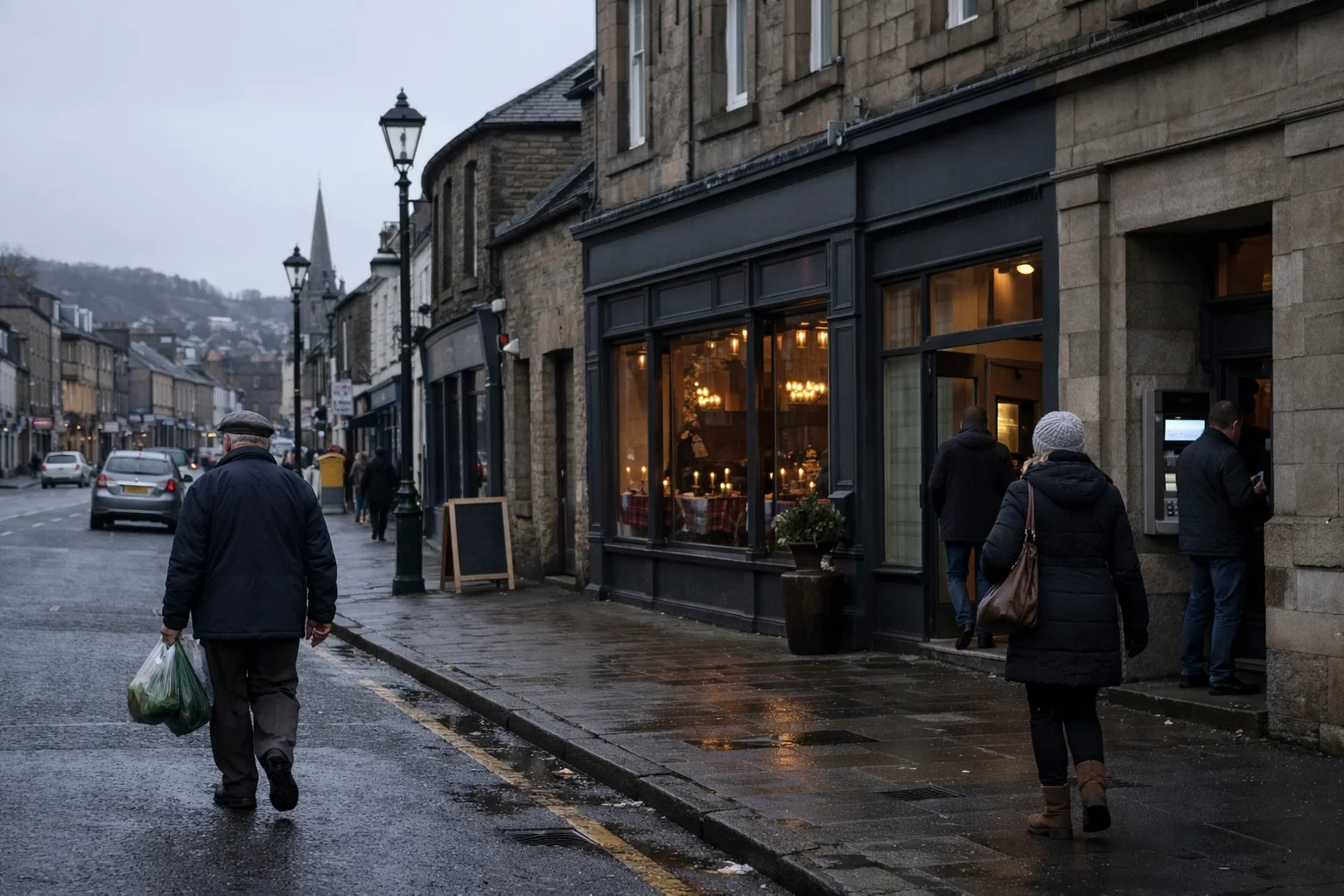
Is Burns Night a bank holiday in Scotland on 25 January? No, it isn’t. Although widely celebrated, Burns Night is not a statutory public or bank holiday. Schools, banks, and workplaces remain open, with celebrations held in the evening.
- Burns Night honours Robert Burns, Scotland’s national poet, through poetry, food, and music
- In 2026, it falls on a Sunday, with most events scheduled that evening
- The official 2026 Scottish bank holidays do not include 25 January
- It lacks legal recognition as a bank holiday despite its cultural importance
- Scots mark it socially, not with paid leave
- Visitors can expect lively events, normal trading hours, and rich cultural experiences
What Is Burns Night And Why Is It Celebrated In Scotland?
Burns Night is a cultural celebration observed every year on 25 January in honour of the birth of Robert Burns, Scotland’s national poet. Robert Burns was born in 1759 in Alloway, Ayrshire, and his poetry and songs captured the language, humour, sorrow, humanity and spirit of the Scottish people in a way that few writers have since.
His works include Auld Lang Syne, To A Mouse, Address To The Haggis and many other poems and songs that are still memorised, recited and sung all over the world.
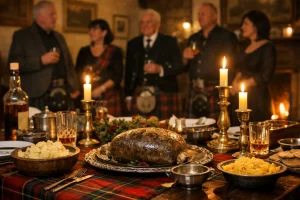
Burns Night is rooted in tradition. The very first Burns Suppers were held by his friends shortly after his death in 1796, as a way to remember his achievements, share his work, and preserve Scottish culture. The celebration subsequently spread from intimate gatherings in Scotland to formal dinners in homes, clubs, universities and Scottish societies across the globe.
A traditional Burns Night is structured and follows a sequence of ceremonial and cultural moments, including the gathering of guests, the welcoming speech, the procession of the haggis with recitation of the Address To The Haggis, a multi‑course meal, poetry readings, musical interludes, and concluding with the singing of Auld Lang Syne.
Key Traditions Associated With Burns Night
- Address To The Haggis – A ceremonious recitation of Burns’ poem before the haggis is served
- Haggis, Neeps And Tatties – The traditional main course of the evening
- Poetry Recitals – Selections of Burns’ poems are read, often by guests
- Whisky Toasts – Toasts to the memory and legacy of Burns, often led by the host
- Music And Song – Bagpipes and folk music enrich the celebration
These traditions reflect the cultural values that Burns represented: honesty, resilience, humour, humanity and community.
The Cultural Significance Of Burns Night
The reason Burns Night endures is that it is not only a celebration of one man’s literary genius, but also a celebration of Scottish identity. Across Scotland and within Scottish communities worldwide, Burns Night fulfils both a cultural and social role.
It reminds people of their shared heritage, provides an opportunity for community gathering, and creates an annual ritual where stories, music and poetry are passed between generations.
When Is Burns Night In 2026 And How Is It Observed?
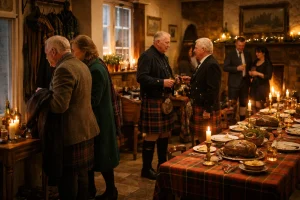
In 2026, Burns Night falls on Sunday, 25 January. Because the date is fixed to Burns’ birthday, the evening of Burns Night typically takes place around that weekend. When Burns Night is a Sunday, many events occur on the night itself or slightly earlier in the preceding days so that people can participate without work or school commitments interfering.
How Events Are Scheduled?
In many Scottish cities and towns, Burns Night events take various forms:
- Formal Burns Suppers in hotels and community halls
- Restaurant‑hosted dinners with Burns Night menus
- Pub events with poetry readings and Scottish music
- Informal family gatherings in homes
Because the date in 2026 is a weekend evening, it increases the likelihood that larger events will attract more participants arriving from further afield.
Types Of Observance
People attend Burns Night celebrations in different ways. Some follow the formal structure of a Burns Supper, which is defined by a set order of proceedings, while others enjoy informal meals or attend club nights with Burns Tribute performances.
Schools and universities might have assemblies or themed events earlier in the day, especially for young people learning about Burns and Scottish literature.
While the celebrations can last well into the evening, the observance itself is not tied to any legal obligation. It is, first and foremost, a cultural and social tradition.
Is Burns Night A Public Or Bank Holiday In Scotland?
Many people assume that Burns Night should automatically be a bank holiday because of its cultural prominence, but it is not. Officially, Burns Night is not a bank holiday in Scotland or anywhere else in the UK.
A bank holiday has legal status, which means it is recognised in legislation and often gives employees a day off with pay, and allows banks and many businesses to close. Burns Night has strong cultural importance, but it does not have that legal recognition.
In conversation with a colleague who specialises in Scottish holiday entitlements, we discussed why this distinction exists. He was very clear:
“Burns Night is a cultural and social celebration, highly valued in Scotland, but for a day to be classed as a bank or public holiday it must be written into legal statutes by the appropriate authority. Burns Night has never been added to that list, so while people celebrate it widely, it remains a normal working day in statutory terms.”
That professional perspective helped underline for me the difference between cultural observance and legal holiday status. It reminded me that celebration does not automatically become a statutory day off.
What This Means In Practice?
- Banks generally operate as normal
- Schools continue with their scheduled day
- Government offices remain open
- Many businesses follow usual working hours
Even though events and dinners happen in the evening, they do not affect the daytime routine for most workplaces or institutions.
Why The Confusion Around Holiday Status?
There are a few reasons people mistakenly think Burns Night is a bank holiday:
- Burns Suppers are often large, organised events that feel like official observances
- Schools sometimes hold Burns Night themed activities
- Media coverage on or around 25 January can give the impression of heightened national recognition
None of these elements, however, has legal weight in terms of holiday entitlements.
Bank Holiday Dates In Scotland For 2026
To provide clear context around where Burns Night stands in relation to official holidays, the table below shows the bank holidays observed in Scotland for the year 2026.
Scotland Bank Holidays 2026
| Date | Day | Holiday Name |
|---|---|---|
| 1 January 2026 | Thursday | New Year’s Day |
| 2 January 2026 | Friday | 2nd January |
| 3 April 2026 | Friday | Good Friday |
| 4 May 2026 | Monday | Early May Bank Holiday |
| 25 May 2026 | Monday | Spring Bank Holiday |
| 3 August 2026 | Monday | Summer Bank Holiday |
| 30 November 2026 | Monday | St Andrew’s Day |
| 25 December 2026 | Friday | Christmas Day |
| 28 December 2026 | Monday | Boxing Day (Substitute) |
This table makes it clear that 25 January is not listed. Bank holidays are legislated by the UK Parliament and the Scottish Government, and these are the dates that employees can normally expect statutory time off.
Observations From The 2026 Calendar
- 2 January is included separately from New Year’s Day, unique to Scotland
- St Andrew’s Day (30 November) is a recognised bank holiday in Scotland
- Spring and Summer bank holidays follow UK patterns
This table highlights the formal dates officially recognised for holiday closure, which does not include Burns Night.
Do Schools And Businesses Close On Burns Night?
Because Burns Night is not on the bank holiday list, schools, banks, and most workplaces remain open.
Typical Arrangements
- Schools operate as scheduled with classes continuing
- Banks are open under normal business hours
- Offices and public services continue regular operations
- Retail stores and supermarkets trade as usual
There are exceptions where individual employers or small businesses choose to give staff time off in the evening to attend Burns Night events, but this is discretionary, not statutory.
Examples Of Organisation Choices
Some universities, particularly those with strong Scottish studies departments or student societies, sometimes encourage their members to attend Burns Night dinners or organise their own events. However, this is separate from any official holiday status.
From my own experience in cities such as Edinburgh and Glasgow, I’ve seen businesses take a celebratory approach. Restaurant reservations for Burns dinners, themed nights in pubs, and community hall events are common. These social occasions might feel like the whole city has paused, but during the day, the economic and educational activities continue as usual.
How Do Scots Typically Celebrate Burns Night If It Is Not A Holiday?
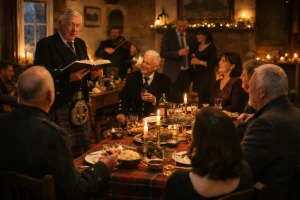
The cultural observance of Burns Night is rich and diverse, and it often feels like a holiday even though it legally is not. Across Scotland, many people participate in celebrations that combine food, music, poetry, remembrance and fellowship.
Common Elements Of Celebration
- Burns Suppers in homes or public venues
- Community events in village halls and clubs
- Recitations of Burns’ poems and songs
- Toasts to the memory of Burns and to friends
Below is a table illustrating the components of a traditional Burns Supper.
Typical Components Of A Burns Supper
| Component | Description |
|---|---|
| Welcome Speech | The host welcomes guests and sets the tone for the evening |
| Address To The Haggis | Recitation of the poem with ceremonial presentation of the haggis |
| Meal | Traditional Scottish meal with haggis, neeps and tatties |
| Toasts | Toast to the Immortal Memory of Burns and other guest toasts |
| Recitals | Poetry readings and musical performances |
| Auld Lang Syne | Singing of Burns’ famous song to conclude the event |
The social importance of this celebration is that it brings people together. Burns Night is not merely about food and poetry; it is about shared heritage and social connection.
Variation In Celebrations
Not all Burns Night celebrations are formal. Some families or friend groups have relaxed gatherings, enjoy a themed dinner at home, or attend a local club night. Some communities organise larger public celebrations with guest speakers, live music, and entertainment that extends beyond the dinner itself.
What Should You Know If You Are Visiting Scotland On Burns Night?
If you plan to be in Scotland on 25 January 2026, it’s worth understanding how Burns Night fits into daily life, travel and event availability.
Practical Tips For Visitors
- Many Burns Night dinners in restaurants and venues require advance booking
- Public transport and city services operate normally during the day
- Evening events may attract larger crowds, especially in cultural centres
Travel And Event Considerations For Visitors
| Consideration | Notes |
|---|---|
| Event Bookings | Reserve Burns Supper seats early |
| Daytime Services | Normal operating hours for shops/businesses |
| Evening Transport | Check timetables for buses/trains after event hours |
| Cultural Experience | Expect music, recitals, and local gatherings |
The cultural experience of Burns Night can be a highlight for visitors. Even though it is not a public holiday, the evening celebrations are often lively and meaningful, and many tourists enjoy the rituals, conversations and local hospitality.
Why Isn’t Burns Night Made An Official Bank Holiday In Scotland?

Many people wonder why a date with such cultural importance is not recognised as a bank holiday. The answer lies in how statutory holidays are created.
Bank holidays are established through legislation and require government decisions that balance economic impact, public interest, and historical precedent.
While Burns Night has cultural importance, it has not been adopted into the legal holiday calendar. Discussions and proposals about holiday recognition happen from time to time in political circles, but as of 2026, Burns Night remains outside formal status.
Creating a bank holiday involves careful consideration of:
- Economic implications for business and government services
- Alignment with existing holiday calendars
- Public demand and cultural impact
Because Burns Night is celebrated largely in the evening hours rather than the daytime, some officials might regard it more as a social tradition than a full‑day observance requiring statutory closure.
Does Burns Night Feel Like A Holiday Even If It Isn’t?
Culturally and socially, Burns Night carries the weight of significance that many statutory holidays possess. Even though it is not a bank holiday, the energy and enthusiasm around Burns Night celebrations often give it the feel of one.
From my own experiences attending Burns Suppers and observing public enthusiasm, the evening brings a sense of collective identity and shared joy. Friends, family and strangers connect over the traditions of food, music and poetry. In that sense, Burns Night can feel like an unofficial holiday one that belongs to the people rather than to the statute book.
Frequently Asked Questions
What do you eat on Burns Night?
Traditional fare includes haggis, neeps (turnips) and tatties (potatoes), often followed by a dessert like cranachan.
Is Burns Night a holiday outside Scotland?
Burns Night is celebrated by Scottish communities around the world, but it is not an official public holiday anywhere.
Are shops open on Burns Night in the UK?
Yes. Because Burns Night is not a bank holiday, shops and businesses operate normal hours on 25 January.
What happens at a Burns Supper?
A Burns Supper typically includes welcoming guests, the address to the haggis, a meal, toasts and recitations of Burns’ poetry.
Is Burns Night a religious celebration?
No. Burns Night is cultural and literary in focus, celebrating the life and work of Robert Burns rather than a religious observance.
How do children celebrate Burns Night in schools?
Schools may host themed lessons, poetry readings, or cultural activities, but they remain open and follow the regular timetable.
Has there ever been a campaign to make Burns Night a bank holiday?
There have been occasional discussions suggesting new public holidays, but Burns Night has not been adopted into the official bank holiday list as of 2026.

Leave a Reply