
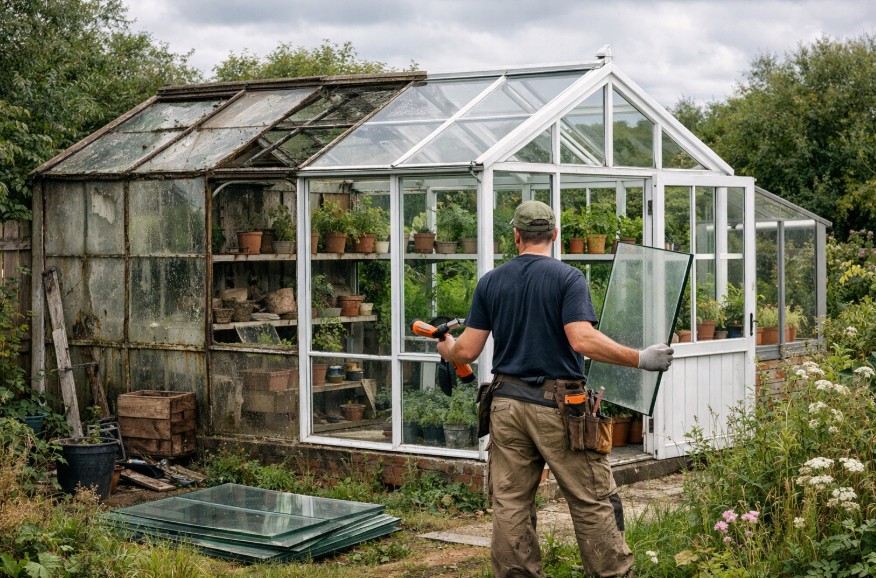
Many gardeners inherit a greenhouse that has quietly fallen into disrepair. Cracked panels, green algae, rusty hinges and sagging shelves all build up over the years until the structure looks more like a liability than an asset.
The good news is that most greenhouses don’t need to be replaced entirely. With some time, a few materials and a clear plan, you can bring almost any tired structure back to working order.
Start With a Thorough Clean
Before anything else, the greenhouse needs a proper clean. Remove all pots, staging and debris from the interior, then wash every surface with a diluted horticultural disinfectant.
Pay particular attention to the glazing bars, where algae and dirt collect and create damp conditions that encourage disease.
Work from the roof down, rinse everything off well, and let the structure dry out fully. A long-handled brush makes the job far easier, and you’ll quickly get a clear picture of what needs repairing once the grime has gone.
Replacing Damaged Glazing
Cracked or missing panels are often the biggest eyesore on an old greenhouse. They also let in cold air and pests, which directly affects your plants’ health.
Glass is the traditional choice, but many gardeners now opt for plastic alternatives instead.
A replacement acrylic greenhouse sheet transmits up to 92% of light, making it highly effective for growing, and it’s far more impact-resistant than standard glass.
Panels can be ordered cut to your exact measurements, which makes installation considerably more straightforward.
When fitting new panels, check that the glazing clips or channels are also in good condition. Worn clips won’t hold panels securely, so it’s worth replacing them at the same time.
Repairing and Refreshing the Frame
The type of frame you’re working with will determine the level of effort involved:
- Aluminium frames are generally low maintenance but can develop loose fixings and damaged seals. A check of all bolts and gaskets is usually enough.
- Steel frames are more prone to rust. Sand back any affected areas, apply a rust converter, then finish with a suitable outdoor paint.
- Timber frames need checking for rot, particularly around the base and at joints. Small areas can be cut back and filled with exterior wood filler before repainting. More extensive rot may require full section replacement.
Whatever the material, take time to check that the door hangs true and closes properly, as a poorly fitting door lets in far more cold air than people realise.
Improving Ventilation and Drainage
Old greenhouses are often poorly ventilated, and that causes problems with humidity, disease and overheating in summer. Check that all roof vents open and close freely.
If the arms have seized, replace them. Automatic vent openers are an inexpensive upgrade that will keep temperatures stable without any effort.
Drainage matters too. Clear any blocked guttering and make sure the ground inside doesn’t hold standing water after rain. A layer of gravel or paving slabs can noticeably improve the conditions underfoot.
Reviving the Interior
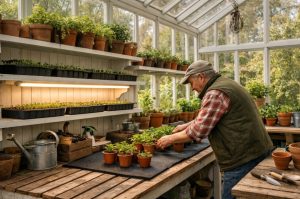
Once the structure is sound, turn your attention to the staging and shelving. Old wooden staging can be sanded, treated and repainted to look as good as new.
Adding a layer of capillary matting to the shelves helps retain moisture around pots and reduces how often you’ll need to water.
Good lighting will extend the growing season and make the space more enjoyable to work in. A simple plug-in grow light or LED strip fitted under the top shelf can do a great deal for plant health through the darker months.
Turn a New Leaf for Your Greenhouse
A greenhouse makeover doesn’t have to happen all at once. Tackle one area at a time, starting with the structure’s performance, and you’ll find the project becomes manageable.
The result is well worth the effort. A well-maintained greenhouse will serve you for many more years, and the restoration process itself gives you a thorough understanding of how everything fits together.

Leave a Reply