
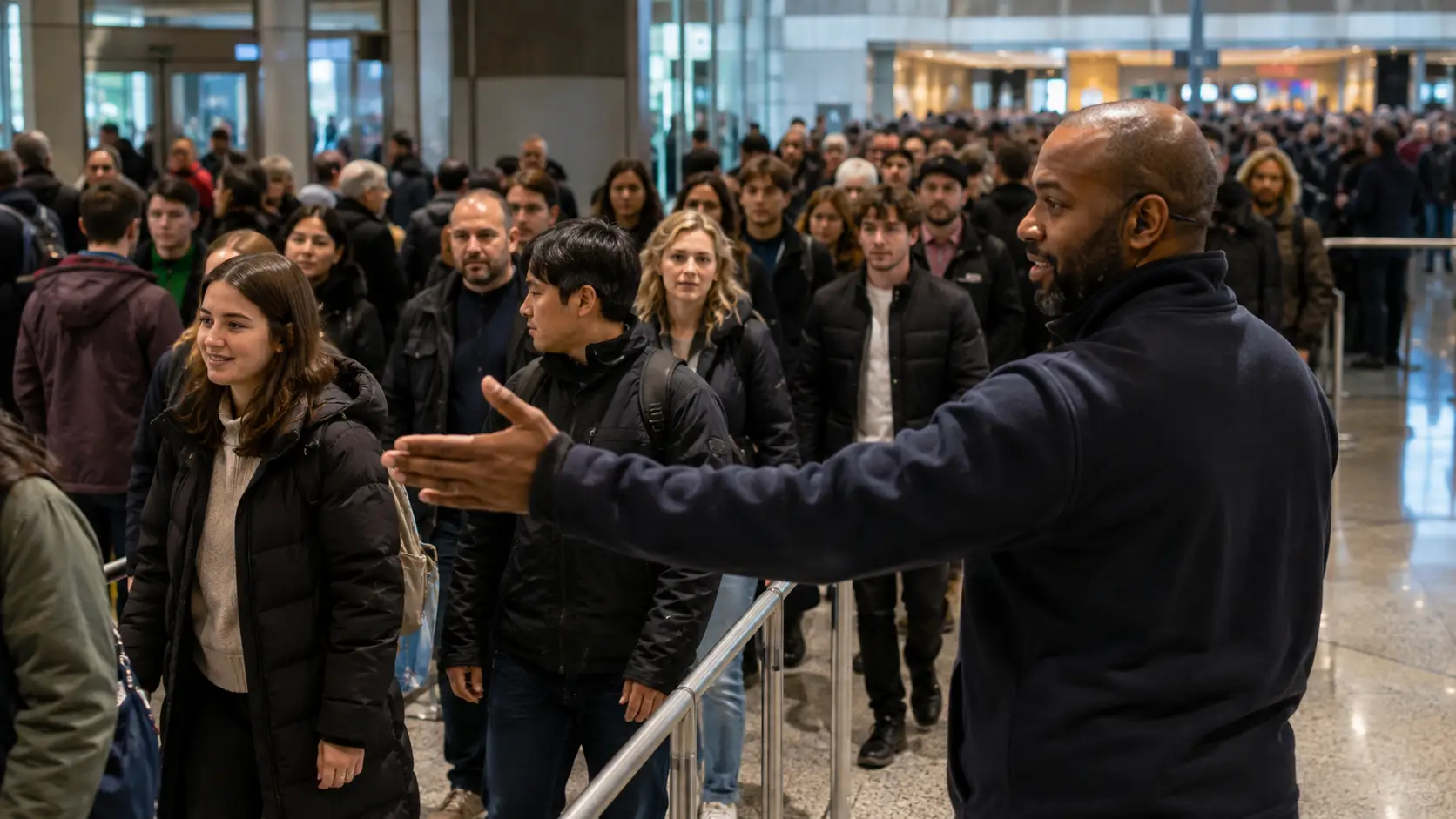
Large crowds often move together. Each mob member responds to tiny environmental stimuli. A gate closing, delayed announcement, or sudden direction change might affect thousands of decisions in minutes.
Frontline staff who give directions, answer queries, and establish the mood are driving this movement.
How workers talk, stand, and act affects uncertainty-related annoyance or collaboration. Event organisers like Event People (eventpeople.co.uk) know that crowd management goes beyond just barricades and signage.
Visible personnel provide comfort, guide, and show seriousness. In unfamiliar places, people look for signs when they lack clear instructions. Uniformed workers persuade well.
Stress may decrease when unhurried personnel give straightforward instructions without effort.
Calmness indicates control. Visitors may notice even a minor issue if the movement is quick, the glances are annoyed, or the instructions contradict each other.
Tones Impact Instructional Receivership

A directive might evoke different emotions depending on how it’s delivered. A powerful yet polite request inspires collaboration by displaying respect.
When a standard instruction is delivered with a dismissive or aggressive tone, it can feel like a personal encounter. One quarrel in a packed room can quickly capture attention and affect those around it.
Staff must be confident, not aggressive, when repeating directions to clients who are fatigued or irritated.
Visibility Establishes Order
Frontline troops lead crowds to authority and support. Well-placed, attentive staff plan the event and interact with their environment.
Having a visible guide reduces the likelihood of guests wandering into banned areas or forming unofficial lines.
Staff who are preoccupied, in small groups, or on their phones may not realise they are signalling that regulations are not being followed or that no one is monitoring them.
Respect Prevents Little Issues From Escalating
In crowds with diverse demands, expectations, and knowledge levels, mobility, language, sensory, and limited space challenges may affect some guests. When patients react, confusion can be distressing.
Respectfully explaining why a request cannot be met builds trust. Hearing limits rather than being ignored makes people more likely to comply.
Consistency Promotes Teamwork

Diverse worker responses complicate crowd control. Guests can walk between doors, argue directions, or have personnel say what they wish. Regular communication clarifies events and expectations.
Pre-gate-opening briefings help personnel agree on routes, limits, emergency protocols, and terminology for questions. If a staff member’s body language sets the tone, they may not need to use words.
Approachable personnel use eye contact and open body language and offer assistance. In noisy situations, crossed arms, aggressive gestures, and proximity can be perceived as hostile.
Staff posture influences movement; therefore, they must understand. Be a route bottleneck. Step aside and point clearly to direct people without slowing them down.
Pressure Challenges Training Quality
Most events go well until plans change. Weather, transport delays, technical issues, and medical occurrences all strain frontline responders. Employees are trained to moderate their reactions before dealing with the public.
Learning where to obtain information and when to escalate an issue helps workers improve. Their confidence calms guests.
They can change courses without confusion, trusting their judgement.
Human Signal in Crowd
Crowd management includes capacity limits, impediments, admission systems, and evacuation techniques. Measures provide structure, but frontline workers make it real.
They permanently indicate whether the workplace is safe, organised, and worth working in for guests.
A calm expression, a respectful explanation, or a confident gesture may seem insignificant, but repeated by event staff can impact a crowd.

Leave a Reply