
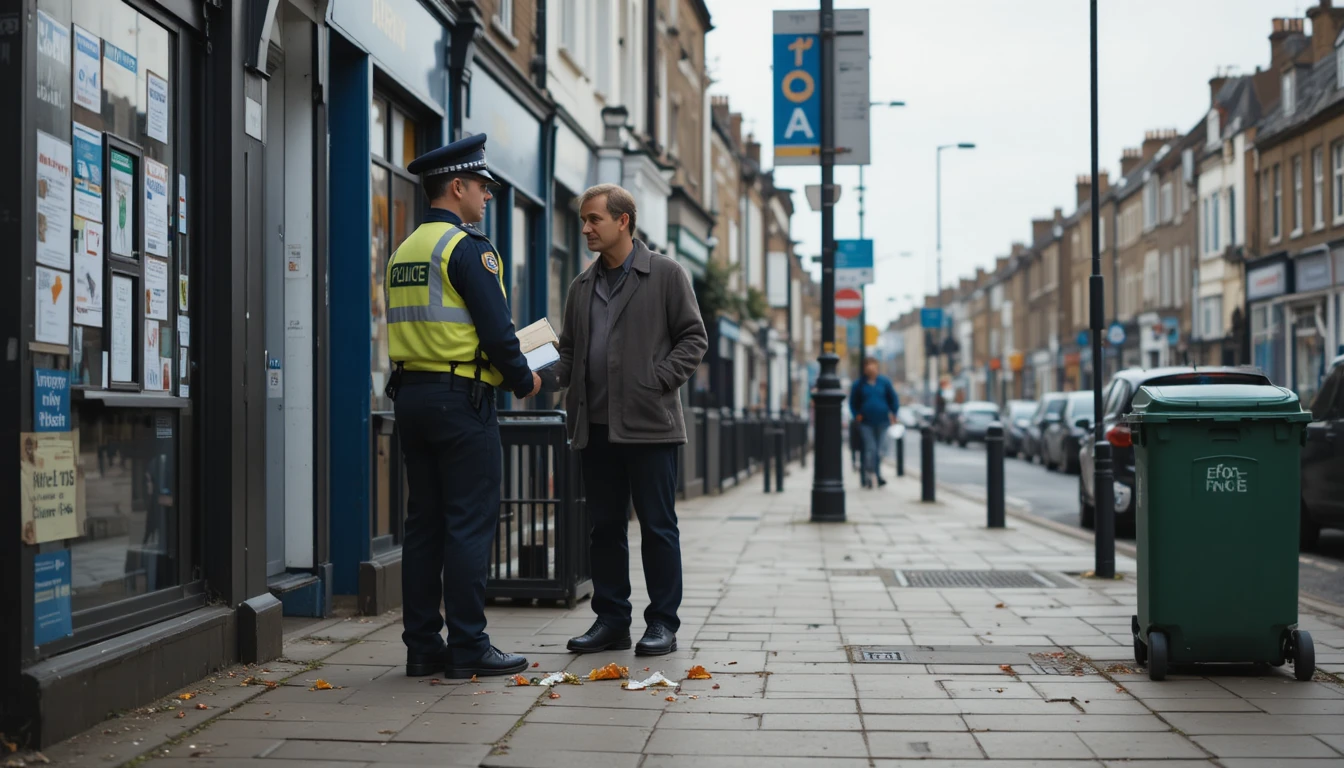
A Haringey Council littering fine is a fixed penalty notice issued for offences such as dropping litter, dog fouling or dumping rubbish in the borough. The penalty is £500 for littering or dog fouling and £1,000 for dumping rubbish or fly-tipping.
It must be paid within 14 days, or the case may be taken to the Magistrates’ Court, where the fine can rise to up to £2,500, with possible prosecution costs and a criminal record.
Key takeaways:
- Haringey Council littering fines must be paid within 14 days.
- Payment can be made online or by telephone.
- A notice cannot be appealed, but it can be challenged through a representation.
- Weak challenges, such as no bins nearby or small litter, are usually rejected.
- Ignoring an FPN can lead to court action.
What Is a Haringey Council Littering Fine?

A Haringey Council littering fine is a fixed penalty notice, often called an FPN, issued for certain environmental offences in the borough. It is commonly used when a person is believed to have dropped litter, failed to clear up dog fouling or dumped rubbish unlawfully.
A fixed penalty notice gives the person an opportunity to deal with the matter without going straight to court. It is not the same as an immediate criminal conviction. However, it should still be treated seriously because failure to pay can lead to prosecution.
Littering is not limited to large items. Small items can still count as litter if they are dropped, thrown, left behind or placed somewhere they should not be.
This can include cigarette ends, food wrappers, takeaway packaging, bottles, cans, chewing gum, paper, tissues and other everyday waste.
In Haringey, environmental enforcement is used to protect public spaces and reduce the cost of street cleaning.
Litter, dog fouling and dumped rubbish can affect pavements, parks, estates, shopping areas, roads and residential streets. The council’s position is that people and businesses must take responsibility for their waste.
The key point is simple. If a person leaves waste in a public place instead of disposing of it properly, they may receive a Haringey Council fixed penalty notice.
How Much Is a Haringey Council Littering Fine?
The cost of a Haringey Council littering fine depends on the type of offence. The penalty is set at £500 for littering or dog fouling and £1,000 for dumping rubbish or fly-tipping.
Offence Fixed Penalty Amount Typical Example Payment Period
Littering £500 Dropping a cigarette end, wrapper or food packaging 14 days
Dog fouling £500 Failing to clean up after a dog in a public place 14 days
Dumping rubbish or fly-tipping £1,000 Leaving bags, furniture or commercial waste unlawfully 14 days
The penalty amounts are higher than many people expect. This is why it is important for residents, visitors and businesses to understand the rules before assuming that a small item will not matter.
£500 Penalty for Littering or Dog Fouling
A £500 penalty can be issued for littering or dog fouling. This applies when someone drops or leaves waste in a public place, or when a dog owner fails to clear up after their dog.
A cigarette end is one of the most common examples. Some people assume cigarette ends are too small to be treated as litter, but councils often regard them as litter because they create mess, contain harmful materials and are difficult to clean from pavements and drains.
Dog fouling is also taken seriously. Dog waste can be unpleasant, hazardous and difficult for street cleaning teams to manage. Dog owners are normally expected to carry suitable bags and dispose of dog waste properly.
£1,000 Penalty for Dumping Rubbish or Fly-Tipping
Dumping rubbish is treated more seriously than ordinary littering. In Haringey, the fixed penalty for dumping rubbish or fly-tipping is £1,000.
Fly-tipping can include household waste, commercial waste, building materials, old furniture, mattresses, electrical items, boxes, black bags or other rubbish left in an unauthorised place.
It does not always have to be a large amount of waste. Even one bag or box can create an issue if it is dumped unlawfully.
Residents may face action if they put rubbish out at the wrong time, leave items beside public bins or place waste where it is not meant to be collected. Businesses may face enforcement if they do not have proper commercial waste arrangements.
Court Penalties for Unpaid Fixed Penalty Notices
If the fixed penalty notice is not paid within 14 days, a summons can be issued and the case may be heard in the Magistrates’ Court. If the person is convicted, the court can impose a penalty of up to £2,500. The person may also be ordered to pay prosecution costs.
Stage What It Means Possible Result
FPN issued The council issues a fixed penalty notice A person can pay or make a representation
14-day period Payment must be made within the deadline No further action if paid on time
Non-payment The FPN remains unpaid A summons may be issued
Court hearing The matter goes to the Magistrates’ Court Fine, prosecution costs and possible criminal record
A Haringey Council littering fine should therefore not be ignored. Even if the person disagrees with it, they should use the proper representation process instead of doing nothing.
When Must a Haringey Council Fixed Penalty Notice Be Paid?
A Haringey Council fixed penalty notice must be paid within 14 days. If it is paid within this period, no further action will be taken for that fixed penalty notice.
The 14-day deadline is important because it gives the person a limited window to resolve the matter. Once that period passes, the council can begin the next stage, which may include issuing a summons for the Magistrates’ Court.
A person who receives a notice should check the date on the letter carefully. They should also check whether the reference number starts with “WK” or whether it is a 9-digit number only, because this affects how payment or representation should be made.
The person should not wait until the final moment to deal with the notice. Payment problems, missing reference numbers, bank issues or email delays can create unnecessary complications.
Important details to check include:
- The FPN reference number
- The offence stated on the notice
- The amount due
- The date of issue
- The payment deadline
- The correct payment method
- The correct representation route, if challenging the notice
Keeping a copy of the notice and any payment confirmation is also sensible. If a dispute later arises about payment or communication, records can help prove what happened.
How Can a Haringey Council Littering Fine Be Paid?
A Haringey Council littering fine can be paid online or by telephone. The person will need the reference number on the letter and a debit or credit card.
The payment method depends partly on the reference number. This is why the notice should be read carefully before making a payment.
Paying the FPN Online
Online payment is usually the simplest method for many people. The person should use the correct payment service and enter the details exactly as shown on the notice.
Before paying online, the person should make sure they have the FPN letter in front of them. This helps prevent typing mistakes and ensures the correct case is paid.
What Is Needed Why It Matters
FPN reference number Identifies the correct penalty notice
Debit or credit card Allows the payment to be processed
Correct penalty amount Helps avoid underpayment or confusion
Payment confirmation Provides proof that the FPN was paid
After payment, the person should save or screenshot the confirmation page. They should also keep any email receipts or bank records.
Paying by Telephone
Payment can also be made by telephone. The correct number depends on the reference format.
FPN Reference Type Telephone Number Availability
Starts with “WK” 020 8489 1000 Council payment line
9-digit number only 020 7150 8697 Monday to Friday, 9am to 4pm
When paying by telephone, the person should speak clearly, confirm the reference number and check the amount before the payment is completed. They should ask for a payment reference or confirmation where available.
Details Needed Before Making Payment
The most important detail is the FPN reference number. Without it, the payment may not be correctly matched to the penalty notice.
The person should also check whether the notice is for littering, dog fouling or dumping rubbish. This matters because the penalty amount differs depending on the offence.
If there is uncertainty about the reference number or payment method, the person should use the contact route shown on the notice rather than guessing.
What Happens If a Haringey Council Littering Fine Is Not Paid?

If a Haringey Council littering fine is not paid within 14 days, the council can issue a summons. The case can then be heard in the Magistrates’ Court.
This changes the situation significantly. The original fixed penalty notice is designed to settle the matter without court proceedings. Once the matter goes to court, the person may face a higher financial penalty and additional consequences.
If convicted, the person could be fined up to £2,500. They may also be ordered to pay the costs of the prosecution. A criminal record may also result from conviction.
A council enforcement adviser described the risk clearly: “I always tell people not to treat an FPN as just another letter. If I receive one, I would check the reference number, deadline and evidence straight away, because missing the 14-day period can turn a manageable penalty into a court matter.”
This insight is especially important for people who feel the notice is unfair. Disagreeing with a penalty does not stop the deadline by itself. The person must either pay it or submit a representation through the correct route.
The practical risk of ignoring a fixed penalty notice is shown below.
Action Taken Likely Result
Paid within 14 days No further action
Representation submitted correctly Clock stops while it is reviewed
Ignored completely Summons may be issued
Convicted in court Fine, prosecution costs and possible criminal record
A person who cannot find the letter, has lost the reference number or is unsure what to do should act quickly. Delays can make the position more difficult.
Can a Haringey Council Littering Fine Be Appealed or Challenged?
A Haringey Council fixed penalty notice cannot be appealed in the normal way, but it can be challenged by making a representation. This is the formal process for asking the council to review the notice.
The word appeal is often used in everyday conversation, but representation is the correct term in this context. A person can make a representation on any ground, but the notice may only be cancelled in limited situations.
Representation Instead of Appeal
A representation is a written challenge. It should explain why the person believes the penalty notice should not stand.
The strongest representations are usually clear, factual and supported by evidence. The person should avoid emotional arguments that do not address whether the notice was issued correctly.
For example, a person may explain that the wrong person was identified, the location was incorrect, the waste was not theirs, or there is evidence that the council made an error. A representation can also argue that it is not in the public interest to proceed.
When a Penalty Notice May Be Cancelled?
Haringey Council may cancel a penalty notice if it was issued incorrectly or if it is not in the public interest to proceed against the defendant.
This means the person should focus on the issue that matters most. A successful challenge is unlikely to be based only on inconvenience, lack of bins, lack of signs or the small size of the litter.
Possible Ground Why It May Matter
Incorrect identity The wrong person may have been issued the notice
Incorrect location The notice may contain a factual error
Waste not linked to the person Responsibility may not be proven
Procedural error The notice may not have been issued correctly
Public interest concern It may not be fair or proportionate to proceed
A local waste compliance professional explained it clearly: “If I were challenging a notice, I would focus on whether the notice was issued correctly, whether the evidence is accurate, and whether there is a genuine public interest reason to review it. I would not rely on arguments that the council has already said it usually rejects.”
What Happens After a Challenge Is Submitted
Before making a representation, the person needs the FPN reference number on the letter.
If the reference starts with “WK”, the person can make a representation online. If the reference is a 9-digit number only, they should email Haringey.Council@LASupport.co.uk.
Once the challenge is received, the clock stops until the person receives a response. This means they should not be disadvantaged while the representation is being considered.
A Reviewing Officer will consider the case independently and inform the person of the outcome. If the representation is accepted, the notice may be cancelled. If it is rejected, the person will need to follow the instructions given in the response.
Which Challenges Are Usually Rejected by Haringey Council?
Haringey Council identifies several types of challenges that are likely to be rejected. This information is useful because it helps residents and businesses avoid relying on weak arguments.
Common Rejected Challenges from Residents
Residents should be careful about making a representation based only on reasons the council has already said it is unlikely to accept.
Common rejected reasons include saying there were no signs nearby, there were no bins nearby, the litter was only small, or the person offered to pick it up. A warning not being given is also unlikely to be enough.
Resident Challenge Why It Is Usually Weak
There were no signs nearby Littering rules do not usually depend on warning signs
There were no bins nearby People are expected to carry waste until it can be disposed of
It was only a cigarette end Small items can still count as litter
A warning was not given The council may issue a penalty without first giving a warning
The person offered to pick it up The offence may already have occurred
Residents may also face rejection if they say rubbish was put out early because they were busy, away or living above a shop. The council may also reject reasons such as “other people do it”, “my rubbish was overflowing” or “someone else must have moved it”.
The main lesson is that a representation should not rely on excuses that do not challenge the correctness of the notice.
Common Rejected Challenges from Businesses
Businesses are also expected to manage waste properly. A business may receive a penalty if it fails to follow commercial waste rules, puts rubbish out incorrectly or cannot show proper waste arrangements.
Common rejected business challenges include saying the business ran out of commercial rubbish sacks or stickers, a contractor said it was acceptable, a new staff member made a mistake, or the business pays business rates.
Business Challenge Why It Is Usually Rejected
The business ran out of sacks or stickers The business is expected to maintain proper waste arrangements
A contractor said it was acceptable The business remains responsible for its waste
A new staff member made a mistake Staff training is part of business responsibility
The business pays business rates Business rates do not replace commercial waste duties
Other shops do the same Other behaviour does not remove liability
Businesses should also avoid relying on arguments such as not needing a contract, having a contract but no paperwork, or being unable to bring waste back inside after a missed collection. These reasons may not be accepted.
What Evidence May Help When Challenging a Haringey Council FPN?
Evidence can make a representation stronger. A person challenging a Haringey Council littering fine should provide clear information that supports their case.
A representation should not simply say the notice is unfair. It should explain why the penalty was issued incorrectly or why it is not in the public interest to proceed.
Helpful evidence may include:
- Photos or videos of the location
- Proof that the person was not responsible for the waste
- Documents showing lawful waste disposal
- Witness details, where relevant
- Copies of waste contracts or collection records
- Evidence that the notice contains a mistake
Residents may need evidence showing that the waste was not theirs or that there has been a factual error. Businesses may need paperwork such as commercial waste contracts, waste transfer notes or collection records.
The representation should be easy to follow. It should include the reference number, the person’s contact details, the reason for the challenge and any supporting evidence.
Practical note on representations:
A strong representation should be polite, specific and organised. It should not be written as a complaint about general council policy. It should focus on the facts of the individual notice.
What Is the Difference Between Littering, Dog Fouling and Fly-Tipping in Haringey?

Littering, dog fouling and fly-tipping are all environmental offences, but they involve different types of behaviour.
Littering usually means dropping, throwing or leaving small waste items in a public place. This can include packaging, wrappers, cigarette ends, tissues, takeaway boxes, cans or bottles.
Dog fouling happens when a person responsible for a dog fails to clear up after it. This often happens on pavements, grass areas, parks and public walkways.
Fly-tipping means dumping rubbish unlawfully. This is usually more serious because it can involve larger waste, repeated dumping or rubbish left in places where it causes obstruction, mess or environmental harm.
Offence Typical Waste Haringey Penalty
Littering Cigarette ends, wrappers, food packaging £500
Dog fouling Dog waste left in a public place £500
Fly-tipping Bags, furniture, commercial waste, bulky items £1,000
The difference between littering and fly-tipping is often the type, size and context of the waste. However, people should not assume that a small amount of rubbish will be ignored. Haringey Council can issue penalties for both small littering offences and larger dumping offences.
How Can Residents and Businesses Avoid a Haringey Council Littering Fine?
Avoiding a Haringey Council littering fine requires sensible waste habits. The safest approach is to dispose of all waste properly and avoid making assumptions about what the council may overlook.
Responsible Waste Disposal for Residents
Residents should avoid dropping any item in a public place, even if it seems small. If there is no bin nearby, the person should carry the item until they can dispose of it properly.
Residents should also follow household waste collection rules. Bags should not be placed outside too early, and bulky items should not be left on the pavement without arranging proper collection.
Simple habits can reduce the risk of enforcement:
- Carry small litter until a bin is available
- Put household waste out only at the correct time
- Do not leave rubbish beside public bins
- Clean up after the dogs immediately
- Arrange proper collection for bulky items
These steps may seem basic, but many fixed penalty notices arise from everyday mistakes.
Commercial Waste Duties for Businesses
Businesses have additional responsibilities because commercial waste must be handled through proper arrangements. A business should not use household waste services or public bins for commercial rubbish.
A business should have a valid waste contract, use the correct sacks or stickers, keep records and train staff properly. If waste is collected at a timed collection point, it should only be put out at the correct time.
Business Duty Why It Matters
Commercial waste contract Shows lawful waste disposal arrangements
Waste transfer records Provides evidence if questioned
Staff training Reduces mistakes by employees
Correct collection timing Prevents waste being treated as dumped
Proper storage Avoids obstruction, mess and enforcement action
A business that cannot prove how its waste is managed may struggle if challenged by enforcement officers. Good paperwork is not just administration. It can protect the business if a dispute arises.
What Should Someone Do After Receiving a Haringey Council Littering Fine?

After receiving a Haringey Council fixed penalty notice, the person should read it carefully and act promptly. Ignoring the notice is risky because non-payment can lead to court action.
The first step is to check the details. The person should look at the offence, location, time, reference number, amount and deadline. If the details appear correct and the person accepts the notice, payment should be made within 14 days.
If the person believes the notice was issued incorrectly, they should make a representation using the correct route. The representation should include evidence and should be submitted before further action is taken.
Step Action
1 Read the FPN letter carefully
2 Check the reference number and deadline
3 Decide whether to pay or make a representation
4 Gather evidence if challenging the notice
5 Keep copies of payment or representation records
The person should also avoid sending repeated, unclear messages. A single well-prepared representation with relevant evidence is usually better than several emotional or incomplete messages.
Conclusion: How Should a Haringey Council Littering Fine Be Handled?
A Haringey Council littering fine should be handled quickly, carefully and through the correct process.
The penalty is £500 for littering or dog fouling and £1,000 for dumping rubbish or fly-tipping. It must be paid within 14 days unless a representation is submitted and reviewed.
A person who accepts the notice should pay it on time and keep proof of payment. A person who believes the notice was issued incorrectly should make a representation with clear evidence.
They should not rely on weak arguments such as there being no bins nearby, the item being small or a warning not being given.
Ignoring the notice is the worst option. Non-payment can lead to a Magistrates’ Court summons, a fine of up to £2,500, prosecution costs and a possible criminal record.
For residents and businesses, the safest approach is to understand the rules, manage waste responsibly and act promptly if an FPN is received.
FAQs About Haringey Council Littering Fine
Is a Haringey Council littering fine a criminal conviction?
A Haringey Council littering fine is a fixed penalty notice, not an automatic criminal conviction. However, if the penalty is not paid and the case goes to the Magistrates’ Court, a conviction could result in a criminal record.
Can someone ignore a Haringey Council fixed penalty notice?
A person should not ignore a Haringey Council fixed penalty notice. If it is not paid within 14 days, the council can issue a summons and the matter may be heard in the Magistrates’ Court.
Does picking up the litter afterwards cancel the fine?
Picking up the litter afterwards does not usually cancel the fine. Haringey Council states that offering to pick up the litter is one of the challenges likely to be rejected.
Can someone challenge a fine because there were no bins nearby?
A challenge based only on there being no bins nearby is likely to be rejected. People are expected to dispose of waste responsibly, even if they need to carry it until they find a suitable bin.
How long does Haringey Council give people to pay an FPN?
Haringey Council gives people 14 days to pay a fixed penalty notice. If it is paid within that time, no further action will be taken.
What happens while a representation is being reviewed?
Once a representation is received, the clock stops until the person receives a response. This means the person should not be disadvantaged while the Reviewing Officer considers the challenge.
Can businesses challenge a waste-related penalty notice?
Businesses can make a representation, but weak reasons are likely to be rejected. A business should provide clear evidence, such as waste contracts, collection records or proof that the notice was issued incorrectly.
Is fly-tipping treated the same as ordinary littering?
Fly-tipping is treated more seriously than ordinary littering. In Haringey, the fixed penalty for dumping rubbish or fly-tipping is £1,000, while littering and dog fouling carry a £500 penalty.

Leave a Reply