
DWP payments over Christmas are subject to changes due to UK bank holidays. Understanding when and how your benefits will be paid during this period is essential for effective budgeting.
With early payment dates and the annual £10 Christmas Bonus, claimants need to be aware of adjusted schedules and eligibility criteria.
This guide outlines everything you need to know about DWP benefit payments across the festive season to help you manage your finances smoothly and avoid unexpected delays.
How Will DWP Payments Be Affected by the Christmas Holidays?
The Department for Work and Pensions adjusts benefit payment dates during the Christmas and New Year period to accommodate bank holiday closures.
This affects millions of claimants across the UK who rely on regular financial support from DWP or HMRC.
In 2025, the 25th and 26th of December fall on a Thursday and Friday. These dates are recognised bank holidays, meaning payment processing through banks will not occur.
As a result, benefit payments due on these days will be paid earlier to ensure claimants do not experience a delay.
The same applies to New Year’s Day, which falls on a Thursday in 2026. DWP ensures that claimants receive their funds on the preceding working day.
These payment shifts are important to track, especially for those managing fixed monthly or weekly budgets.
Claimants are encouraged to regularly check their online account or contact the office handling their benefit if they are unsure of changes to their payment schedule.
Understanding how these dates affect your payments is vital to managing expenses over the festive period when costs are typically higher.
When Will Benefits Be Paid If They’re Due on Christmas Day or Boxing Day?
When benefit payments are due on Christmas Day (25 December) or Boxing Day (26 December), they are rescheduled to be paid earlier, to ensure claimants are not left without financial support during the festive bank holidays.
In 2025, both dates fall on a Thursday and Friday, which are public holidays across the UK.
This affects all major banks and government departments, including the DWP, meaning no standard payment processing can take place on those days.
To avoid disruption, DWP payments over Christmas that would normally be issued on the 25th or 26th of December will instead be paid on Tuesday, 23 December 2025. This earlier payment date applies across a range of benefits, including:
- Universal Credit
- Personal Independence Payment (PIP)
- Employment and Support Allowance (ESA)
- Jobseeker’s Allowance (JSA)
- State Pension
- Child Benefit
- Disability Living Allowance (DLA)
- Carer’s Allowance
While early payments provide peace of mind before the holiday, they also require careful financial planning.
Since your next regular payment may still fall on its original date in January, the gap between these two payments could be longer than usual. It is advisable to adjust your budget accordingly to cover the extended period after Christmas.
Keep in mind that the exact timing of when the money appears in your account on the revised date can vary depending on your bank or building society.
Most payments are processed overnight and appear by morning, but delays can occasionally occur during the busy holiday period.
Here is a quick reference table for clarity:
| Original Payment Date | New Payment Date |
|---|---|
| Thursday, 25 December 2025 | Tuesday, 23 December 2025 |
| Friday, 26 December 2025 | Tuesday, 23 December 2025 |
For claimants receiving more than one benefit, such as a combination of Universal Credit and Carer’s Allowance, each payment may be processed separately, but both will follow the adjusted schedule.
It’s recommended to log into your GOV.UK benefits account or check your award letter for specific information relating to your payment.
What Happens to Payments Scheduled for New Year’s Day?
New Year’s Day in 2026 falls on Thursday, 1 January. DWP payments due on this day will instead be issued on Wednesday, 31 December 2025. This ensures that recipients can access their benefits before the bank holiday closure.
This schedule affects a wide range of claimants including those receiving:
- Universal Credit
- Employment and Support Allowance (ESA)
- Jobseeker’s Allowance (JSA)
- Personal Independence Payment (PIP)
- State Pension
It is important to note that not all payments are processed at the same time on the rescheduled date.
Payment times can vary depending on your bank or building society. Some may receive funds early in the morning, while others could see payments later in the day.
Claimants should avoid making financial commitments based on an expected early arrival time and instead monitor their accounts on the rescheduled date.
Who Qualifies for the £10 Christmas Bonus from DWP?
The Christmas Bonus is a small, tax-free payment made by the Department for Work and Pensions in the first full week of December. It is intended to provide a modest financial cushion during the holiday season.
To qualify, claimants must be receiving at least one of a set list of benefits during the qualifying week, which is expected to fall between 1 and 7 December 2025. These benefits include but are not limited to:
- State Pension
- Personal Independence Payment (PIP)
- Disability Living Allowance
- Carer’s Allowance
- Contribution-based Employment and Support Allowance (ESA)
- Widow’s or Bereavement Benefits
- Industrial Injuries Disablement Benefit
The £10 bonus is issued automatically and does not require any action from the claimant. If both members of a couple receive qualifying benefits, each person will receive the bonus separately.
However, individuals who only receive Universal Credit are not eligible for this bonus. If a person receives multiple qualifying benefits, they will still receive only one bonus payment.
The amount, although symbolic, can contribute to covering small seasonal costs such as food or household essentials. It appears as a separate payment in the same account where regular benefits are paid.
How Often Are Different Benefits Paid Throughout the Year?
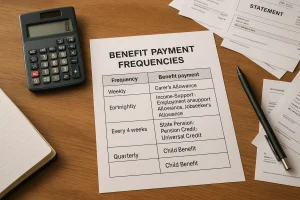
Understanding how frequently your benefits are paid is key to budgeting effectively, especially when payments are rescheduled during holiday periods such as Christmas and New Year.
The DWP and HMRC issue various types of financial support, each with a specific payment frequency, which may be weekly, fortnightly, every four weeks, or monthly, depending on the benefit type.
Here is a detailed breakdown of the standard payment frequency for the most common UK benefits:
| Benefit Type | How Often It’s Paid |
|---|---|
| Universal Credit | Every month (on the same date each month) |
| Jobseeker’s Allowance (JSA) | Every two weeks |
| Employment and Support Allowance (ESA) | Every two weeks |
| State Pension | Every four weeks |
| Child Benefit | Every four weeks (or weekly if eligible) |
| Personal Independence Payment (PIP) | Every four weeks |
| Carer’s Allowance | Weekly in advance or every four weeks |
| Attendance Allowance | Every four weeks |
| Disability Living Allowance (DLA) | Every four weeks |
| Maternity Allowance | Every two or four weeks |
| Income Support | Every two weeks |
| Pension Credit | Every four weeks |
While these are the default payment frequencies, changes are made when a scheduled date falls on a weekend or public holiday, such as Christmas or New Year. In such cases, payments are usually made on the working day before the original due date.
For example, someone who normally receives ESA every two weeks on a Friday, and whose payment is due on Friday 26 December 2025, will instead receive it on Tuesday 23 December 2025, ahead of the Christmas bank holiday.
If you are in receipt of Universal Credit, your monthly payment date is determined by the date of your original claim. This remains consistent each month unless affected by a non-working day.
For claimants who receive Child Benefit weekly due to being a single parent or receiving certain other benefits, the same rules apply. Payments falling on a bank holiday are processed early, ensuring continuity of support.
Being aware of your payment cycle not only helps you track when to expect funds but also enables better planning around essential expenses like rent, bills, and groceries.
This becomes even more important when navigating DWP payments over Christmas, as early payments and longer gaps between instalments can disrupt normal budgeting routines.
If you are unsure about your benefit frequency or need to confirm upcoming payment dates, you can refer to your award letter, log into your online benefits account, or contact the relevant DWP office directly.
How Are DWP Benefits Paid During the Festive Season?
All benefits issued by the DWP are paid directly into a bank, building society, or credit union account.
The method of payment remains the same during the festive season, although the date of payment can shift depending on public holidays.
Claimants are required to provide valid account details when submitting a benefit application. This ensures that payments are processed securely and reach the correct account without delays.
For individuals who are unable to open or manage a standard account, alternative arrangements can be made.
This requires contacting the office that administers the benefit and discussing available options. In the case of Universal Credit, the Universal Credit helpline should be contacted.
Once payments are sent by DWP, the time it takes for them to appear in your account can depend on your bank’s processing times.
During the festive period, while payment dates may shift, the amount received and the payment method do not change.
What Should You Do If You Need to Repay DWP Benefits?
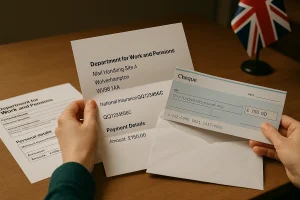
In rare situations, an individual may wish to voluntarily return a benefit payment. This may occur if they have received a payment they were not entitled to or no longer require due to a change in financial circumstances.
To return a payment, the claimant must write to the department that issued the benefit. The letter should include the following:
- Full name and National Insurance number
- Details of the payment, including date and amount
- A cheque made payable to the department responsible
This process ensures transparency and allows the department to update records accordingly. Note that repayments of Child Benefit are only accepted in cases of overpayment.
Voluntary repayment is not common but is available for those who feel they have received financial support unnecessarily or in error.
Conclusion
Being aware of DWP payments over Christmas can help claimants avoid financial stress during the festive season.
With changes to regular payment dates and additional support like the Christmas Bonus, it’s important to stay informed and plan ahead.
Whether you receive Universal Credit, State Pension or other benefits, checking your schedule in advance ensures a more stable financial experience.
Always refer to official sources or contact your benefits office directly if you have any uncertainties about your payment arrangements.
FAQs About DWP Christmas Payments
Will Universal Credit be paid early over Christmas?
Yes, if your usual payment date falls on a bank holiday such as 25 or 26 December or 1 January, you will receive your payment early—typically on the last working day before.
Is the £10 Christmas Bonus still available in 2025?
Yes, the DWP has confirmed the £10 Christmas Bonus will still be issued to eligible claimants during the qualifying week in December 2025.
What should I do if my benefit hasn’t arrived on the expected date?
First, check if it’s a bank holiday or weekend. If it’s delayed beyond the adjusted schedule, contact your benefit provider or DWP office.
Can the Christmas Bonus be reclaimed or adjusted if not received?
If you’re eligible but didn’t receive it, you should contact the DWP. However, since it’s paid automatically, issues are rare.
Will DWP offices be open during Christmas week?
DWP offices usually close on bank holidays (25 and 26 December, 1 January), but opening hours on surrounding days may vary.
Are there any changes for those receiving benefits weekly?
Yes, weekly benefit payments (such as Carer’s Allowance) will also be adjusted to arrive before bank holidays where applicable.
Does early payment mean I’ll get more money in December?
No, the payment is just brought forward. You will not receive an extra payment, so you should budget accordingly to cover the extended period.

Leave a Reply