
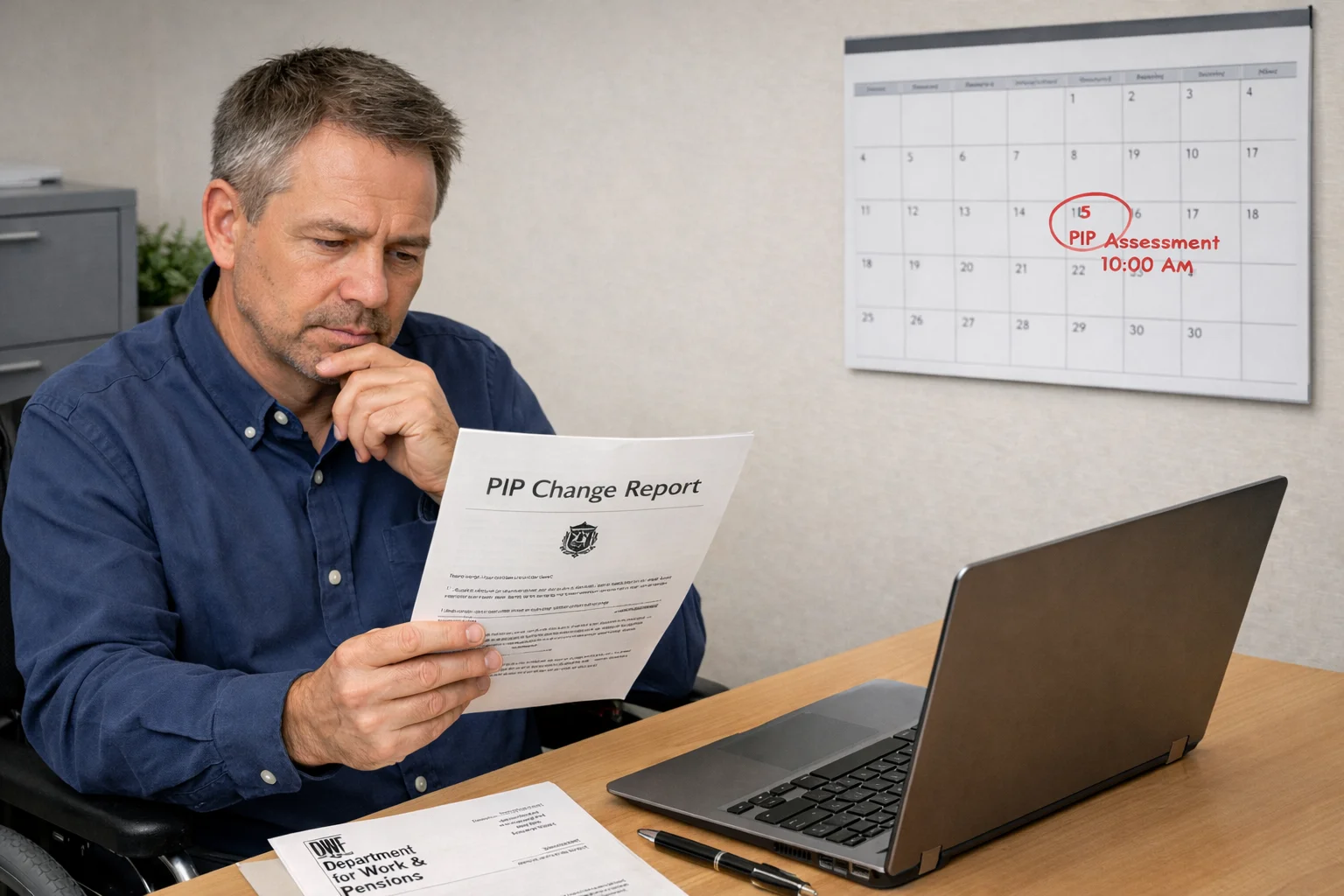
If you’re wondering whether reporting a change in circumstances for your Personal Independence Payment (PIP) means another assessment, the short answer is: often yes, but not always. It depends on the type of change you report and how it may affect your daily living or mobility needs.
Here’s what you need to know at a glance:
- Significant changes often trigger a full reassessment
- Minor updates like address changes usually don’t
- You may need to complete a new PIP2 form
- Your whole award can be reviewed, not just one part
- Assessments can be face-to-face or phone-based
- Failure to report changes may lead to overpayments
- Some changes may result in higher awards if supported with evidence
What Exactly Is a PIP Change of Circumstances?
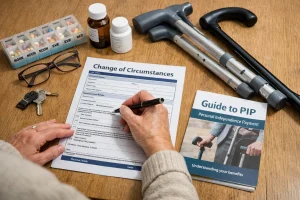
When you are awarded Personal Independence Payment (PIP), you agree to report any changes that might affect either your eligibility or how much you receive.
A PIP change of circumstances means any alteration in your life (health, living situation, or personal details) that might influence your daily living or mobility needs and therefore the points you were originally awarded.
A change of circumstances could be:
- Your condition is getting better or worse
- You are now needing more help with daily tasks or mobility
- Going into a hospital or residential care
- Moving abroad for an extended period
- Changes to personal information like your address or bank details
These changes are important because the Department for Work and Pensions (DWP) bases your award on how your condition affects daily living and mobility. Even changes that seem small can matter because they affect contact details or where support is delivered.
GOV.UK guidance explains that depending on what has changed, your PIP award could increase, decrease, stay the same, or stop.
What Counts as a Change of Circumstances?
A change that you must report includes:
- Your health condition deteriorates or improves
- Your ability to perform daily living tasks alters
- Your ability to carry out mobility activities changes
- You stay in hospital or a care/nursing home for more than a short period
- Personal details such as name, address, phone number or bank account change
- You travel abroad for more than a certain number of weeks
It’s important to report changes quickly and with evidence where possible. If you don’t, you could face an overpayment or even legal consequences for giving incorrect information or delaying reporting.
Reporting doesn’t always have to involve a medical assessment. Sometimes the DWP can decide purely from written information and evidence that you’ve supplied.
How Do You Report a Change?
You typically report a change by contacting the PIP enquiry line or, where available, by following the procedures set out on the GOV.UK site for benefits.
At the time of writing, the main ways to report changes include:
- Telephone: 0800 121 4433
- Textphone (Relay UK): 18001 then 0800 121 4433
- BSL video relay: via the official GOV.UK service
You’ll be asked to provide:
- Full name and date of birth
- Your National Insurance number
- The date the change occurred
- Specific details of what has changed
Recording your contact is essential, whether by making a note of the call or keeping a copy of a written report, as proof of timely reporting.
Does Reporting a PIP Change of Circumstances Mean Another Assessment?
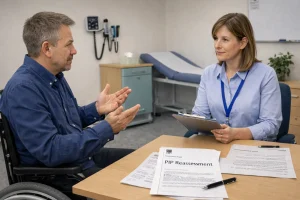
This is the most common concern for people claiming PIP. Many worry that reporting a change equals automatic medical reassessment. The truth is that a reassessment can happen, but it’s not guaranteed every time.
When a New Assessment Is Likely
A new assessment is most likely when the change could affect how many points you score on the PIP daily living or mobility descriptors, such as when:
- Your health has significantly worsened, meaning you now need more help overall
- You find that you can no longer perform certain activities you previously managed
- Your mobility struggles have become noticeably harder (for example, you cannot walk as far or with the same level of independence as before)
From the perspective of someone who has been through this with family members, what often triggers a reassessment is not just the change itself, but how clearly that change relates to the points criteria used in PIP. If the effect on daily living or mobility is obvious or clearly documented, the DWP is more likely to want additional information via assessment.
In conversation with a government professional who regularly processes change reports, I was told that:
when there’s a reported change that may affect the number of points a claimant scores, the case is often referred for a full reassessment. Even if the original award still has time left, the new information requires a fresh examination of needs.
That reflects the official guidance which says awards may be reviewed at any time during an ongoing award if a claimant reports a change of circumstances.
When a New Assessment Might Not Happen
Not every change leads to medical reassessment.
For example:
- Changes to contact information, such as name, address, or phone numbers
- Updates to your bank account or your representative acting on your behalf
- Travel abroad that does not affect your daily living needs
These administrative updates are important, but they don’t necessarily change how your condition affects your abilities. In those cases, DWP can usually update your record without a medical review.
Even when reassessment does not happen, your entire award can be reviewed based on the evidence you provide. DWP may decide the award should remain the same or change the award without asking for a new assessment appointment.
What Triggers Reassessment?
Below is a simplified view of what typically triggers another assessment:
| Type of Change | Likelihood of Reassessment | Notes |
|---|---|---|
| Worsening health affecting daily living | High | More likely to get a new PIP2 form and assessment |
| Increased difficulty with mobility | High | Especially if points threshold may change |
| Moving into long‑term care | Medium | Depends on how it affects daily needs |
| Minor personal detail updates | Low | Usually no reassessment needed |
| Hospital stays less than 28 days | Low | Often treated as temporary |
Note that these triggers are not absolute rules; DWP has discretion to review on a case‑by‑case basis.
What Happens During a PIP Review or Reassessment?
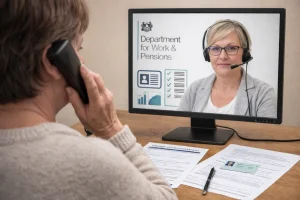
If DWP decides a reassessment is necessary, several stages can follow:
Form and Evidence Stage
Once a change is reported:
- You might be sent a review form ora change of circumstances form
- You’ll need to complete this form detailing how the change affects your daily living or mobility activities
The information you supply here is very important because it forms the basis of any assessment decision.
Assessment Appointment
Depending on the information provided and what DWP needs to confirm:
- You may be invited to a telephone assessment
- Or a face‑to‑face/video appointment with a health professional
- In some cases, no appointment is necessary if the evidence is clear
Recent guidance suggests that paper‑based reviews are often used where possible, with in‑person assessments only if needed for clarity.
Decision Letter
The final step is receiving a letter from DWP explaining the outcome:
- Increase in award
- Decrease in award
- No change
- Award stopped
If your award changes unfavourably and you disagree, you usually have the right to seek a Mandatory Reconsideration and potentially an appeal.
How Long Does a PIP Change of Circumstances Take?
While each case is different, the process generally takes several weeks. Official guidance and welfare advice sites suggest an approximate timeline like this:
| Stage | Typical Time |
|---|---|
| Reporting and Acknowledgement | 1–2 weeks |
| Form Completion | 2–4 weeks |
| Assessment Scheduling (if needed) | 3–6 weeks |
| Final Decision | 1–3 weeks after assessment |
A complete review from reporting to final letter can often take around 8 to 12 weeks, and sometimes longer depending on DWP workloads and whether an assessment is needed.
Can a Change of Circumstances Be Backdated?
In some situations, if you report a change late but it clearly affected your condition earlier, DWP may backdate an award change.
Backdating usually depends on:
- When the change actually started
- When you reported it
- Whether you have supporting evidence
Backdating is not automatic DWP needs to agree the change existed before the report and affected your daily life and mobility needs.
What Happens If You Don’t Report a Change?
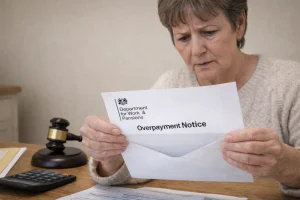
Failing to report a relevant change can lead to:
- Overpayment recovery
- Penalties
- Reduction or cessation of payments
- In rare cases, legal action may be taken if the failure to report is judged deliberate
It’s therefore best to report changes promptly and keep a record of your contact.
Real‑Time Example: When Reporting Changed the Outcome
A friend of mine, Claire, had mild arthritis and was initially awarded the standard rates for both daily living and mobility. Over time her condition worsened. She began struggling with tasks like preparing meals and walking outside for more than a few metres.
What We Did?
- She reported the change to DWP promptly by phone and followed up with written notes.
- DWP sent a review form asking detailed questions about the change in her ability.
- Based on her responses and evidence from her GP, they arranged a telephone assessment.
What Happened Next?
DWP reviewed her entire claim, not just the part that changed.
As a result:
- Her mobility component was increased to the enhanced rate
- Her daily living component moved to a higher award band
Claire’s experience showed that reporting changes clearly, with evidence, can lead to a meaningful reassessment. It also demonstrated that what might seem like an isolated issue (mobility) often affects other parts of the award.
Understanding How DWP Scoring Works
When assessing eligibility for Personal Independence Payment (PIP), the Department for Work and Pensions (DWP) uses a structured, points-based scoring system.
This system is split into two components: Daily Living and Mobility, and within each component, there are a number of specific descriptors that measure how your health condition or disability affects you.
Each descriptor represents a particular activity. For Daily Living, these activities might include tasks like preparing food, managing medications, washing and bathing, dressing, and communicating. For Mobility, the activities assess your ability to plan and follow a journey or physically move around.
Every activity has a set of options with descriptions of how well or poorly someone might carry it out. Depending on which description best fits your situation, you’re awarded a certain number of points.
- Each activity is scored from 0 to 12 points, depending on the severity of the limitation.
- The total score across each component determines the rate you qualify for:
- Standard rate: 8 to 11 points
- Enhanced rate: 12 or more points
Here is a simplified table that outlines how scores lead to award levels:
| Component | Points Required | Award Level |
|---|---|---|
| Daily Living | 8–11 | Standard Rate |
| Daily Living | 12+ | Enhanced Rate |
| Mobility | 8–11 | Standard Rate |
| Mobility | 12+ | Enhanced Rate |
This scoring system is why a change in your circumstances can trigger a reassessment. If your physical or mental health has improved or worsened, or if your ability to perform any of the assessed activities changes, your points may go up or down, potentially altering the award you receive.
For example, someone who could previously walk 200 metres unaided but now uses a mobility aid and can only walk 50 metres might move from no award to receiving the standard or even enhanced rate for mobility.
In short, the DWP needs to re-check your points to ensure your award matches your current needs. That’s why reporting any significant change is so important, it ensures your support remains accurate and fair based on the current scoring framework.
PIP Change of Circumstances Online and Forms

While many government services are increasingly moving online, the process for reporting a change of circumstances for PIP is still mostly manual or phone-based, particularly if PIP is your only benefit.
If you only receive PIP, you currently cannot report a change of circumstances fully online via a dedicated web form on GOV.UK. Instead, you need to call the PIP enquiry line to speak with a DWP adviser.
The call allows them to record the nature of the change and determine whether they need to send you any additional forms or start a reassessment.
However, if you are receiving Universal Credit as well as PIP, some elements of your change may be reported through your Universal Credit online journal.
This is especially true for shared changes such as hospital stays, care home admissions, or going abroad, which may impact multiple benefits at once. Even then, the UC team may ask you to call the PIP team directly to handle that part of your case.
When a reassessment is required, the DWP will usually send you a new PIP2 form.
This form asks for detailed information about:
- How does your condition affect your day-to-day life
- Any changes in the support or aids you use
- New medical evidence or diagnoses
- How have your needs increased or decreased over time
The PIP2 form must be returned within the deadline provided, usually about one month. Extensions can sometimes be granted if requested in advance.
Here’s a comparison of how reporting differs depending on your benefit situation:
| Benefit Type | Online Reporting Available | How to Report a Change |
|---|---|---|
| PIP only | No | Call PIP enquiry line |
| PIP + Universal Credit | Partially (via UC journal) | Report via UC and call PIP |
It’s always advisable to confirm by phone to ensure that the correct part of your claim is updated, especially since missing or incomplete reports can lead to delays or overpayments.
Conclusion
So, does a PIP change of circumstances mean another assessment? Often, yes, especially if it affects how you live or move day to day. Even if it doesn’t lead to a medical assessment, your award will likely be reviewed in full.
Always report changes promptly, and be prepared with evidence. It could help you get the right level of support and avoid future complications.
For official guidance, visit the gov.uk page on reporting PIP changes
FAQ Section
What’s the Difference Between a Pip Review and Reassessment?
A review is a scheduled check to see if you still meet eligibility. A reassessment is often triggered by changes you report and involves new evidence and potentially a fresh decision.
Do All Changes to Health Need a New Pip Assessment?
Not always. It depends on whether the change affects the criteria DWP uses. Small or temporary changes might not require reassessment.
How Do I Fill in a New Pip2 Form After a Change?
Answer honestly, using real examples. Link symptoms to how they affect daily living or mobility. Supporting medical evidence helps.
Can Reporting a Change Reduce My Pip Award?
Yes. A review may result in your award increasing, decreasing, or staying the same. Reporting improvements could reduce your payments.
What Counts as a ‘significant Change’ for Mobility?
Needing help walking, using aids, or a new medical condition affecting physical movement are all considered significant.
Can Someone Report on My Behalf?
Yes. A friend, family member, or carer can call the enquiry line with you present or be added to your call for support.
What Documentation Should I Keep When Notifying Pip Changes?
Keep a record of your call, a copy of any forms sent, and letters or medical notes confirming your health status.

Leave a Reply