
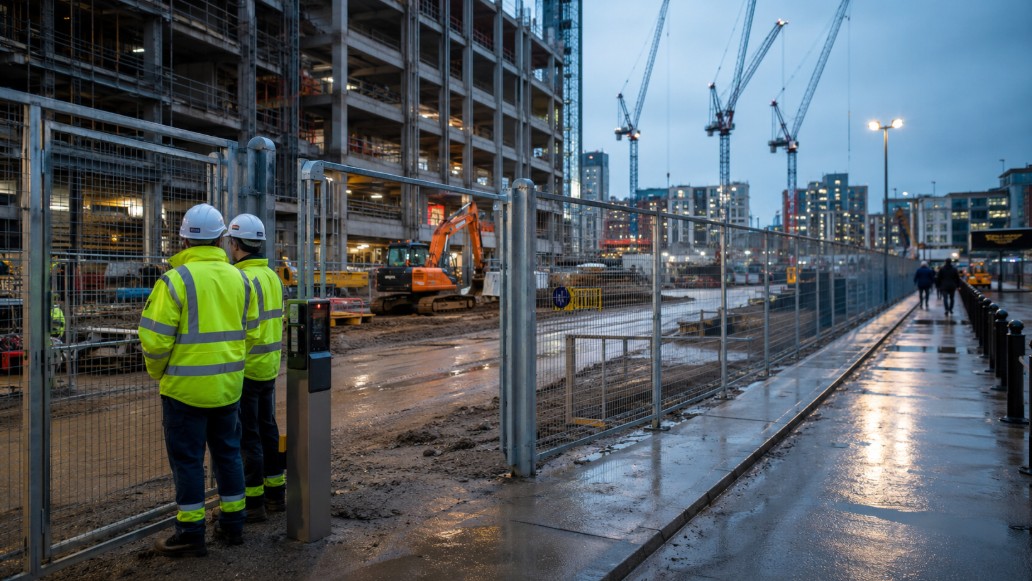
Construction projects are subject to detailed requirements regarding perimeter security. Regulatory compliance safeguards the public and workers, while also influencing project schedules and budgets. Applying the correct standards for perimeter controls can help avoid disruptions and prevent reputational damage.
The safety and security of a construction site’s perimeter are essential for successful project outcomes. As regulatory expectations grow more specific, project teams must pay close attention to measures such as temporary fencing that impact public safety, site access, and theft prevention.
Temporary fencing typically serves as the initial barrier against unauthorised entry, making compliance with relevant requirements a legal obligation and an operational priority.
Following the guidance set by authorities and industry standards lowers the risk of incidents that could delay work or affect the public’s perception of your project.
Why Careful Perimeter Management Underpins Successful Outcomes?

Perimeter controls act as a vital boundary between construction activity and the external environment. They deter unauthorised entry, reducing risks such as theft or vandalism that may cause delays, increase costs, or trigger contractual disputes.
Insufficient site boundaries can result in material losses and raise insurance costs, while also increasing the potential for contractual penalties due to project interruption.
Protecting public safety is also a key responsibility. Secure fencing prevents accidental entry into hazardous areas and keeps work zones separate from public spaces.
When perimeter measures are robust, construction projects demonstrate duty of care and reduce the likelihood of regulatory scrutiny in the event of an incident. This also helps to protect the project’s reputation.
Why Do Regulations Affecting Construction Site Perimeter Controls Matter for Site Safety?
The Regulatory Framework Guiding Site Boundaries
Multiple forms of law and industry guidance shape the expectations for construction site perimeters. Health and safety legislation requires employers to establish and maintain effective boundaries that provide protection for both workers and the general public.
This legislation is supported by codes of practice, which set out further guidance on standards for materials, installation, and maintenance.
Where construction sites adjoin public roads or footpaths, extra obligations often arise. Local authorities may attach planning requirements that define boundary locations, access points, or specific interface treatments.
Highways regulations may also affect perimeter barriers, temporary crossings, and provisions for pedestrian movement around the site. These measures need to be considered at the outset of every project to ensure regulatory expectations are met.
Key Compliance Areas to Verify at the Outset

Before starting construction activities, it is important to check that the fencing system in use is suitable for both environmental and site-specific demands. Factors such as wind, unstable ground, or uneven terrain can all undermine fencing if not accounted for.
Conducting a pre-installation survey is common practice and helps identify potential hazards related to perimeter management at a particular location.
Segregation of construction areas from public or staff pathways should be clear and effective, not limited to a simple physical divide. Distinct demarcation reduces the chances of conflicts between vehicles, equipment, and pedestrians, especially near access gates.
Regular inspection should cover possible impact from wear, weather, or accidental damage, ensuring that boundary integrity is maintained as site conditions evolve.
When project phases change, procedures, method statements, and installation responsibilities should be updated and documented accordingly. Maintenance records should be kept to support ongoing inspection and repair of perimeter controls. Proper documentation also provides evidence that boundaries are being managed in line with legal and contractual requirements throughout the project.
Common Pitfalls and Strategies to Prevent Compliance Failures
A frequent issue is underestimating the effect of site conditions on standard fencing products. Exposure to strong winds or soft ground may require reinforcement to avoid fence collapse. Unauthorised modifications, such as creating unofficial access points by moving fence panels, compromise compliance and raise accident risks.
For vehicle gates, insufficient control of access or unplanned widening of entrances can result in security problems and pedestrian safety conflicts. Gaps caused by poor logistical planning can expose the site to liabilities if not addressed rapidly.
Implementing regular monitoring and clear inspection schedules can help resolve issues early, supporting safety and predictability within the construction site environment.

Leave a Reply