
Most food business owners don’t think much about Environmental Health Officers until one turns up unannounced. By then, it’s usually too late to fix the things that will land you a poor hygiene rating or, worse, an improvement notice.
The truth is, a lot of compliance failures come down to the same handful of mistakes, and they’re surprisingly easy to prevent once you know what inspectors actually look for.
Continue reading to learn what UK food businesses get wrong about compliance.
Where Do Most Food Businesses Fail on Temperature Control?
Where Most Businesses Slip Up on Temperature Control?
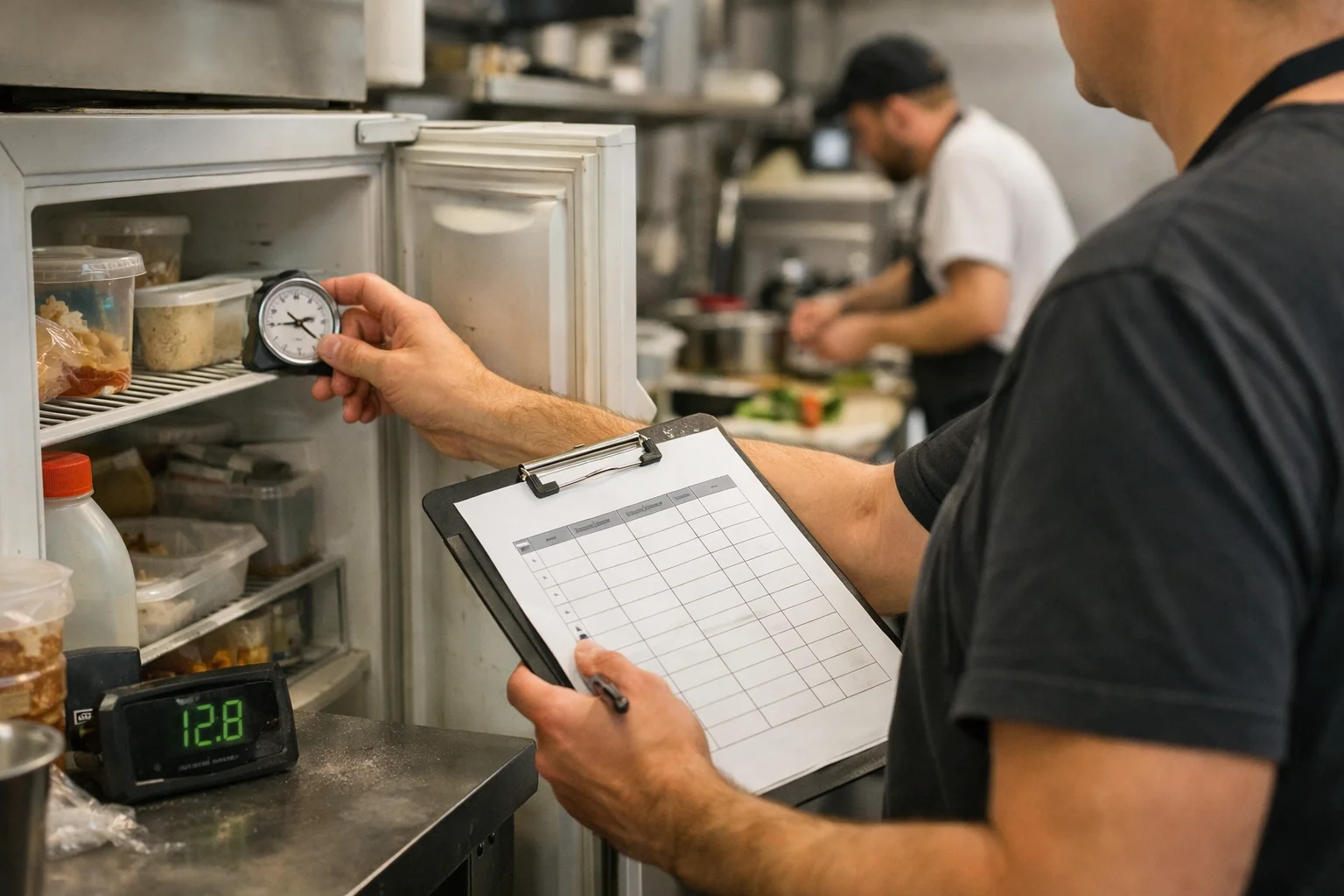
Temperature monitoring is one of the first things an EHO will check, and it’s one of the most common areas where food businesses fall short. The law requires that cold food is stored at 8°C or below, with best practice sitting at 5°C. Hot food must be held at 63°C or above.
The problem isn’t usually that business owners don’t know this. It’s that they can’t prove it. An EHO won’t just look at the thermometer on the wall.
They’ll want to see written records showing temperatures have been checked and logged at regular intervals. A fridge that’s running at the right temperature today means nothing if there’s no paper trail for the last three months.
Gaps in temperature logs are a red flag. So are records that look too neat or too consistent, because inspectors know that real-world readings fluctuate. If every entry reads exactly 4°C for weeks on end, that’ll raise questions about whether anyone’s actually checking.
What “Food-Safe” and “Impervious” Really Mean?

You’ll hear the terms “food-safe” and “impervious surface” a lot in EHO guidance, but many operators don’t fully understand what they mean in practice.
Under the Food Hygiene Regulations, any surface in an area where food is prepared, handled, or stored must be smooth, washable, and resistant to corrosion.
That’s what “impervious” refers to: a surface that won’t absorb moisture, grease, or bacteria.
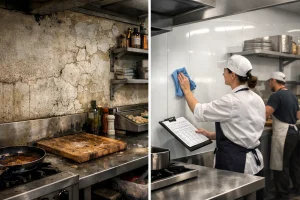
Standard painted plaster doesn’t meet this requirement. Neither do untreated timber panels or basic emulsion finishes. Over time, painted walls crack, peel, and harbour bacteria in places you can’t easily clean.
An EHO will pick up on this quickly, particularly in prep areas and behind cooking stations where steam and grease build up.
PVC hygienic wall cladding is one of the most common solutions used to meet this standard.
Suppliers like Simply Cladding provide food-approved hygienic cladding sheets that are specifically designed for kitchens, prep areas, and commercial food environments. The sheets are non-porous, easy to wipe down, and don’t require repainting or re-sealing over time.
Overlooked Areas That Catch Operators Out
It’s easy to focus on the obvious things, like handwashing stations and fridge temperatures, and miss the details that inspectors notice.
Here are some of the areas that frequently trip businesses up:
- Behind and underneath equipment: Grease and food debris accumulate in places that are hard to reach. If you can’t move your equipment to clean behind it, that’s a problem.
- Ceiling tiles and extractor fans: Cracked or stained ceiling tiles suggest a lack of maintenance. Dirty extractors can spread contaminated particles across a kitchen.
- Pest-proofing gaps: Small openings around pipework, doors, and vents are an invitation for pests. EHOs will check for droppings and gnaw marks as part of a routine visit.
- Staff training records: Every food handler needs to have documented training that’s appropriate for their role. Verbal assurances aren’t enough.
These aren’t obscure rules hidden in fine print. They’re all covered in Regulation (EC) No. 852/2004, which applies to every food business in the UK. But many operators only discover them after they’ve been cited.
What Happens When You Fail an Inspection?

A poor EHO inspection can have real consequences. At the lower end, you’ll receive a written report with required improvements and a follow-up date.
Fail to act and you could be served a Hygiene Improvement Notice, which is a legal document that compels you to fix specific issues within a set timeframe.
In more serious cases, an EHO can issue a Hygiene Emergency Prohibition Notice, which forces immediate closure.
This typically happens where there’s an imminent risk to public health, such as evidence of a pest infestation or a complete breakdown in temperature control.
Beyond the legal side, there’s the reputational damage. Your Food Hygiene Rating is publicly available online, and customers do check it.
A score of 1 or 2 will cost you bookings, delivery platform listings, and trust. Recovering from that takes months, even after the issues are fixed.
Closing Thoughts
Compliance isn’t something you sort out the week before an inspection. It’s built into how you run your kitchen every day.
Log your temperatures properly, make sure your surfaces meet the legal definition of impervious, and don’t assume that the areas out of sight are also out of mind for an EHO.
The businesses that score well aren’t doing anything extraordinary. They’ve just made the basics part of their routine.

Leave a Reply