

From 1 April 2026, workers across the UK will receive a confirmed statutory pay increase, with the National Living Wage for 21+ rising to £12.71 per hour. Broader reforms also impact Statutory Sick Pay and family-related benefits, while sector-specific wage disputes are still unfolding.
Key Updates Covered in This Blog:
- National Minimum and Living Wage increases across all age bands
- SSP reforms: day-one eligibility, no lower earnings limit, and new rate
- Family-related statutory payments increasing to £194.32/week
- Real Living Wage vs statutory rates explained
- Ongoing wage disputes in retail, NHS, and education
What Are the Confirmed Minimum and Living Wage Increases from April 2026?

The UK Government has confirmed an increase to statutory wage rates starting from 1 April 2026, following the advice of the Low Pay Commission (LPC).
These updates affect the National Living Wage for workers aged 21 and over, as well as the National Minimum Wage for younger age groups and apprentices. These new rates are legally binding for all employers across the UK and are part of the government’s annual commitment to adjusting earnings to reflect economic trends.
The National Living Wage for workers aged 21 and above will increase from £12.21 to £12.71 per hour, representing a 4.1% rise. It’s a modest but significant step for millions of workers who rely on wage growth to keep up with living costs.
Breakdown of the New Wage Rates (April 2026)
The table below outlines the confirmed hourly rate increases by age category and job type:
| Age/Category | 2025 Hourly Rate | 2026 Hourly Rate | Increase (£) | Percentage Change |
|---|---|---|---|---|
| National Living Wage (21+) | £12.21 | £12.71 | £0.50 | 4.1% |
| Age 18–20 | £10.00 | £10.85 | £0.85 | 8.5% |
| Age 16–17 | £7.55 | £8.00 | £0.45 | 6.0% |
| Apprentices | £7.55 | £8.00 | £0.45 | 6.0% |
The accommodation offset rate, which allows employers to count the value of accommodation toward pay, has also increased to £11.10 per day.
I’ve worked closely with SMEs that rely on seasonal and young workers, and the increase in the 18–20 and 16–17 age bands is one of the most impactful changes for them in recent years.
“It’s about recognising that younger workers are facing the same inflationary pressures as everyone else,” one local business owner told me during a recent wage planning workshop.
Who Decides These Wage Increases?
Wage changes like these do not happen randomly or without extensive research. The Low Pay Commission plays a central role.
This independent body consults businesses, trade unions, economists, and labour market experts before submitting its recommendations to the UK Government. The government typically accepts these suggestions, which then become law from the following April.
A senior official from the Department for Business and Trade explained the government’s view clearly in a recent media briefing.
“We rely on the LPC to ensure that minimum wage policies remain effective without disrupting employment. The 2026 figures reflect our commitment to a fairer labour market and better protections for younger and lower-paid workers.”
In my view, this coordinated system helps maintain a predictable structure for employers and employees. We may not always see dramatic leaps in wage figures, but the process ensures that every year brings a step forward.
How Are Wider Statutory Payments Changing in April 2026?
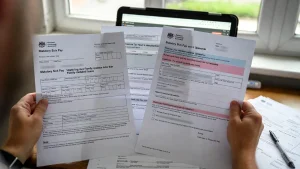
In addition to hourly wages, several statutory payments for UK workers will be increasing or undergoing reform from 6 April 2026.
These changes affect everything from Statutory Sick Pay (SSP) to family-related leave payments such as maternity and paternity leave.
Statutory Sick Pay (SSP) Changes in Detail
Perhaps the most significant reforms come in the area of Statutory Sick Pay. For many years, access to SSP has been limited by strict eligibility criteria and a waiting period. This year, the government has responded to long-standing concerns by restructuring the benefit.
Here’s a table showing the key changes to SSP starting April 2026:
| Aspect | Pre-April 2026 | Post-April 2026 |
|---|---|---|
| Eligibility Start Date | Day 4 of absence | Day 1 of absence |
| Lower Earnings Limit | £123 per week | Removed |
| Weekly SSP Rate | £109.40 | £123.25 or 80% of earnings |
| Coverage | Employees earning over LEL | All employees regardless of earnings |
These reforms extend SSP coverage to part-time, gig economy, and low-paid workers who were previously ineligible. For employers, the 80% rule provides some flexibility, but it also increases the obligation to track average earnings more closely.
As an HR consultant, I’ve had multiple cases where an employee had to go without SSP simply because they earned £119 per week. Removing the Lower Earnings Limit is a long-overdue correction.
Statutory Family-Related Pay Increases
Starting April 2026, the weekly statutory rate for Maternity Pay, Paternity Pay, Adoption Pay, Shared Parental Pay, and Bereavement Pay will increase to £194.32 per week. This change reflects both inflation adjustments and policy reform aimed at improving work-life balance.
| Family-Related Benefit | Previous Weekly Rate | April 2026 Weekly Rate |
|---|---|---|
| Maternity / Paternity Pay | £172.48 | £194.32 |
| Adoption / Shared Parental Pay | £172.48 | £194.32 |
| Parental Bereavement Pay | £172.48 | £194.32 |
These benefits are subject to either the set rate or 90% of average weekly earnings, whichever is lower. For many workers, the higher statutory rates now more closely align with real-life expenses, especially in early childcare.
Why Are These Pay Changes Happening in 2026?

Every year, changes to minimum wage and statutory payments are shaped by macroeconomic indicators, labour market trends, and the recommendations of independent bodies.
In 2026, the driving forces behind these adjustments include persistent inflation, concerns about wage stagnation, and the political pressure to deliver fairer work conditions.
Economic and Inflationary Context
The UK inflation rate has remained elevated since the post-pandemic recovery, impacting the real value of earnings.
Although headline inflation has started to ease, core costs like housing, energy, and groceries remain high. These increases have squeezed lower-income households the hardest.
In response, the government has taken a conservative but strategic approach. Increasing the National Living Wage by 4.1% keeps it in line with CPI forecasts while limiting the risk of job loss due to employer cost burdens.
A government economist said during a recent policy roundtable:
“While we’d like to see even faster wage growth, it’s important to avoid pricing young people and small businesses out of the labour market. These rates balance worker welfare with economic sustainability.”
Real Living Wage vs. National Minimum Wage
Alongside statutory pay rates, many employers voluntarily opt to follow the Real Living Wage, a non-government benchmark promoted by the Living Wage Foundation. This wage is calculated based on real living costs, including housing, childcare, and transportation.
For 2026, the Real Living Wage is expected to exceed £13.00 per hour in London and £12.25 outside London. While not legally enforceable, many large employers in the hospitality, retail, and care sectors have adopted it to improve recruitment and retention.
| Pay Scheme | Legal Requirement | Set by Government | Rate (2026 Expected) |
|---|---|---|---|
| National Minimum Wage | Yes | Yes | £8.00 – £12.71 |
| Real Living Wage | No | No | £12.25 – £13.15 |
As someone who advocates for fair pay practices, I see this as a valuable benchmark. It’s also something employees can raise with their employers during pay reviews, especially if they live in high-cost areas.
What Pay Disputes and Talks Are Ongoing in 2026?
Beyond the statutory minimum increases, union negotiations and wage disputes are dominating the headlines across various sectors in 2026. These discussions involve both public and private employers and are fuelled by dissatisfaction with pay offers that lag behind inflation.
Retail Sector: Morrisons and the Usdaw Dispute
In the retail industry, Morrisons is under pressure from the Usdaw union after refusing to offer wage increases above the newly adjusted National Living Wage. Usdaw claims that staff have seen real-term pay cuts due to rising living costs and that the company has the financial capacity to offer more.
Talks between the union and the supermarket chain have stalled, and there is increasing speculation about potential industrial action.
A union representative told a regional paper:
“We’re not asking for excessive raises. We’re asking for pay that reflects the contribution these workers make day in and day out.”
From my perspective, this case underscores how the legal minimum doesn’t necessarily reflect moral expectations from employees or the public.
NHS and Healthcare Pay Negotiations
In the NHS, union groups such as UNISON and the British Medical Association are campaigning for higher pay than the government’s proposed 2.5% increase. They argue that after years of public service under strain, including the pandemic, a modest rise is not enough.
One union negotiator I spoke with put it bluntly:
“If minimum wage is rising to £12.71, then how can we justify paying trained healthcare staff just marginally more? Some of our entry-level workers could soon be earning less than the new minimum.”
This growing frustration is leading to calls for stronger action, including formal ballots for strike authorisation. The stakes are high not just for worker pay, but for the entire healthcare system’s capacity to retain staff.
Education and Public Sector Pay Discussions
Teacher unions such as NASUWT and public sector unions including UNISON, GMB, and Unite are also engaged in collective pay negotiations for 2026–27. Their joint pay claim cites inflation, workload increases, and the need to attract new talent into underfunded services.
| Sector | Government Offer | Union Claim | Dispute Status |
|---|---|---|---|
| NHS | 2.5% | 5–6% | Ongoing talks |
| Retail (Morrisons) | NMW only | Above NMW | Risk of strike |
| Education | 3% | 6%+ | Possible strike ballot |
These negotiations are not guaranteed to lead to strikes, but the tone in 2026 is certainly confrontational. With inflation still eroding real incomes, many workers feel the need to push back harder than in previous years.
Teachers and Public Sector Workers – Will There Be Strikes?

Unions representing teachers, local government staff, and school support staff (e.g., NASUWT, GMB, UNISON) are also pushing for above-inflation wage increases. They argue that rising costs have eroded real wages and that previous increases haven’t kept pace.
If the pay claims for 2026–27 are rejected or delayed, strikes could disrupt schools and councils by mid-2026.
As a parent and someone who has worked alongside public sector teams, I understand how critical stability is in these services. Pay negotiations are not just about money; they’re about retention, motivation, and morale.
What Does the April Pay Rise 2026 Mean for UK Workers Like Me?
Personally, I view this year’s statutory increase as a long-overdue correction, especially for younger and part-time workers who’ve often been underpaid for essential jobs.
It’s promising to see the removal of the Lower Earnings Limit for SSP, which finally brings gig workers and low-hour employees into the fold. It’s these quiet reforms often overlooked that can have the biggest impact in the long run.
That said, the real battle remains in the sectors beyond the minimum. Workers in healthcare, education, and retail are now depending on the outcome of collective bargaining, not just what’s handed down in legislation.
Conclusion
The April 2026 pay rise brings a mix of confirmed government action and still-evolving union-led negotiations.
To recap:
- Statutory minimum wages are rising across all age groups, with the Living Wage for over-21s set at £12.71 per hour
- Statutory Sick Pay and family-related payments are being modernised with better coverage and improved calculation
- Union disputes continue across the NHS, retail, and education sectors, demanding fairer and more inflation-proof wage offers
As always, it’s worth checking directly with your employer, HR department, or union rep to understand how these changes affect your specific role and pay.
Frequently Asked Questions
What is the new UK minimum wage for 21-year-olds in 2026?
From 1 April 2026, the National Living Wage for workers aged 21 and over is set at £12.71 per hour.
How does the 2026 pay rise compare with inflation?
The 4.1% rise for over-21s slightly trails forecasted inflation, while younger age groups see higher percentage gains. It’s a mixed picture depending on your wage band.
Will all workers benefit from the April pay rise 2026?
Only workers paid the statutory minimums will be automatically affected. However, many employers use these rates as a baseline for wage reviews.
Is the Real Living Wage increasing too in 2026?
Yes, though it’s set independently by the Living Wage Foundation and not government-mandated. It’s expected to surpass £13/hour in London.
What sectors are negotiating additional pay in 2026?
Healthcare, retail, education, and local government are all engaged in union-led wage talks beyond the statutory minimums.
How do unions influence pay rises beyond the minimum wage?
Unions submit formal pay claims and negotiate with employers or public bodies. If talks break down, strikes or action ballots can follow.
Could strikes affect services in 2026 due to pay disputes?
Yes. Retail stores, schools, and NHS facilities could face disruption if current wage negotiations remain unresolved.

Leave a Reply