
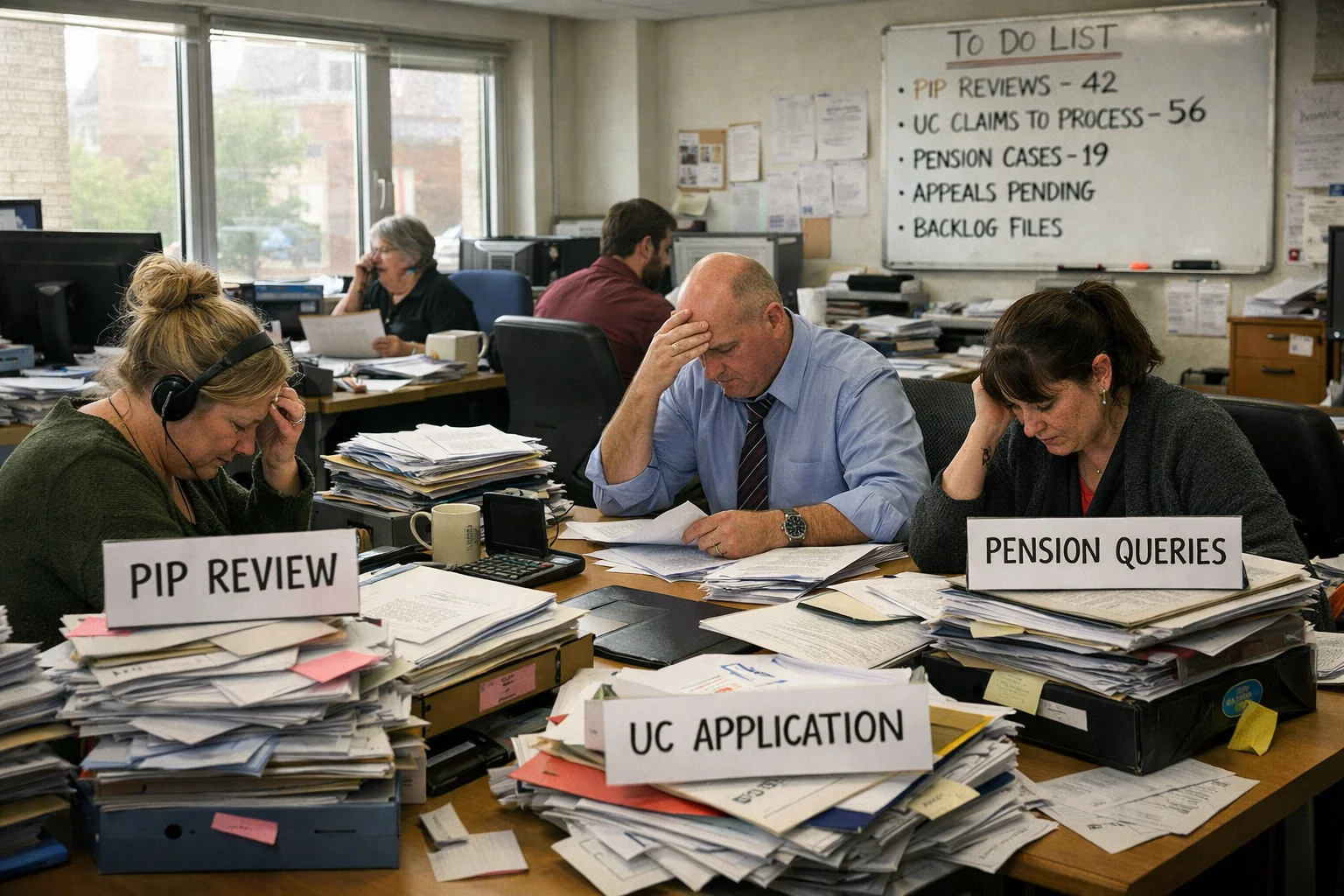
Will there be delays to your PIP, pension, or Universal Credit claim? Yes, if strike action goes ahead at the Department for Work and Pensions (DWP), delays are very likely. Thousands of DWP staff are being balloted for industrial action over pay, which could directly impact service delivery across key benefits.
Here are the key points you need to know:
- The PCS union is balloting 50,000 DWP workers over pay disputes
- Services affected may include PIP assessments, UC claim processing, and pension queries
- Strike action could start as early as March 2026
- Claimants may face delays in new claims, changes in circumstances, and assessment bookings
- Core payments like pensions and UC are expected to continue, but admin delays are likely
- The government and union remain in dispute over pay fairness and staffing levels
What Is Causing the Potential Delays in PIP, Pensions, and Universal Credit?

The ballot for industrial action at the Department for Work and Pensions (DWP) has opened between 19 January and 23 February 2026.
This statutory ballot involves nearly 50,000 members of the Public and Commercial Services (PCS) union and represents one of the most significant civil service industrial ballots in recent memory.
The reason for this ballot is a long‑standing dispute over pay, wage compression, recruitment challenges and recognition of workload, which the union argues the DWP’s pay offer for 2025/26 has failed to address.
These workers are spread across multiple areas of service delivery, including Jobcentres, Universal Credit service centres, PIP assessment offices and pension processing units.
Each of these functions is integral to keeping claims flowing and payments on schedule. It follows that if staffing in these areas becomes disrupted, waiting times and processing backlogs could easily lengthen.
Even if strike action does not take place immediately, the anticipation of reduced staffing levels often leads departments to reprioritise duties, pushing less urgent tasks lower down the list and placing additional strain on remaining teams.
Roles and Services Covered in the Ballot
| Function Area | Typical Duties | Impact if Disrupted |
| Jobcentres | Claim assessments, work coach meetings | Delay in job support processing |
| Universal Credit service centres | New claims and changes in circumstances | Longer wait times for UC decisions |
| PIP assessment centres | Disability benefit assessments | Slow scheduling of assessments |
| Pension centres | State pension payments and queries | Delays in adjustments and award notices |
| Child maintenance units | Assessments and support actions | Delay in maintenance decisions |
This breakdown shows how interconnected these functions are with everyday claimant needs. If one link in the service chain weakens due to reduced staffing, delays can ripple outward.
In many industrial disputes I have covered, the risk to service efficiency increases disproportionately compared to the number of staff on strike because departments often operate close to full capacity in their routine functions.
Who Is Balloting and Why Does It Matter?
The ballot process itself is governed by UK trade union law and must be conducted by post. PCS members working at the DWP receive paper ballots that they must return to indicate whether they support industrial action.
The legal requirement for postal ballots means that online or workplace voting isn’t permitted, which can affect turnout and the legitimacy of any resulting mandate for strike action.
PCS leaders have been actively encouraging participation, offering resources such as local training and digital communications to ensure members understand both the stakes and the procedure.
Ballot Process and Member Engagement
- Postal ballot issued to eligible members
- Replacement ballots available if originals are not received
- Ongoing communications to boost awareness
- Encouragement to “post the ballot back early” to ensure participation
From my perspective as someone who tracks welfare and benefit policy, participation levels matter as much as the result itself.
Even where dissatisfaction is widespread, low turnout can mean the ballot fails to produce a legal mandate for action, making the process and negotiations less effective from the union’s point of view.
Why Are DWP Workers Considering Strike Action?
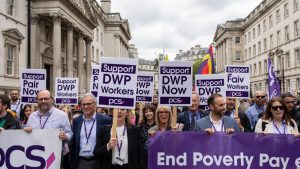
At the core of this dispute are structural pay issues and chronic low pay. PCS argues that the latest pay offer for DWP staff did not prioritise the lowest paid grades, many of whom are administrative assistants, officers and executive officers, resulting in a scenario where their pay levels will sit at or close to the National Living Wage from April 2026.
This situation is especially pronounced due to wage compression, where pay differences between job grades narrow so significantly that progression becomes meaningless.
Such a situation not only affects morale but also undermines recruitment and retention, placing further pressure on day‑to‑day operations.
Comparison of Pay Offers vs. Union Expectations
| Element | DWP Offer 2025/26 | PCS Union Demand |
| Average Pay Increase | Around 3.25% (plus 0.5% remit uplift) | Re‑opening pay talks for higher “restorative” award |
| Approach to Lower Grades | Limited prioritisation | Call for a “Real Living Wage” above NLW |
| Structural Pay Reform | Minor adjustments | Focused reform on compressed pay bands |
| Funding Request | Treasury remit guidance | Special Treasury business case for pay increases |
| Expected Impact on Services | Keep processing times stable | Potential delays if strike action occurs |
This table summarises the differences between what PCS members believe is necessary and what the DWP has proposed. The department believes its offer is balanced and considers fiscal constraints, while the union sees it as insufficient to address underlying issues.
What struck a senior workforce professional I spoke with was the broader operational context:
“I see this dispute as a structural problem rather than a one year disagreement. When lower grades cluster around the minimum wage, you remove incentives, weaken morale and make recruitment extremely difficult. That creates operational risks for departments like DWP.”
This insight highlights that the dispute is about more than a one‑off increase; staff feel their long‑term career prospects are undermined, which could lead to service delivery challenges if unresolved.
How Will Strike Action Potentially Affect Benefits?
Understanding how strike action affects claimants requires breaking down the types of services the DWP provides:
Potential Service Impact Areas
- New claims processing: Time to decision for new claims may lengthen, particularly for PIP and Universal Credit.
- PIP assessments: Scheduling of assessment appointments could be slower if administrative and arranging staff are partly on strike.
- Change of circumstance actions: Updates to existing claims may take longer, affecting payments or award adjustments.
- Customer service response times: Phone and in‑office query handling may be limited or delayed.
From my own experiences reporting on similar disputes, processing backlogs tend to grow quickest in areas where high volumes of administrative actions interact with fixed deadlines.
Examples of How Claimants Might Notice Delays
Here’s a simplified example of how processing times might change under strike conditions:
| Stage of Claim | Normal Processing Time | Estimated Strike Impact |
| New Universal Credit claim | ~5 working days | 7–10 working days |
| PIP assessment booking | ~3 weeks | 4‑6 weeks |
| PIP decision notification | ~8 weeks | 10‑12 weeks |
| Pension record update | ~2 weeks | 3–4 weeks |
These estimates illustrate that even small reductions in staffing capacity can translate to noticeable delays in claimant experiences. While automatic payments like standard UC awards and pensions continue to be scheduled, administrative tasks that affect timing or accuracy can lag.
Services such as claim reviews, changes of address, or mid‑award adjustments may be most susceptible to slip from target timelines, because they require active processing by administrative teams.
Timeline and Likely Strike Dates if Mandate Achieved
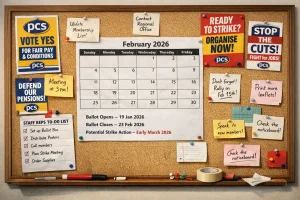
With the ballot closing on 23 February 2026, union officials will begin counting votes immediately thereafter. If sufficient turnout and majority support exist, PCS could serve notice to strike as soon as possible thereafter, subject to the 10‑day legal notice period for industrial action.
This means strike action could be anticipated as early as the first weeks of March 2026. However, exact dates depend on both the ballot outcome and subsequent negotiations between PCS and DWP officials.
Historical patterns from other PCS industrial actions show that unions may choose dates that maximise visibility or coincide with particular policy debates, emphasising the need for flexibility among claimants and stakeholders.
Operational Challenges Within DWP Beyond Pay
Pay and wage compression are only part of the broader set of issues affecting DWP staff. Several system‑wide pressures intersect with the pay dispute:
- Recruitment difficulties into specialist roles
- Higher-than‑average staff turnover in frontline positions
- Increased workload from policy changes and service demand
- Elevated levels of stress and workload burnout
These challenges are not new. They are compounded by structural reforms and transformation programmes across the welfare system, meaning that workplace pressure remains consistently high.
From discussions with professionals working in government policy, one thing was clear:
“The challenge is balancing the immediate impact on claimants with the long term consequences of underinvesting in staff. Short‑term disruption is visible. Long‑term decline is often hidden until it becomes a crisis.”
This perspective is important because it highlights the trade‑offs decision‑makers face when considering how to resolve such disputes.
How PCS Members Are Mobilising During the Ballot
Mobilisation efforts by PCS have been extensive. The union is conducting workplace engagement and training sessions, known as “Winning Campaign Schools” and “Movement training” to encourage turnout and ensure members understand what a yes vote would mean for both negotiations and service continuity.
PCS Mobilisation Activities
- Leafleting outside workplaces
- Online rallies and briefings
- Regional training for activists
- Encouragement to join PCS before ballot deadlines
Union communicators emphasise that high turnout is crucial in determining whether a legal mandate for industrial action can be secured, given the current trade union legislation framework.
What This Means for the Public and Welfare System
The prospect of DWP industrial action naturally raises concern for claimants and those dependent on timely benefit support. While the union does not intend unnecessary harm, disruption is often a mechanism to force negotiations by making policymakers aware of operational vulnerabilities.
Service Continuity Priorities
Even if strike action occurs, certain functions are prioritised:
- Scheduled pension payments
- Ongoing Universal Credit payments already in payment cycle
- Emergency or urgent claim processing where risk is high
Administrative tasks not related to immediate payment scheduling remain most at risk of delay.
Preparing for Potential Disruptions
For claimants and people interacting with DWP services, preparation helps reduce stress caused by unexpected delays.
Here are some practical steps to consider:
Check Your Online Accounts
- Regularly monitor the Universal Credit online journal or PIP online account for status updates.
- Document interactions and requests to create a clear trail.
Ensure Appointments Are Attended
- Unless explicitly told by DWP that your local office is closed, attend scheduled interviews or assessments to avoid possible penalties.
Plan for Longer Waits
- Expect communication responses and claim progress updates to take longer during periods of industrial action.
Use Digital Tools Where Possible
- Online enquiries and update forms often queue differently than telephone lines, which may be more affected during strikes.
Government Response and DWP Position
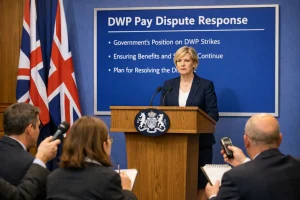
The DWP has stated its commitment to ensuring competitive pay for employees and highlighted that its pay offer considered feedback from trade unions and the upcoming National Living Wage increase.
The department emphasises that while pay negotiations continue, it remains focused on balancing fiscal responsibility with staffing needs. From government professionals I have spoken with, there is a clear intent to prioritise critical functions like pension payments and UC awards to avoid hardship to claimants, even under industrial pressure.
This intent, however, does not eliminate the potential for delays in administrative and decision‑making processes when staffing capacity is reduced due to strike action or related unrest.
Conclusion
In light of the ongoing PCS ballot and potential DWP strike action, delays in processing PIP, pensions, and new Universal Credit claims are a real possibility. While key payments will likely continue, administrative tasks may face disruptions.
Understanding the root of the dispute, low pay and staffing pressure,s helps explain the broader impact.
Staying informed and preparing for slower response times can help claimants manage expectations during this period of industrial uncertainty within the UK welfare system.
Frequently Asked Questions About the DWP Strike and Service Delays
Does strike action automatically delay all benefit payments?
No. Scheduled payments like monthly Universal Credit and pensions are generally paid on time. What may be delayed are processing tasks, such as new claims or changes in circumstances.
Will PIP assessments continue during a strike?
Some assessments may be delayed if staff who normally administer or arrange them are participating in action. It depends on staffing levels during the period of dispute.
How long could delays last?
Delays depend on the length of any industrial action and how quickly the department can clear backlogs once full staffing returns. Short strikes could mean mild delays; longer action could lead to wider backlogs.
Can I still contact DWP during a strike?
Yes, but waiting times on phone lines and in offices may increase. Use online services where possible for enquiries.
What should I do if my benefit decision is urgent?
Contact your case manager or adviser, and provide clear evidence of urgency; departments will try to prioritise urgent cases.
Are pension payments legally protected?
Yes, pension payments are statutory and prioritised, but some administrative actions (like updating records) could still slow down.
How do I stay updated on strike dates and service changes?
Follow official PCS updates on social channels and the PCS website, check DWP announcements, and monitor your benefit account messages.

Leave a Reply