
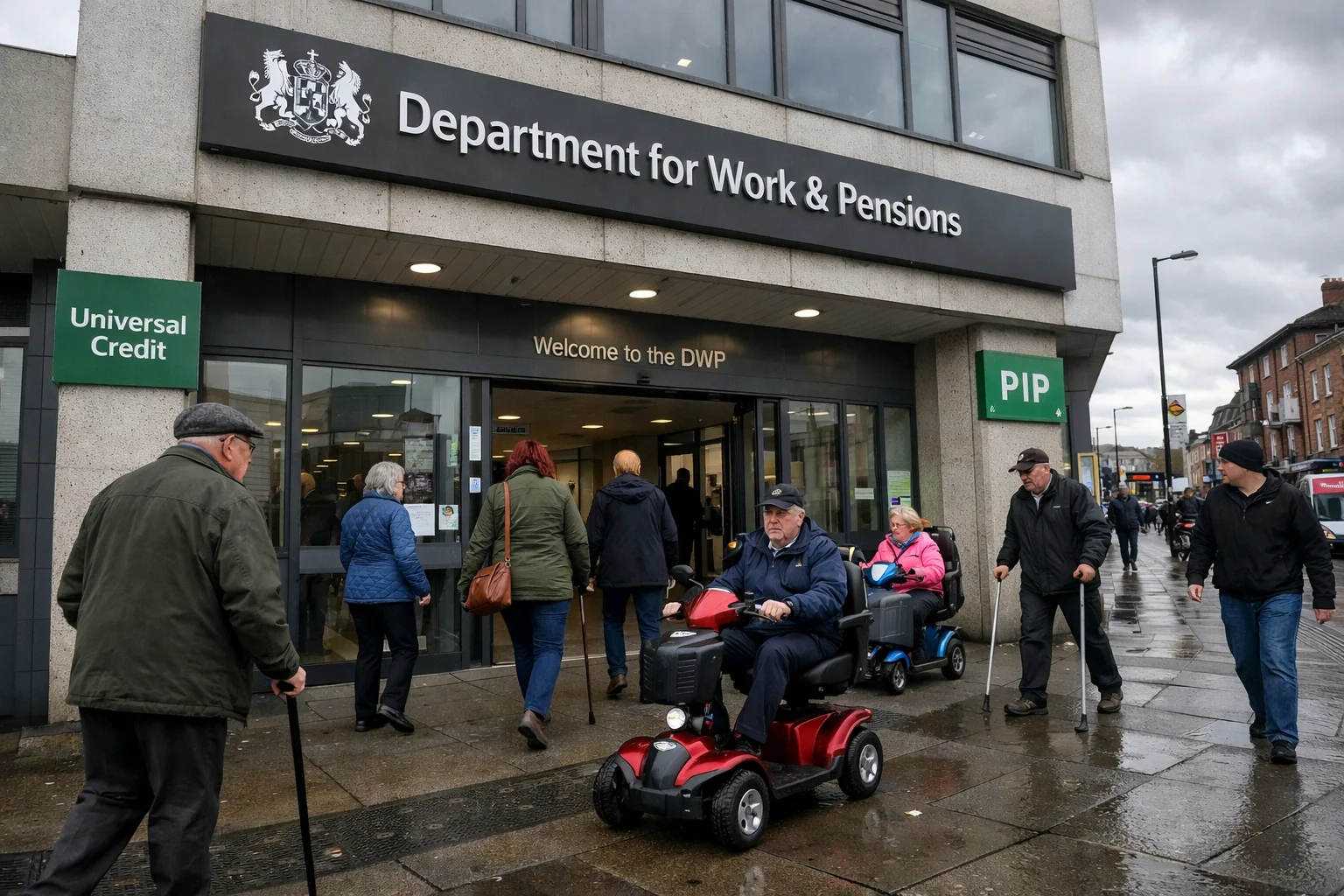
The Department for Work and Pensions (DWP) has initiated a significant shift in how benefit assessments are conducted across the UK.
With sweeping reforms on the horizon, claimants of Personal Independence Payment (PIP) and Universal Credit are being urged to prepare for a major increase in face-to-face assessments starting in 2026.
This article explores the implications of the DWP’s new direction, offering an in-depth look at the planned changes, the reasons behind them, and what they mean for current and future claimants.
Why Is the DWP Increasing Face-to-Face Assessments for PIP and Universal Credit?
The Department for Work and Pensions (DWP) is adjusting its approach to benefit assessments due to growing concern over the reliability of remote evaluations.
Since the pandemic, the majority of assessments for Personal Independence Payment (PIP) and Universal Credit have been conducted via telephone or video call. This shift was initially a response to COVID-19 restrictions but has remained largely in place.
The government has received feedback suggesting that remote assessments may have led to inconsistencies and an increased rate of approvals that do not reflect the claimant’s actual needs.
Face-to-face assessments are being reintroduced to ensure a more thorough and accurate evaluation process, particularly for complex cases.
This strategy also aligns with the government’s aim of enhancing public confidence in the benefits system.
Ministers have indicated that face-to-face assessments are better suited for evaluating physical and mental health limitations, which may not always be apparent through virtual means.
What Changes Will Be Made to the Assessment Ratios in 2026?
The DWP has confirmed a substantial adjustment to how benefit assessments are delivered, with a clear move away from predominantly remote evaluations.
From April 2026, a significantly higher proportion of assessments for both PIP and Universal Credit related Work Capability Assessments will be conducted face to face.
Current Assessment Ratios and Delivery Methods
As of 2024, the majority of assessments are completed remotely.
Telephone and video calls became the standard following the pandemic and were retained as part of contractual arrangements agreed under the previous government.
For Personal Independence Payment, only a small fraction of assessments are currently conducted in person. Work Capability Assessments follow a similar pattern, with remote evaluations forming the majority of decisions.
The DWP has acknowledged that while remote assessments improved speed and accessibility, they may not always provide sufficient depth for complex cases.
Planned Increase in Face-to-Face Assessments
By 2026, the DWP intends to increase the proportion of face-to-face assessments for both PIP and WCA to 30 percent.
This represents a sharp rise compared to current levels and will require expanded capacity across assessment centres and healthcare providers.
The department has stated that in-person assessments allow healthcare professionals to better observe functional limitations, behavioural indicators, and physical symptoms that are harder to assess remotely.
This change is expected to lead to more consistent and evidence-based decisions.
Operational Changes Required to Meet New Targets
To support the increased number of in-person assessments, the DWP is restructuring its operational model.
This includes reallocating healthcare professionals, reducing unnecessary reassessments, and extending review intervals for stable claims.
These operational changes are designed to ensure that the higher volume of face-to-face assessments does not result in longer waiting times or increased backlogs.
Comparison of Assessment Targets Before and After 2026
| Assessment Type | 2024 Face-to-Face Rate | 2026 Face-to-Face Target |
|---|---|---|
| Personal Independence Payment | 6% | 30% |
| Work Capability Assessment | 13% | 30% |
This shift highlights the government’s intention to rebalance assessment methods rather than eliminate remote assessments entirely.
How Will These Changes Affect PIP and Universal Credit Claimants?

The increase in face-to-face assessments will directly influence how claimants engage with the benefits system. While some claimants may welcome a more thorough evaluation process, others may face new practical challenges.
Increased Requirement to Attend In-Person Appointments
A greater number of claimants will be required to attend assessment centres in person.
This may involve travel, time off work for some households, or additional planning for those with mobility or mental health conditions.
The DWP has indicated that reasonable adjustments will remain in place, but exemptions from face-to-face assessments are expected to be more limited and based on clear medical justification.
Changes to Review Frequency and Award Duration
One of the most significant impacts on claimants is the extension of review periods. Under the new approach, most PIP claimants aged 25 and over will not be reassessed as frequently as before.
Initial award reviews will generally take place after three years, with subsequent reviews extended to five years if eligibility remains unchanged.
This reduces the stress and administrative burden on claimants whose conditions are long term and unlikely to improve.
Greater Emphasis on Medical EviJdence and Documentation
With more in-person assessments, the quality and completeness of supporting evidence will become increasingly important.
Claimants will need to ensure that their medical records accurately reflect how their condition affects daily living and mobility.
This may require:
- Updated letters from GPs or specialists
- Evidence of ongoing treatment or medication
- Records showing how conditions fluctuate over time
Healthcare professionals conducting assessments will use this evidence alongside face-to-face observations to make their recommendations.
Potential Outcomes for Claimants
The DWP argues that these changes will lead to fairer and more accurate decisions. However, outcomes may vary depending on individual circumstances.
Some claimants may find their awards unchanged due to longer review periods, while others may experience more detailed scrutiny during assessments.
For Universal Credit claimants undergoing Work Capability Assessments, the changes may also influence work-related requirements and access to employment support programmes.
Overall, the reforms signal a more structured and intensive assessment process that places greater emphasis on direct interaction between claimants and assessors.
What Are the Reasons Behind Scrapping Virtual Assessment Targets?
Previously, under Conservative leadership, contracts were issued that set a target of 80 percent of all assessments being completed remotely.
This was viewed as a cost-saving and efficiency measure during the pandemic.
However, the Labour government has taken a different stance, arguing that such contracts have contributed to an ineffective system.
Concerns have emerged from healthcare professionals, claimant advocacy groups, and civil society organisations.
They argue that virtual assessments may lead to incomplete or inaccurate representations of claimants’ health conditions.
The government has responded by removing this target and reinstating in-person assessments as a core part of the benefits process.
The Labour administration’s view is that real-world evaluations are critical to ensuring fairness in the system.
It allows assessors to see how disabilities and health issues affect a claimant’s daily life, something that cannot always be captured through a screen or telephone.
How Much Will These Reforms Save the UK Government?

One of the main motivations behind the reforms is to ensure better value for taxpayers. The DWP estimates that increasing face-to-face assessments and extending review periods could result in £1.9 billion in savings by 2030/31.
These savings will be achieved through:
- Fewer incorrect or fraudulent claims due to more accurate assessments
- Reduced frequency of assessments for long-term, stable cases
- Better allocation of DWP resources and medical professionals
- Streamlined support systems that target those most in need
Below is a financial projection table related to the expected savings.
| Reform Component | Projected Savings by 2030/31 |
|---|---|
| Increased face-to-face assessments | £900 million |
| Reduced frequency of PIP reviews | £500 million |
| Reallocation of healthcare resources | £300 million |
| Operational and administrative efficiencies | £200 million |
| Total Estimated Savings | £1.9 billion |
These cost reductions are part of a wider governmental strategy to ensure that the welfare system remains financially sustainable while still supporting those who need it most.
What Support Will Be Available Through New Employment Programmes?
In addition to reforms in the assessment process, the government is rolling out new employment initiatives designed to help people with long-term health conditions find and sustain work.
These efforts are part of the broader Get Britain Working plan.
One of the flagship programmes is Connect to Work, which will provide tailored support for individuals who are currently out of work due to disability or health concerns.
The programme will focus on offering practical assistance, such as skills training, interview coaching, and help accessing reasonable workplace adjustments.
The DWP is also hiring 1,000 additional work coaches. These professionals will work directly with claimants to develop personalised employment strategies.
By 2026, the government aims to help 300,000 disabled or unwell individuals enter or re-enter the workforce.
The employment support measures will focus on:
- Individualised coaching and goal setting
- Workplace accommodation and adjustment advice
- Confidence-building and skills development
- Supportive job placement services
These programmes are designed to complement the new assessment structure, with the aim of moving more people from welfare into meaningful employment where possible.
What Is the Timms Review and How Does It Relate to PIP Reform?
Alongside the operational changes being implemented by the DWP, a formal review of the PIP system, known as the Timms Review, is scheduled to begin in 2026.
This review will evaluate the structure and function of PIP as a benefit and examine whether it meets its original objectives of supporting disabled people to live independently and participate in society.
The review will focus on:
- The effectiveness of the PIP assessment framework
- The clarity and fairness of eligibility criteria
- How well PIP promotes improved health, wellbeing, and social inclusion
While the immediate changes to face-to-face assessment ratios will come into effect regardless of the Timms Review, the findings from the review may lead to further reforms in subsequent years.
The review is also expected to look at how different types of disabilities are represented in the assessment model and whether adjustments are needed to better serve diverse claimant groups.
These potential future reforms may impact eligibility, award levels, and the type of support offered.
How Should Claimants Prepare for the 2026 Assessment Changes?

With face-to-face assessments set to become significantly more common, claimants will need to prepare accordingly.
While the extended intervals between reviews may provide some breathing room, the depth of assessment is expected to increase.
Steps claimants can take to prepare include:
- Compiling comprehensive medical documentation from general practitioners, specialists, and therapists
- Keeping a diary of daily challenges related to their condition
- Reviewing the assessment criteria published by the DWP to understand what will be evaluated
- Attending support group meetings or seeking guidance from welfare rights organisations
For those who face mobility or mental health issues that make in-person assessments difficult, the DWP may still offer exceptions. However, these will likely be limited and based on clear medical evidence.
Conclusion
The upcoming increase in DWP face-to-face assessments marks a pivotal shift in the UK’s welfare system.
With changes set to begin in 2026, claimants must stay informed and adequately prepared for in-person evaluations.
These reforms aim to improve assessment accuracy, reduce long-term costs, and support more individuals back into employment.
As the welfare landscape evolves, understanding these developments will be crucial for anyone receiving or applying for PIP or Universal Credit in the years ahead.
Frequently Asked Questions
What is the difference between PIP and Universal Credit?
PIP (Personal Independence Payment) is designed to help with extra living costs for those with long-term health issues or disabilities, while Universal Credit is a broader benefit that covers living costs for those out of work or on low income.
Will I be notified if I have to attend a face-to-face assessment?
Yes, the DWP will send formal notification with appointment details. You will also be given time to prepare and provide supporting evidence.
Can I request a remote assessment instead?
In exceptional cases, such as severe health limitations or mobility issues, a request can be made for a remote assessment, but this is subject to DWP approval.
What happens if I miss a DWP assessment appointment?
Missing a scheduled assessment without valid reason may result in your claim being delayed or even suspended. Always notify the DWP if you cannot attend.
Are these changes already in effect?
No, the new face-to-face assessment targets will come into effect from April 2026. However, claimants should begin preparing in advance.
How often will assessments occur under the new rules?
For most PIP claimants over 25, initial reviews will now take place after three years, followed by a potential five-year gap between future assessments if eligibility remains.
What documents should I bring to my DWP assessment?
You should bring identification, recent medical records, prescriptions, and any specialist reports or letters from healthcare professionals that support your claim.

Leave a Reply