
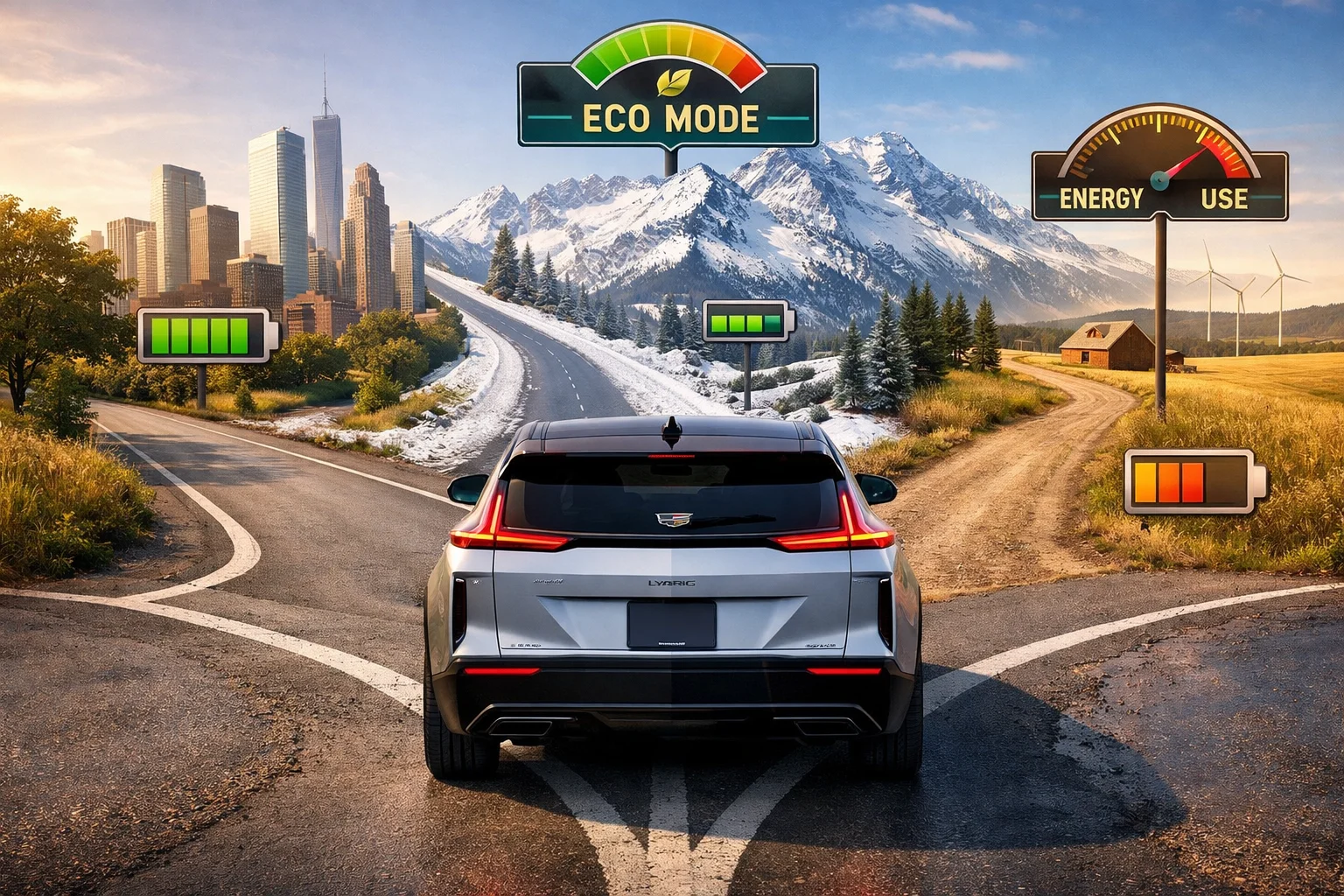
The Cadillac Lyriq, a fully electric luxury SUV, stands as a significant step forward in General Motors’ electrification strategy.
With its modern design, cutting-edge technology, and smooth EV performance, the Lyriq also introduces various driving modes, each tailored to specific driving conditions and preferences.
But a common question among EV buyers and enthusiasts remains: Do these driving modes impact battery range and energy usage?
The short answer is yes. Each driving mode in the Lyriq alters the vehicle’s dynamics from throttle response and regenerative braking to power delivery and traction control which in turn directly affects battery usage and overall range.
This article explores how each driving mode in the Cadillac Lyriq influences efficiency, performance, and real-world energy consumption, helping you make better decisions behind the wheel.
What Are the Different Driving Modes Available in the Cadillac Lyriq?
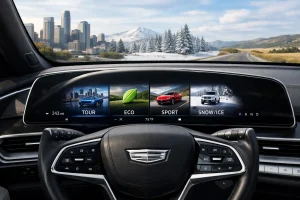
The Cadillac Lyriq offers a selection of drive modes, each tailored to enhance the driving experience under specific conditions. These modes affect how the electric powertrain behaves, as well as how various vehicle systems respond to inputs from the driver and road.
Overview of Cadillac Lyriq Drive Modes
Cadillac has engineered the Lyriq to meet diverse driver needs by including the following primary drive modes:
- Tour (Normal) Mode
- Eco Mode
- Sport Mode
- Snow/Ice Mode
- Tow/Haul Mode (availability may vary based on model or future releases)
These drive modes are designed not only to alter performance characteristics but also to influence how much energy is consumed during operation.
Tour Mode: The Balanced Default Setting
Tour Mode is the standard mode when you start the Lyriq. It is configured to offer a smooth, predictable drive with moderate regenerative braking and a well-balanced throttle response. This mode suits a broad range of driving conditions and is ideal for most users who prefer consistent, everyday driving without sacrificing comfort or control.
Eco Mode: Focused on Efficiency
Eco Mode reduces energy consumption by softening throttle response and increasing regenerative braking levels. It helps maximise range and is particularly useful for urban commutes and longer journeys where efficiency is the priority.
Sport Mode: Prioritising Performance
In Sport Mode, the system sharpens throttle response and reduces regenerative braking, allowing for a more dynamic and engaging drive. While the trade-off is higher battery usage, this mode is useful when swift acceleration or overtaking is required.
Snow/Ice Mode: Safety and Traction in Poor Conditions
This mode is tuned to support driving on slippery surfaces by controlling power delivery and adjusting traction control. It ensures stable handling but may reduce regenerative braking to avoid sudden deceleration that could compromise traction.
Tow/Haul Mode: Special Use Case for Heavy Loads
Although not currently standard in the Lyriq, GM’s EV platform supports Tow/Haul Mode in other electric vehicles. This mode recalibrates torque delivery and braking systems for towing applications, but at a noticeable cost to battery range due to the added load demands.
How Does Eco Mode in the Cadillac Lyriq Maximise Battery Efficiency?
Eco Mode in the Cadillac Lyriq focuses on improving energy efficiency. It modifies multiple vehicle systems to ensure minimal energy consumption during operation.
Drivers who regularly use Eco Mode report longer ranges per charge compared to other settings.
Eco Mode achieves this by:
- Dulling throttle response to prevent energy spikes from quick acceleration
- Enhancing regenerative braking to recover more energy when decelerating
- Enabling one-pedal driving in most driving conditions
This mode is especially beneficial in urban environments where stop-and-go traffic allows regenerative braking to play a greater role.
One-pedal driving in Eco Mode can significantly reduce energy loss by converting more kinetic energy into stored battery power.
In long-distance driving, Eco Mode helps maintain a stable energy draw, leading to more predictable and extended range figures.
Does Sport Mode in the Lyriq Consume More Battery Power?
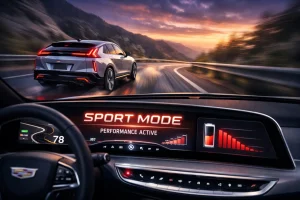
Sport Mode is designed to deliver a more engaging and responsive driving experience. It adjusts the vehicle’s performance characteristics, which can substantially increase the rate of battery consumption.
Key changes in Sport Mode include:
- Sharper throttle input for quicker acceleration
- Reduced regenerative braking, resulting in more reliance on traditional braking
- Tighter steering and enhanced responsiveness from the electric drivetrain
These changes deliver a more performance-oriented experience but at the cost of efficiency. In this mode, the battery depletes faster due to the increased power demands placed on the motors.
The decreased regenerative braking also means the vehicle recovers less energy during deceleration.
Sport Mode is ideal for short, dynamic drives rather than long-distance travel, where conserving battery life is a priority.
Is Tour Mode a Balanced Option for Everyday Use?
Tour Mode is the default driving mode in the Cadillac Lyriq. It is designed to provide a balance between comfort, performance, and efficiency, making it the most commonly used mode for day-to-day driving.
In Tour Mode, the vehicle delivers moderate throttle sensitivity and maintains a comfortable level of regenerative braking. It is well-suited to a range of driving environments, from motorways to suburban roads.
This mode does not heavily optimise for efficiency or performance but rather provides a well-rounded experience.
For drivers who are not specifically seeking either extended range or enhanced acceleration, Tour Mode serves as the most practical option.
How Does Snow or Slippery Mode Affect Battery Usage in the Lyriq?
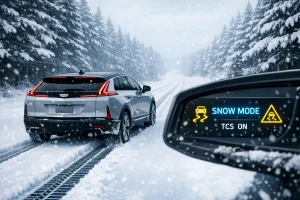
Snow or Slippery Mode is essential for improving vehicle safety in adverse weather. It ensures that the vehicle remains stable and maintains grip when driving on snow-covered, icy, or generally low-traction surfaces. However, it also alters how the Lyriq consumes energy.
Traction Management and Power Limiting
Snow Mode works by limiting the torque sent to the wheels, particularly during acceleration. By reducing the force delivered to each wheel, the system helps prevent slippage and improves overall control.
This power limiting approach means that less energy is transferred rapidly, but the trade-off is that the vehicle may operate in a less energy-efficient manner, as it avoids aggressive regen braking and torque delivery.
Regenerative Braking Adjustments
In normal conditions, regenerative braking is a significant contributor to energy recovery. However, in Snow Mode, aggressive regen can destabilise the vehicle, especially on icy roads where sudden deceleration might cause skidding.
To mitigate this, Cadillac reduces or disables regenerative braking in this mode. While this increases safety, it also means that less energy is recaptured during braking, which can slightly lower the total driving range.
Energy Draw from Stability Systems
The Lyriq’s Snow Mode may engage multiple stability systems such as:
- Enhanced traction control
- Stability control assistance
- Anti-lock braking adjustments
These systems operate continuously in low-traction scenarios, drawing additional energy from the battery. While the impact on range is not as severe as in Sport or Tow Modes, it is measurable, particularly during extended periods of driving in adverse weather.
When Should You Use Snow Mode?
Snow Mode should be activated in the following situations:
- Driving on icy, slushy, or snowy roads
- Descending slippery hills where regen braking might reduce traction
- Navigating surfaces with inconsistent grip
Using Snow Mode during these scenarios enhances safety, even if it means accepting a slight decrease in battery efficiency. The trade-off is justified by improved handling, smoother power distribution, and better overall control of the vehicle.
Is Tow/Haul Mode Available in the Cadillac Lyriq and What’s Its Impact on Range?
Currently, the Tow/Haul Mode is more commonly found in other electric vehicles within the General Motors lineup. As of now, it is not confirmed as a standard feature in the Cadillac Lyriq. However, the platform and architecture may support such functionality in future trims or upgrades.
In electric vehicles where Tow/Haul Mode is enabled, the system configures the drivetrain to handle heavier loads. This involves increased torque output, reduced acceleration aggressiveness for stability, and potentially altered regenerative braking to accommodate towing dynamics.
Towing significantly increases the demand on the battery. Heavier loads require more power to move and maintain speed, leading to quicker battery depletion.
How Do Regenerative Braking and One-Pedal Driving Affect Energy Efficiency?
Regenerative braking plays a crucial role in extending the driving range of electric vehicles like the Cadillac Lyriq. It converts kinetic energy from deceleration into electrical energy and stores it back in the battery.
One-pedal driving, which is closely tied to regenerative braking, allows the driver to accelerate and decelerate using only the accelerator pedal. This system enhances the effectiveness of energy recovery, especially in city driving conditions.
The level of regenerative braking varies depending on the selected drive mode:
| Driving Mode | Regenerative Braking Level | One-Pedal Driving Availability |
|---|---|---|
| Eco | High | Fully enabled |
| Tour | Medium | Partially enabled |
| Sport | Low | Not prominent |
| Snow/Ice | Low or Limited | Disabled or minimised |
Eco Mode provides the most aggressive regenerative braking, leading to improved energy recapture and efficiency. Sport and Snow Modes either reduce or disable regen to prioritise stability or driving feel.
What Factors, Other Than Driving Modes, Influence Battery Range in the Lyriq?
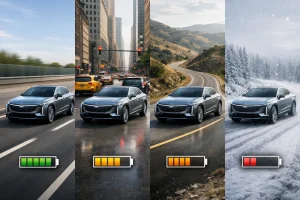
Although driving modes have a direct influence on battery usage, several other factors also affect overall range. These elements work in combination with the selected mode to determine how far the Lyriq can travel on a single charge.
The table below outlines key factors and their impact on battery performance:
| Factor | Description | Impact on Range |
|---|---|---|
| Driving Speed | Higher speeds increase air resistance | Decreases range |
| Driving Style | Aggressive acceleration and braking use more energy | Decreases range |
| Terrain | Hilly or mountainous roads require more power | Decreases range |
| Weather Conditions | Cold weather affects battery chemistry and HVAC usage | Decreases range |
| Tyre Pressure | Underinflated tyres create more rolling resistance | Decreases range |
| Use of Heating/Cooling | Climate control draws power from the battery | Decreases range |
| Payload or Towing Load | Added weight requires more energy to move | Decreases range |
Drivers can maximise range by combining Eco Mode with smooth driving techniques, avoiding rapid acceleration, maintaining tyre pressure, and limiting climate control use when possible.
Which Cadillac Lyriq Mode is Best for Maximising Range?
When it comes to stretching every kilometre from the Lyriq’s battery, Eco Mode remains the most effective setting. It is purpose-built to reduce energy consumption and maximise regenerative braking.
Here is a quick comparison of the available drive modes:
| Mode | Energy Efficiency | Performance Level | Best Use Scenario |
|---|---|---|---|
| Eco | ★★★★★ | ★★ | Long commutes, city driving |
| Tour | ★★★★☆ | ★★★ | Balanced everyday driving |
| Sport | ★★☆☆☆ | ★★★★★ | Short spirited drives or overtaking |
| Snow/Ice | ★★★☆☆ | ★★ | Winter driving, slippery surfaces |
| Tow/Haul* | ★☆☆☆☆ | ★★★★ | Towing heavy loads (future availability) |
*Note: Tow/Haul Mode is not confirmed in current Lyriq models.
By selecting the appropriate mode based on driving needs and external conditions, Lyriq owners can better manage their energy usage and tailor performance to their environment.
Conclusion
Yes, driving modes in the Cadillac Lyriq significantly affect energy usage and driving range. Each mode is calibrated to serve a particular driving purpose from conserving battery in Eco Mode to delivering performance in Sport Mode.
Drivers can optimise their experience by selecting the appropriate mode based on their priorities, whether it’s range, performance, comfort, or safety.
Understanding these settings is essential for getting the most out of your electric vehicle and ensuring your journeys are both efficient and enjoyable.
FAQs About Cadillac Lyriq Driving Modes and Battery Usage
What’s the most energy-efficient driving mode in the Cadillac Lyriq?
Eco Mode is the most efficient, designed to reduce energy usage and maximise regenerative braking.
Can switching between driving modes affect long-term battery health?
No, using different modes doesn’t harm the battery but consistently using high-power modes may reduce long-term range slightly due to higher energy throughput.
Does one-pedal driving work in all modes?
It’s primarily available and most effective in Eco Mode. Some other modes reduce the regen braking for smoother transitions.
Is there a way to customise driving modes in the Lyriq?
At this stage, Cadillac does not offer user-customisable drive modes, though future OTA updates may introduce more personalisation.
Does using climate control affect battery usage more than driving modes?
Yes, heating or cooling systems can impact battery usage noticeably, especially in colder climates.
How much range do I lose in Sport Mode compared to Eco?
On average, Sport Mode may reduce total range by 10–20% compared to Eco Mode, depending on driving style.
Are driving modes available on all Lyriq trims?
Core driving modes like Tour, Eco, and Sport are standard. Snow and Tow modes may depend on trim or optional packages.

Leave a Reply