
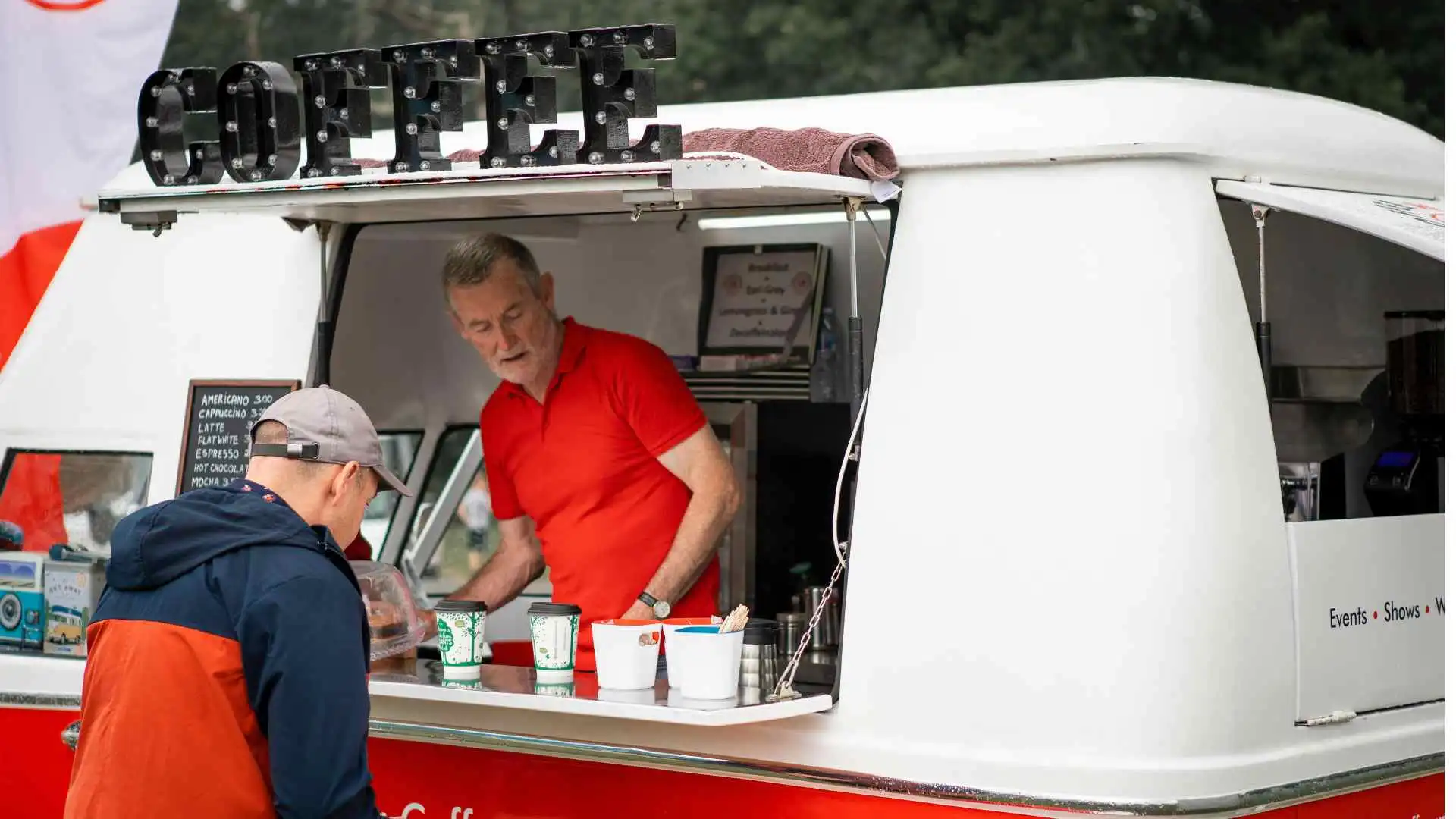
The coffee van has become one of the more appealing routes into small business ownership in the UK.
Startup costs are lower than a fixed premises, the operational model is flexible, demand is consistent, and the barrier to entry is low enough that someone with strong barista skills and a business head can be trading within a few months of deciding to start.
That accessibility is also why the market is more competitive than it looks from the outside.
The difference between a coffee van that builds a loyal following and one that trades inconsistently for a year before closing usually comes down to the decisions made before the van leaves the driveway for the first time.
From Bean to Business: Starting Your Own Coffee Van
The Business Model Before the Van
The most common mistake new coffee van operators make is buying a van before they’ve answered the business questions that should determine what kind of van, what equipment, and what route to market they need.
Where will you trade? There are broadly four models. Fixed pitch trading, where you have a regular location, a market, a business park, a railway station, and build a returning customer base.
Event trading, where you work festivals, corporate events, weddings, and sporting occasions. Mobile route trading, where you move between locations and build a sequence of regular stops. And a hybrid of these.
Each model has different operational requirements, different revenue profiles, and different cost structures. An event-focused operation needs more capacity, the ability to scale output quickly, and equipment that handles high-volume bursts.
A fixed pitch operation needs a loyal customer base, consistent day-to-day quality, and a location that’s available and legally accessible for trading.
The revenue reality deserves honest attention before you commit significant capital. A busy fixed pitch in a good location can produce a high income for one person.
An event-focused operation that produces that income from fewer, higher-revenue days carries more variability. Many people starting coffee vans underestimate how many trading hours it takes to cover costs and generate meaningful income.
The Vehicle
The vehicle is the most visible decision and often the most emotionally driven. The converted Citroën H van looks beautiful. The converted horsebox photographs well. Neither of those facts is a business reason to buy one.
The practical criteria for a coffee van vehicle are capacity for the equipment and the stock you need, reliability, ease of cleaning and maintenance, compliance with the weight restrictions of the sites you’ll trade on, appropriate gas safety and electrical systems, and a price point that doesn’t commit so much capital to the vehicle that there’s nothing left for stock, marketing, and the inevitable unexpected costs of the first year.
A purpose-converted trailer offers more flexibility than a vehicle-mounted setup for operators who haven’t fully established their trading pattern: you can move between tow vehicles, park the trailer at events without leaving the vehicle there, and the conversion can be more spacious relative to cost. The aesthetic is different, but the commercial case is often stronger.
The Equipment
Coffee quality determines whether customers come back, and it’s primarily determined by the machine and how it’s used.
A mobile coffee machine for a van or trailer needs to deliver the extraction quality and milk-steaming capability of commercial café equipment, in a form factor suited to the available space, and with reliability that holds up through full trading days without mains electricity or water connections.
Professional-grade espresso machines for mobile use typically run on LPG or built-in generators and use onboard water tanks rather than mains connections.
The investment level matters: an entry-level machine will produce acceptable coffee, but a higher-quality machine with better temperature stability and pressure control will produce consistently better results across a full day of service. Repeat custom is built on that consistency.
Grinder quality matters as much as machine quality. Fresh-ground coffee tastes significantly different from pre-ground, and the dose-to-dose consistency of a good commercial grinder lets the barista dial in the espresso correctly and maintain it through changing conditions.
Milk steaming equipment that can produce properly textured milk for lattes and flat whites at pace is the third critical component.
At peak periods, the bottleneck in a coffee van is often milk rather than espresso, so steaming efficiency directly affects output capacity.
Licensing and Compliance
Trading on public land requires a street trading licence from the relevant local authority.
Markets and events require permission from the organiser. Food hygiene registration with the local authority is mandatory.
Gas safety certification for LPG equipment must be up to date. Electrical systems need sign-off. Public liability insurance is non-negotiable.
The licensing landscape varies by local authority, and some areas have significantly more restrictive street trading policies than others.
Understanding the specific requirements for the locations you’re targeting before committing saves you from building a business plan around a pitch that turns out to be inaccessible.
Building the Customer Base

For a fixed pitch or route operation, the first three months of trading are about building the habit as much as selling coffee.
Customers who know your van is in the same place at the same time every weekday become automatic, not deliberate.
Consistent location and hours are the primary driver of the repeat custom that makes the economics work.
Quality and friendliness are why people come back rather than go elsewhere.
A coffee van where the barista knows the regulars’ orders, remembers what someone mentioned last week, and makes the two minutes of getting a coffee a pleasant interaction builds something genuinely difficult to replicate at scale.
That relationship is the competitive advantage that the chains can’t match.
The business that survives the first year is almost always the one that understood this from the start and built toward it, rather than the one that relied on footfall and novelty to sustain trading.

Leave a Reply