

The DWP driving licence revocation rules introduced under the Public Authorities (Fraud, Error and Recovery) Act 2025 (PAFER Act) give the Department for Work and Pensions (DWP) new powers to recover unpaid benefit debts from people who deliberately refuse to repay what they owe.
While the DWP cannot automatically revoke a driving licence, it can apply to a court to impose a driving disqualification in specific circumstances as a last-resort enforcement measure.
The rules include strict legal safeguards, including a £1,000 debt threshold, court approval, protection for people who need to drive for work or caring responsibilities, and opportunities to agree an affordable repayment plan before enforcement is considered.
Key takeaways:
- The DWP cannot automatically remove a driving licence.
- A court must approve any driving disqualification.
- The qualifying debt must generally be at least £1,000.
- Affordable repayment arrangements can usually prevent enforcement.
- The new powers will be introduced gradually from October 2026.
How Do the DWP Driving Licence Revocation Rules Work in Practice?

The DWP driving licence revocation rules follow a structured legal process rather than automatic action.
The DWP must first confirm a qualifying benefit debt exists and that the individual has failed to repay it despite being given opportunities to do so under the Public Authorities (Fraud, Error and Recovery) Act 2025.
In most cases, individuals are contacted and encouraged to arrange an affordable repayment plan.
If they cooperate, enforcement is usually not needed. If they do not, the case may escalate.
Where repayment is still refused, the DWP can apply to a court for a driving disqualification.
However, this is not automatic and depends on strict criteria such as debt level, ability to pay, and deliberate non-compliance. The court then makes the final decision.
This ensures the process prioritises repayment first, with driving bans used only as a last resort in serious cases.
Can the DWP Automatically Take Away Someone’s Driving Licence?
No. One of the most common misconceptions about the DWP driving licence revocation rules is that the DWP can directly remove a driving licence.
In reality, it cannot revoke or suspend a licence on its own. Instead, it must apply to a court, which makes the final decision after reviewing the legal conditions.
Court Approval Is Required Before a Driving Ban
Driving disqualification is a last-resort measure under the DWP debt recovery system.
Before any court action, the DWP will normally attempt recovery through letters and repayment plans, giving individuals the chance to avoid enforcement entirely.
A court can only approve a ban if it is satisfied the person has deliberately refused to repay despite having the means to do so.
Simply owing money does not automatically put a driving licence at risk. Enforcement will also be phased in from October 2026, giving time to arrange repayment or support.
Why This Is Not the Same as a DVLA Medical or Motoring Ban?
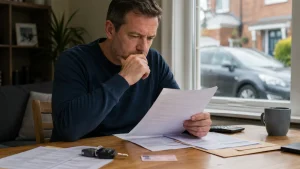
This system is different from DVLA or court-imposed bans for driving offences or medical reasons.
Those relate to road safety or legal driving standards, while the DWP powers relate only to unpaid benefit debt after repeated non-compliance.
Even in DWP cases, the court retains full discretion and must consider all circumstances before deciding whether a driving disqualification is appropriate.
Who Could Be Affected by the DWP Driving Ban Rules?
The DWP driving licence revocation rules apply only to a limited group of people, mainly those who have stopped receiving benefits, still owe money to the DWP, and repeatedly refuse to repay despite having the ability to do so.
It is not aimed at all benefit claimants or anyone with minor errors in their claim.
Thousands of debtors are being contacted with updated letters encouraging them to arrange repayment before enforcement begins.
Early engagement can often prevent further action under the Public Authorities (Fraud, Error and Recovery) Act 2025.
Who is typically affected:
- People with outstanding DWP debts after leaving the benefits system
- Individuals who can afford to repay but refuse to engage
- Cases where repayment has not been arranged despite repeated contact
What people should do:
- Check the debt details carefully
- Contact the DWP as soon as possible
- Set up an affordable repayment plan if needed
- Seek free debt advice if required
These steps usually prevent the case from escalating to stronger enforcement action.
What Conditions Must Be Met Before a Driving Disqualification Is Considered?

A driving disqualification is designed to be one of the strongest enforcement options available under the legislation and can only be considered after several legal conditions have been satisfied.
The process is intentionally strict to ensure that enforcement remains proportionate and subject to judicial oversight.
The £1,000 Benefit Debt Threshold
One of the most important safeguards is the financial threshold. A court can only consider a driving disqualification where the outstanding qualifying debt is at least £1,000.
However, reaching this amount alone does not automatically result in enforcement.
The DWP must still demonstrate that other recovery options have been explored and that the legal criteria have been met before asking the court to intervene.
The legislation also introduces other debt recovery measures. In qualifying cases, the department can recover money directly from a person’s bank account without first obtaining a court order.
Future provisions under the Act will also introduce the Eligibility Verification Measure, allowing the DWP to request limited information from banks and financial institutions to help identify incorrect benefit payments earlier, improve payment accuracy and resolve errors more quickly.
Ability to Pay and Refusal to Repay
The court must also be satisfied that the individual has the financial means to repay the debt but has deliberately chosen not to do so.
This distinction is significant because the legislation is intended to target persistent avoidance rather than people experiencing genuine financial hardship.
Reinforcing this approach, Work and Pensions Minister for Transformation Andrew Western said:
“To anyone with an outstanding debt – our door is open and DWP will always work with you to find an affordable way to repay.”
He also added:
“But for those who can pay and won’t – we’re going further than ever before to claw back cash and crack down on fraud.”
These comments underline that affordable repayment remains the preferred outcome, with stronger enforcement reserved for those who deliberately refuse to engage.
Reasonable Excuse and Vulnerability Safeguards
The legislation includes several important protections to ensure that driving disqualification is not applied unfairly.
For example, courts cannot impose a driving ban where a person has an essential need for their licence, such as:
- Driving required for employment, including delivery drivers and couriers.
- Caring responsibilities that depend on private transport.
- Other exceptional circumstances accepted by the court.
Another safeguard is that any driving disqualification is initially suspended, provided the individual complies with the agreed repayment terms.
This creates a strong incentive to maintain repayments while avoiding unnecessary disruption to employment or family responsibilities.
| Requirement | How the Rule Works |
|---|---|
| Minimum qualifying debt | At least £1,000 |
| Court involvement | Required before any driving disqualification |
| Ability to pay | Court must be satisfied the debtor could repay |
| Deliberate non-payment | Persistent refusal is a key consideration |
| Essential need protection | Licence cannot be removed where essential for work or caring responsibilities |
| Suspended order | Ban is initially suspended while repayment terms are maintained |
What Should Someone Do After Receiving a DWP Debt Letter?

Receiving a DWP debt recovery letter does not mean a driving ban is certain.
The Government has made clear that early engagement is the easiest way to avoid enforcement under the DWP driving licence revocation rules.
Individuals should carefully check the details of the letter, confirm whether the debt is correct, and contact the DWP as soon as possible if repayment has not been arranged.
Those who respond within the four-month window can often avoid further action by agreeing a realistic repayment plan. Free debt advice may also be offered where needed.
These steps are part of a wider Government approach to improve debt recovery while reducing fraud in the welfare system.
Commenting on the broader objectives behind the reforms, Cabinet Office Minister Satvir Kaur said:
“Fraud against the public sector and unrecovered debt deny our vital frontline services of the funding they deserve.”
She added:
“Under these new powers in the PAFER Act, this Government will deliver on its promise to protect hardworking taxpayers and clamp down on those who try to cheat the system.”
The new debt recovery powers also sit alongside wider anti-fraud initiatives.
The Government has highlighted several recent enforcement successes, including Operation Mellow, which involved raids across London and Berkshire targeting an alleged £3 million fraud network accused of using hundreds of stolen identities to fraudulently claim Universal Credit (UC) and Personal Independence Payment (PIP).
Other high-profile prosecutions cited by the Government include:
- Catherine Wieland, who was sentenced after being caught ziplining in Mexico while fraudulently claiming £23,000 in PIP.
- Bethany Elwood, sentenced for £78,000 of Universal Credit fraud after falsely claiming to be single for more than four years.
- Kelly-Ann Clews, who received around £75,000 in overpayments from multiple public bodies, including the DWP.
- Mark Arberry, sentenced after wrongly claiming £40,000 in benefits despite inheriting £35,000.
- Helen Green, who received a seven-month prison sentence for £25,000 of PIP fraud.
While these cases concern benefit fraud rather than driving licence disqualification, they illustrate the Government’s broader commitment to tackling fraud, recovering public money and protecting the integrity of the welfare system.
The Government also reports that the overall fraud and error rate has fallen to 3.2%, its lowest level since the pandemic, with the new legislation expected to strengthen those improvements further.
How Do Repayment Plans Help Prevent a Driving Ban?
For most people receiving a DWP debt letter, early engagement is the most effective way to avoid enforcement under the DWP driving licence revocation rules.
The Government has made clear that these measures are designed to encourage repayment rather than impose immediate penalties.
Individuals can contact the DWP to arrange an affordable repayment plan based on their financial situation.
In many cases, this can prevent the case from progressing further. Free debt advice may also be offered where needed to support sustainable repayments.
Affordable repayment arrangements:
- Help stop enforcement action from escalating
- Allow debt to be managed in manageable instalments
- Reduce the likelihood of court involvement
In some cases, even if a court order is made, a driving disqualification may be suspended as long as repayment terms are followed.
If circumstances change due to illness or income loss, individuals should contact the DWP immediately.
Early communication helps adjust repayment plans and avoid stronger enforcement action.
What Facts, Proposed Changes, and False Claims Should UK Drivers Understand?

With significant media attention surrounding the DWP driving licence revocation rules, it is easy to misunderstand how the legislation actually works.
Separating confirmed facts from common misconceptions helps provide a clearer picture of who may be affected.
Confirmed Facts
The following points are established under the current legislation:
- The powers were introduced through the Public Authorities (Fraud, Error and Recovery) Act 2025.
- The DWP can recover certain qualifying debts directly from bank accounts in specified circumstances.
- Driving disqualification always requires a court application and judicial approval.
- Courts can only consider a driving ban where the qualifying debt is generally £1,000 or more.
- Enforcement of the new powers will be introduced gradually from October 2026.
- Individuals who rely on their driving licence for essential work or caring responsibilities are protected by statutory safeguards.
- The Government aims to generate approximately £14.6 billion in savings over five years through wider fraud, error and debt recovery measures, supported by investment in up to 3,000 additional staff.
Proposed Future Measures
Not every provision within the legislation becomes operational at the same time.
For example, the Eligibility Verification Measure will be introduced separately in the future.
It will allow the DWP to request limited data from banks and financial institutions to help identify incorrect benefit payments, reduce errors and improve payment accuracy.
This measure is intended to strengthen fraud prevention while ensuring legitimate claimants continue receiving the correct entitlement.
Common Misinformation
Several myths have circulated online since the legislation was announced.
The most common misconception is that every benefit claimant could lose their driving licence. This is incorrect.
Another false claim is that the DWP can remove a driving licence without any independent oversight.
In reality, only a court has the authority to impose a driving disqualification, and only after considering the legal tests and individual circumstances.
It is also inaccurate to suggest that simply owing money to the DWP automatically leads to enforcement.
The legislation is aimed at people who deliberately refuse to repay qualifying debts despite having the financial means to do so and after being given opportunities to resolve the matter voluntarily.
Conclusion
The DWP driving licence revocation rules are a structured debt recovery measure, not an automatic penalty for owing money.
They target only those who deliberately refuse to repay while having the means to do so, with safeguards like court approval and a £1,000 threshold ensuring fair use.
Early action is key, responding to a DWP debt letter and arranging a repayment plan can usually prevent enforcement from escalating.
Frequently Asked Questions
1. Does the DWP automatically deduct money from every debtor’s bank account?
No. Direct bank deductions apply only in qualifying circumstances under the legislation and are subject to the legal safeguards contained within the Act and the relevant Code of Practice.
2. Can someone challenge a DWP benefit debt before enforcement begins?
Yes. Anyone who believes the amount owed is incorrect should contact the DWP promptly to discuss the decision and understand the available review or appeal processes where applicable.
3. What happens if someone genuinely cannot afford to repay the debt?
The DWP states that it will work with individuals to agree affordable repayment arrangements wherever possible. Early communication is strongly encouraged if financial circumstances make repayment difficult.
4. Will every debt over £1,000 result in a driving disqualification?
No. Reaching the £1,000 threshold is only one requirement. A court must also be satisfied that the individual has deliberately refused to repay despite having the means to do so.
5. Are these powers mainly aimed at current benefit claimants?
No. The legislation primarily addresses people who have stopped receiving benefits but still owe qualifying debts and have avoided repayment after leaving the benefits system.
6. How are the new debt recovery powers monitored?
The use of direct deductions and driving disqualification orders is governed by the DWP Direct Deduction and Disqualification from Driving Orders Code of Practice, which sets out strict safeguards and enforcement procedures.
7. Where can someone manage or repay money owed to the DWP?
Individuals should follow the instructions provided in their DWP correspondence or use the official Government service for managing and repaying benefit debts.
Those needing additional support can also request information about free debt advice services.

Leave a Reply