
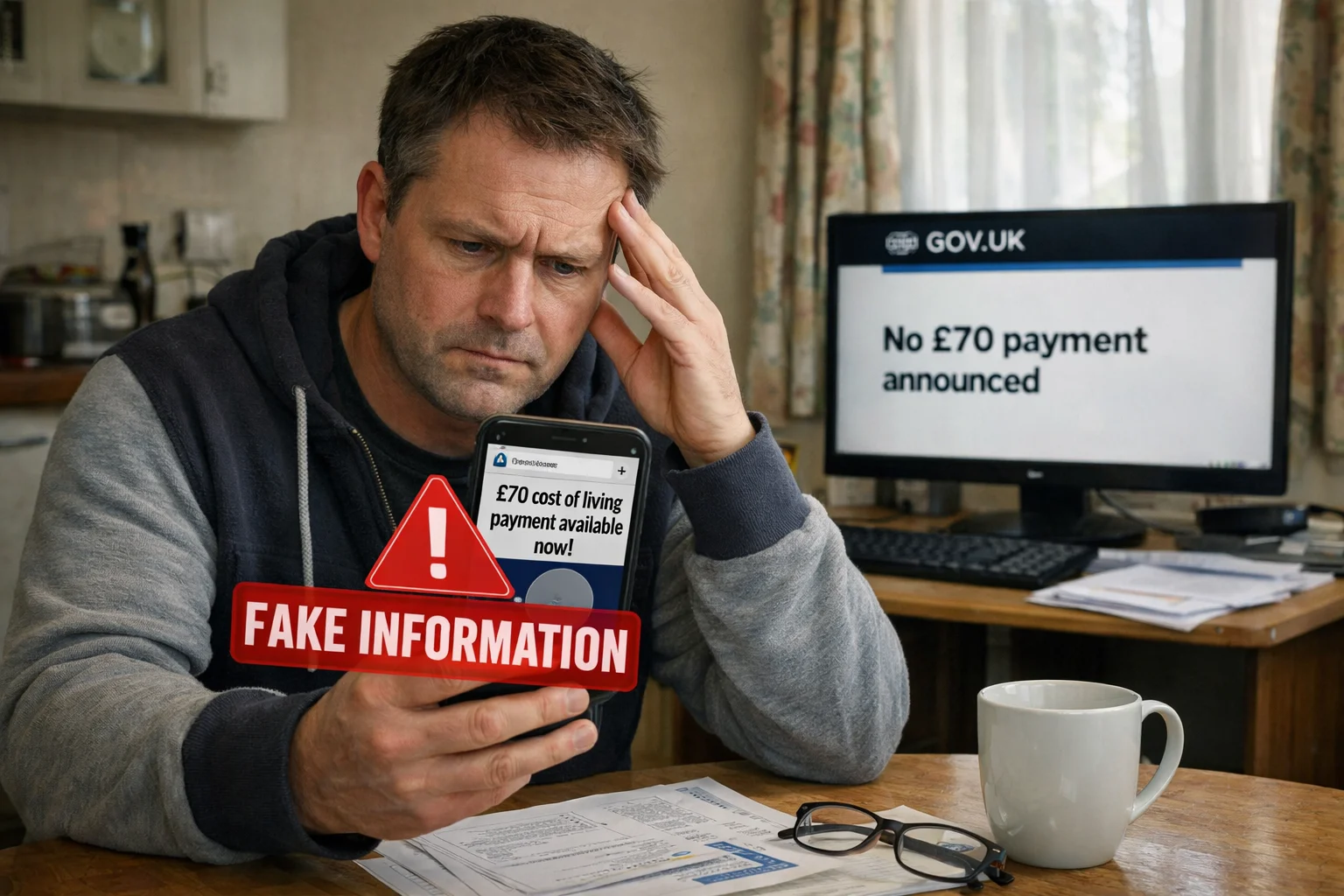
If you’re searching for clarity on the £70 cost of living payment, here’s the direct answer: there is no official national £70 cost of living payment confirmed by the UK Government or the Department for Work and Pensions (DWP). This figure does not appear in any official GOV.UK national benefit update.
The £70 amount being discussed often refers to local council support, not a government-wide scheme. In this guide, I explain the real source of the figure and how local funding works.
Key points covered in this guide:
- The £70 figure originates from local Household Support Fund schemes
- GOV.UK confirms no new national cost of living payments beyond 2024
- Past DWP payments were £299–£301 and are now closed
- Some families may receive £70 per child, but only through local councils
- Official updates can be found on GOV.UK and council websites
What Is the £70 Cost of Living Payment Everyone Is Talking About?
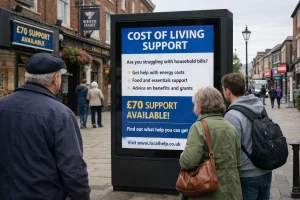
Why the £70 Figure Keeps Appearing Online?
I’ve been following cost of living news for some time now, and recently, one number in particular has caught my attention: £70. Across various Facebook groups, WhatsApp chats, and even in a few emails from readers, I keep seeing mentions of a £70 payment supposedly being issued by the government.
At first glance, it seems like a straightforward update that the UK government has introduced another round of cost of living payments. But when I began looking deeper, I noticed the same pattern I’ve seen in previous benefit rumours.
The claims are inconsistent. Some say it’s for pensioners, others mention it’s per child, and a few suggest it’s an automatic top-up for those already on Universal Credit.
The root of the confusion, in most cases, is that people are mixing up local support payments with national benefits.
Where the “£70 Per Child” Reports Actually Come From?
The figure of £70 often refers to localised payments made by councils in England. These are usually funded through the Household Support Fund (HSF). It’s a central government initiative that gives local councils money to support residents in financial hardship.
For example, in some counties, families with children who qualify for free school meals were given £70 per child as a school holiday voucher. In others, pensioners or vulnerable households received one-off support payments or supermarket vouchers of a similar value.
When these announcements appear in regional news sites or community bulletins, they’re often reshared online without context.
The headline “£70 Cost of Living Payment Available Now” might refer to a specific local scheme in, say, Manchester or Kent, but when shared nationally, it’s easy to assume it applies everywhere.
Some examples of where the £70 figure came from include:
- Councils are issuing £70 food vouchers per eligible child during the summer holidays
- One-off £70 grants given to low-income households through winter support schemes
- Local announcements made without a clear reference to eligibility or region
Because these payments originate from councils, the criteria, amounts, and timeframes differ. They’re not part of a nationwide rollout, even though the money does originate from government funding via the Department for Work and Pensions (DWP).
Has the UK Government Officially Announced a £70 Cost of Living Payment?
What Past National Cost of Living Payments Looked Like?
To get clarity on this, I revisited the official GOV.UK Cost of Living Payment guidance, which outlines all national support payments issued between 2022 and 2024. During that time, the government issued a series of automatic lump-sum payments to help with soaring energy costs, food prices, and inflation.
These were provided to people on specific means-tested benefits, such as:
- Universal Credit
- Pension Credit
- Income Support
- Child Tax Credit
- Working Tax Credit
Here’s a breakdown of what the official national payments looked like:
| Payment Date Range | Amount | Eligible Groups |
|---|---|---|
| Spring 2023 | £301 | Universal Credit, Pension Credit, others |
| Autumn 2023 | £300 | Same as above |
| Early 2024 | £299 | Final round of national cost of living support |
Each of these payments was automatically paid, and recipients didn’t have to apply. If someone qualified based on a benefits assessment window, the money was transferred directly into their account.
What’s especially important is that none of these payments were £70, and there has been no new national payment announced for 2026 or beyond. The current government guidance confirms this.
Where Does This Leave the £70 Payment?
The answer is that it is not a continuation of these national support packages. The Department for Work and Pensions has confirmed that the Cost of Living Payment scheme ended in 2024, and there are no current plans to bring it back in 2026.
Could This Be a Local Council Payment Instead?
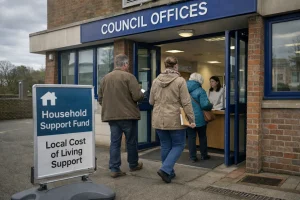
What the Household Support Fund actually is?
Local councils have a certain amount of discretion in how they help their residents through hard times. Since 2021, the government has funded the Household Support Fund, allowing councils to provide one-off payments, food vouchers, or energy grants to residents in need.
This funding is provided by the central government but is administered locally.
That means every council can set its own:
- Payment amount
- Eligibility criteria
- Application process
- Distribution method (cash, voucher, direct credit)
So, a £70 payment in Leicester could be a voucher for food essentials, while in Cornwall it might be a cash payment for heating bills.
Here’s a second table that outlines the key difference between national payments and local schemes:
| Type of Support | Administered By | Fixed Nationwide? | Typical Amount |
|---|---|---|---|
| Cost of Living Payment | DWP (Central Govt) | Yes | £299–£301 |
| Household Support Fund | Local Councils | No | £50–£100 |
Because of this local variation, it’s vital to understand that not everyone will receive £70, and not all areas offer support at that level.
Why Local Payments Are Often Mistaken for National Schemes?
The mistake often happens when a local announcement is picked up by news outlets and shared as if it were a national story. For example, “Families to Receive £70 Cost of Living Payment” might be completely true in one county, but it’s misinterpreted as a new UK-wide government measure.
This issue is made worse by vague headlines and social media posts that omit location details. Without specifics, it’s easy to assume that the £70 applies to all households or that it’s an automatic government payment.
In reality, Household Support Fund payments are not guaranteed, and the £70 figure is just one of many local variations.
What Have Government Officials and My Own Research Revealed About These Claims?
After seeing how often the £70 figure was being shared, I decided to look into the claims more seriously. I started with the GOV.UK payment guidance and also explored a number of local council websites to see if any official mention of a new national scheme existed.
No such announcement was found.
A statement from a government official also made it clear that there is no national £70 cost-of-living payment, and that any reports of such payments are likely linked to Household Support Fund distributions administered by local authorities.
This clarification is important, but it hasn’t been widely circulated in the media. As a result, the rumour keeps growing.
From my own perspective, I’ve learned to be cautious with new financial “announcements” that begin circulating online without backing from primary sources.
In this case, it became clear very quickly that there was a kernel of truth behind the £70 figure, but that the reality was far more complex than a blanket government payout.
For example, when I looked into school holiday support programmes, I found that some families did receive £70 per child but only if they lived in a participating local authority and were already eligible for free school meals.
This information wasn’t hidden, but it also wasn’t highlighted clearly when people reshared the story online.
How Do Local Councils Decide Who Gets These Payments?
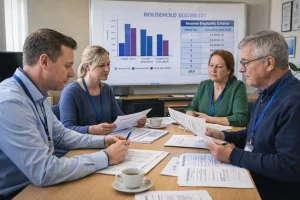
Each council sets its own rules based on available funds, community needs, and government guidelines. Generally, payments from the Household Support Fund target:
- Households on low incomes
- Residents already claiming means-tested benefits
- Families with children on free school meals
- Pensioners living alone
- Individuals at risk of homelessness or food poverty
These councils may distribute payments in various ways, such as:
- Supermarket vouchers during school holidays
- Direct bank transfers after an approved application
- Energy top-up grants for households using prepayment meters
A small number of councils offer automatic payments to residents already receiving Council Tax Reduction or Housing Benefit. But in most areas, residents need to apply manually and submit documentation showing financial hardship or qualifying benefit status.
Do You Need to Apply for a £70 Cost of Living Payment?
In almost all cases, yes. Unlike the DWP’s Cost of Living Payments (which were automatic), Household Support Fund payments are not universal and often require an application.
Each local authority runs its own process, so it’s important to visit your council’s official website and search for the latest guidance on:
- Application forms
- Required documentation
- Submission deadlines
- Payment timelines
Some councils run temporary schemes during school holidays or winter months, meaning the £70 payment may only be available for a short window.
There are exceptions. A few councils automatically issue vouchers to families whose children already qualify for free school meals.
Others may contact eligible residents directly. But for the most part, residents need to be proactive.
Can Social Media Be Trusted for Cost of Living Updates?
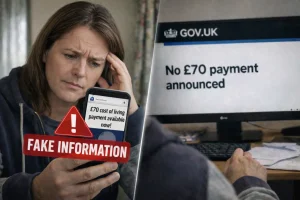
Social media is often where people first hear about government support. However, it’s also where details get lost or distorted. The £70 payment rumour is a perfect example.
Information may be:
- Outdated (referring to a scheme that ended last year)
- Taken out of context (a council-specific scheme being shared nationally)
- Missing crucial details (who qualifies, where it applies)
While it’s useful to stay connected through local community groups, I recommend that readers verify any financial claim using trusted sources, such as:
- GOV.UK
- Your local council website
- National news outlets with a record of accuracy
Final Thoughts
To be completely clear, there is no national £70 cost of living payment in the UK. The figure exists because some councils have chosen to offer support at that level, often for children or specific households.
Understanding the difference between national and local support makes all the difference. While the £70 payment isn’t a government‑wide scheme, real help is still available, just not in the way many posts suggest.
Frequently Asked Questions
Is the £70 cost of living payment a government scheme?
No, it is not a national government scheme. Any £70 payments come from local councils.
Why do some families receive £70 per child?
This usually comes from local Household Support Fund schemes run by councils.
Have national cost-of-living payments ended?
Yes, the national payments that ran between 2022 and 2024 have ended.
Can pensioners receive local cost-of-living support?
Yes, depending on the council and eligibility criteria.
Do I need to apply for these payments?
In most cases, yes. Local council payments often require an application.
Where can I find accurate information?
Your local council website and official GOV.UK guidance are the most reliable sources.
Will there be more national payments in future?
At present, the government has said there are no plans for further national cost of living payments.

Leave a Reply