

A growing number of UK cars are being written off by high road tax, especially as VED rates rise to £735 and above. Owners are scrapping or exporting vehicles not because they’re broken, but because taxing them has become more expensive than they’re worth.
Key points covered in this blog:
- VED changes in 2026 will raise tax on high-emission cars to £760–£790
- Common family cars like the Ford Mondeo and VW Golf R32 are impacted
- Some owners choose to export or scrap their vehicles
- Keeping an older car may be more eco-friendly than buying new
- Government policies aim to push cleaner vehicle ownership
- Cost comparisons and model-specific tax rates included
Why Are So Many UK Cars Being Written Off by High Road Tax?
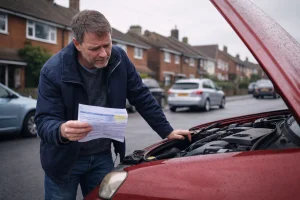
For thousands of car owners across the UK, the annual cost of Vehicle Excise Duty (VED) is becoming the final nail in the coffin for vehicles that are otherwise perfectly functional.
The VED system, based largely on carbon emissions, has become a silent killer for many older vehicles, especially those with mid-to-large engines.
Owners are finding themselves in an impossible situation: either pay hundreds of pounds a year in tax or scrap the car even when it’s still running well.
As of now, cars emitting more than 225g/km of CO2 are placed in the top VED bands. With annual rates reaching £735 and increasing to £760 from April 2026, the financial burden is leading people to walk away from cars that still have life left in them.
There’s a cultural shift taking place too. Vehicles that were once considered sensible or even aspirational purchases are being treated as liabilities.
This change affects not only owners but also independent dealers, mechanics, and classic car enthusiasts.
How the £735 Tax Band is Affecting Everyday Drivers?
Many of the vehicles being hit by the high VED band are not high-performance supercars. They’re common vehicles people purchased for everyday needs: family cars, practical estates, or versatile hatchbacks.
These cars may still meet the needs of their owners, but the cost of keeping them taxed and legal has become too steep.
Owners are increasingly making difficult decisions:
- Scrapping their cars early even if they are still in good working condition
- Exporting them to countries with lower tax burdens
- Holding onto vehicles without renewing the tax, which risks legal penalties
“I bought my Ford Mondeo V6 as a practical car for long-distance travel and occasional family trips,” one owner told me. “I expected to keep it for another five years, but with the tax now pushing £760, it’s going to cost more than the car’s worth in just a couple of years.”
The perception of value has shifted. VED is no longer just a fee; it’s become a deciding factor in whether a car lives or dies.
What Are the New Car Tax Rates Coming in 2026?

As confirmed by the Government, the upcoming VED changes scheduled for April 2026 will impact a vast range of vehicles, particularly those registered between March 2001 and April 2017.
These changes are part of broader efforts to encourage more eco-friendly motoring and discourage ownership of high-emission vehicles.
Here is a breakdown of how the car tax bands are changing:
Current vs Upcoming VED Bands (April 2026)
| CO2 Emissions (g/km) | Current Annual Rate | 2026-2027 Annual Rate |
|---|---|---|
| Up to 100 | £20 | £20 |
| 101 – 110 | £20 | £20 |
| 111 – 120 | £35 | £35 |
| 121 – 130 | £165 | £170 |
| 131 – 140 | £195 | £200 |
| 141 – 150 | £215 | £225 |
| 151 – 165 | £265 | £275 |
| 166 – 175 | £315 | £325 |
| 176 – 185 | £345 | £360 |
| 186 – 200 | £395 | £410 |
| 201 – 225 | £430 | £445 |
| 226 – 255 | £735 | £760 |
| Over 255 | £750 | £790 |
As the table shows, the largest increases are concentrated on higher-emission vehicles, specifically those over 201g/km. These rates are only part of the problem, though. The first-year rate for brand-new high-emission cars can exceed £5,000, especially for those over 255g/km.
This approach is designed to drive behavioural change, but the consequence is that many older, affordable vehicles are no longer economically viable for average households.
Which Popular Car Models Are Caught in the £735+ VED Trap?
Let’s put names to the numbers. Here’s a list of specific vehicle models that fall into the high VED bracket and are now considered financially nonviable by many UK motorists. While some might expect luxury or niche cars, the reality includes popular family and performance models.
10 Common Models in the VED Trap
| Model | Annual Road Tax |
|---|---|
| Saab 900 Convertible | £735 |
| Land Rover Freelander 2 i6 | £760 |
| Audi TT 1.8T | £735 |
| Ford Galaxy 2.3 | £735 |
| Jaguar X-Type 2.0 Auto | £735 |
| Subaru Forester 2.5 XT | £735 |
| Volkswagen Golf R32 | £760 |
| Chrysler PT Cruiser | £735 |
| Vauxhall Zafira VXR | £735 |
| Ford Mondeo V6 | £735 |
These models once had solid resale value. Now, many dealers won’t touch them, and private sales are becoming increasingly rare. As one independent dealer told me,
“We often get excited when a Saab 900 comes in. But the excitement fades when you remember the buyer will have to fork out £735 each year. It’s almost impossible to move those cars now.”
Why Is It Cheaper to Scrap or Export a Car Than Pay the Tax?

The harsh truth is that annual VED is now high enough that, within just a couple of years, it can eclipse the car’s resale value. Let’s say a vehicle is worth £1,200 and the VED is £735 annually. In two years, you’ve spent more in tax than the car is worth, without even factoring in insurance, maintenance, or fuel.
Here’s a simple breakdown:
Cost Comparison of Keeping vs Scrapping a High-VED Car
| Cost Element | Year 1 | Year 2 | Total |
|---|---|---|---|
| Road Tax (VED) | £735 | £735 | £1,470 |
| Insurance (estimate) | £500 | £500 | £1,000 |
| Maintenance (average) | £300 | £300 | £600 |
| Total | £3,070 | ||
| Resale Value | £1,200 |
Owners are aware of these figures and are increasingly turning to export markets where these tax rules don’t apply. Enthusiasts in Eastern Europe and certain parts of Asia are particularly interested in importing these vehicles, often for collector or performance use.
Is It More Environmentally Friendly to Keep an Older Car?
The environmental argument is often misunderstood. While newer vehicles, especially EVs, are touted as more sustainable, their production involves substantial carbon output. Manufacturing a new vehicle can emit up to 17 tonnes of CO2e, depending on materials, logistics, and energy sources.
Environmental Impact Comparison
| Vehicle Type | Manufacturing Emissions | Annual Operating Emissions (average) |
|---|---|---|
| New Petrol Car | ~17 tonnes CO2e | 2.0–2.5 tonnes CO2e/year |
| New EV | ~12–15 tonnes CO2e | 0 (direct) |
| Existing Older Car | 0 (already built) | 2.5–3 tonnes CO2e/year |
The key argument made by environmental researchers like Mike Berners-Lee is that longevity reduces per-mile emissions.
In his words,
“If you make a car last to 200,000 miles rather than 100,000, then the emissions for each mile the car does in its lifetime may drop by as much as 50%.”
This doesn’t mean keeping every old car is environmentally better. However, if the car runs efficiently and isn’t a heavy polluter, it often makes more ecological sense to maintain it rather than replace it prematurely.
How Are the 2026 Tax Changes Impacting Normal Car Owners?

The tax policy isn’t just affecting collectors or luxury car owners, it’s hitting ordinary drivers the hardest. Many cars from the 2001 to 2010 era fall into mid-to-high VED bands, and their owners are largely working-class individuals who bought these vehicles for reliability and affordability.
Models like the Vauxhall Zafira VXR or the Ford Galaxy were once go-to family cars. Today, their VED costs are almost punitive.
“I used to recommend cars like the Mondeo or Galaxy to friends looking for space and comfort,” I wrote recently in my motoring column. “Now I have to warn them about the road tax bill first.”
One transport official I interviewed for this article stated clearly,
“The emissions-based tax model is designed to push long-term behavioural change. We realise it’s not perfect, but the intent is to phase out inefficient vehicles gradually.”
There’s a growing call for some kind of transitional relief or rebate system for owners of affected vehicles. Whether or not the Government listens is still up for debate.
Can You Avoid the High Road Tax or Reduce Your Bill?
For those worried about getting caught in the high-VED trap, here are some of the practical options:
- Purchase a car registered before March 2001, which is taxed based on engine size, not emissions.
- Opt for a lower-emission vehicle (under 130g/km CO2) to stay in lower tax brackets.
- Consider a full-electric vehicle which currently remains exempt from VED.
- Monitor for classic status: cars over 40 years old are VED exempt if registered as historic vehicles.
It’s also advisable to use gov.uk or car tax checker tools to assess a car’s tax band before purchase.
What’s the Future of High-Emission Vehicles in the UK?
The UK Government has committed to ending the sale of new petrol and diesel cars by 2035, with increasing incentives and policies targeting the transition. What we are seeing now with the 2026 tax bands is just a preview of a more aggressive push to reduce road-based emissions.
Many older, high-emission vehicles may:
- Be scrapped early despite remaining usable
- Be exported to countries with different tax systems
- Eventually gain classic status and be preserved by enthusiasts
It’s clear that vehicles once seen as common and reliable are becoming rarer due to financial pressures. This raises deeper questions about access, affordability, and the environmental cost of transitioning to new technologies.
Conclusion
Increased road tax is forcing many UK drivers to part with vehicles they still value, not due to mechanical issues, but because the tax burden outweighs the car’s worth. As we approach 2026, the VED changes are reshaping how people view car ownership, especially for older, higher-emission models.
Balancing environmental responsibility with affordability is key. Until then, many beloved cars will continue to be written off by high road tax scrapped, sold abroad, or left idle on driveways.
Frequently Asked Questions
What is the VED trap in 2026?
The VED trap refers to the situation where the annual tax on high-emission vehicles becomes so expensive it exceeds the car’s value, making them uneconomical to own.
Are diesel or petrol cars more affected by the new VED rates?
Both are affected if they emit high levels of CO2, though older petrol models tend to dominate the highest bands due to engine sizes.
Will classic car tax exemptions apply to these models?
Yes, once a car reaches 40 years old, it may qualify for VED exemption, though that’s still over a decade away for most 2000s-era vehicles.
How can I check my car’s CO2 emissions?
You can check your car’s CO2 band on the official DVLA website or your V5C document.
Are electric cars exempt from road tax in 2026?
As of now, electric vehicles remain exempt, but the Government may introduce a road usage charge in future years.
What is Band K for car tax?
Band K capped the maximum tax rate for cars registered between March 2001 and March 2006, but it’s no longer available for newer vehicles.
Can you challenge the VED charges?
No, VED is set by law and based on your vehicle’s registration date and CO2 emissions. It cannot be appealed.

Leave a Reply