
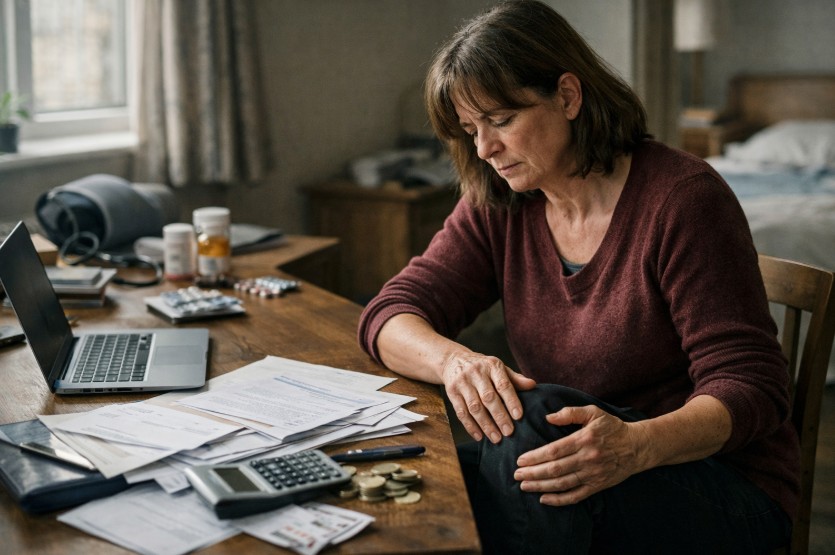
Arthritis forces decisions that rarely feel fair. Treatment is weighed against work and income, and how much uncertainty a person can absorb. This is not about chasing relief or new ideas.
It is about making sustainable choices that hold inside the financial and medical systems people actually live with.
Living with arthritis rarely stays confined to the body. Pain has a way of bleeding into work, play, sleep, money, and everyday decisions. When joints stop cooperating, hours get shorter, and days get longer.
Plans change, and costs start stacking up in persistent ways. For many people, the pressure is not dramatic, but constant. That pressure shapes how treatment options are weighed, especially when household budgets already feel tight.
How Do People With Arthritis Make Sustainable Treatment Decisions?
Arthritis and the Cost of Staying Functional

Arthritis does not arrive as a single event. It settles in and stays. Some days are manageable, others less so, but the pattern is familiar to anyone who relies on their body to earn a living.
When pain becomes regular, people start looking beyond basic painkillers and physio, not out of curiosity but necessity.
That is where conversations around cannabis for arthritis begin to surface. The focus is rarely about breakthroughs or promises. It is about staying mobile enough to work, sleep, and get through the week.
In a cost-of-living climate where every decision carries weight, treatment choices become practical calculations rather than hopeful experiments.
Pain Is Treated Conservatively for a Reason
Pain is not taken lightly in UK medicine, especially when it sticks around a while. Long-term pain is assessed slowly and adjusted often because the body reacts differently once discomfort becomes part of daily life.
That caution shows up in how treatment options are discussed, particularly when standard approaches stop giving consistent relief.
In pain medicine, cannabinoids are approached as part of that considered conversation, not as a shortcut or a promise.
Clinical guidance from UK pain specialists reflects this measured stance. The emphasis stays on suitability, follow-up and balance.
For arthritis sufferers, that framing matters less in theory and more in practice. Pain control is not about chasing relief. It is about staying functional enough to keep life moving.
Choosing a Clinic Stops Being Abstract

Once pain becomes part of daily life, clinic choice stops being theoretical. People are no longer comparing brochures or promises.
They are asking whether appointments run on time, whether follow-ups happen and whether communication stays clear once treatment starts.
Valid questions enters the mind. Is medical cannabis right for me? Is cb1 medical good? What form factor will work for me?
These answers are important, because for someone managing arthritis alongside work limits and rising costs, informed options carry more weight than speculation.
A clinic that answers messages, explains changes and keeps reviews predictable becomes easier to live with. When money and energy are both limited, uncertainty is the last thing anyone wants to budget for.
Access Comes With Limits, Not Guarantees
Medical cannabis has clear boundaries as to where it sits inside the UK healthcare system. It is prescribed selectively and reviewed regularly, and is definitely not positioned as a first stop for pain management. That framework shapes expectations early on and filters who moves forward and who does not.
For people living with arthritis, those limits are not abstract. They influence timing, cost, and how much effort goes into each appointment. When access is restricted and waiting lists stretch, decisions feel heavier. Treatment is weighed against household spending, transport and time away from work.
In that environment, patience wears thin. People are not chasing options. They are trying to make informed choices that fit inside an already tight routine.
Financial Pressure Shapes Health Decisions

Living with a long-term condition often means juggling treatment alongside bills that do not pause for appointments or flare-ups. When income drops or work becomes harder to sustain, the safety net starts to play a bigger role.
Support systems like Universal Credit can become part of everyday planning, not as a fallback but as a necessity.
That financial backdrop changes how healthcare choices are made. Cost is no longer an abstract concern. It sits next to rent, food and heating. Pain treatment decisions are filtered through affordability and stability.
The question is not what sounds promising. It is what can realistically be carried month to month without tipping everything else out of balance.
Living With Pain Inside Real-World Limits
Arthritis does not arrive with a clean boundary around it. It seeps into everything from work and money to the small decisions that fill an ordinary week.
Pain management becomes less about finding answers and more about fitting care into life as it actually exists. Budgets tighten. Energy dips. Choices narrow.
In that space, people are not looking for perfect solutions. They are trying to find a way to maintain equilibrium. When treatment decisions are made, clarity and consistency count for more than promises.
The goal is simple enough, keep moving. Keep working where possible. Keep life from shrinking any further than it already has. And meet pain with grace, dignity, and poise.

Leave a Reply