
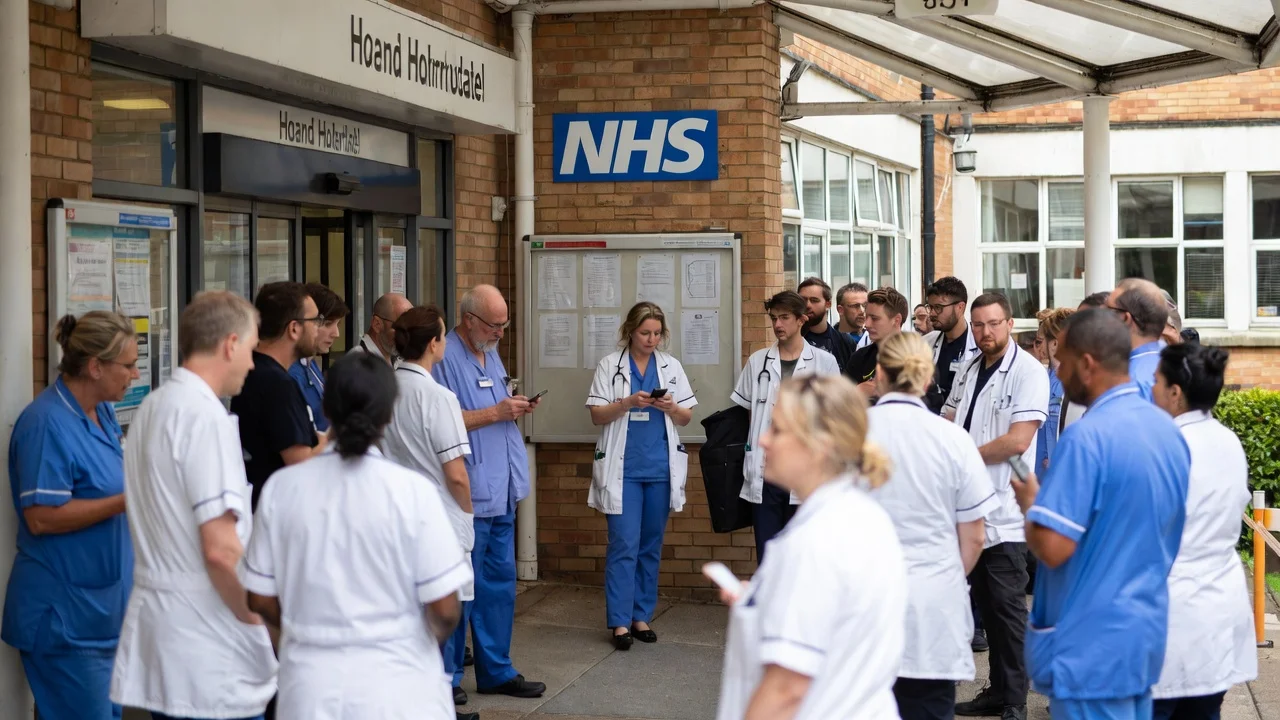
As of now, there are no resident doctor strikes planned in England for 2026. However, the British Medical Association (BMA) holds a valid strike mandate until 1 August 2026, meaning strike action can still be called with appropriate notice.
Here’s what you need to know:
- The BMA can legally call strikes with 10–14 days’ notice
- Three five-day strikes took place in 2025
- Talks between the BMA and the government are ongoing
- Resident doctor pay has increased by 28.9% over three years
- New legislation prioritises UK-trained doctors for speciality training
- The NHS faces pressure from both workforce gaps and hospital strain
- Future strikes could still affect patient services if negotiations fail
This article explains everything in detail.
Are There Any Doctors’ Strikes Planned in 2026?

Currently, there are no confirmed dates for any resident doctor strikes in England in 2026. The British Medical Association (BMA) Resident Doctors Committee does, however, hold a valid strike mandate that runs until 1 August 2026. This allows them to legally organise future strike action should negotiations with the government reach another impasse.
The absence of immediate strike plans does not mean the dispute is over. Instead, it signals that talks are still ongoing, and strike action remains a real possibility.
To understand the context of this, we can look at recent strike activity. Resident doctors undertook three five-day strikes in 2025, which significantly affected hospital staffing and patient appointment scheduling across the NHS in England.
Summary of 2025 Resident Doctor Strikes
| Strike Period | Duration | Impact |
|---|---|---|
| 25–30 July 2025 | 5 Days | Major disruption to outpatient care |
| 14–19 October 2025 | 5 Days | Reduced staff in A&E and surgeries |
| 17–22 December 2025 | 5 Days | Pre-Christmas backlog in services |
Although no strike dates are currently announced, the BMA is not obligated to wait until August to initiate further strikes. As long as the legal notice requirements are followed, strikes could resume with as little as 10 days’ warning later this year.
What Is the BMA’s Mandate for Resident Doctor Strikes?
The mandate for strike action was secured through a ballot of BMA members. This gave the Resident Doctors Committee the legal authority to organise strike action during a six-month period, ending on 1 August 2026.
What’s interesting to note is the gradual decline in turnout and support for strike action over the last few years. This could impact how aggressively the BMA chooses to exercise this mandate.
Strike Ballot Turnout and Support Rates
| Year | Voter Turnout | Strike Support Among Members |
|---|---|---|
| January–February 2023 | 77.5% | High |
| June–August 2023 | 71.3% | High |
| 2024 | 61.9% | Moderate |
| 2025 | 55.3% | Moderate |
| Latest Ballot (2026) | 52.5% | One-third of all resident doctors |
The voting trend shows a declining level of engagement and support. This could be due to negotiation fatigue, changing public perception, or improving pay conditions. Regardless, the mandate remains legally valid.
Legal Notice Requirements for 2026
| Date Range | Required Notice for Strike Action |
|---|---|
| Before 18 February 2026 | Minimum 14 Days |
| After 18 February 2026 | Minimum 10 Days |
These legal notice periods were updated under the Employment Rights Act 2025, which shortened the time needed to notify the NHS and the public about planned industrial actions.
What Are the Government and BMA Doing to Avoid More Strikes?
Negotiations have continued into 2026 with renewed effort from both the BMA and the Department of Health and Social Care. There appears to be a shared understanding that repeated strike action is unsustainable for NHS workers and patients alike.
A government official involved in the current talks shared their view on the ongoing efforts:
“We’ve had constructive conversations with the BMA since the start of the year. We are working not just to end the cycle of strikes, but to deliver better long-term outcomes for doctors in training. Alongside pay adjustments, we’re focusing heavily on reforming speciality training access.”
As someone who has followed this topic closely, I’ve seen how the strike narrative has evolved. In previous years, the government appeared dismissive. Now, the language has shifted towards compromise.
“I’ve noticed a real change in tone this year. There’s more acknowledgement that workforce planning mistakes from previous years created the pressure-cooker environment we see today. If these talks can address training pathways and burnout together, we might be seeing the start of meaningful progress.”
Major Government Responses to Strike Concerns
| Issue Addressed | Action Taken |
|---|---|
| Doctor Pay | 28.9% increase over 3 years, 5.4% in 2025 |
| Specialty Training Competition | Medical Training (Prioritisation) Bill introduced |
| NHS Workforce Bottlenecks | Reforms in placement and training allocations |
| Workforce Planning Legislation | Priority for UK graduates and NHS-experienced doctors |
This multi-pronged response is designed to demonstrate both a short-term and long-term commitment to addressing the underlying issues fuelling resident doctor unrest.
What Is Causing Tension Between Resident Doctors and the NHS?

The causes of industrial action are not just about pay. Resident doctors have repeatedly cited concerns about progression opportunities, competition for training placements, and overall working conditions.
Key Factors Behind the Dispute
- Pay progression: While salaries have risen, doctors argue that inflation and work intensity have outpaced real-terms pay growth
- Specialty training bottlenecks: Increased numbers of graduates have led to more competition for fewer positions
- Workforce burnout: High patient-to-doctor ratios and long hours have resulted in unsustainable working environments
- Planning failures: Legacy decisions from earlier in the decade led to a surge in medical graduates without expanding training slots
These challenges combine to create frustration and distrust between junior medical professionals and government health policymakers.
How Much Do Resident Doctors in the UK Earn?
Pay for resident doctors varies widely depending on the stage of training, location, and hours worked. Additional compensation is awarded for overnight shifts, weekends, and other unsocial hours.
UK Resident Doctor Pay Overview
| Grade / Position | Base Salary Range | Typical Total with Add-ons |
|---|---|---|
| Foundation Year 1 (FY1) | £32,000 – £35,000 | £48,000 – £50,000 |
| Foundation Year 2 (FY2) | £38,000 – £42,000 | £54,000 – £58,000 |
| Senior Resident Doctor | £50,000 – £60,000 | £90,000 – £97,000 |
According to recent government estimates, the average earnings for a first-year resident doctor are already higher than the UK’s national average full-time wage. However, many doctors point out that these figures include unsociable hours and overtime that may not be consistently available.
How Is the Government Reforming Speciality Training Access?
One of the most significant issues contributing to repeated strike ballots is the growing difficulty in securing specialty training places. Despite significant investment in medical education, the system has not adequately expanded training positions.
To address this, the government introduced the Medical Training (Prioritisation) Bill in January 2026. If passed, it will become law in time to influence the 2026 training intake cycle.
Key Features of the Medical Training (Prioritisation) Bill
| Clause | Description |
|---|---|
| Priority for UK Graduates | Preference in specialty placements for UK-trained doctors |
| NHS Experience Consideration | International doctors with NHS experience also prioritised |
| Fairness Framework | No exclusion of international applicants, only prioritisation |
| Parliamentary Progress | Currently under review, expected to pass mid-2026 |
The government claims this bill aims to maximise return on investment in UK medical education and stabilise workforce numbers. NHS England has also made changes to this year’s specialty training application to reduce unnecessary competition.
What Role Do International Medical Graduates Play in the NHS?

International medical graduates (IMGs) have long been vital to the NHS. While the new legislation prioritises UK-trained doctors and those with NHS experience, it does not exclude foreign applicants.
The government has been keen to clarify its position:
“Internationally trained doctors bring immense value to our healthcare system. This new prioritisation is not about exclusion. It’s about ensuring our investment in UK medical education leads to real opportunities for graduates.”
This approach attempts to balance political and economic realities with the NHS’s continued need for a global workforce. IMGs who have worked in NHS hospitals or who complete training locally will still be eligible for priority.
Contribution of International Medical Graduates
| Metric | Estimated Value |
|---|---|
| % of NHS Doctors (IMGs) | 38% |
| Top Source Countries | India, Nigeria, Pakistan |
| NHS Training Contribution | Essential in rural hospitals |
| Eligibility for Prioritisation | With NHS experience only |
This strategy allows the NHS to maintain diversity while ensuring domestic medical graduates are not overlooked in career development opportunities.
What Should Patients Expect During Any Future Strike Action?
Patient care is a core concern in any period of industrial unrest. During past strikes, NHS Trusts implemented emergency frameworks to preserve life-saving and urgent services while rescheduling or delaying non-critical care.
If the BMA calls a new strike before August 2026, patients can expect:
- Advance notifications via NHS websites and media
- Delay or cancellation of elective surgeries and outpatient visits
- Continued operation of emergency and maternity services
- GP availability may vary depending on the Trust area
The NHS typically prioritises the following services during strike action:
- Cancer treatments
- Accident and Emergency (A&E)
- Dialysis and transplant support
- Urgent paediatric care
Each Trust follows its own contingency protocol, but communication with patients has generally improved since the first strikes in early 2023.
How Do Resident Doctor Strikes Affect NHS Staff and Hospital Operations?
While much attention is placed on patient care during strike action, another critical impact occurs internally within NHS hospitals. When resident doctors walk out, it places enormous pressure on consultants, nurses, and administrative staff to maintain continuity of care.
In many cases, consultant doctors must cover junior-level shifts, often leading to extended hours and burnout across senior teams. Nurses and allied health professionals also find themselves doing more cross-functional work than usual, taking on administrative and monitoring duties typically handled by resident doctors.
Operational Impacts Within NHS Hospitals During Strikes
| Area Affected | Typical Operational Response |
|---|---|
| Inpatient Wards | Consultant-led rounds, reduced training time |
| Outpatient Services | Postponed or cancelled appointments |
| Theatre and Surgery | Priority-only operations (e.g. cancer, urgent trauma) |
| A&E Departments | Longer waiting times, shift redistribution among staff |
| Staff Mental Health | Increase in stress and fatigue across permanent teams |
Although Trusts work hard to implement strike contingency plans, hospital morale can suffer during these periods. Staff who remain on duty often experience higher levels of stress and resentment, especially when strike periods are frequent or drawn out.
The longer-term consequence of repeated strikes is the interruption of mentorship and training cycles. Senior doctors are pulled away from teaching responsibilities to fill service gaps, meaning junior colleagues miss crucial development opportunities even outside the strike window.
What Could Future Strike Action Mean for NHS Reform?

Resident doctor strikes have become more than just labour disputes. In many ways, they are acting as a catalyst for long-overdue NHS reform, particularly in areas like workforce planning, education policy, and recruitment strategies.
The repeated strikes since 2023 have forced both the Department of Health and NHS England to confront issues that had been delayed for years, such as:
- Fragmented training pathways
- Over-reliance on overseas staff without structured support
- Delayed retirement and lack of transition planning for senior doctors
- Stagnant salaries for critical early-career roles
Government leaders now increasingly refer to strike resolution in the same breath as systemic healthcare reform.
“The strikes have brought serious attention to the fragility in our medical career pathways. If we can come to an agreement with the BMA that includes structural changes, we may not just prevent future strikes but also secure a stronger NHS workforce for the next generation,” a government health planning adviser explained.
As reforms like the Medical Training (Prioritisation) Bill and the 10-Year Health Plan progress through Parliament and NHS governance, many believe the doctor strike disputes could serve as a turning point in how the UK builds and retains its medical workforce.
Conclusion
While there are no planned resident doctor strikes in the UK for 2026, the situation remains fluid. With a valid BMA mandate in place and ongoing negotiations underway, further industrial action cannot be ruled out. The government’s response through pay adjustments and training reforms shows promise, but sustained commitment is essential. As discussions continue, both healthcare professionals and patients will be watching closely, hopeful that lasting solutions can be achieved without further disruption to NHS services.
FAQs – Resident Doctors Strike 2026
Why are UK resident doctors considering further strike action?
Resident doctors argue that pay has not kept up with inflation, and the competition for training posts has become unsustainable. Their strikes aim to highlight these issues.
What happens if the BMA calls another strike in 2026?
The BMA must give notice before any industrial action. Once notified, the NHS will activate emergency coverage plans to protect urgent services.
Have past strikes in 2025 impacted NHS patient care?
Yes, non-urgent procedures and outpatient services faced delays. However, trusts worked to maintain critical services like cancer care and A&E.
How will new laws affect NHS industrial action notices?
The Employment Rights Act 2025 reduced the minimum strike notice period from 14 to 10 days, offering more flexibility to unions while keeping public safety in mind.
Is the Medical Training (Prioritisation) Bill already in effect?
Not yet. The Bill was introduced in January 2026 and is currently progressing through Parliament. It’s expected to be in place by this year’s application cycle.
Can international doctors still access NHS training pathways?
Yes, but UK graduates and experienced NHS staff will be prioritised. International doctors without prior NHS work are still welcome to apply but won’t receive priority placement.
Will consultant and junior doctors strike again in 2026?
So far, there are no announcements of consultant or junior doctor strikes. The current focus is on resident doctors, but other groups may act depending on contract outcomes.

Leave a Reply