
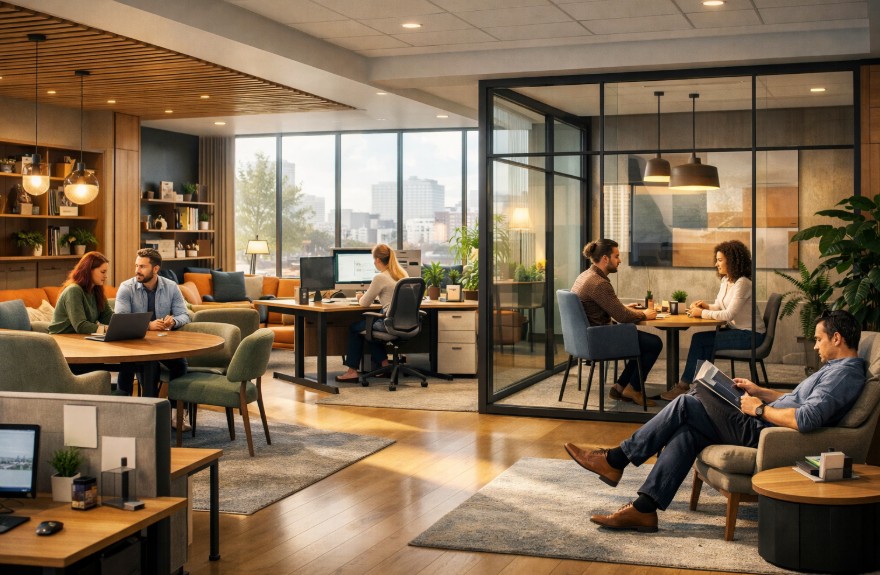
A great office design does far more than look good. It supports productivity, reflects company culture, and creates an environment where people feel comfortable spending a large part of their day.
Whether you’re designing a corporate office, a small studio, or a hybrid workspace, the fundamentals remain the same the space needs to work for the people using it.
Good office design is about balance. It blends functionality with comfort, efficiency with personality, and structure with flexibility.
Below are the key elements every well-designed workspace should include to truly support both employees and the business.
What Are the Most Important Elements of a Modern Office Design?
A Layout That Supports How People Work
The starting point for any successful office design is layout. There’s no one-size-fits-all approach, because different teams work in different ways. Some need quiet focus areas, while others thrive on collaboration.
A great layout offers a mix of open spaces and private zones. Open areas encourage communication and teamwork, while enclosed rooms or quiet corners support focused tasks and confidential conversations.
Clear pathways and logical zoning help the office feel intuitive and reduce unnecessary distractions.
Comfortable and Practical Furniture
Furniture plays a huge role in how an office functions day to day. Ergonomic seating, well-sized desks, and flexible furniture options all contribute to comfort and productivity.
Practicality matters just as much as comfort. In smaller offices or multipurpose spaces, adaptable furniture like a foldable desk can be especially useful.
It allows rooms to be reconfigured quickly for meetings, collaborative sessions, or solo work, making the most of limited space without compromising usability.
Lighting That Works With the Space
Lighting has a significant impact on mood, energy levels, and concentration. The best office designs maximise natural light wherever possible, positioning desks near windows and using glass partitions to allow light to flow through the space.
Artificial lighting should be layered. Overhead lighting provides general illumination, while task lighting supports focused work.
Warmer lighting in breakout areas can help create a more relaxed atmosphere, encouraging rest and informal conversation.
Thoughtful Use of Colour and Materials
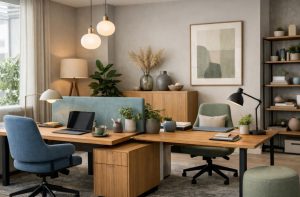
Colour influences how a space feels and how people behave within it. Neutral tones often work well as a base, creating a calm backdrop that won’t distract. Accent colours can then be used to reflect brand identity or energise specific areas.
Materials also matter. Natural finishes such as wood or fabric add warmth and reduce the clinical feel that offices can sometimes have. Combining textures helps create visual interest while still maintaining a professional look.
Acoustic Comfort and Noise Control
Noise is one of the most common complaints in modern offices. A flexible workspace takes acoustics seriously, especially in open-plan environments.
Acoustic panels, soft furnishings, carpets, and even plants can help absorb sound and reduce echo.
Creating designated quiet zones or phone booths allows employees to concentrate or take calls without disruption, improving overall productivity and wellbeing.
Storage That Reduces Clutter
Cluttered spaces can quickly feel stressful and unprofessional. Smart storage solutions keep essentials accessible while maintaining a clean, organised appearance.
Built-in storage, shelving, and concealed cupboards help prevent desks from becoming overloaded. When storage is easy to use and well positioned, it supports better habits and keeps the workspace feeling calm and efficient.
Flexibility for Changing Needs

Modern workplaces are constantly evolving. Teams grow, roles change, and working patterns shift. A great office design allows for flexibility rather than locking the business into a rigid layout.
Modular furniture, movable partitions, and multi-use spaces make it easier to adapt without costly redesigns. Flexible design ensures the office can support the business both now and in the future.
A Space That Reflects Company Culture
Finally, a great office should feel like a true reflection of the company behind it. Design choices communicate values, whether that’s innovation, professionalism, creativity, or wellbeing.
Artwork, branding elements, and carefully chosen décor help create a sense of identity and belonging. When employees feel connected to their environment, it can positively impact morale and engagement.
Bringing It All Together
Great office design isn’t about following trends or copying what other businesses are doing. It’s about understanding how people work and creating a space that supports them in practical, thoughtful ways.
By focusing on layout, comfort, lighting, flexibility, and culture, you can create a workspace that not only looks good but genuinely works well.
When design supports people, productivity, wellbeing, and business success naturally follow.

Leave a Reply