
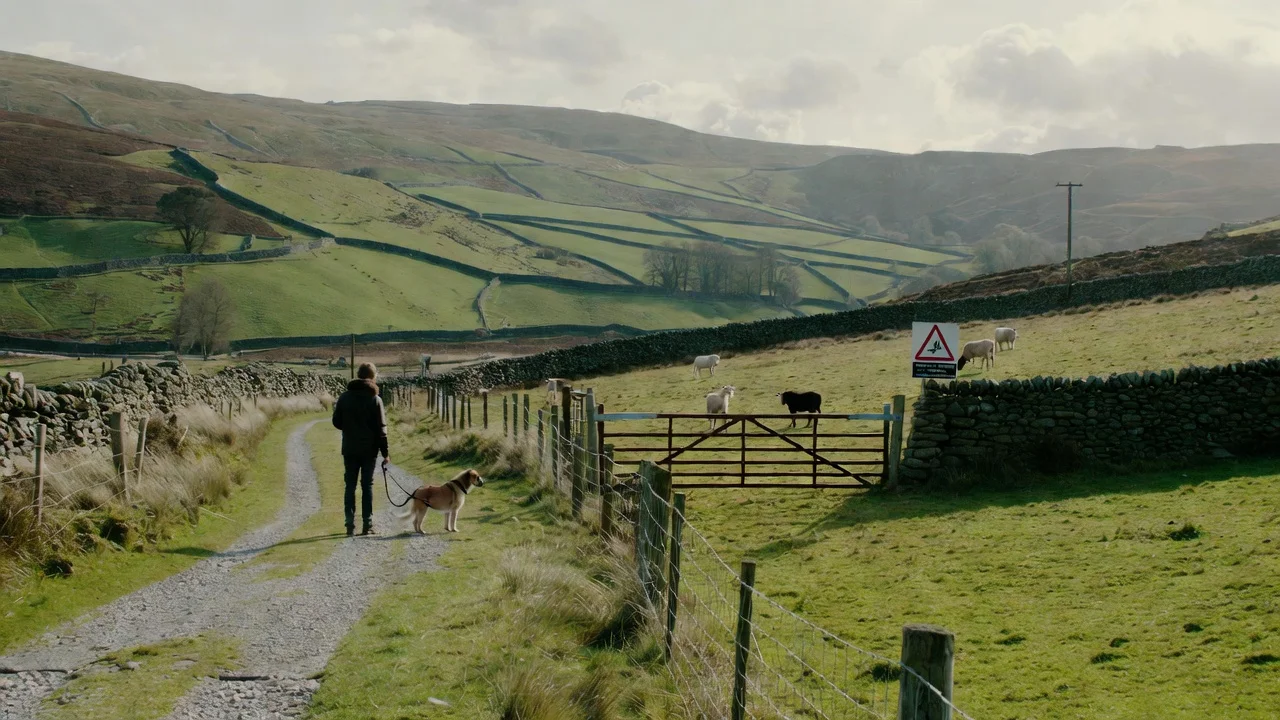
From 18 March 2025, dog walkers in Wales could face unlimited fines under the new Dogs (Protection of Livestock) (Amendment) Act 2025. This updated law strengthens penalties and expands police powers to protect livestock from worrying, even if a dog doesn’t make physical contact.
Key points from the new law include:
- Covers roads, footpaths, and open access land, not just farms
- Distinguishes between worrying and attacking livestock
- Now includes camelids like alpacas and llamas
- Allows police to seize dogs, enter property, and take forensic samples
- Owners may be exempt if the dog was under unauthorised control
- Unlimited fines replace the previous £1,000 cap
- Local councils can issue on-the-spot penalties in restricted areas
This change affects all dog walkers using public and rural paths across Wales.
Why Are Dog Walking Fines Increasing in Wales?
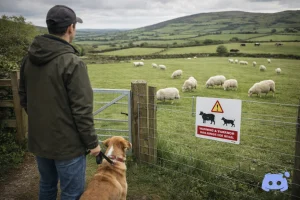
The sharp rise in dog walking fines in Wales is being driven by the increasing number of incidents involving dogs worrying livestock, which includes chasing, attacking or causing distress to animals.
These incidents have been on the rise across rural communities, especially with more people accessing the countryside since the pandemic and more dogs being walked on public rights of way that intersect with grazing lands.
The Dogs (Protection of Livestock) (Amendment) Act 2025, set to come into effect on March 18, 2025, is the result of years of lobbying by farmers and rural authorities who demanded stronger legal measures to deter irresponsible dog ownership.
The previous legislation, dating back to 1953, has become inadequate in dealing with modern challenges, including increased footfall in rural areas and higher livestock densities.
Statistics from National Farmers Union (NFU) Wales show:
| Year | Reported Livestock Incidents | Estimated Cost to Farmers |
|---|---|---|
| 2020 | 700+ | £1.2 million |
| 2022 | 900+ | £1.6 million |
| 2023 | 1100+ | £1.9 million |
The increase in reports is attributed not just to a higher number of cases but also better awareness among farmers and more consistent police responses in recent years.
As someone who regularly walks my springer spaniel in Pembrokeshire, I have witnessed the anxiety that both dog owners and farmers carry. I once saw a sheep bolt across a field because of an off-leash terrier. That moment highlighted the real consequences of carelessness, even if unintentional.
In my view, the law is not an attack on dog lovers but a much-needed tool to maintain harmony between recreational countryside users and working farms.
What Does the New Dog Law in Wales Actually Say?
The Dogs (Protection of Livestock) (Amendment) Act 2025 is designed to enhance enforcement, clarify terminology, and give stronger investigatory powers to authorities. While it builds on the 1953 act, this new version is tailored for modern realities.
The core aim of the updated legislation is to give police and courts more authority to act before livestock worrying becomes widespread and to distinguish between different types of incidents.
Here’s a breakdown of what’s new:
| Legal Element | 1953 Act | 2025 Amendment Act |
|---|---|---|
| Scope of Incident | On enclosed farmland | Includes public roads, rights of way, and common land |
| Definition of Offence | All under “worrying” | Attacking” and “worrying” treated as distinct behaviours |
| Animals Covered | Sheep, cattle, pigs | Now includes alpacas, llamas, emus and other camelids |
| Dog Owner Liability | Owner always held liable | Owner exempt if dog was under another’s control unlawfully |
| Penalties | Fine up to £1,000 | Unlimited fine and compensation powers |
Clarified Legal Definitions
One of the most important changes is the legal clarification between two actions:
- Worrying livestock: Includes chasing, being loose among animals, or disturbing them to the point of causing stress or injury.
- Attacking livestock: Physical contact or biting, leading to injury or death.
This separation allows law enforcement and courts to better assess the severity of an incident and apply more appropriate penalties.
Extension to More Livestock
A growing number of farms in Wales now keep camelids, such as alpacas and llamas, often for tourism or wool production. These animals, along with ostriches and emus, are now protected under the new law.
Police can now investigate and prosecute incidents where dogs interact dangerously with this broader range of livestock.
How Could You Be Fined Under the New Dog Walking Rules?
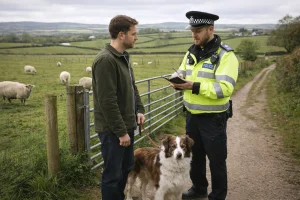
Penalties for violating the updated law are severe and allow for broader interpretation by police and magistrates. Dog walkers in Wales can now face unlimited fines, especially if they are found to have neglected control responsibilities.
Previously, the law capped fines at £1,000, which many in the farming community considered insufficient. With this change, the courts now have the flexibility to impose harsher financial consequences based on the seriousness of the offence.
Here is a comparison of penalties before and after the new law:
| Scenario | 1953 Law Penalty | 2025 Law Penalty |
|---|---|---|
| Dog chases sheep but causes no injury | Warning or small fine | Possible court case and unlimited fine |
| Dog injures or kills livestock | Max £1,000 fine | Unlimited fine and potential prosecution |
| Repeat offences | Possible court referral | Seizure of dog and formal investigation |
Police now also have authority to demand compensation for:
- Veterinary costs
- Livestock losses
- Costs for seizing and detaining a dog
In some circumstances, the court may even order the destruction of a dog, although this is reserved for extreme or repeated offences.
“A professional from the North Wales Rural Crime Team told me,” this legislation finally allows us to deal proactively with cases instead of waiting for second or third attacks. Farmers can now feel supported in protecting their livelihoods, and responsible dog owners will have clearer expectations.”
This statement reflects a broader change in attitude among rural enforcement units. The emphasis is no longer on reacting but on preventing incidents altogether.
Where Do These Rules Apply Across Wales?
A common misunderstanding is that the law only applies to incidents happening within a fenced farm or private land. In reality, the new legislation broadens the scope to include various public access areas where livestock might graze or roam.
Here’s where the law applies:
| Area Type | Covered by 1953 Act | Covered by 2025 Amendment |
|---|---|---|
| Enclosed farmland | Yes | Yes |
| Public footpaths through farmland | No | Yes |
| Roads adjacent to grazing land | No | Yes |
| Access land under CRoW Act | No | Yes |
| Commons or hill grazing areas | No | Yes |
This expansion is critical in Wales, where open grazing and rights of way intersect frequently. Some areas, such as the Brecon Beacons and Snowdonia, feature extensive open-access zones that now fall under the protection of the new law.
Local authorities are also beginning to enforce Public Space Protection Orders (PSPOs). These allow councils to restrict dog access to certain fields or require dogs to be kept on leads. Breaching a PSPO can result in an on-the-spot fixed penalty notice.
Can You Still Walk Multiple Dogs or Let Them Off the Lead?
There is no explicit ban in the law against walking multiple dogs, but local councils can impose specific limits, especially in high-risk areas.
Some local authorities are consulting on capping dog walker numbers at four dogs per individual, especially for professional dog walking businesses operating in public parks and shared rural paths.
Letting dogs off the lead is not illegal in general countryside use, but if there is a reasonable risk of interaction with livestock, it becomes a legal liability.
The law requires that the dog be either:
- On a physical lead, or
- Under close and effective control at all times
Here’s a quick reference:
| Situation | Off-Lead Permitted? | Lead Required? |
|---|---|---|
| Empty public field | Yes | No |
| Public footpath through grazing land | No | Yes |
| National Trust property with signage | Depends on rules | Often required |
| Active farm road or path | No | Yes |
As a personal practice, I now use a 10-metre-long line when walking my dog near livestock. It allows him some freedom to sniff and roam while giving me immediate recall control.
Since adopting this method, I’ve felt more confident navigating mixed-use countryside without fearing I’m unintentionally breaking the law.
What Should Dog Owners Do to Stay Compliant?
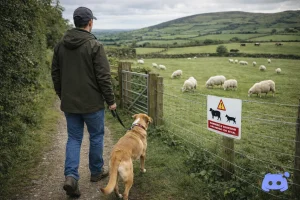
Staying on the right side of the law doesn’t require drastic lifestyle changes but rather a more mindful and proactive approach to countryside dog walking.
Here are some core best practices that every dog walker in Wales should consider:
- Always carry a lead, even if your dog is typically well-behaved
- Keep dogs on a lead near livestock or signs of grazing
- Respect local signage and PSPO notices
- Avoid walking through fields with visible livestock, even on public rights of way if alternative routes are available
- Practice and reinforce recall training so your dog returns immediately on command
Training and routine can make a big difference. Some organisations, including the Kennel Club and RSPCA, offer free or low-cost courses for dog owners to reinforce control in open spaces.
From my experience, shifting my walking habits slightly, using quieter paths, earlier hours, and keeping to the field edge has helped reduce any chance of livestock interaction. It’s not an inconvenience but rather a part of responsible pet ownership.
What Happens If Your Dog Worries Livestock?
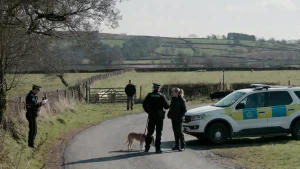
If your dog is found to have worried or attacked livestock, the process now involves faster and more extensive investigative procedures.
Under the new powers, police can:
- Enter private property to seize and detain a dog suspected of worrying livestock
- Take forensic samples or impressions from the dog (pawprints, saliva) or livestock
- Identify and interview witnesses, including farmers and other walkers
- Order the dog to be held until a court hearing
The table below outlines the potential steps:
| Investigation Step | Triggered When |
|---|---|
| Seizure of dog | Risk of repeated offence or court proceedings pending |
| Evidence collection (samples/impressions) | Dog suspected of contact with livestock |
| Court summons issued | Dog owner refuses fine or offence is severe |
| Compensation assessment | Livestock injury or loss documented |
A dog does not need to have made physical contact with livestock to be subject to these processes. The sight of a dog running near ewes in lambing season, for instance, is enough for a report to be made and an investigation to begin.
Conclusion
Dog walking in Wales is still a beautiful and cherished activity, but it now comes with added responsibility.
The Dogs (Protection of Livestock) (Amendment) Act 2025 isn’t about banning off-lead walking or penalising dog lovers. It’s about balance, protecting animals, supporting farmers, and ensuring our countryside remains a safe space for all.
As a dog owner, I’ve taken this as a call to become more vigilant. It’s a small shift in habits that can make a big difference for me, my dog, and the animals that call our countryside home.
FAQs
Can I be fined if my dog chases livestock but doesn’t hurt them?
Yes. Under the new law, worrying livestock includes chasing or causing stress, not just physical harm.
Are all breeds affected by this new rule in Wales?
Yes, all dog breeds fall under this law, regardless of size or temperament.
What is the legal definition of “worrying livestock”?
Worrying includes chasing, attacking, or being loose among livestock in a way that could cause harm or distress.
Do I need to report if someone else’s dog worries livestock?
Yes, you can report incidents to the local police or rural crime unit. Anonymous tips are also accepted.
What happens if my dog was stolen and then worried livestock?
The new act provides a defence if the dog was under someone else’s control without your consent, such as in the case of theft.
Are alpacas and llamas covered by the new legislation?
Yes, the law now includes camelids like alpacas and llamas, which are increasingly kept as livestock.
What kind of evidence can police use to prove my dog was involved?
Police can use DNA samples, paw impressions, and witness statements to link your dog to a livestock incident.

Leave a Reply