
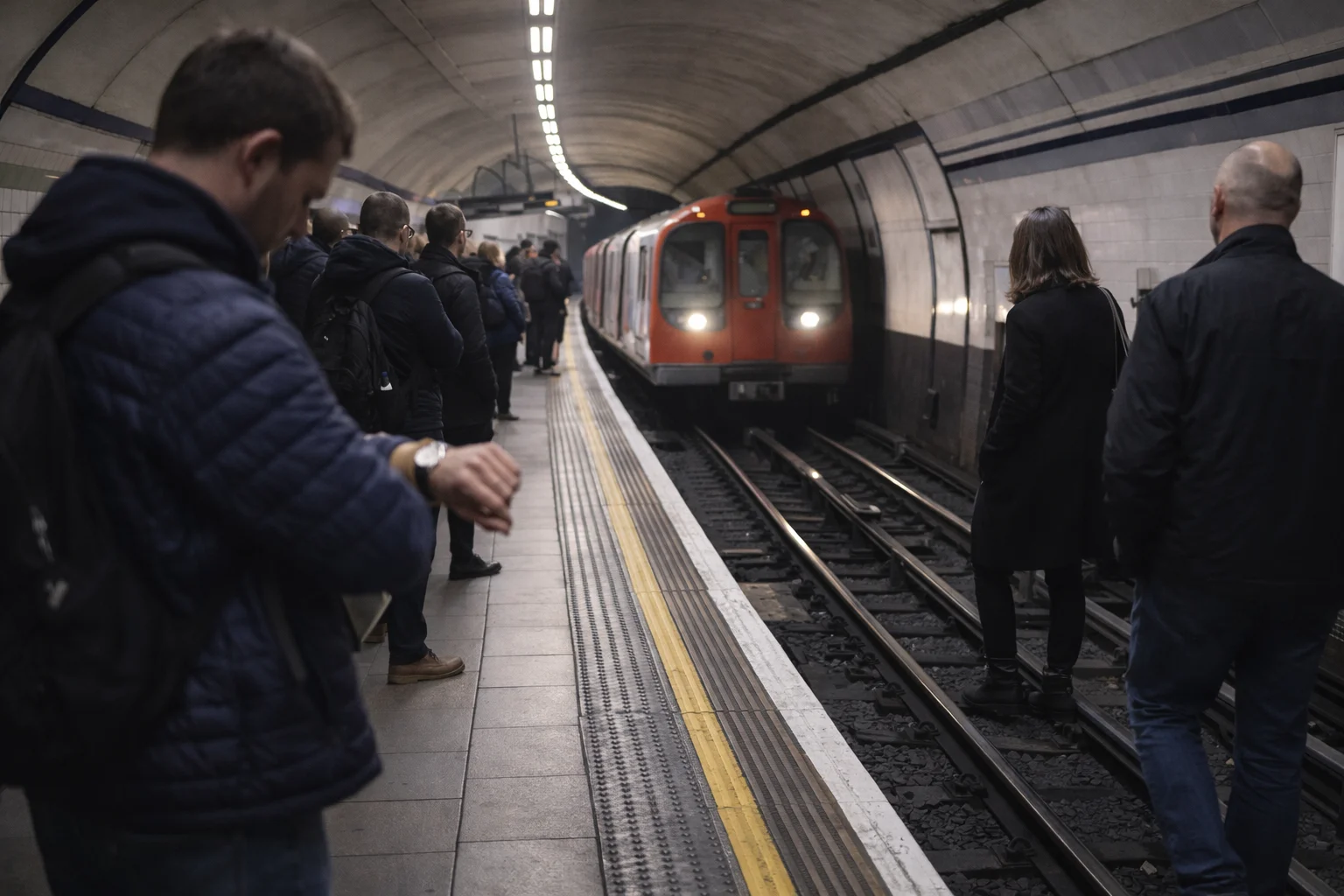
Londoners can expect disruption on the Piccadilly Line from the evening of Sunday 15 February until the morning of Saturday 21 February due to industrial action at Northfields Depot.
The strike does not shut down the entire Underground network, but it will likely cause delays, later start times and possible cancellations, particularly before 8am.
Services will continue running, including routes to Heathrow Airport, though early morning passengers should allow extra time. No other London Underground lines are affected, but separate Overground strikes are planned.
Key points to know:
- Strike runs from 15 to 21 February
- Action is at Northfields Depot, not drivers network wide
- Piccadilly Line trains will still operate
- Delays most likely before 8am
- Heathrow services may face moderate disruption
- Other Tube lines remain unaffected
- Live TfL updates are essential before travelling
What Are the Confirmed Piccadilly Line Strike Dates?
The confirmed Piccadilly line strike dates run from the evening of Sunday 15 February until the morning of Saturday 21 February. This period of industrial action centres on Northfields Depot in Ealing, which plays a key operational role in maintaining and dispatching Piccadilly Line trains.
Although many commuters initially assumed the strike would halt services entirely, this is not a full network shutdown. The Piccadilly Line will continue running throughout the strike period.
However, because depot staff are responsible for preparing trains for service, disruptions are expected across different sections of the route.
Northfields Depot handles the stabling and maintenance of trains operating across key stretches of the line, including routes serving Central London and Heathrow Airport. When depot workers take industrial action, the ripple effect can influence:
- Train preparation schedules
- First departure times
- Service frequency during peak hours
- The ability to recover quickly from delays
The strike begins in the evening, meaning the first noticeable effects are likely to appear during the following morning’s services. Early weekday commuters are expected to feel the greatest impact, particularly those travelling before 8am.
To understand the timeline clearly, the strike period can be summarised as follows:
| Date | Timeframe | Expected Operational Impact | Passenger Effect |
|---|---|---|---|
| Sunday 15 February | Evening start | Depot disruption begins | Limited late evening effect |
| Monday to Friday | All day with peak strain | Reduced train availability | Delays, later starts |
| Before 8am daily | Early service rollout | Highest disruption risk | Longer waiting times |
| Saturday 21 February | Morning end | Gradual normalisation | Services stabilising |
This structured timeline gives commuters a clearer view of when caution and additional planning will be required.
Why Is the Piccadilly Line Being Affected by Industrial Action?
The Piccadilly Line is affected because RMT members working at Northfields Depot have initiated industrial action. Depot workers are responsible for a wide range of behind-the-scenes operational tasks that ensure trains are safe, maintained and ready for passenger service.
Their duties include mechanical checks, cleaning, positioning trains for morning departures and ensuring compliance with safety protocols. Without adequate depot staffing, trains may not be released into service at normal capacity.
From a professional transport planning perspective, depot strikes create a specific type of operational challenge. A London based rail operations consultant explained to me,
“When a depot goes on strike, the issue is not just numbers of trains. It is the sequencing and timing of train preparation. Even small disruptions early in the day can cascade into wider delays.”
This insight highlights why disruption tends to be most visible during early morning hours. Once trains are running and circulating along the route, the system can stabilise. However, the initial rollout phase remains vulnerable.
The Piccadilly Line stretches from Cockfosters in North London to Heathrow Airport and Uxbridge in the west. It passes through high demand areas including King’s Cross St Pancras, Leicester Square and Hammersmith. Because of this broad geographic coverage, even moderate service changes can influence a significant number of daily commuters.
The industrial action does not currently involve drivers across the entire Underground network. It is targeted at one operational base. This distinction is crucial because it limits the scale of disruption compared to previous citywide Tube strikes.
Which Piccadilly Line Services Will Be Disrupted During the Strike Dates?
During the confirmed Piccadilly line strike dates, services will operate but with anticipated irregularities. The most common effects passengers may experience include later start times and reduced frequency during certain periods.
TfL has indicated that disruption is particularly likely before 8am. Early commuters travelling into Central London for work should be prepared for extended waiting times.
The Piccadilly Line operates across several key branches:
| Branch | Key Stations | Likely Disruption Level | Notes |
|---|---|---|---|
| Heathrow Branch | Heathrow Terminals 2 and 3, Terminal 5 | Moderate to High | Early flights most at risk |
| Uxbridge Branch | Rayners Lane, Uxbridge | Moderate | Service frequency may vary |
| Central London Core | King’s Cross, Covent Garden, Piccadilly Circus | Low to Moderate | Knock on delays possible |
| Cockfosters Branch | Finsbury Park, Arnos Grove | Moderate | Early service affected |
Passengers travelling to Heathrow should exercise particular caution. Early morning departures to the airport are often tightly scheduled. Even minor service delays can increase stress for travellers with fixed flight times.
From my own experience of covering London transport disruptions, I have noticed that airport travellers tend to feel the psychological impact of strike news more acutely than daily commuters. As one frequent flyer told me,
“It is not just the delay that worries you. It is the uncertainty.”
Will Heathrow Airport Services Be Affected?
Heathrow services will continue operating throughout the strike period. However, because of the reduced availability of prepared trains early in the day, first services may depart later than normal.
Passengers should consider:
- Leaving home earlier than planned
- Checking live departure boards before setting off
- Having a backup option, such as the Elizabeth Line
The Elizabeth Line offers a strong alternative for Heathrow access, particularly from Central London.
Are Peak Hours the Most Disrupted?
Morning peak hours are expected to face the greatest challenges. Once trains are fully circulating, service reliability may improve slightly during midday periods.
Evening peak services could experience minor delays if earlier disruptions have not been fully absorbed into the timetable.
The overall pattern suggests fluctuating reliability rather than complete suspension.
Are Other London Underground Lines Impacted by the Piccadilly Line Strike Dates?
No other London Underground lines are currently scheduled to be affected by these Piccadilly line strike dates. This provides a degree of stability across the broader network.
The Underground network consists of multiple lines operating from different depots. Because this industrial action is specific to Northfields Depot, the impact remains contained.
To clarify the broader context:
| Transport Service | Impact Status | Reason |
|---|---|---|
| Piccadilly Line | Disrupted | Northfields Depot strike |
| Central Line | Normal | No industrial action |
| District Line | Normal | Independent operations |
| Victoria Line | Normal | Separate depot structure |
| London Overground | Separate action planned | Different dispute |
While Overground strikes have been announced separately, they are not directly connected to the Piccadilly Line situation.
This compartmentalisation prevents a citywide paralysis. It also allows commuters to adapt by switching lines where possible.
How Can London Commuters Prepare for the Piccadilly Line Strike Dates?

Preparation remains the most effective response to confirmed Piccadilly line strike dates. Because trains are still running, the strategy is less about avoidance and more about flexibility.
I personally approach these situations by building additional buffer time into my schedule. As I often tell colleagues,
“In London, the margin for error is usually slim. During strikes, that margin needs to expand.”
Practical preparation steps include:
- Monitoring TfL service updates on the morning of travel
- Allowing an additional 20 to 30 minutes for key journeys
- Exploring alternative routes via the Elizabeth Line or National Rail
- Avoiding tight airport connection windows
Commuters travelling from West London into Central London may find that bus services experience increased demand. This could result in slightly longer boarding times.
It is also useful to understand the typical flow of disruption:
| Time of Day | Expected Service Pattern | Recommended Action |
|---|---|---|
| 5am to 7am | Highest uncertainty | Check status before leaving |
| 7am to 10am | Gradual stabilisation | Allow extra travel time |
| Midday | More consistent service | Monitor updates |
| 4pm to 7pm | Variable depending on earlier delays | Stay flexible |
The key principle is anticipation rather than reaction. Checking real time updates shortly before departure reduces unnecessary waiting at stations.
What Do These Piccadilly Line Strike Dates Mean for London’s Wider Transport Network?
Even limited industrial action can influence broader commuter behaviour. When passengers anticipate delays, they often redistribute themselves across alternative services.
This redistribution may lead to:
- Increased passenger volumes on parallel lines
- Higher demand for bus services
- Slight congestion on major roads
- Pressure on interchange stations
However, because the disruption is confined to one line, the overall transport ecosystem remains resilient.
A senior transport policy analyst summarised the situation clearly in conversation, stating,
“This is a contained operational disruption rather than a systemic crisis. The network absorbs it, but passengers must adjust expectations.”
That distinction matters. A systemic crisis would involve multiple lines and a full shutdown. In contrast, the current Piccadilly line strike dates represent a moderate challenge with manageable consequences.
For businesses located along the Piccadilly corridor, minor delays in employee arrival times may occur. However, the likelihood of widespread absenteeism is low.
London’s transport system has experienced far more severe industrial action in recent years. Compared to those episodes, this week’s disruption remains relatively limited in scope.
The broader message for commuters is one of awareness rather than alarm. Services are operating. The line is not closed. Planning and flexibility will determine how smoothly individual journeys proceed during the confirmed Piccadilly line strike dates.
Conclusion: How Serious Are These Piccadilly Line Strike Dates for Commuters?
The confirmed Piccadilly line strike dates from 15–21 February represent a moderate but not catastrophic disruption to London travel.
Trains will continue to run. The network will not shut down. No other Underground lines are affected. However, delays, later starts and possible cancellations should be expected, particularly before 8am.
For most Londoners, this week will require:
- A little extra planning
- A little extra time
- Regular status checks
From my perspective, this is a reminder that London’s transport system, while resilient, remains vulnerable to industrial action. Fortunately, compared to previous large-scale strikes, this disruption is limited and manageable with sensible preparation.
Frequently Asked Questions About Piccadilly Line Strike Dates
Can I still travel on the Piccadilly Line during the strike dates?
Yes, trains are still operating. However, services may start later than usual and face delays, especially during early morning hours.
Is the entire London Underground affected?
No. The industrial action is limited to the Piccadilly Line due to a strike at Northfields Depot. Other Underground lines are operating normally.
How will this impact Heathrow Airport travel?
Heathrow services will continue running, but passengers should allow additional time and check live updates before travelling.
Are evening services likely to be cancelled?
Evening services are expected to run, though minor delays or cancellations may occur depending on operational pressures.
Why do depot strikes cause disruption if drivers are not on strike?
Depot staff prepare and dispatch trains. Without full staffing at depots, service frequency and reliability can be affected.
Should I consider alternative routes during strike week?
If your journey is time-sensitive, such as airport travel, exploring alternatives like the Elizabeth Line or National Rail services may be wise.
Where can I check real-time updates on service status?
TfL provides live updates via its official website and transport apps. Checking shortly before departure is recommended during the strike period.

Leave a Reply