
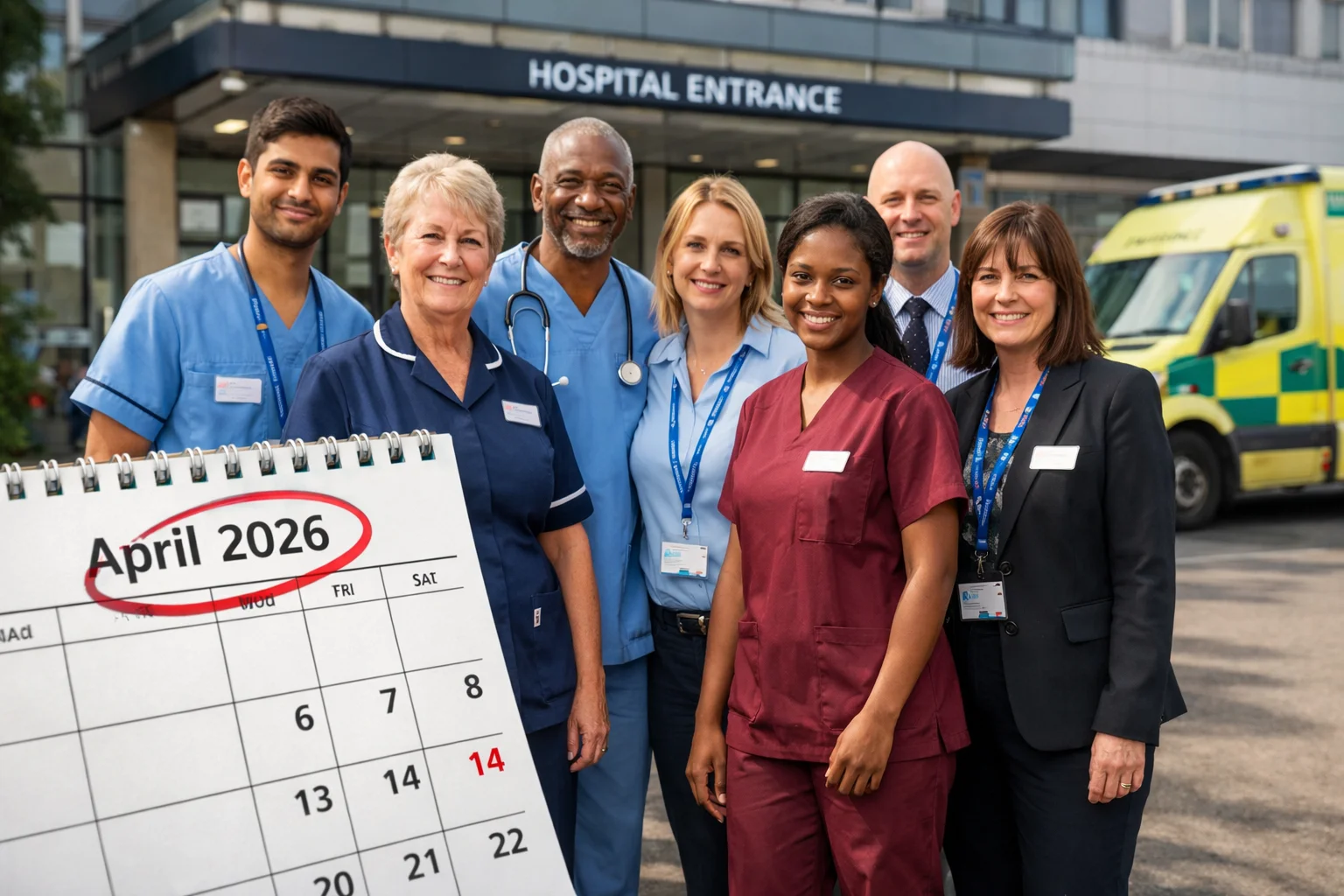
The NHS pay rise 2026 will be paid from 1 April 2026, with eligible staff receiving the 3.3 percent uplift in their April salary if they are paid through the Electronic Staff Record system.
The UK Government has accepted the Agenda for Change Pay Review Body recommendation, and NHS Business Services Authority has been instructed to process the increase on time. This marks the earliest implementation of a pay award in six years.
Key takeaways:
- 3.3 percent pay rise for Agenda for Change staff in England for 2026 to 2027
- Paid from 1 April 2026 in April pay packets
- Wales also confirmed 3.3 percent from April
- Scotland already agreed a two year deal including 2026 to 2027
- Band 5 nursing roles to be formally reviewed
This guide explains what the decision means for you and what to expect next.
When Will the NHS Pay Rise 2026 Be Paid?
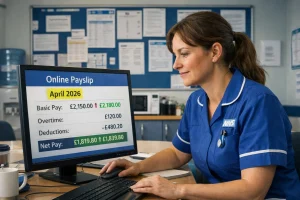
The NHS pay rise 2026 will be paid from 1 April 2026, with the uplift appearing in April salary payments for staff paid through ESR.
The Government confirmed on 12 February 2026 that it had accepted the Pay Review Body recommendation of a 3.3 percent increase for Agenda for Change staff in 2026 to 2027.
NHS Business Services Authority has been asked to ensure the uplift is processed in the April pay packets.
This is the earliest the Government has accepted and implemented a PRB recommendation in six years. Official guidance has been issued to trusts and integrated care boards to prepare payroll systems and cash flow arrangements so that staff are paid on time.
In England and Wales, the award will apply from the start of the new financial year. For many NHS employees, this means the increase should not be delayed or backdated later in the year.
How Much Is the NHS Pay Rise for 2026 to 2027?
The NHS pay rise for 2026 to 2027 is a 3.3 percent uplift for staff employed under Agenda for Change terms and conditions in England. The Government has formally accepted the Pay Review Body recommendation, confirming the increase for the upcoming financial year.
Wales has also confirmed a 3.3 percent uplift. In Scotland, RCN members previously accepted a two year offer from the Scottish Government that includes a 2026 to 2027 pay award. Northern Ireland is awaiting clarity on payment timing.
Key details include:
- 3.3 percent consolidated increase to basic pay
- Applies to all eligible Agenda for Change bands
- Effective from 1 April 2026
- Pensionable as part of basic salary
- Separate arrangements apply for doctors and dentists
While some unions have described the award as below inflation, the Government states that it reflects a commitment to reward NHS staff fairly and provide funding to support implementation. For you, the exact cash increase will depend on your pay band and point on the pay scale.
Will NHS Staff Receive Back Pay in 2026?
For most staff in England and Wales, the NHS pay rise 2026 will not involve back pay if payroll systems implement the uplift in April 2026 as planned.
The Government has instructed NHS Business Services Authority to ensure the 3.3 percent increase is included in April pay packets for those paid via ESR.
In previous years, delays to Pay Review Body decisions led to arrears being paid later in the year.
This time, the acceptance of the recommendation in February allows employers to prepare in advance of the new financial year. Official communications to trusts emphasise readiness and timely processing.
If implementation proceeds as directed, you should see the higher salary from April rather than receiving a lump sum backdated payment months later. However, final confirmation in Northern Ireland is still pending, so timelines there may differ.
What Is Agenda for Change and Who Does the 2026 Pay Award Apply To?
Agenda for Change is the national pay system covering the majority of NHS staff in England and Wales. It sets out pay bands, job evaluation processes and progression arrangements. The 2026 pay award applies to staff employed under these terms and conditions.
Agenda for Change covers a wide range of roles, including:
- Nurses and midwives
- Allied health professionals
- Healthcare assistants
- Administrative and clerical staff
- Porters and support workers
It does not apply to doctors, dentists or very senior managers, who have separate pay review processes.
Below is a simple overview of how the 3.3 percent impact applies across bands.
Band Example Role 3.3% Impact Type
Band 2 Healthcare Assistant Increase to basic salary
Band 5 Staff Nurse Increase to basic salary
Band 6 Senior Nurse or AHP Increase to basic salary
Band 7 Ward Manager Increase to basic salary
Because the uplift is consolidated, it permanently increases your basic pay and influences pension contributions and future increments.
What Is Happening With Band 5 Nurses in 2026?
Alongside the headline NHS pay rise 2026, the Government has announced specific measures focused on Band 5 nurses.
Following engagement with the Royal College of Nursing and NHS Staff Council, a series of commitments have been made to deliver what is described as a fairer deal for nurses.
Band 5 roles represent the largest proportion of the nursing workforce and are seen as a critical stage in career progression. Official guidance has been issued to NHS trusts to review Band 5 nursing job descriptions and ensure each nurse is placed in the correct band.
Key commitments include:
- Reviewing all Band 5 nursing job descriptions
- Ensuring every nurse is in the correct pay band
- Providing additional recurrent funding to support reviews
- Making graduate pay a priority in pay structure reform
- Launching a national nursing preceptorship programme
Trusts are required to undertake proper assessments of the duties Band 5 nurses are asked to perform and confirm whether they align with current job descriptions.
Board level oversight and engagement with staff side representatives are expected. NHS England regional teams will maintain oversight to ensure consistency and identify risks early.
Could Band 5 Reviews Lead to Higher Pay?
Band 5 reviews could lead to higher pay if a role is formally re evaluated and found to match a higher band under the Job Evaluation Scheme. However, any change must follow the established process and is not automatic. The outcome depends on the duties performed and evidence submitted.
If you are a Band 5 nurse, this means your employer should assess whether your responsibilities reflect your current band. If they do not, re banding may be considered in line with national rules and funding arrangements.
Why Has the Government Accepted the Pay Review Body Recommendation Early?
The Government has stated that accepting the Pay Review Body recommendation in February 2026 demonstrates a commitment to reward NHS staff fairly and work constructively with trade unions. This is the earliest PRB recommendation has been accepted and implemented in six years.
Official communication to NHS leaders highlights the importance of timely payroll preparation and financial planning.
Additional funding will be provided by increasing integrated care board allocations and adjusting NHS Payment Scheme prices to reflect the final award.
Reasons cited include:
- Providing certainty before the new financial year
- Avoiding delays and back pay issues
- Supporting workforce morale
- Demonstrating engagement with the NHS Staff Council
Further guidance will follow, but interim instructions have been issued to ensure readiness from April. For staff, early acceptance reduces uncertainty about payment timing.
How Have Unions Responded to the 2026 NHS Pay Award?
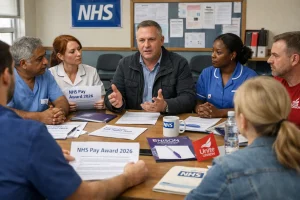
Union responses have been mixed. The Royal College of Nursing has criticised the 3.3 percent award, describing it as below inflation and raising concerns about real terms pay.
RCN leadership has stated that many unions withdrew from the Pay Review Body process this year, arguing it is not fit for purpose.
The RCN has also indicated that it expected direct negotiations on a potential multi-year deal. Instead, the Government reverted to the PRB system. Elected union representatives are now reviewing the details of the award and considering next steps.
At the same time, union engagement contributed to additional commitments focused on Band 5 nursing roles and career progression. This means the 2026 pay round includes both a headline uplift and broader structural discussions.
How Will the NHS Pay Rise 2026 Affect You Personally?
The NHS pay rise 2026 will increase your basic salary by 3.3 percent if you are employed under Agenda for Change terms. Because it is consolidated, the uplift becomes part of your permanent salary and affects pension contributions and future pay progression.
In practical terms, you may notice:
- A higher gross monthly salary from April 2026
- Increased pensionable pay
- Higher overtime and unsocial hours payments
- Possible changes to tax deductions depending on earnings
If you are a Band 5 nurse, you may also be affected by the job description review process. This could mean discussions with your manager about duties and banding.
You should check your April payslip carefully and review communications from your trust. If anything appears incorrect, raising it promptly with payroll or HR will help resolve issues quickly.
NHS Pay Rise 2026 in England, Scotland, Wales and Northern Ireland What Is the Difference?
The NHS pay rise 2026 varies slightly across the UK due to devolved arrangements.
In England:
- 3.3 percent uplift for Agenda for Change staff
- Effective from 1 April 2026
- Paid in April salary if processed on time
In Wales:
- 3.3 percent uplift confirmed
- Applied from April 2026
In Scotland:
- Part of a previously agreed two year deal
- RCN members accepted the offer including 2026 to 2027
In Northern Ireland:
- 3.3 percent recommended
- Awaiting clarity on payment timing
If you work outside England, you should monitor announcements from your devolved government and employer. While the headline percentage is similar in most nations, implementation details and communication timelines may differ.
What Happens Next After the 2026 NHS Pay Rise?

The NHS pay rise 2026 is not the end of discussions about pay reform. Official communications indicate that further work will continue on structural changes and engagement with unions.
Agenda for Change reform discussions
The Government has committed to working with the NHS Staff Council to invest in reforming the Agenda for Change pay structure.
This includes reviewing graduate pay and addressing issues linked to career progression. Reform discussions may focus on clarity of roles, consistent job evaluation, and modernising the pay framework.
Potential Multi-Year Deal Talks
Although the 2026 award followed the PRB process, unions had anticipated direct negotiations on a multi-year settlement. Future talks could revisit the idea of longer-term agreements to provide stability and predictability for staff and employers.
Further PRB announcements
Announcements about other Pay Review Body recommendations are expected to follow. This may include updates for groups not covered by Agenda for Change. Monitoring official publications will help you stay informed.
Structural Pay Reform Investment
Additional funding has been promised to support the pay uplift and reform process. Integrated care board allocations and NHS Payment Scheme prices will reflect the final award.
Over time, structural reform may aim to improve fairness, progression pathways and recognition of professional responsibilities.
For you, this means the 2026 uplift is part of a wider conversation about how NHS pay is structured and delivered in the years ahead.
NHS Pay Rise 2026 When Will It Be Paid?
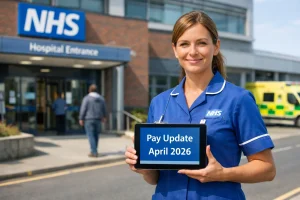
To summarise clearly, the NHS pay rise 2026 will be paid from 1 April 2026, with eligible staff in England and Wales receiving the 3.3 percent uplift in their April salary if payroll systems are ready.
The Government accepted the Pay Review Body recommendation in February 2026 and instructed NHS Business Services Authority to implement the increase promptly.
This early decision aims to avoid delays seen in previous years. Scotland already has a two year agreement that includes 2026 to 2027, while Northern Ireland is awaiting confirmation on timing.
For most Agenda for Change staff, the key point is that the increase should appear in April pay rather than being backdated later in the year.
Conclusion
The NHS pay rise 2026 provides a 3.3 percent uplift for Agenda for Change staff, paid from 1 April 2026 in England and Wales.
Early acceptance of the Pay Review Body recommendation means many staff should see the increase in their April salary without delay.
Alongside the headline uplift, the Government has announced targeted action for Band 5 nurses and ongoing reform discussions.
While unions have raised concerns about inflation and process, official guidance confirms funding and payroll preparation are in place.
If you work in the NHS, reviewing your payslip, understanding your band and staying informed about local communications will help you make sense of what the 2026 pay award means for your role and future progression.
FAQs
Is the 2026 NHS pay rise pensionable?
Yes, the 3.3 percent uplift is consolidated into basic pay and is pensionable. This means your pension contributions and benefits will reflect the higher salary.
Does the 3.3 percent increase apply to part time NHS staff?
Yes, part-time staff under Agenda for Change receive the same percentage uplift. The increase is applied pro rata to contracted hours.
Will agency nurses receive the NHS pay uplift?
Agency nurses are not directly covered by Agenda for Change pay awards. Their rates depend on agency contracts and local agreements.
How will the pay rise affect unsocial hours payments?
Unsocial hours enhancements are calculated as a percentage of basic pay. When basic pay increases, related enhancements also rise.
Can NHS trusts delay the April 2026 pay increase?
Trusts have been instructed to prepare payroll systems for April implementation. Delays are not expected in England if guidance is followed.
What happens if my Band 5 role is re-evaluated?
If a review finds your duties match a higher band, rebanding may occur under the Job Evaluation Scheme. Any change must follow national procedures and evidence-based assessment.
Is this the final NHS pay deal for 2026 to 2027?
The 3.3 percent uplift has been confirmed for Agenda for Change staff. However, wider reform discussions and future negotiations may continue.

Leave a Reply